REVIEW · OSLO
Downtown Oslo: Self-Guided Highlights and History Audio Tour
Book on Viator →Operated by VoiceMap Audio Tours · Bookable on Viator
Oslo by audio is a tidy way to get oriented fast. This self-guided walk strings together five downtown stops that help you read the city like a local, from harbor life to Nobel Peace Prize storytelling. You’ll be on your own schedule, following English audio prompts you can download ahead.
I especially like the mix of modern and old: you start at Aker Brygge, then hit the Nobel Peace Center in a former rail building, and end at Østbanehallen, once a key station and now a visitor-friendly hub. I also like the practical setup—offline access to audio, maps, and geodata—so you’re not stuck hunting for signal.
One caution: one review I saw complained about the audio content feeling out of date, and the best part for that person was basically turning off the narration and using the signs instead. If you’re the kind of traveler who relies on narration for every fact, bring a bit of flexibility.
In This Review
- Key Highlights You’ll Actually Notice
- A quick look at Downtown Oslo audio, from Rådhusplassen to Langkaia
- Aker Brygge: the shipyard past you can still feel
- Nobel Peace Center: old rail building, modern mission
- Royal Palace Park built in the 1840s: where Oslo relaxes
- Karl Johan Avenue: Oslo’s main street with deep roots
- Østbanehallen reopened in 2015: a former station now built for visitors
- Price and value: what $9.99 buys you (and what it doesn’t)
- Getting the most from a self-guided walk (especially if audio feels wrong)
- Who this tour suits best
- Should you book this Downtown Oslo highlights audio tour?
- FAQ
- How much does the Downtown Oslo self-guided audio tour cost?
- How long is the tour?
- What language is the audio available in?
- Where do I start and end the tour?
- Do I need a smartphone for this experience?
- Is food or transportation included?
- Are museum tickets included?
- Is offline access included?
- How many people can be in the group?
Key Highlights You’ll Actually Notice
- Aker Brygge as your warm-up: a former shipyard area that’s now an easy place to snack and meet up
- Nobel Peace Center in an old station: trains once arrived here, now the building tells the Peace Prize story
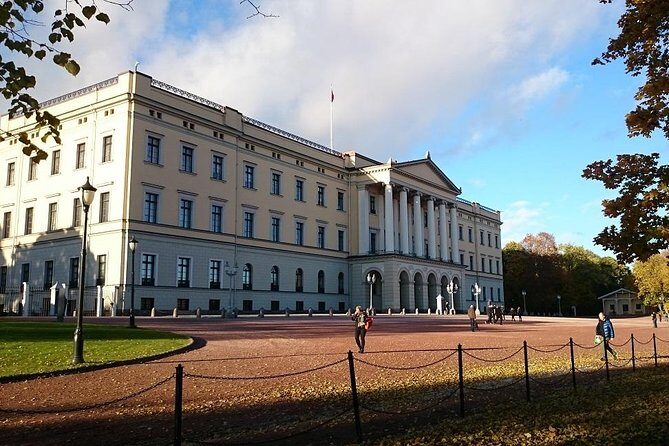
- Royal Palace Park’s 1840s feel: manicured lawns, ponds, and a famous role as a 1960s hangout base
- Karl Johan Avenue’s long timeline: first formed in the 1500s, renamed Karl Johan in 1852 after the King
- Østbanehallen’s 2015 comeback: reopened as shops, restaurants, a hotel, and the Oslo Visitor Center
- VoiceMap offline mode: you can keep going even with sketchy phone coverage
A quick look at Downtown Oslo audio, from Rådhusplassen to Langkaia
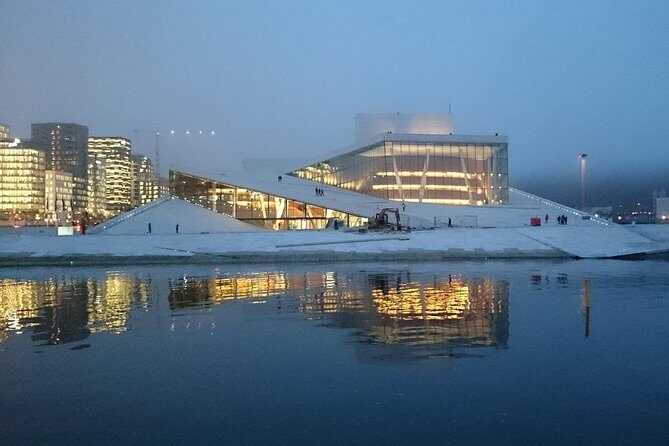
This is a short audio tour—about 40 minutes—designed for a one-and-done loop through central Oslo. You begin at Rådhusplassen and finish near Havnelageret / Langkaia 1. That matters because it keeps the route compact: you get viewpoints and landmarks without turning it into a half-day march.
You’ll need to use the VoiceMap app on your own smartphone. The tour price covers the audio experience and gives you lifetime access to the tour once you book. What’s included is also smart for travel: offline access to audio, maps, and geodata means you can plan calmly, then walk without worrying you’ll lose the route mid-street.
Two practical notes before you start:
- Make sure your audio is downloaded before you leave Wi‑Fi.
- Wear comfortable shoes. Downtown Oslo is walkable, but 40 minutes adds up when you keep pausing.
You can also read our reviews of more guided tours in Oslo



Aker Brygge: the shipyard past you can still feel
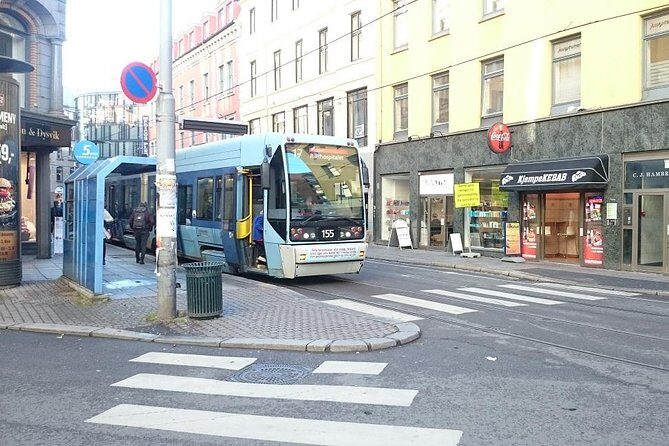
Your first stop is Aker Brygge, a shopping and dining area built on the remains of an old shipyard. Even without heavy explanation, the location tells a story: it’s the kind of waterfront place that once belonged to work, and now belongs to people who want to linger.
I like using Aker Brygge as a warm-up stop because it’s low-pressure. You’re not staring at a single monument; you’re in a lived-in part of the city where stopping for a coffee or a quick bite feels normal. It’s also an easy mental anchor. After Aker Brygge, everything else on your walk starts to feel like chapters in the same downtown book—harbor, ideas, palace grounds, city main street, then a restored station area.
If you’re traveling with time constraints, this stop also gives you flexibility. You can treat it as a “look, breathe, reset” moment—grab something if you need energy, then move on.
Possible drawback: because Aker Brygge is a popular meetup zone, it can feel busy. If you prefer quiet, plan for that and keep your focus on the waterfront setting and the shipyard-to-shopping transformation.
Nobel Peace Center: old rail building, modern mission
Next up is the Nobel Peace Center building. Here’s the key detail that makes the stop more than just a museum name: the building used to be a train station for arrivals from western parts of Norway. The narration connects that industrial arrival story to what the Nobel Peace Prize stands for now.
Why this works well on an audio tour: you get a built-in contrast. Trains once meant movement, travel, arrival. Now the same walls hold a museum-style story about Alfred Nobel, plus past winners and the Peace Prize legacy.
I like this kind of stop because it gives you context for what you might otherwise treat as a headline. Even if you don’t plan to enter every museum (tickets aren’t included), you can still enjoy the idea of the place: where people came in, now they come to learn why the world has a Peace Prize at all.
Tip for getting value: slow down at the exterior and surrounding area. The tour includes audio, but the building’s setting does a lot of the talking too—especially for travelers who like to read place and function, not just follow a script.
Royal Palace Park built in the 1840s: where Oslo relaxes
Then you’ll reach the park that surrounds the Royal Palace. This isn’t a tiny garden you rush through. The grounds were built during the 1840s, with majestic trees, well-kept lawns, and ponds, including ponds with fountains.
What I find practical about this stop is that it breaks up the walk with a change of pace. After city streets and civic storytelling, you get open space and a sense of order. It’s also a popular recreational area for Oslo citizens. That’s important: this isn’t just pretty scenery; it’s part of daily life.
And there’s a quirky, human detail you’ll hear: the park served as a base for hippies in the mid-1960s. That single line keeps the whole area from feeling like a sealed-off palace postcard. It’s a reminder that public spaces change with culture, not just with architecture.
Possible drawback: if you’re expecting a major “wow” viewpoint at every step, this stop can feel more about atmosphere than a single photo moment. If you like gardens, ponds, and the rhythm of a formal park, you’ll enjoy it.
Karl Johan Avenue: Oslo’s main street with deep roots
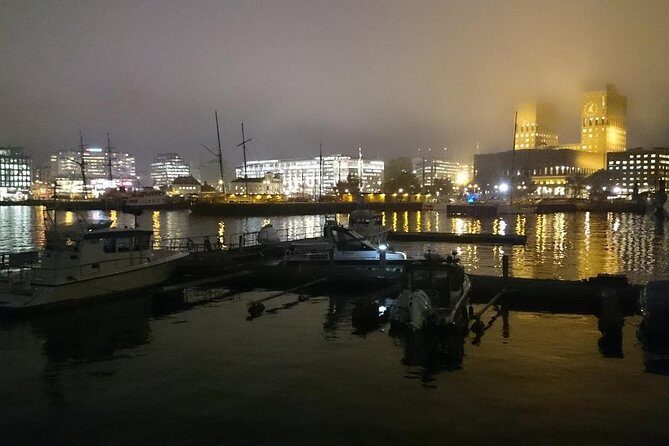
Your next chapter is Karl Johan Avenue, often just called Karl Johan. This street is one of those “you’ll understand it once you walk it” places. The audio framing helps: the first part of the street dates back to the 1500s, but since 1852 it’s known as Karl Johan, named after the King.
This stop matters because it gives you a spine for the city. When you hear a street has centuries behind it, you start to notice how a city organizes itself: where people stroll, where civic buildings sit, where the urban energy concentrates.
If you’re touring on a short schedule, Karl Johan is a smart use of time. It’s a natural connector, so the walking feels purposeful. Even if you don’t stop often, you’ll likely pick up visual cues—street scale, street life, and the kind of downtown layout that makes Oslo feel coherent.
Value tip: keep an eye on the rhythm of storefronts and pedestrian flow. Karl Johan tells you what Oslo prioritizes in daily life: easy walking, central access, and a main drag that doesn’t feel like it belongs only to cars.
You can also read our reviews of more historical tours in Oslo





Østbanehallen reopened in 2015: a former station now built for visitors
For the last stop, you’ll land at Østbanehallen. In the old days, it was the central railway station for northern routes in Norway. After a full transformation, the building reopened in 2015, and now it features shops, restaurants, a hotel, and the Oslo Visitor Center.
This is a great way to end an audio walk because it’s practical. You’re not just leaving with photos—you’re finishing at a place designed to keep travelers moving. If you want to pick up information for the next day, or you just want a convenient place to eat afterward, Østbanehallen fits the bill.
It’s also an honest closure to the theme of the tour. Earlier you saw a Nobel Peace story housed in a former rail building. Now you see another former rail space reborn for modern needs. The city reuses its built history, rather than freezing it.
Possible drawback: because Østbanehallen is now a shopping and dining area, you may feel more “commercial downtown” than “quiet landmark.” That’s not bad—it just changes the mood from the palace park style.
Price and value: what $9.99 buys you (and what it doesn’t)
At $9.99 per person, this tour is priced like a low-stress add-on. And for many people, that’s exactly what it is: a guided-feeling walk without paying for a full guided tour.
Here’s what you get:
- Lifetime access to the audio tour after booking
- VoiceMap app access
- Offline access to audio, maps, and geodata
And here’s what you don’t get:
- A smartphone (you bring your own)
- Transportation
- Food or drink
- Any museum tickets or entrance fees
So the value depends on your style. If you like self-guided walking and you’re happy to use the audio as context rather than a ticket to enter sites, $9.99 can be a bargain. If you want a guided group experience with stops that always include paid entry, you’ll need to budget extra beyond the audio fee.
Also, note the tour size: it has a maximum of 10 travelers. That doesn’t mean you’ll be in a big crowd during a self-guided walk, but it does suggest the platform is managing limited participation.
Getting the most from a self-guided walk (especially if audio feels wrong)
One real lesson from the review data I saw: don’t treat the audio as gospel. At least once, someone felt the content was out of date and ended up turning it off, using street signs instead.
You can protect yourself from that risk with a simple approach:
- Use the audio to get the “why” behind places.
- Use signs and your own eyes to confirm the fine details.
- If a segment feels off, skip it. Keep walking. Don’t get stuck arguing with a narration track.
A couple of smart habits also help the experience click:
- Download offline content before you start.
- Keep the app open so the maps and geodata guide you in real time.
- Move at a steady pace; the route is about 40 minutes, so long stops can stretch it.
Finally, since the tour is offered in English and works near public transportation, it’s a great “connective tissue” plan. Use it as a warm start, then branch into other parts of Oslo afterward.
Who this tour suits best
This audio walk is a strong fit if you:
- Want a quick introduction to downtown Oslo without committing to a long guided day
- Like walking between recognizable civic and cultural spaces
- Appreciate a narrative that explains how buildings changed roles over time
- Travel with enough flexibility to pause, read, and adjust your pace
It’s less ideal if you:
- Need narration to be perfectly current for every stop
- Prefer a classic guided group with live explanations
- Want lots of museum entry time included (tickets are not included)
Should you book this Downtown Oslo highlights audio tour?
If you’ve got around an hour, I’d lean yes. The stops are the right kind of downtown anchors—Aker Brygge, the Nobel Peace Center, Royal Palace Park, Karl Johan Avenue, and Østbanehallen—and they link together into a walk that feels like it makes sense. The offline setup is a practical win, and $9.99 is easy to justify for a self-guided orientation loop.
Just go in with the right mindset: use the audio for big-picture context, but stay alert for changes you’ll see on the ground. If you’re comfortable blending narration with on-site reading, this tour can help you enjoy Oslo’s center without over-planning your day.
FAQ
How much does the Downtown Oslo self-guided audio tour cost?
The price is $9.99 per person.
How long is the tour?
The duration is approximately 40 minutes.
What language is the audio available in?
The tour is offered in English.
Where do I start and end the tour?
You start at Rådhusplassen, Oslo, Norway, and end at Havnelageret, Langkaia 1, 0150 Oslo.
Do I need a smartphone for this experience?
Yes. A smartphone is not included.
Is food or transportation included?
No. Food and transportation are not included.
Are museum tickets included?
No. Tickets or entrance fees to any museums or other attractions along the route are not included.
Is offline access included?
Yes. The tour includes offline access to audio, maps, and geodata.
How many people can be in the group?
The experience has a maximum of 10 travelers.