REVIEW · OSLO
Oslo: Guided Walking Tour of Central Oslo with Local Guide
Book on GetYourGuide →Operated by NORDIC FREEDOM TOURS · Bookable on GetYourGuide
Two hours in Oslo, and the city feels suddenly readable. I like the story-first route that links major landmarks with lesser-known corners, and I love the humor-and-interaction approach guides use to make history stick. The main trade-off is that it moves at a tour pace, so you only get short stops for photos and a quick look.
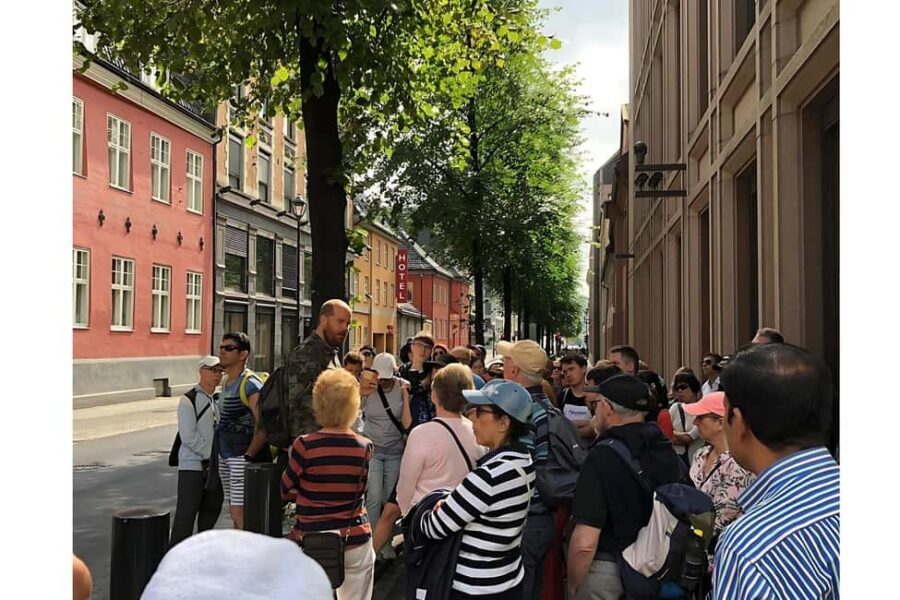
You meet your guide outside Jernbanetorget metro station by the bronze Tiger sculpture, looking for a sign that reads NORDIC FREEDOM TOURS. An English-speaking local guide leads a well-paced walk through the heart of Oslo, and the small-group format is designed so you can ask questions as you go—something you’ll hear praised again and again, including guides like Daniel and Marta.
In This Review
- Key Things I’d Plan Around
- Starting at Jernbanetorget and the Tiger Photo Stop
- Oslo Opera House to Christiania Torv: Modern Oslo in Plain Sight
- Akershus Fortress and Oslo City Hall: Power, Defense, and Governance
- Oslo Cathedral and Karl Johans Gate: Street-Level History You Can Walk Through
- Aker Brygge Waterfront Time: Maritime Oslo Without the Detour
- Norwegian Parliament and the Royal Palace Area: Modern Norway, Up Close
- Pacing, Group Feel, and What This Tour Does Well
- Price and Value: Why $14 Works for a Central Oslo Orientation
- Should You Book This Central Oslo Walking Tour?
- FAQ
- Where do I meet the guide?
- How long is the tour, and where does it end?
- Is the tour in English?
- Is this a private tour?
- What’s not allowed during the tour?
- Can I get a refund if my plans change?
Key Things I’d Plan Around
- Meet at the Tiger (Jernbanetorget), a central station-area spot that’s easy to find
- Opera House + fjord viewpoints without needing museum time
- Akershus Fortress and Oslo Cathedral for the medieval backbone of the city
- Karl Johans Gate, City Hall, and National Theatre area to understand how civic life works
- Aker Brygge free time for waterfront wandering, photos, and a break
- Guides who keep it fun (Daniel, Marta, Camille, Ramon, and others are repeatedly praised for humor and interaction)
Starting at Jernbanetorget and the Tiger Photo Stop
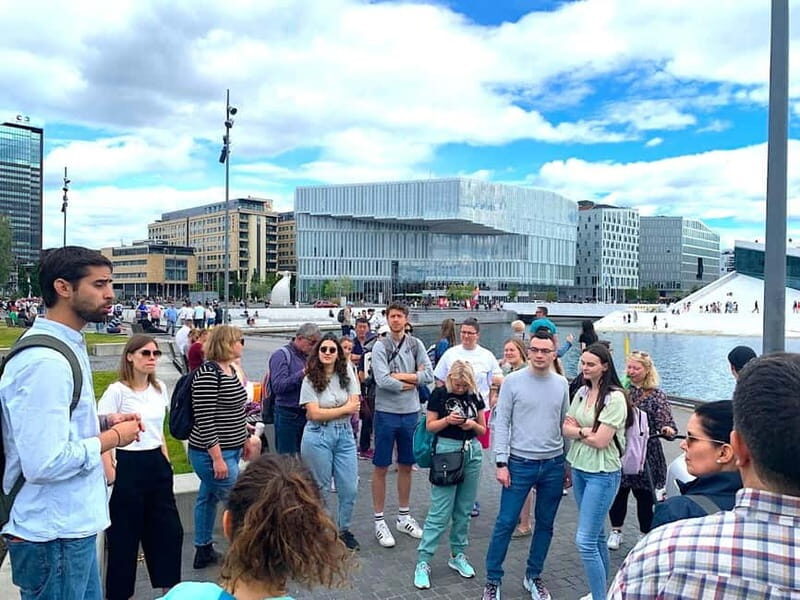
The tour begins in a place you can’t really miss: outside Jernbanetorget metro station, next to the large bronze Tiger. It’s a smart choice for first-timers because it’s close to Oslo Central Station, and you’re already in the busy, walkable core of the city.
The first stop is a quick photo moment at the Tiger—short on purpose. Then you’re moving, using the early seconds of the walk to set the tone: Oslo isn’t just a postcard city. It’s a place that reinvented itself over centuries, from a medieval settlement to a modern Scandinavian capital. That framing matters, because it gives you context before you hit the big sights.
I also like that the guide is clearly identifiable with the NORDIC FREEDOM TOURS sign. In practice, it reduces that awkward “did I get on the right tour?” stress. And because the tour is in English with a live guide, you can actually follow what’s happening, not just nod politely at monuments.
One more practical note: this is a guided public walk, so expect to keep moving. If you’re the type who wants to stare at every detail for a long time, you’ll need to treat this as orientation. Use it to learn where to return later.
You can also read our reviews of more walking tours in Oslo



Oslo Opera House to Christiania Torv: Modern Oslo in Plain Sight
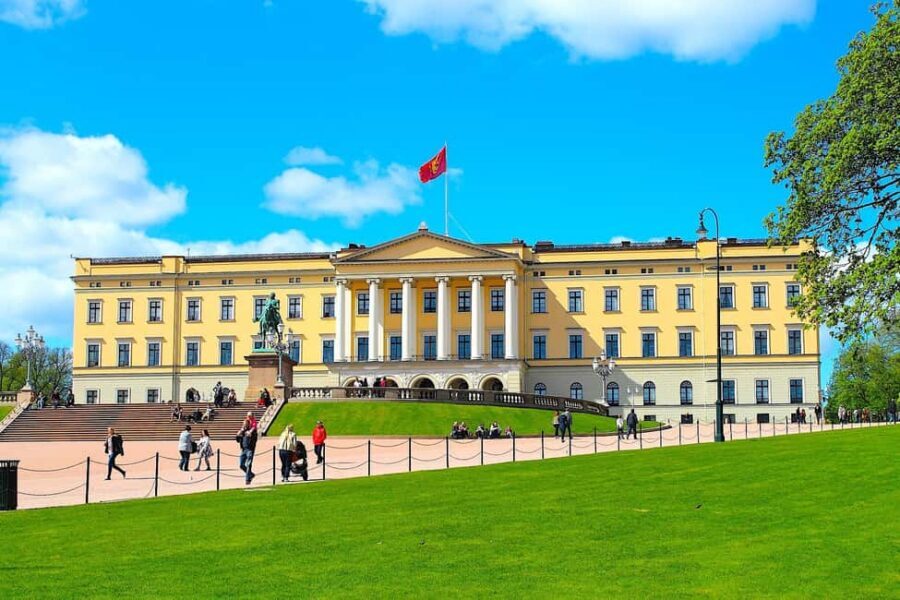
Very quickly, you reach the Oslo Opera House, one of the city’s most recognizable landmarks. The good thing about starting here is the location does the explaining for you. The building’s contemporary design sits right by the fjord, so you can feel how Oslo blends city and water—architecture and geography working together.
Expect a brief photo stop rather than a long break. The idea isn’t to turn this into a museum visit. It’s to show you the visual headline of Oslo, then connect it to how the city tells its own story now.
From there, the walk includes historic central areas such as Christiania Torv, an important early square linked to Oslo’s development. This is where the tour gets more interesting for your brain. You’re not only collecting sights; you’re building a timeline in your head. The guide’s job is to connect what you see in the square and street layout to why the city grew where it did.
If you like tours that keep the pace lively, this segment is usually where you feel it. Guides are repeatedly praised for interactive storytelling—often with a wry Scandinavian sense of humor. That doesn’t mean jokes instead of facts. It means the facts land easier because the guide knows how to pace the conversation.
Akershus Fortress and Oslo City Hall: Power, Defense, and Governance
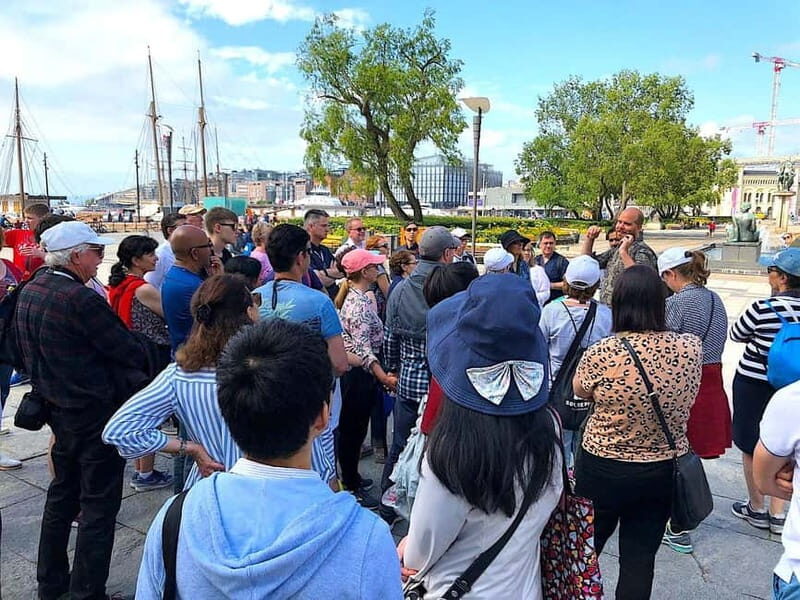
Next comes Akershus Fortress, where the city’s “old meets new” theme gets physical. Fortresses are big because they were built to last, and Akershus does exactly that. You’ll get a photo stop and guided commentary that explains why this location mattered, not just what you’re looking at.
The key value here is perspective. Many visitors see fortresses as frozen scenery. On this kind of walk, you get the sense of why the spot mattered—strategic defense and control of the area, long before today’s waterfront life.
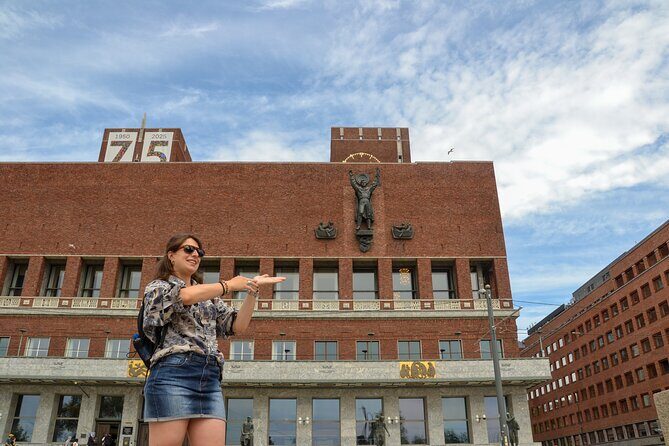
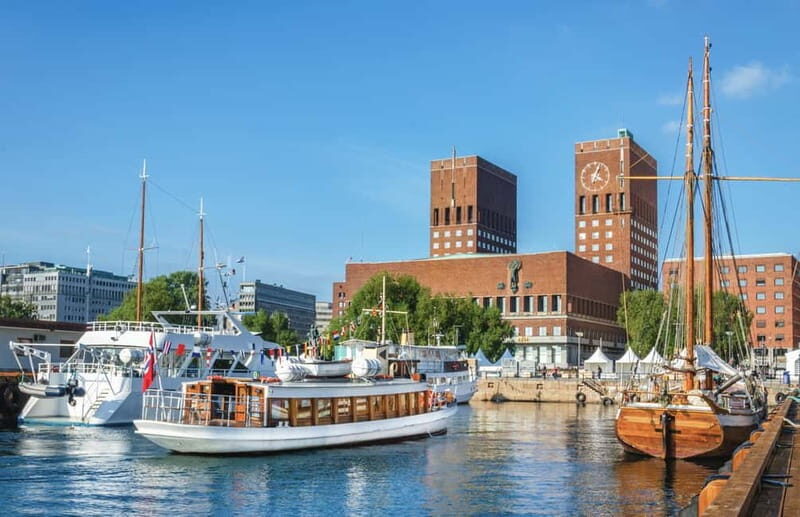
Then you move to Oslo City Hall for another photo stop and guided visit. City Hall is a different type of landmark: it’s civic authority in modern form. Put Akershus next to City Hall in your mental stack and you can see how Oslo’s relationship with power changed—fortified defense turning into civic administration.
You’ll also pass close to cultural-political landmarks like the National Theatre area as you work your way along the main boulevard. That’s a smart inclusion because Oslo’s city center isn’t only government buildings. It’s also where culture and everyday city life meet.
One thing I’d watch for: because photo stops are limited, you shouldn’t rely on this tour to satisfy your need for “just one more angle.” Instead, treat these as checkpoints. You’ll likely want to come back later on your own with more time.
Oslo Cathedral and Karl Johans Gate: Street-Level History You Can Walk Through
Oslo Cathedral is a major stop, and it’s not just there for the architecture. A cathedral is one of the easiest ways to feel continuity in a city’s story. You get sightseeing time and guided commentary, which helps you understand what the building represents within Oslo’s history and identity.
After that, the walk shifts into Karl Johans Gate, Oslo’s main boulevard. This is where the tour becomes a street walk, not a monument walk. Karl Johans Gate is known for shops, historic buildings, and local life, and the guide’s commentary typically makes the street layout feel meaningful.
This segment tends to be a favorite because it’s practical. When your guide explains the city’s transformation—what changed, what stayed, and what it means—you get a roadmap for where to wander afterward. If you want to plan your own day, this boulevard is a great spine to follow.
From a value standpoint, Karl Johans Gate is a high payoff stop. It’s central, easy to revisit, and it connects many points of interest. When your tour ends later near the palace area, you can still move around efficiently because you’re already oriented.
Also, this is where you’ll hear guides encourage questions. Multiple reviews highlight that guides answer queries and involve the whole group, not just lecture at you. That matters on a walking tour, because your questions turn the walk into something personalized.
Aker Brygge Waterfront Time: Maritime Oslo Without the Detour
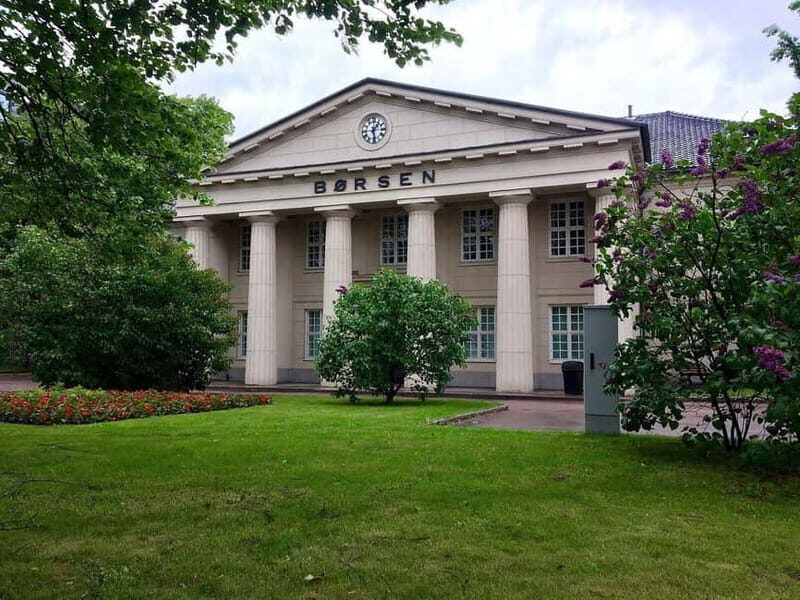
Aker Brygge is the waterfront moment, and it’s a well-chosen one. It’s known for maritime history, restaurants, and views along the fjord, and it gives you something different from the political and religious stops earlier.
Expect another photo stop plus guided context—then a slice of free time. That free time is valuable because waterfronts are best enjoyed with your own pace. You can step back for a fjord view, browse around, or grab something to drink without feeling like you’re falling behind.
This is also where the tour’s structure helps you. The guided parts keep you from just walking past scenery. The unstructured portion lets you actually absorb the place with your senses.
If you want the best use of that free time, keep it simple: take a couple of photos, then walk a short stretch for views. Don’t try to “finish Aker Brygge” during the tour. Save extra exploring for later, once you know what you like.
You can also read our reviews of more guided tours in Oslo






Norwegian Parliament and the Royal Palace Area: Modern Norway, Up Close
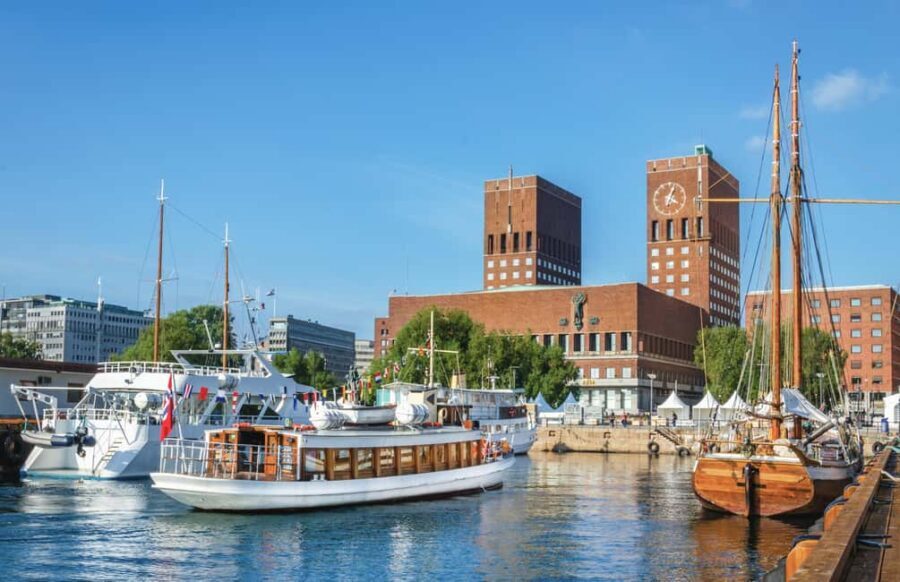
The walk reaches Norway’s political heart with a stop near the Norwegian Parliament, followed by a guided look toward the Royal Palace area.
This is a strong close because it ties the earlier themes together. Akershus and Oslo Cathedral talk about older structures of power and meaning. City Hall and Parliament talk about how modern Norway functions. Then the Royal Palace adds another layer: monarchy and governance, explained in a way that fits what you’ve already walked through.
You’ll get photo time near the palace zone and guided commentary that helps you understand the monarchy’s place in today’s Norway and how governance works in practice. Even if you don’t care about politics, the placement is effective because it shows Oslo’s center as a working civic space, not only a museum of buildings.
The tour ends near Slottsplassen, at Slottsplassen 1. That location is convenient because you’re right by the palace area—easy to keep walking or transition to your next plan.
Pacing, Group Feel, and What This Tour Does Well
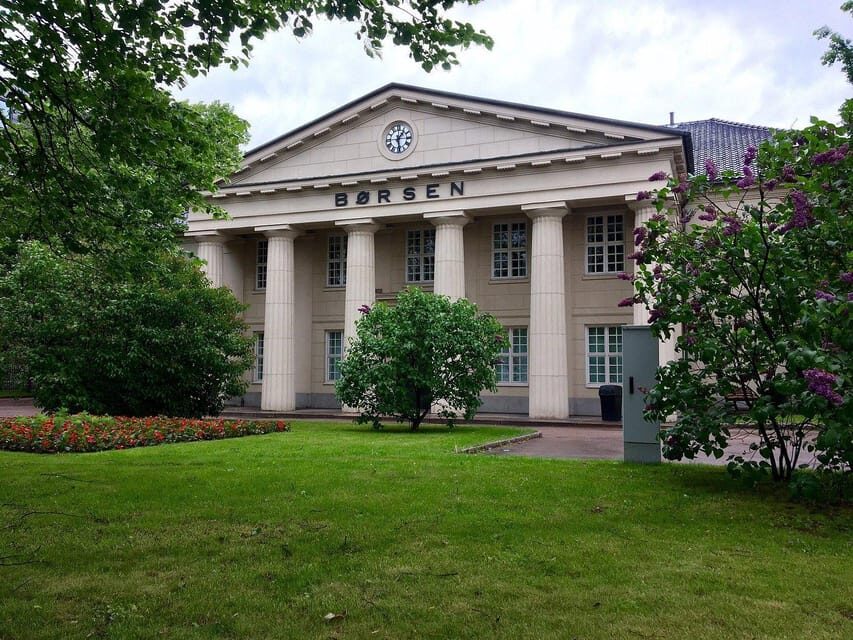
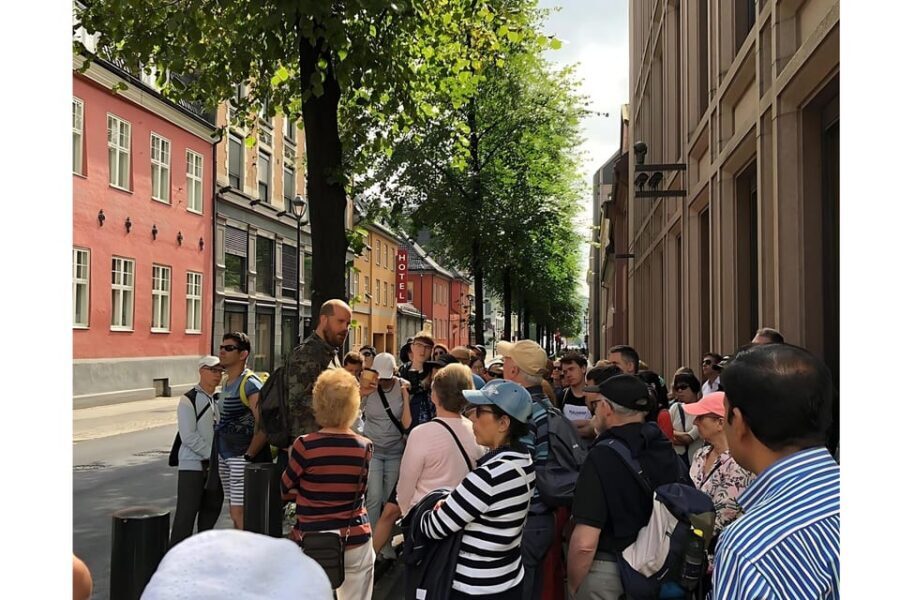
This is designed as a public walking tour with a limited number of participants, built to keep interaction possible while still staying on schedule. In other words, you’re not stuck listening to a monologue from 10 feet away.
The pace is one of the most praised aspects in the feedback: guides are described as making the walk feel smooth and not rushed. That matches the tour length—2 hours is long enough to cover a lot of landmarks, but short enough that you shouldn’t expect deep time inside any one place.
One practical advantage: some reviews mention guides using microphones so the group can hear clearly, even when the group is larger than expected. So if you’re worried about losing audio or falling behind, that’s a real strength of the operation.
As for rules, this is a focused tour. Professional cameras aren’t allowed, and video recording and audio recording aren’t allowed either. Pets aren’t allowed, but assistance dogs are permitted. If you’re planning to do heavy filming gear or rely on recorded commentary, plan something different for your day.
Price and Value: Why $14 Works for a Central Oslo Orientation
At around $14 per person for a 2-hour guided walk, the value comes from what you’re actually buying: a local guide, a route that hits major landmarks, and context that helps you understand what you’re seeing.
This isn’t priced like an all-day ticketed attraction. You’re paying for interpretation—stories, connections, and practical city insight while you walk. The fact that the guide is English-speaking and local matters here. With a good guide, you don’t just see Oslo; you start to understand how it fits together.
You also get a sensible mix: Opera House, historic square areas, fortress and cathedral, city hall and parliamentary zone, plus Aker Brygge waterfront with a free-time window. That range is exactly what first-time visitors need, and it’s also useful for returning travelers who want a cleaner “thread” through the city.
If you’re the type who likes to plan your remaining days after seeing how everything connects, this tour is a smart first move.
Should You Book This Central Oslo Walking Tour?
If you want an efficient introduction to central Oslo—with major sights and enough explanation to make them meaningful—this tour fits well. The repeated praise for guides like Daniel and Marta points to a consistent strength: lively storytelling, humor, and real interaction rather than stiff facts.
I’d skip it only if you’re looking for long stops, museum-style depth, or unrestricted filming. Since the pace is built for a 2-hour overview, you’ll need to add extra time elsewhere for anything you want to linger on.
For most visitors, though, booking this walk is a solid move. It gets you oriented quickly, shows you where Oslo’s past and present collide, and ends in the best possible spot to keep exploring.
FAQ
Where do I meet the guide?
Meet outside Jernbanetorget metro station next to the large bronze TIGER sculpture. The guide will be wearing a sign that reads NORDIC FREEDOM TOURS.
How long is the tour, and where does it end?
The tour lasts 2 hours. It finishes at Slottsplassen 1 near the Royal Palace area.
Is the tour in English?
Yes. The tour has a live guide in English.
Is this a private tour?
No. It’s a public walking tour with a limited number of participants.
What’s not allowed during the tour?
Professional cameras are not allowed. Video recording and audio recording aren’t allowed. Smoking, bikes, and pets are also not allowed (assistance dogs are permitted).
Can I get a refund if my plans change?
Yes. Free cancellation is available up to 24 hours in advance for a full refund.