REVIEW · OSLO
Oslo: City Highlights Walking Tour
Book on GetYourGuide →Operated by Oslo Walking · Bookable on GetYourGuide
Oslo hits you fast when the walk starts right at history’s doorstep. I like how this tour strings together major stops in a logical route, so you actually understand why Oslo looks the way it does. I also like the German guidance, with room for questions, stories about Norway’s links to Denmark and Sweden, and city growth from Viking times to today. One watch-out: it’s still a moderate walking route, and in bad weather you’ll need to dress for it.
You’ll also want to manage your expectations about photos and pacing. One guest said the guide sometimes wrapped up talks and moved on quickly if you wanted extra time for pictures. If you’re the type who stops for a lot of angles (totally fair), just be ready to ask when you can pause.
In This Review
- Key highlights at a glance
- Nobel Peace Center to Royal Palace views: what this 2-hour route really gives you
- German walking tour energy: why the guide makes or breaks the experience
- Nobel Peace Center: the modern opening that puts everything else in context
- Akershus Fortress: how Oslo’s medieval origins shape the present
- Christiania Torv and Kvadraturen: the historic grid you can feel in your legs
- Oslo Opera House by the fjord: modern Oslo lands mid-tour
- Karl Johan Street: the main avenue tour that ties civic Oslo together
- Wrapping up near the University: getting your bearings fast
- How much walking is involved, and what to wear
- Price and value: is $37 worth it for Oslo highlights?
- Who should book this tour (and who might not)
- Should you book the Oslo City Highlights Walking Tour?
- FAQ
- Is the Oslo City Highlights Walking Tour offered in German?
- How long is the tour?
- Where do we meet the guide?
- What’s the price per person?
- What landmarks are included on the walk?
- Is there moderate walking required?
- What if the weather is bad?
- Is the tour wheelchair accessible?
- How good is the overall rating?
- Is there a cancellation option?
Key highlights at a glance
- Nobel Peace Center starting point: a strong opener for modern Norway and its global role
- Akershus Fortress: context for Oslo’s older roots without turning it into a textbook
- Christiania Torv + Kvadraturen: walk the historic district grid and “read” the streets
- Oslo Opera House by the fjord: modern architecture break in the middle of the story
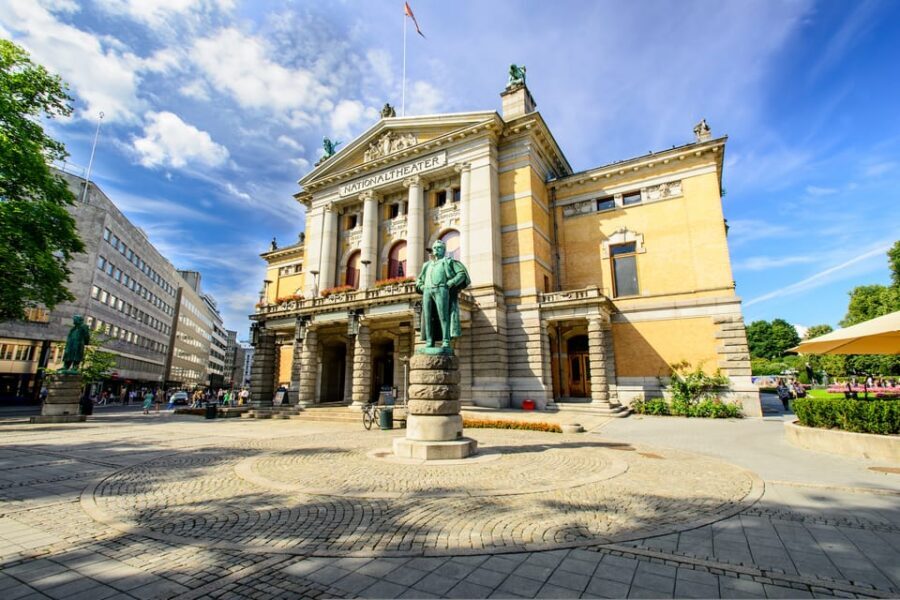
- Karl Johan Street civic parade: Cathedral, Parliament, National Theater, and the University area
Nobel Peace Center to Royal Palace views: what this 2-hour route really gives you
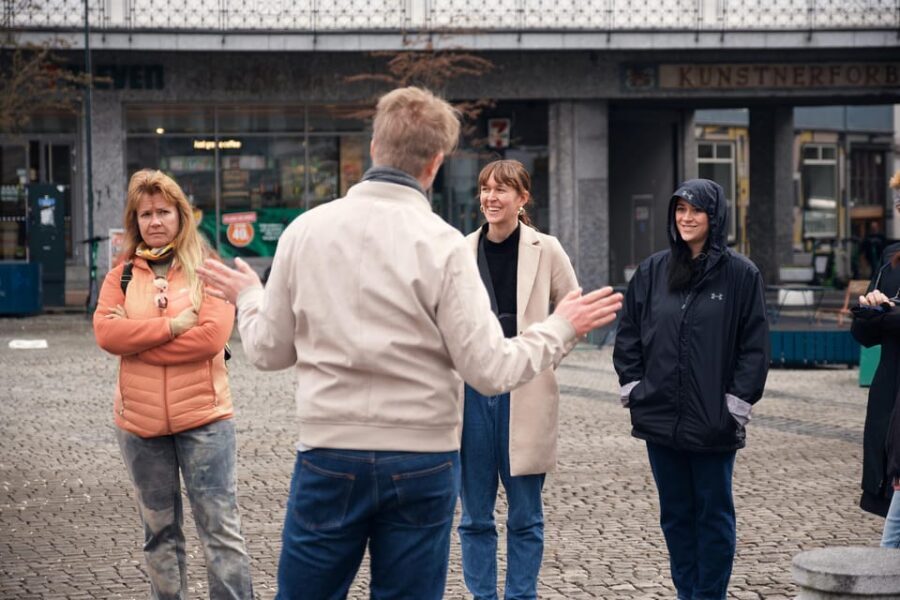
This tour is built like a storyline you can walk. You start at the Nobel Peace Center, then move from Oslo’s older core toward the city’s modern center, with the fjord always nearby as a reminder that water shapes life here. In just two hours, you get a clear sense of where Oslo’s power, culture, and identity sit.
I like that the route doesn’t jump randomly. It goes from the historic heart (fortress and old layout) to landmarks that show how Oslo grew into a modern capital (Opera House, major civic buildings). By the end, you’re near the University area with a view toward the Royal Palace, which is a smart “wrap-up” moment because it helps your brain connect city blocks you’ll see later on your own.
The practical upside is value. For $37, you’re buying time: someone else does the heavy lifting of explaining what matters, while you focus on walking the streets and noticing details. If you have only one day in Oslo, this tour can help you plan the rest of your trip with confidence.
You can also read our reviews of more walking tours in Oslo



German walking tour energy: why the guide makes or breaks the experience
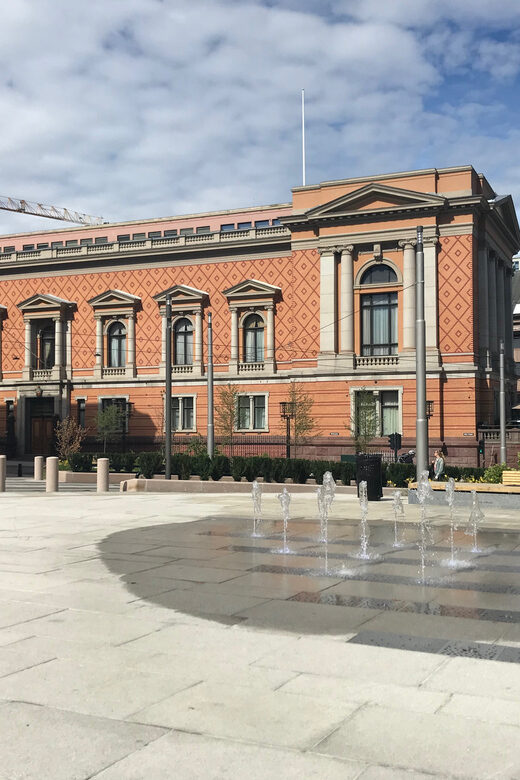
The tour is led by a live guide speaking German, and the feedback is consistently positive about how active and helpful the guiding feels. People appreciated that the guides answered questions, kept an energetic tone, and connected landmarks to everyday Oslo life—not just dates and names.
I noticed a pattern in the examples you can expect from different guides. One guide named Emily stood out for answering lots of questions and talking about language in Norway, relations with Denmark and Sweden, and the city’s development from Viking times to now. Another, Maria, was praised for mixing solid history with a respectful, well-organized style. There’s a reason this matters: when you understand the “why” behind a street or building, Oslo stops feeling like a collection of photos and starts feeling like a place.
That said, pacing is personal. One guest specifically wished the guide had mentioned photo time during stops. So if photography is your priority, watch for natural pauses and ask for a moment if you need it. It’s not a dealbreaker, just something to plan around.
Nobel Peace Center: the modern opening that puts everything else in context
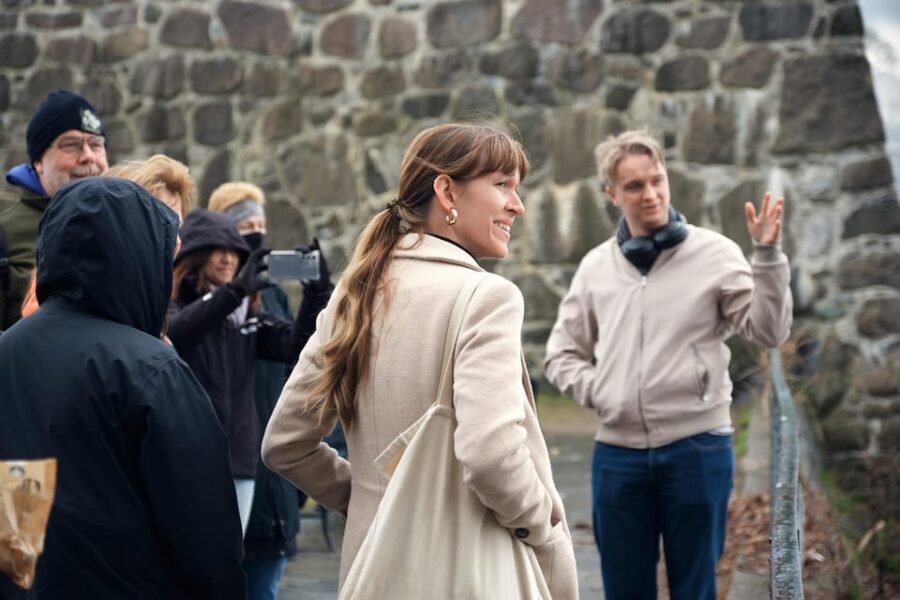
Starting at the Nobel Peace Center is a clever move. It anchors the tour in modern Oslo, where Norway’s global reputation and civic values show up in a real, visible way. From there, you’re not just walking through old stones; you’re walking through a timeline.
This is also an easy orientation point. If you’re new to the city, having a recognizable start helps you build confidence quickly. You meet near the entrance, so you don’t waste the first part hunting for the group.
In a two-hour format, the best opening moments do two jobs: set the mood and explain what you’ll see later. Nobel Peace Center does that. Then the tour pivots to the medieval story at Akershus Fortress, which makes the shift in time feel meaningful rather than random.
Akershus Fortress: how Oslo’s medieval origins shape the present
Akershus Fortress is the “older Oslo” stop, and it matters because it explains how Oslo grew up around power and protection. When you pass it, you’re looking at a defensive site that helped define the city’s early landscape and strategy.
I like that the guide doesn’t leave it vague. The tour is built to link what you see to the medieval origins of Oslo, so you can understand why the harbor and central districts sit where they do. Even if you’re not a fortress person, this is one of those stops that makes the rest of the walk easier to understand.
One useful tip for how to enjoy this kind of stop: slow down your reading. Look at lines, walls, and entrances while the guide explains what the site represented. If you treat it like a landmark you’re sightseeing instead of a story you’re learning, it’s less memorable.
Christiania Torv and Kvadraturen: the historic grid you can feel in your legs

The tour gets especially interesting when it shifts from big monuments to the layout of the city. Christiania Torv and the historic Kvadraturen district are about streets and structure, not just standout buildings.
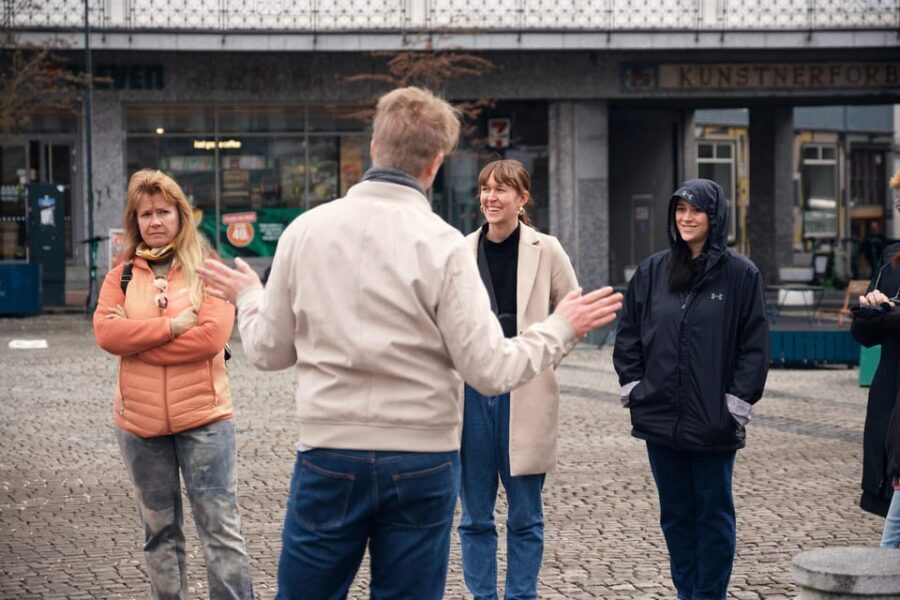
Kvadraturen is the original city layout, and walking it helps you understand Oslo’s logic in a way that maps can’t match. You feel the geometry. You notice how movement and street width influence daily life. This is also where the tour starts to feel less like sightseeing and more like “learning how Oslo works.”
If you’re a first-time visitor, this is gold. It helps you connect what you’ll see at Karl Johan Street later. It also makes it easier to navigate the central area on your own afterward—because you’ve physically walked the bones of the city.
You can also read our reviews of more city tours in Oslo





Oslo Opera House by the fjord: modern Oslo lands mid-tour
Then comes one of the most photogenic transitions in the whole walk: the Oslo Opera House. The tour frames it as a symbol of modern Oslo, and you can see why. The building’s presence by the fjord makes the city feel open and confident, like it’s looking outward.
I like this stop as a break in the story. After medieval roots and historic street layouts, the Opera House is a “today” marker. It gives your brain a rest while still keeping the theme: Oslo keeps reinventing itself.
This is also where the photo opportunities are real. The Opera House area is naturally suited to quick stops, wide shots, and skyline views. If you’re short on time in Oslo, spending your energy on this landmark mid-walk is a smart use of your two hours.
Karl Johan Street: the main avenue tour that ties civic Oslo together
Karl Johan Street is Oslo’s main thoroughfare, and walking it during the tour gives you a front-row view of what the city treats as important. This is where the tour stacks major sights in a sequence that’s easy to follow.
Along the way, you’ll pass:
- Oslo Cathedral
- Parliament building
- National Theater
- University of Oslo’s historic Aula
What makes this section work is the guide’s linking of government, culture, and education. You’re not just seeing buildings; you’re learning how the city organizes authority and public life. That context is what turns “I walked past it” into “I get why it’s there.”
A quick practical tip: Karl Johan Street can feel busy depending on the day. Use the tour stops as your anchors. If you step out a little to get a cleaner shot, just make sure you’re back in the group before the guide moves on.
Wrapping up near the University: getting your bearings fast
The tour ends near the University of Oslo, and you’ll get a picturesque view toward the Royal Palace. This is a smart finish because it gives you a geographic mental image you can use later.
I like endings like this. They reduce the post-tour confusion where you think, Great, I saw things, but where are they relative to each other? A view toward the Royal Palace helps your brain map the center of Oslo quickly.
This is also the moment to ask any last questions. The tour format tends to be tight, so if something clicked in the middle—Viking-era development, the district layout, how Norway’s modern identity shows up in landmarks—this is often your best chance to clarify.
How much walking is involved, and what to wear
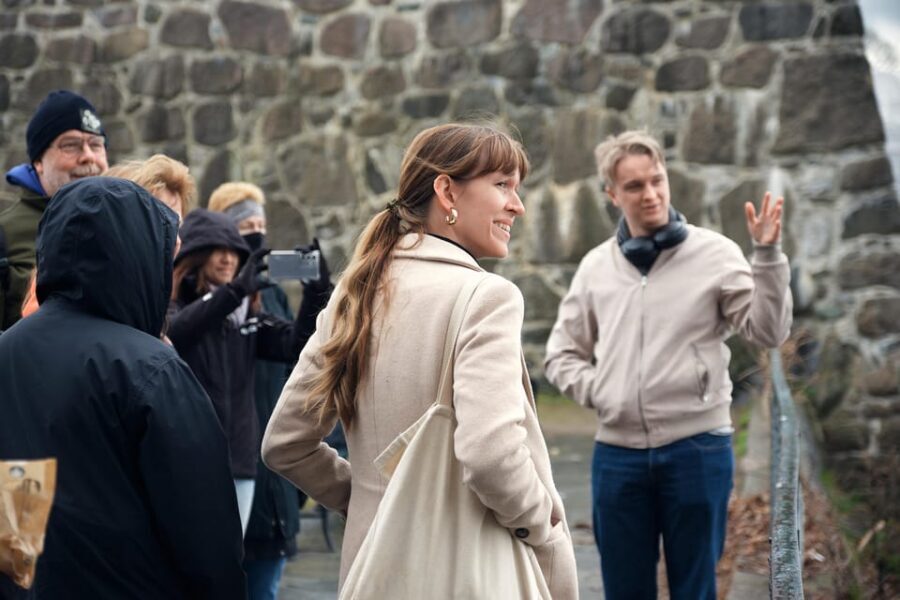
Expect a moderate walking pace for about two hours. That usually means you’ll be on your feet for the full duration, moving between stops rather than waiting around for long.
Weather can be a factor. The tour is not canceled due to bad weather except for severe storms, so you should check the forecast and dress accordingly. On chilly winter days, one guest noted a stop near markets for warm chocolate, which is exactly the kind of practical comfort win you hope for when it’s cold.
My advice: dress like you’re going to be outside the whole time, because you basically are. If you run hot, bring layers you can adjust. If you run cold, prioritize gloves and a warm outer layer over looking stylish.
Price and value: is $37 worth it for Oslo highlights?
At $37 per person for a two-hour guided walk, the value comes from how much information and context you get per minute. In a city where you can easily spend your first day “collecting landmarks,” this tour helps you do better than that by explaining what each stop represents.
It’s also a good value when you’re traveling solo or with limited time. One review described a scenario where the person was the only tourist in the group, which naturally led to a more personal Q-and-A experience. Even if you’re not guaranteed that setup, the overall feedback emphasizes that guides use the time actively and answer questions.
If you’re the type who likes to plan your next moves after you see a place once, this is the kind of tour that pays off. You’ll leave with a clearer sense of what’s worth a return visit and what you can skip unless you’re into specifics.
Who should book this tour (and who might not)
This works best if you want a guided “orientation” walk through Oslo’s central highlights. It’s ideal for:
- First-time visitors with one day or a short stay
- Travelers who prefer learning on foot rather than reading plaques
- Anyone who wants a German guide and a structured route
- People who like architecture and civic buildings, plus a bit of story behind them
It may be less ideal if you:
- Need frequent long photo breaks and don’t like moving on quickly
- Have very limited stamina and need a low-step, minimal-walk experience
- Prefer tours in another language (the guide is German)
Should you book the Oslo City Highlights Walking Tour?
I’d book it if you want to get your bearings fast and understand Oslo beyond the postcard version. The combination of Nobel Peace Center, Akershus Fortress, Christiania Torv/Kvadraturen, the Opera House, and the Karl Johan Street civic stretch is a strong set of stops for a short, focused walk.
I’d think twice only if your biggest priority is slow sightseeing with unlimited photo time. In that case, you can still enjoy the tour, but you’ll want to be proactive about asking for a quick pause.
If you want a practical first look at Oslo that helps you plan the rest of your trip, this is a solid way to spend two hours.
FAQ
Is the Oslo City Highlights Walking Tour offered in German?
Yes. The live tour guide speaks German.
How long is the tour?
The duration is 2 hours.
Where do we meet the guide?
Meet your guide near the entrance of the Nobel Peace Center.
What’s the price per person?
The price is $37 per person.
What landmarks are included on the walk?
You’ll see stops such as the Nobel Peace Center, Akershus Fortress, Christiania Torv, the historic Kvadraturen area, Oslo Opera House, and along Karl Johan Street you pass the Cathedral, Parliament, National Theater, and the University of Oslo’s Aula.
Is there moderate walking required?
Yes. The tour requires a moderate amount of walking.
What if the weather is bad?
The tour is not cancelable due to bad weather except for severe storms. Check the forecast and dress appropriately.
Is the tour wheelchair accessible?
Yes, it is listed as wheelchair accessible.
How good is the overall rating?
It has a 4.8 rating based on 197 reviews.
Is there a cancellation option?
You can cancel up to 24 hours in advance for a full refund.