REVIEW · OSLO
Oslo: Best of Oslo Walking Tour
Book on GetYourGuide →Operated by Vox City International · Bookable on GetYourGuide
Two hours, and Oslo clicks into place. This walking tour strings together the city’s top landmarks and old-world corners, plus a follow-up audio app so you can keep going at your own pace. You’ll walk through Sentrum on the Skagerrak waterfront and hear the stories that explain why Oslo feels both modern and stubbornly historic.
I really like the live guide commentary and story-driven approach. Guides such as Minji, Amelia, and Olaf are singled out for clear explanations, a steady pace, and helpful recommendations (including where to grab coffee). I also love that you get an included app with a curated route, which turns this short walk into a longer Oslo orientation you can revisit later.
One possible drawback: you’re outside the whole time. On snowy or icy days, footing can be tricky, and you won’t get ticketed access to sights since entry to attractions isn’t included. If mobility is a concern, plan for winter conditions and lots of standing while you listen.
In This Review
- Key highlights you’ll actually care about
- Getting your bearings on Oslo’s essentials in just two hours
- Meeting points and what to do before you start
- Karl Johan, Parliament, and the city’s political heartbeat
- The Opera House and the Nobel Peace Award story that puts Oslo on the map
- Christiania: the older city center and why the name keeps changing
- City Hall, the Tiger nickname, and Oslo’s symbolism game
- Aker Brygge and Tjuvholmen: the waterfront payoff
- The included audio app: your self-guided second lap around Oslo
- Price and value: is $38 fair for this kind of tour?
- Practical tips that make the walk more fun
- Who this Oslo walking tour suits best
- Should you book Best of Oslo Walking Tour with Vox City International?
- FAQ
- How long is the Oslo walking tour?
- How much does the tour cost?
- Where do I meet if I book in English?
- Where do I meet if I book in German?
- What languages are the tours offered in?
- What’s included in the tour price?
- Is entry to attractions included?
- Are public transportation tickets included?
- How do I use the included app?
- Is the tour refundable if my plans change?
Key highlights you’ll actually care about
- Karl Johan to the Parliament zone: big civic landmarks and the main street vibe in a tight route
- Nobel Peace Award story time: including why it’s tied to Oslo and not just Sweden
- Christiania and the changing city-name era: a simple way to understand Oslo’s older core
- Aker Brygge and the alternative waterfront feel: modern Oslo energy after the historic stops
- Included audio app for round two: download the route and keep exploring key quarters on your schedule
Getting your bearings on Oslo’s essentials in just two hours
If you’re trying to build a first-day game plan in Oslo, this tour does a smart thing: it focuses on the city-center spine and the landmarks that shape how Oslo functions. You don’t need to guess where government buildings sit, where the main cultural attractions are, or how the waterfront fits into everyday life. The walk gives you a map made of stories.
At 2 hours, it’s short enough to do early without wasting your whole day. It also helps you avoid the common first-visit problem in Oslo: you get around, but you don’t fully understand what you’re looking at. Here, the guide’s job is to connect the dots—between Parliament, royal institutions, older city neighborhoods, and newer waterfront developments.
And yes, this tour is priced at $38 per person. That sounds like a “tour tax,” until you factor in that you’re paying for two things that are hard to DIY: a tight walking route plus a guide who explains what matters (and what doesn’t) fast.
You can also read our reviews of more walking tours in Oslo



Meeting points and what to do before you start
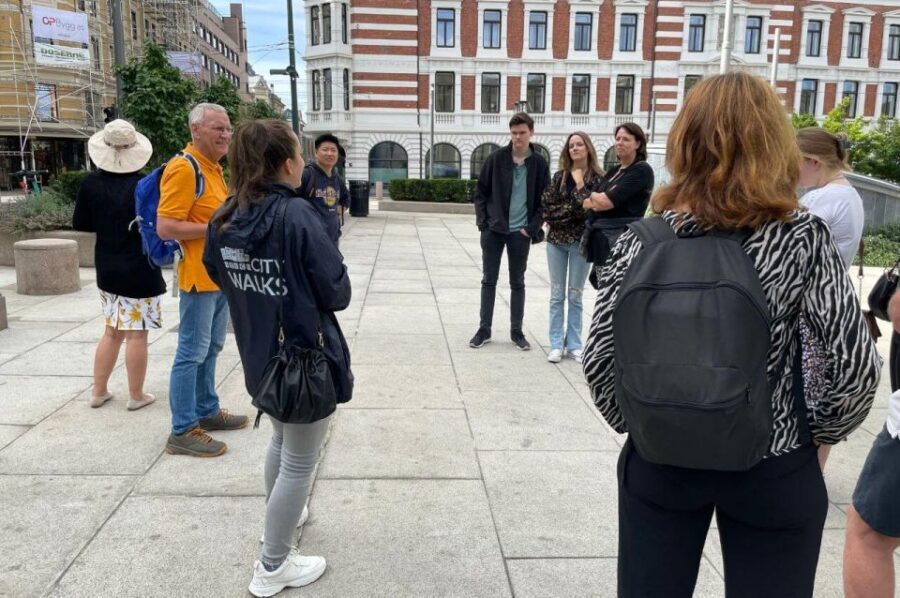
This tour runs with two starting options, and the meeting point depends on your language choice.
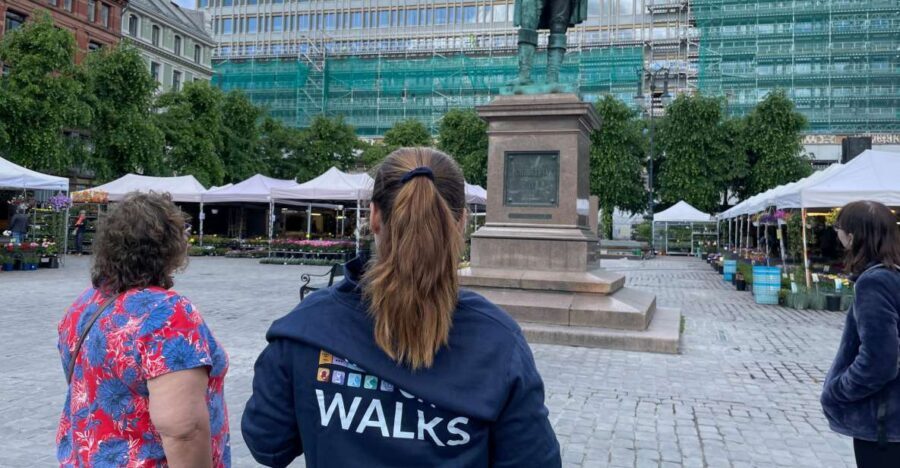
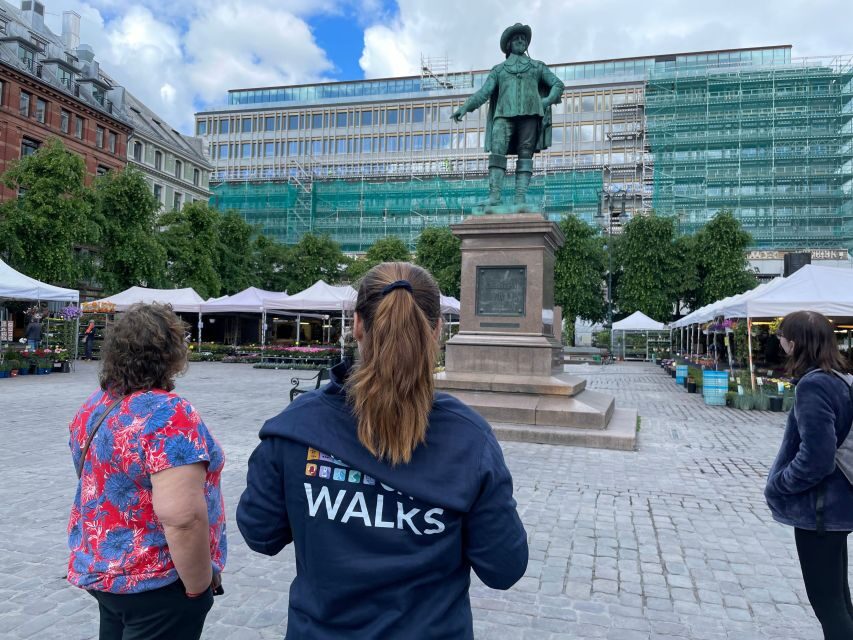
- For the English tour, meet near the statue of P.A. Munch by the Faculty of Law building entrance at University Aula, Karl Johan Str. 47.
- For the German tour, meet at the Nobel Peace Center, Brynjulf Bulls plass 1.
The tour information also stresses arriving about 5 minutes early. That’s not just polite—it keeps you from missing the departure, especially when meeting points can be busy and weather can slow people down.
Once you’re on the street, the rhythm is straightforward. You’ll start with central Oslo sights, then move through older quarters and end up toward the waterfront areas. Most stops are “see and hear,” not “enter and tour,” so you’ll want to save major museum time for later (if you care about museums).
Karl Johan, Parliament, and the city’s political heartbeat
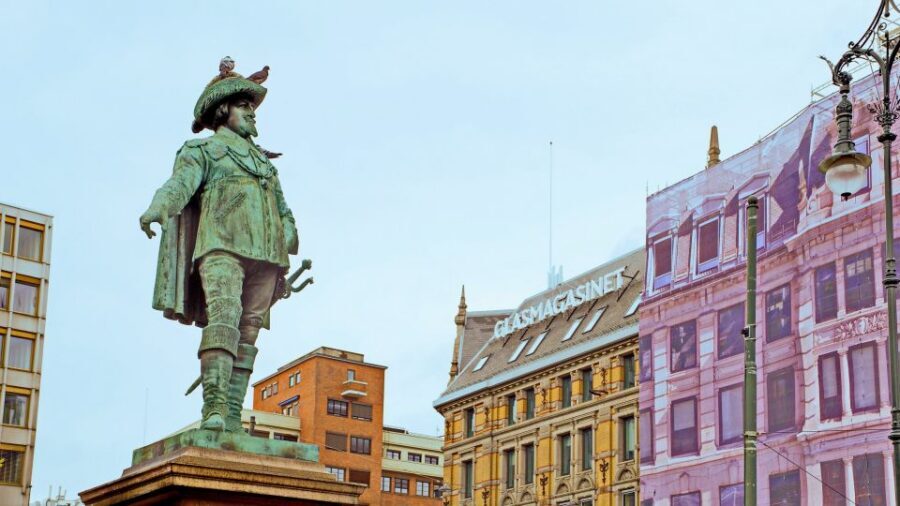
One reason this walk works well is how it anchors you in Sentrum, Oslo’s diverse city center along the Skagerrak. Right away, you’re guided into the part of Oslo that feels official and organized: big institutions, ceremonial spaces, and streets that structure the city.
You’ll pass by or stop for commentary around the Norwegian Parliament and landmarks connected to the government district. The guide’s focus isn’t just naming buildings—it’s explaining how Norway’s civic identity shows up in the city’s architecture and public spaces. You also hear stories that help explain how Oslo earned certain nicknames and reputations, so the city stops feeling like a set of photos and starts feeling like a place with a personality.
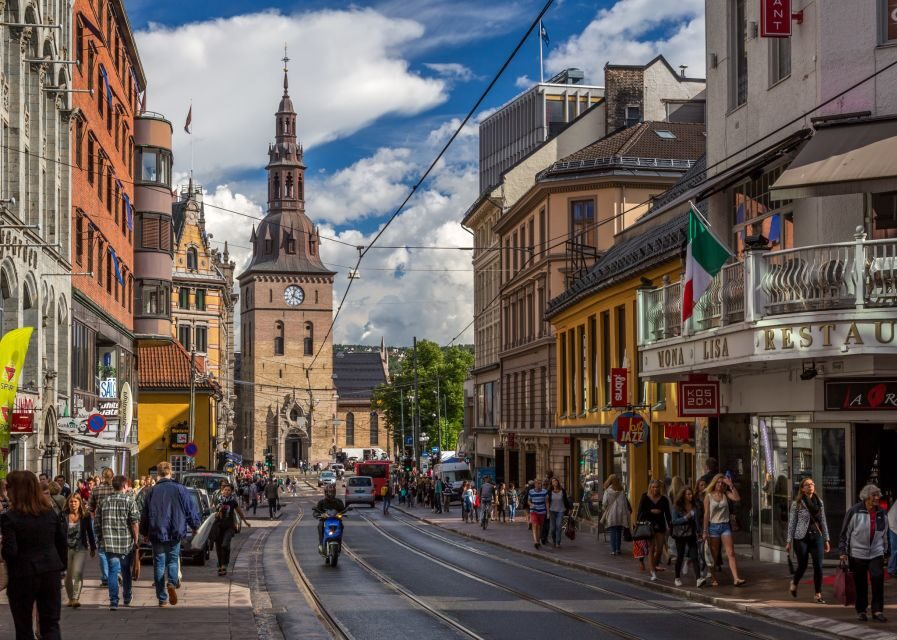
Then comes one of the most useful practical sights for planning: Karl Johan Street. You’ll hear context around it while walking past major highlights. For you, this matters because Karl Johan becomes your reference point all trip long. Once you understand where it runs and what it connects, finding cafés, museums, and transit options is easier.
Along the way you’ll also see the cultural landmarks in this central zone—things like the National Theater and the grand presence of the Grand Hotel Oslo. Even if you don’t go inside, the exterior “why it’s here” explanations help you understand Oslo’s layout: civic life and culture sit close together.
The Opera House and the Nobel Peace Award story that puts Oslo on the map
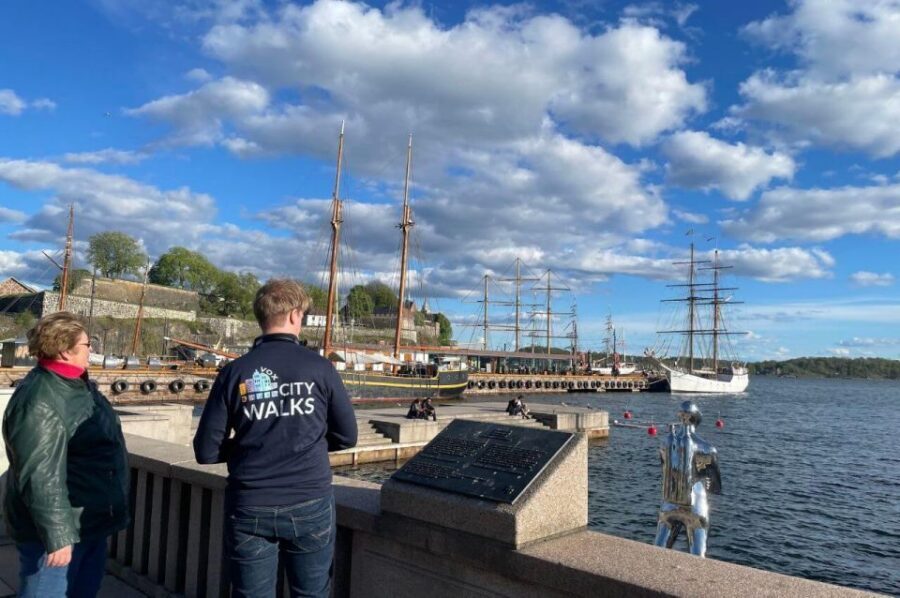
Oslo’s modern face shows up dramatically near the waterfront. During the tour, you’ll stroll past the Norwegian Opera House, described as symbolic—almost like a pearl in the ocean. That’s the kind of image that helps you remember what you’re looking at, but the guide also connects it to Oslo’s identity as a city that balances tradition with confident modern design.
Then you get to one of the tour’s signature story themes: the Nobel Peace Award. The tour highlights the idea that this Nobel Peace Award story is tied to Oslo in a way that’s unique—called out as the only one outside of Sweden. Even if you already know the Nobel brand, hearing how the story lands in Oslo gives you a better sense of why the city invests in peace and international recognition.
You also pass the zone around the Nobel Peace Center (depending on your start point). For many visitors, that’s a helpful shortcut: it turns a museum-likely stop into a meaningful part of the city narrative rather than just another building.
And just like that, Oslo stops being just pretty streets. It becomes a city with an international role you can point to with your own eyes.
Christiania: the older city center and why the name keeps changing
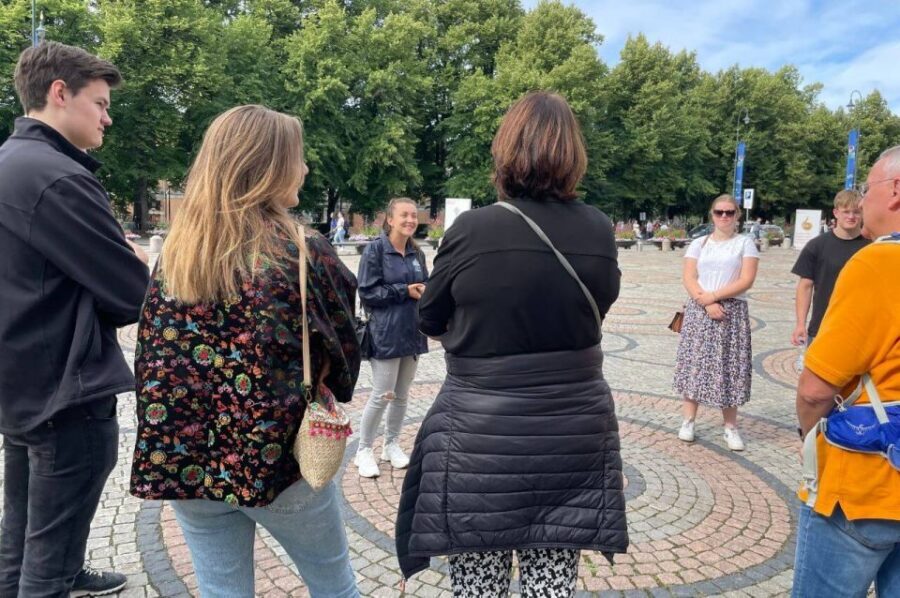
Here’s where the tour earns its points for history without making you sit through a lecture. You’ll visit Christiania Torv, tied to the historic center of Oslo. The guide frames Christiania as the older heart of the city, which matters because it explains why parts of Oslo feel older in spirit even if the buildings you see today are from later eras.
A key highlight you’ll hear about: Oslo’s name has changed multiple times over roughly the last 300 years. That might sound like a trivia tidbit, but it helps you interpret what you see. When street names and older place references use older forms, you’ll understand what you’re reading and hearing rather than wondering if you missed some background.
Along this Christiania section, you’ll also pass places that help you visualize daily life through time: the Oslo Cathedral, Stortorvet Gjestgiveri, and parts of Kvadraturen. Even if you don’t go inside anything, these are the kinds of sites that shape a visitor’s mental map. You’ll start to recognize areas that feel ceremonial, religious, or market-adjacent.






City Hall, the Tiger nickname, and Oslo’s symbolism game
Oslo has a habit of being clever with symbolism, and this tour leans into that. You’ll see Oslo City Hall, plus the Fire Tower and elements associated with the city’s nickname as the Tiger City. The tour even calls out the Tiger Sculpture, which is exactly the kind of thing you’d miss on your own unless you knew to look.
Why does this matter for you? Because Oslo is full of small visual clues: sculptures, towers, and street-level features that quietly tell you what locals value. A guided walk turns those details from random objects into meaning you can carry around.
You’ll also see other civic and ceremonial references connected to the city’s older administrative identity—such as the Gamle rådhus and the Oslo Second City Hall. Even without an in-depth deep-dive, it gives you a feel for how Oslo evolved its centers over time, not just how it grew outward.
This section is also a strong moment for asking questions. In recent tours, guides have been praised for answering in a clear, human way and staying at a pace that doesn’t feel rushed. If you like to know how things connect, this is the part where you’ll get the most from your questions.
Aker Brygge and Tjuvholmen: the waterfront payoff

After the older core and civic landmarks, the walk shifts toward the waterfront vibe—an area that many visitors struggle to understand if they only arrive for photos. Here, you’ll get the Aker Brygge feel described as Oslo’s alternative quarter. That phrasing matters: this isn’t just the postcard marina; it’s where the city feels more like a living scene—shops, food, and the easy flow of people moving around.
You’ll also encounter Tjuvholmen, which pairs well with Aker Brygge for a sense of the waterfront’s different moods in one walk. Even if you don’t stop long, the guide’s framing helps you understand why this area feels important in Oslo’s daily rhythm.
And because this is still a city-center tour, you’re not ending out in the wilderness. The waterfront finish ties back to the rest of what you saw: civic areas, cultural buildings, older quarters, and then the modern waterline.
The included audio app: your self-guided second lap around Oslo
One of the biggest practical perks here is that you don’t just finish a walk and go home. The tour includes access to a sightseeing mobile app. After the guided portion, you can download and continue with a curated audio-guided route through key main sights and quarters.
The self-guided list includes stops like:
- Frogner Stadion
- Norwegian Parliament
- Trinity Church
- Karl Johan’s monument
- Grensen
- Aamodt Bridge
This matters because it turns the tour into a two-stage plan. First, you get the guided orientation. Then, you pick what to revisit, based on what hooked you. If you’re the kind of traveler who likes to re-walk streets in better light or with fewer people, the app becomes your tool for choosing.
It’s also a low-stress way to keep your city learning going without adding another guided booking. You can do it in chunks: a 30-minute audio walk today, another segment tomorrow.
Price and value: is $38 fair for this kind of tour?
For $38 per person and 2 hours, you’re paying for three main things:
1) a curated walking route through central Oslo
2) a live guide who connects landmarks to stories and local context
3) an included app to extend the experience after the walk
What’s not included is important for budgeting: entry to attractions isn’t part of the price. So if you’re expecting museums to be included, you’ll need to plan those separately.
Also, public transportation tickets aren’t included. That usually means you’ll either start from the city center on foot connections, or you’ll transit independently before and after. For many people, that’s fine because the route focuses on the dense core where walking makes sense.
Is the price worth it? In my view, yes—especially if it’s your first day. You’re buying speed and clarity. If you already know Oslo deeply and have a tight interest in specific museum collections, you might not need a guided overview. But for most first-timers, this is a smart “get oriented” investment.
Practical tips that make the walk more fun
Here are the small, real-life things that can turn a good tour into a great one.
First: dress for your sidewalk. Oslo weather can change fast, and the tour is mostly walking outdoors. One review note even points out that sidewalks in winter aren’t always cleared. If you’re visiting in cold months, wear shoes with solid grip.
Second: arrive early and listen for updates at the meeting point. Guides have been praised for starting on time and using clear communication, even when people arrive late. Still, you’ll get the best experience by being there before the group moves.
Third: ask for food and coffee cues. One guide recommendation that pops up: W.B. Samson for cinnamon buns. That’s not random. A good guide tells you where locals actually linger, not just where tourists wander.
Fourth: use the app after. The app route includes additional major sights, so your guided walk becomes a practical starting point for your later self-guided wandering.
Who this Oslo walking tour suits best
This tour fits best if you want:
- a strong first-day orientation
- stories behind landmarks like Parliament, the Opera House, and Christiania
- an easy way to plan what to revisit later
- a guided route that doesn’t require museum tickets to feel complete
It’s also a great match if you enjoy architecture and symbolism but don’t want to spend half your day inside.
If you only want to enter a handful of specific museums, this might feel like too much “see and hear” and not enough “access.” In that case, pair it with one museum day instead of expecting the tour to cover everything.
Should you book Best of Oslo Walking Tour with Vox City International?
I’d book it if you want a clean, efficient introduction to Oslo’s layout and identity. It’s short, landmark-focused, and structured enough to help you plan the rest of your trip. The guide-driven stories (including the Nobel Peace Award angle and the Tiger City symbolism) give you context that most people miss when they wander without a route.
Skip it only if you already have a very detailed Oslo plan and you’re mainly chasing ticketed museum time. Otherwise, this is the kind of tour that helps you feel at home faster—then lets you spend the rest of your days choosing what you want to do next.
FAQ
How long is the Oslo walking tour?
The tour lasts about 2 hours.
How much does the tour cost?
The price is listed as $38 per person.
Where do I meet if I book in English?
For the English tour, meet near the statue of P.A. Munch by the Faculty of Law building entrance at University Aula, Karl Johan Str. 47.
Where do I meet if I book in German?
For the German tour, meet at the Nobel Peace Center at Brynjulf Bulls plass 1.
What languages are the tours offered in?
The live tour is available in English or German.
What’s included in the tour price?
Included are the guided walking tour, live commentary in English or German, and a sightseeing mobile app.
Is entry to attractions included?
No. Entry to attractions is not included.
Are public transportation tickets included?
No. Public transportation tickets are not included.
How do I use the included app?
Scan the QR code on your voucher to access the sightseeing app.
Is the tour refundable if my plans change?
The tour offers free cancellation up to 24 hours in advance for a full refund.