REVIEW · OSLO
City Sightseeing Oslo Hop-On Hop-Off Bus Tour
Book on Viator →Operated by City Sightseeing Ltd - Europe · Bookable on Viator
Oslo’s skyline looks different from a bus window.
This City Sightseeing Hop-On Hop-Off loop is a simple way to cover a lot of Oslo in about 90 minutes, then stretch it into a full day or two with 24 or 48-hour flexibility. Two things I like: the open-top double-decker setup for classic views, and the fact that audio commentary is offered in 8 languages, with English included and free headphones available.
One drawback to keep in mind is that the experience can depend on audio quality and timing. When it works, it’s a great overview. When it doesn’t, you can end up feeling like you paid for a very expensive ride with gaps in information.
In This Review
- Key things to know before you ride
- Why this Oslo hop-on hop-off loop is a smart first move
- Price and pass value: is $46.60 worth it?
- Route overview: from the National Theatre to museums, ports, and the Opera
- Stop-by-stop: what each major area gives you (and what to watch for)
- Stop 1: National Theatre / Royal Palace / Karl Johans Gate area
- Stop 2: Vigelandsparken (Vigeland Sculpture Park and Oslo Museum)
- Stop 3: Folkemuseet (Norwegian Museum of Cultural History)
- Stop 4: Bygdøynes (Kon-Tiki Museum / FRAM / Norwegian Maritime Museum)
- Stop 5: Folkemuseet (Norwegian Museum of Cultural History) again
- Stop 6: Hjortnes (Color Line Terminal Hjortnes)
- Stop 7: Royal Caribbean & MSC Cruise Gate (Filipstad Cruise Terminal)
- Stop 8: Tjuvholmen (Alternative Stop)
- Stop 9: Oslo Cruise Terminal / Akershus Fortress
- Stop 10: Vippetangen (Oslo Ferry Port / DFDS area)
- Stop 11: Narvesen Havnelageret (Langkaia)
- Stop 12: Operagata 4 (Opera House / MUNCH Museum)
- Stop 13: Back to the National Theatre / Royal Palace / Karl Johans Gate area
- Audio guide: the part you should test early
- Timing, rain, and bus comfort: good in most weather, not perfect
- Who should book this City Sightseeing Oslo tour?
- Should you book it?
- FAQ
- How long is the Oslo hop-on hop-off bus tour?
- How often do the buses depart?
- Where is the first stop, and when does it start?
- Where can I board the bus besides the National Theatre?
- Can I hop on and off multiple times?
- Is there an English audio option?
- Are museum entry fees included?
- Is Wi‑Fi included on the bus?
- When does the tour operate each year?
- Do I need to exchange a voucher before boarding?
Key things to know before you ride
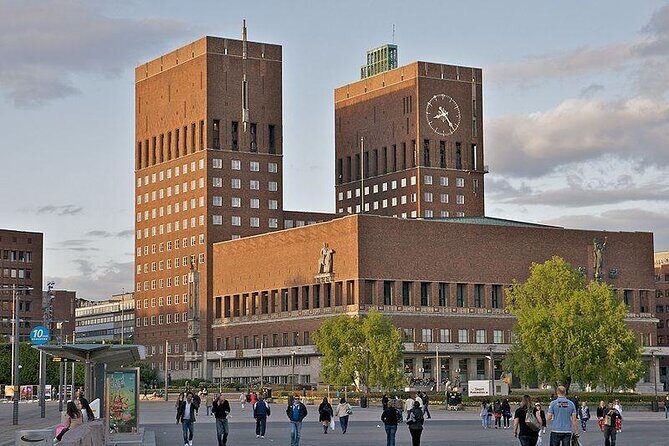
- Frequent departures: buses run about every 30 minutes, which helps when you’re hopping off for museums.
- Multiple sight-focused stops: from the Royal Palace area to Vigeland, Bygdøynes museums, and the Opera/MUNCH area.
- Cruise-ship friendly route: stops include Oslo Cruise Ship Terminal and other nearby port areas.
- Two audio modes: In-Seat Modules or Bring Your Own Device (BYOD), with headphones/adapters available on board.
- 24/48-hour hop-on flexibility: you can get off, wander, and re-board as much as the pass allows.
Why this Oslo hop-on hop-off loop is a smart first move
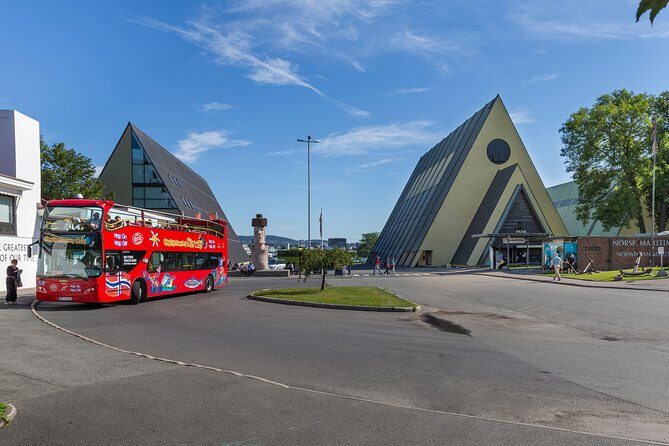
If you only have one shot at seeing Oslo, this tour is built for that. The route is designed around major “I should see that” landmarks and museum districts, so you can get your bearings fast and then decide what’s worth a closer walk.
I like the way it gives you structure without locking you in. You do the loop, you listen along the way, and then you get to choose where to spend your time once you’ve seen the city’s geography from the bus. That flexibility is the core value here, especially in a city where some top sights are spread out.
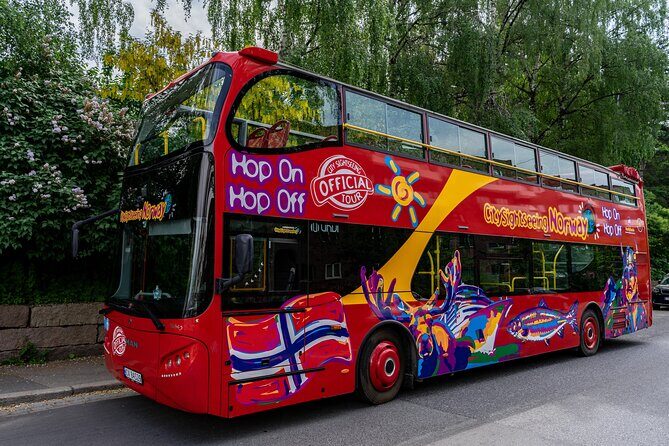
The bus itself is an open-top double-decker, so on a decent day you’ll get that classic Oslo panorama feeling. And even in lousy weather, the whole point is that you can stay rolling while you tour.
You can also read our reviews of more city tours in Oslo


Price and pass value: is $46.60 worth it?
At $46.60 per person, this isn’t a cheap shortcut. But the value makes sense if you use the pass like a plan, not like a random bus ride.
Here’s the math that matters to you:
- The loop is about 90 minutes, and buses run every 30 minutes.
- Your ticket gives 24 or 48 hours of hop-on hop-off access (so you’re not paying again to re-board after a museum stop).
- Entrance fees for attractions are extra, so you’re mainly paying for transport + multilingual audio + access to the right stop locations.
If you’re spending your time in Oslo hitting just two or three of the big stops—like Vigeland, Bygdøynes museums, and the Opera/MUNCH area—the tour can act like a paid map that also gets you around efficiently. If you’re the type who wants to walk most places and only needs one quick overview, you may find it feels pricier than expected.
Also note the tour season: it’s typically June–October (and it doesn’t run on 17 May). If you’re traveling outside that window, you’ll need to plan differently.
Route overview: from the National Theatre to museums, ports, and the Opera
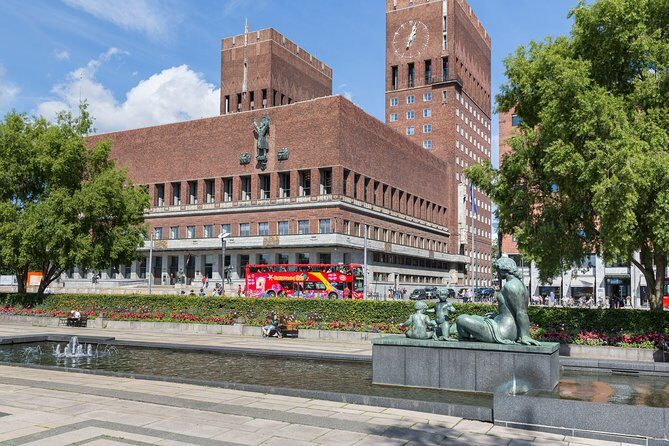
The first stop is at the National Theatre on Karl Johans Gate, with the first departure at 10:00 and the last departure at 4:00 from Stop 1. You’ll see the same core path repeat, with extra stops along the harbor side and museum districts, then back toward the center.
What makes this route practical is that it covers both sides of Oslo’s “two-speed” city structure. You get the palace/theatre/central area vibe, then you move into parks and museum neighborhoods, then you catch the waterfront/port zone, then you swing back toward the arts area near the Opera House.
You don’t have to pick one section in advance. You can do the whole loop for orientation and then return to the places that pull you in.
Stop-by-stop: what each major area gives you (and what to watch for)
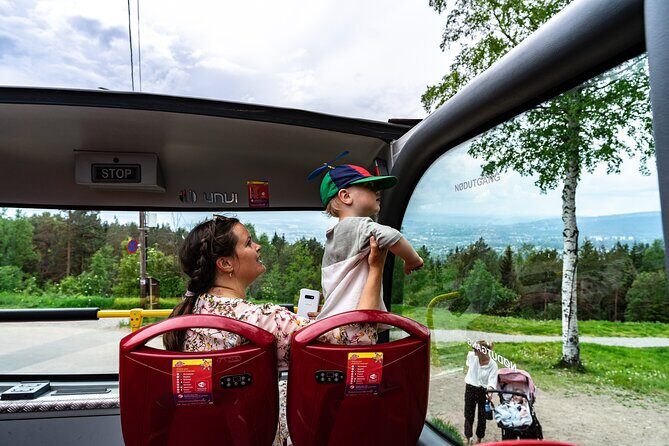
Below is how the tour pieces work as an itinerary, not just a list. Use it like a choose-your-own-adventure guide.
Stop 1: National Theatre / Royal Palace / Karl Johans Gate area
This is your anchor point. It’s where the route starts and also the area you’ll likely connect to most easily on foot later.
If you want an easy beginning, do the first loop without hopping off here. Let the bus take you forward while you learn the stop spacing and the rhythm of the route. Then, on your return, you can decide if the Royal Palace area is worth the walk-and-photos stop.
Practical consideration: since it’s also the main boarding area, this stop can be busier, especially around peak arrival times.






Stop 2: Vigelandsparken (Vigeland Sculpture Park and Oslo Museum)
This is one of the most straightforward “hop off and spend time here” stops. It’s also a great place to get a break from riding.
I like this stop because it gives you a clear outdoors payoff. If the weather cooperates, you’ll benefit more from getting off here than you would at a more purely transit-oriented stop.
Watch for timing: if you’re on a tight schedule, make sure you’re back at the curb in time for the next bus. The tour runs every 30 minutes, so missing one departure can stretch your visit.
Stop 3: Folkemuseet (Norwegian Museum of Cultural History)
This stop is a strong choice if you’re leaning toward culture and history in a museum format. It’s also useful as a “plan B” stop when the city weather makes outdoor wandering less fun.
If you’re doing a half-day only, pairing Vigeland with Folkemuseet gives you a balanced day: park views plus museum time.
Stop 4: Bygdøynes (Kon-Tiki Museum / FRAM / Norwegian Maritime Museum)
This is where you shift into the museum cluster that many people think of when they picture “Norway and the sea” themes.
Even if you don’t want to go inside multiple museums, this stop is valuable because it puts you in position to choose based on what you like once you’re there. The tour makes it easy to hop off, walk between nearby stops (in this general area), and then come back later if you want a second visit.
One caution: multiple museums in one area can turn your “quick look” into a longer stop. Build in cushion, because the bus schedule still moves.
Stop 5: Folkemuseet (Norwegian Museum of Cultural History) again
This repeat stop matters because it gives you another chance to re-board around the mid-route loop. If you miss the bus the first time or you want to extend a museum visit, this extra connection helps.
Stop 6: Hjortnes (Color Line Terminal Hjortnes)
This stop is port-adjacent. It’s useful if you’re docking, transferring, or you’re curious to see parts of the harbor zone.
It’s not necessarily the “must-see” stop for everyone, but it’s helpful for making sure the route connects to transport hubs.
Stop 7: Royal Caribbean & MSC Cruise Gate (Filipstad Cruise Terminal)
Another cruise/harbor connection point. If you’re in Oslo for a day from a ship, this is part of why hop-on hop-off tours can work well: they reduce the friction of getting from ship areas to attractions.
Stop 8: Tjuvholmen (Alternative Stop)
This is an alternate routing stop. Translation: your exact boarding experience can vary a bit depending on how the route is operating that day.
If your plan is time-sensitive, keep your eyes open for staff guidance and double-check which branded bus you’re boarding.
Stop 9: Oslo Cruise Terminal / Akershus Fortress
This is your big “fortress time” connection. Akershus Fortress is explicitly part of the stop plan, so if that’s on your list, it’s a natural hop-off target.
If you’re doing a first loop, I’d keep this in mind for your second pass. Fortress areas often reward walking slowly and stopping for photos, and you’ll want time.
Stop 10: Vippetangen (Oslo Ferry Port / DFDS area)
This is another waterfront transport connection. It helps you avoid “I’m stuck on the harbor side” problems.
It’s also a reminder that the route isn’t only sightseeing. It’s built to keep you moving through areas where people are coming and going.
Stop 11: Narvesen Havnelageret (Langkaia)
This is yet another harbor-zone stop that can help when your day mixes museums, walks, and port areas.
It’s especially useful for keeping your day fluid if you plan to do a short stop and then relocate quickly.
Stop 12: Operagata 4 (Opera House / MUNCH Museum)
If you want one clean “arts district” finale, this is it. It’s close to the Opera House area and the MUNCH Museum connection.
I like this stop as a last or near-last stop because it feels like a payoff: after museums and harbor zones, this area can make the day feel complete.
Stop 13: Back to the National Theatre / Royal Palace / Karl Johans Gate area
The route loops back. This is your moment to decide what gets a second visit on your 24 or 48-hour pass.
Audio guide: the part you should test early
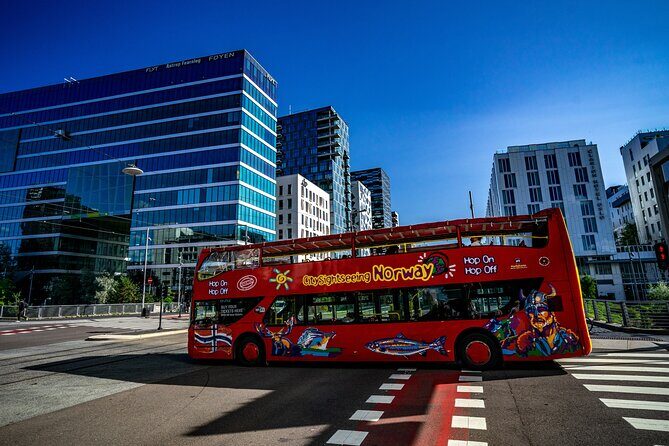
Here’s the straight truth: the audio guide is supposed to be the reason this tour feels smart. And for many people, it is. But the quality seems inconsistent.
The tour offers 8 languages and you can use either:
- In-Seat Modules, or
- BYOD (Bring Your Own Device), where you pair via the system and listen using your own phone/headset.
The operator states you can get free headphones, and that there are borrowable headsets with adapters available on board. That’s helpful if you didn’t bring anything.
On the practical side, do this early:
- Get on and start listening right away.
- Adjust volume immediately.
- If anything sounds wrong—static, low volume, or gaps—move seats or switch to the other audio option if possible.
Some riders reported issues like poor volume, audio cutting out after certain stops, and confusion about which channel to use. That’s fixable if you troubleshoot fast, but it’s better to spot it in the first 10 minutes rather than halfway through the day.
Timing, rain, and bus comfort: good in most weather, not perfect
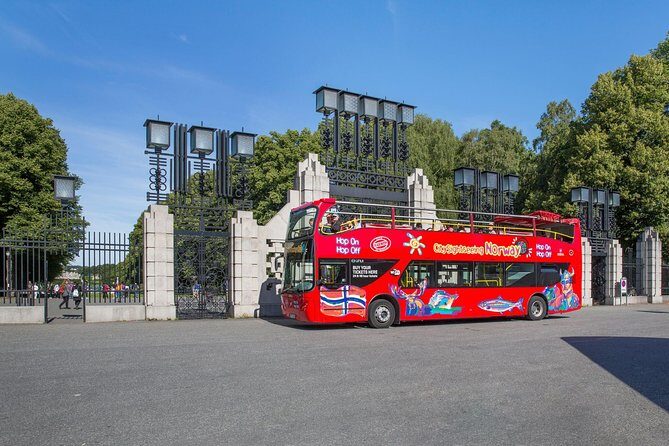
The bus runs in all weather, and the open-top style can be great when the skies behave. The reality is Oslo weather can flip quickly.
Some people found the bus relaxing, especially when it was raining and they could stay under the bus cover. That’s the upside: you’re not forced into cold wet waits at each stop.
But there are also hardware issues to think about. Reports include rain covers/blinds that didn’t sit securely in heavy rain, plus problems related to audio equipment working reliably. So pack like you’re going outside at some point: a rain layer and shoes you can walk in.
Timing is another real-world factor. The tour is listed as running every 30 minutes, but there have been cases where the bus fell behind or skipped a stop during busy cruise days. If you’re trying to catch a specific museum entry time, build in slack.
Finally, note the last departure from Stop 1 is 4:00. That means an early plan matters. Don’t count on a late-day loop that stretches into the evening.
Who should book this City Sightseeing Oslo tour?
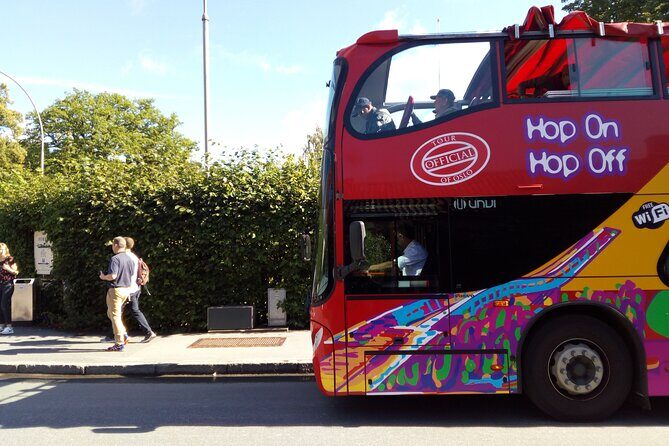
I’d put this tour on your short list if you match one of these situations:
- You’re in Oslo for a day or two and you want a quick overview before choosing your walking routes.
- You’re mixing museums with waterfront sights and you don’t want to fight transit transfers.
- You’re arriving via cruise and want a simple connection from port areas to the major sights.
- You like having commentary while you travel, even if you’re going to do most of the walking on your own.
I’d be more cautious if:
- You strongly rely on audio as your main source of information and you hate troubleshooting tech.
- You’re aiming to squeeze the tour in late in the day, since the last departure from the main starting stop is 4:00.
- Your priorities are very walkable and tightly clustered. In that case, you might decide local transit plus a good map is better value.
Should you book it?
Book it if you want a low-effort way to see the main sights in one continuous loop, then reuse the same pass for a second round at the places you care about. The frequency, hop-on/off flexibility, and the fact that key areas like Vigeland, Bygdøynes museums, Akershus Fortress, and the Opera/MUNCH zone are covered make it a practical choice.
Skip or rethink it if you’re traveling in a narrow time window where a missed audio moment or a delayed bus would ruin your plans. Also, if you know you’ll be outside in cold rain, don’t assume the bus cover solves everything—pack for walking.
If you do book, do one thing that protects your day: on the first ride, confirm your audio works and confirm you’re boarding the official branded City Sightseeing buses. That small habit saves real time.
FAQ
How long is the Oslo hop-on hop-off bus tour?
The tour duration is about 90 minutes for the loop.
How often do the buses depart?
Buses run about every 30 minutes.
Where is the first stop, and when does it start?
The first stop is at the National Theatre on Karl Johans Gate. The first departure is at 10:00 and the last departure is at 4:00.
Where can I board the bus besides the National Theatre?
You can board at several convenient stops, including Frogner Park & Vigeland Sculpture Park, Norwegian Museum of Cultural History, Viking Ship Museum, Kon-Tiki Museum / FRAM Polar Ship Museum / Maritime Museum, Oslo Cruise Ship Terminal, or the Opera House.
Can I hop on and off multiple times?
Yes. With a 24 or 48-hour pass, you can hop on and hop off as many times as you like within that time window.
Is there an English audio option?
Yes. The tour is offered in English, and the audio commentary is available in 8 languages.
Are museum entry fees included?
No. Entrance fees are at your own expense.
Is Wi‑Fi included on the bus?
Yes. Free Wi‑Fi onboard the buses is included.
When does the tour operate each year?
It’s seasonal, typically running June–October. It usually does not run on 17 May.
Do I need to exchange a voucher before boarding?
Yes. You need to exchange your ticket or voucher for the hop-on hop-off ticket with City Sightseeing staff or the bus driver before or upon boarding, and keep your ticket with you.