REVIEW · OSLO
Jewish Heritage Tour in Oslo
Book on Viator →Operated by Oslo Photo Tour · Bookable on Viator
Oslo has Jewish stories hiding in plain sight. What makes this Jewish Heritage tour work is how it turns busy city streets into a readable timeline, from early settlement clues to wartime-era connections. I really like the private, customizable feel, and I love the emotional impact when you can see the Oslo Synagogue. One consideration: synagogue access isn’t guaranteed, so you should plan to enjoy the surrounding context even if entry isn’t possible.
The format is simple: a guided walk in central Oslo for about 2 hours, offered in English with a mobile ticket. You start at TigerJernbanetorget (near Jernbanetorget), then end at a different location depending on the route that day. If you prefer museums, this tour is more street-level than indoor—less standing in galleries, more learning how Oslo’s landmarks connect to Jewish life.
In This Review
- Key things to know before you go
- Why Oslo’s Jewish story shows up in the city’s big landmarks
- Price and logistics: what $256.18 per group really means
- Stop 1: Jernbanetorget and the first Jewish families in Oslo
- Stop 2: Stortorvet, Oslo Cathedral, and the weight of public history
- Stop 3: Norway’s Parliament and Jewish participation in public life
- Stop 4: Grand Hotel area—business, status, and a Nobel connection
- Stop 5: Karl Johans Gate and the feeling of a lived-in Jewish Oslo
- Stop 6: The Royal Palace area and wartime-era clues (1940–45)
- Stop 7: Oslo Synagogue, Jewish street context, and access realities
- The guide factor: what makes Rami Kafarov’s style hit
- How to make the most of your 2-hour walk
- Who this tour suits best
- Should you book this Jewish Heritage Tour in Oslo?
- FAQ
- How long is the Jewish Heritage tour in Oslo?
- What is the price, and is it per person?
- Where do we meet, and where does it end?
- Is the tour private?
- What language is the tour offered in?
- Will I be able to visit the Oslo Synagogue?
- Do I need a printed ticket?
- FAQ
- What is the meeting point address?
- Is the tour offered in English?
- Is there a mobile ticket?
- How much advance notice is typical for booking?
- What if the weather is bad?
- Is service allowed?
- Is there a fitness requirement?
Key things to know before you go
- A tight central route: You cover multiple major landmarks in a short time without it feeling rushed.
- Context, not just facts: The guide ties Jewish history to broader Norwegian history so the story clicks.
- Synagogue access can vary: The stop is planned, but visiting the building itself isn’t always possible.
- Built for questions: The guide is responsive and will adjust based on what you want to focus on.
- Great value if you’re 3–5 people: The price is per group up to 5, not per person.
Why Oslo’s Jewish story shows up in the city’s big landmarks
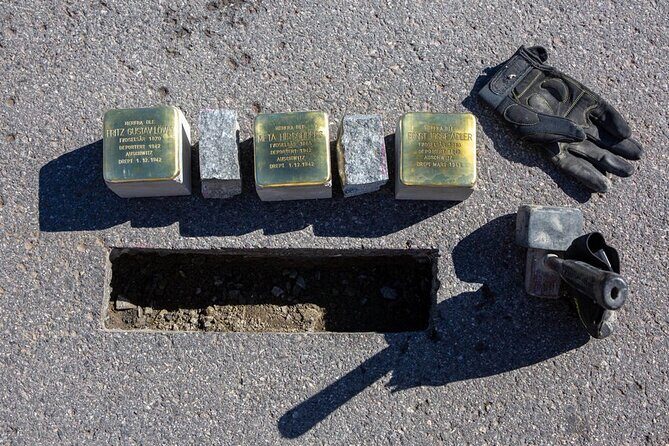
In Oslo, Jewish history isn’t only found in one place. It appears in the city layout: where people lived, where businesses operated, and where power and public life intersected with small communities.
That’s why I like this tour’s approach. Instead of treating Jewish history as a separate topic, it reads it alongside Oslo’s major institutions—royal authority, Parliament, and prominent city squares—so you see how a minority community fit into the wider national story. You’ll also get a sense of what changed over time, especially through the 19th and 20th centuries.
You can also read our reviews of more historical tours in Oslo



Price and logistics: what $256.18 per group really means

The cost is $256.18 per group for up to 5 people, with a duration of about 2 hours. In real terms, this can be a bargain if you’re traveling as a small group: at full capacity (5 people), it works out to roughly $51 per person. If you’re only 2 people, you’re paying more per person, but you still get a private guide rather than a crowded group tour.
The tour runs in good weather, and it’s near public transportation. That matters because Oslo’s center is walkable, but you don’t want to be forced into extra layers of transit or detours on a rainy day.
Also, it’s designed for moderate physical fitness. You’ll be walking and moving between stops, so it’s not a sit-and-scan type of tour.
Stop 1: Jernbanetorget and the first Jewish families in Oslo
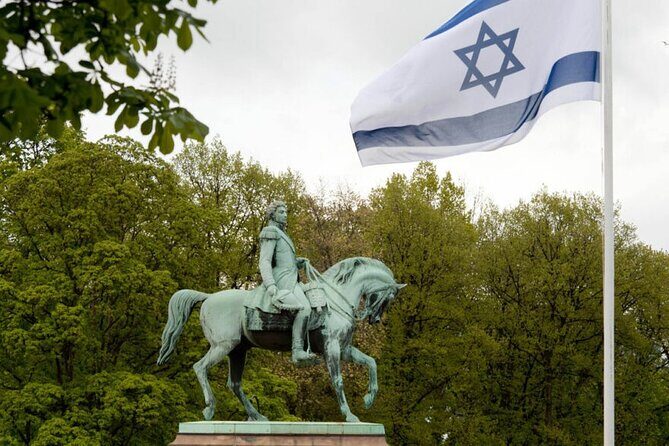
You start at TigerJernbanetorget near Jernbanetorget, and the tour kicks off with a quick but meaningful setup: where the story begins and how the earliest Jewish families got rooted in Oslo.
This is the best kind of opening for a heritage tour. Instead of starting with a building you recognize, you start with people—where they lived, what they were up against, and why that early presence mattered. The guide also points out the actual location of an early property, so you’re not just hearing dates. You’re seeing the streets that still hold the geography of that history.
One practical note: because the stop is short, come ready with one question if you have one. This is where the guide’s momentum sets the tone for the rest of the walk.
Stop 2: Stortorvet, Oslo Cathedral, and the weight of public history
From there you move to Stortorvet, a square with serious presence. The tour uses it to connect Oslo’s religious and civic identity to the wider story of who had access to public life.
You’ll see the Oslo Cathedral area and the Christian IV monument, and the point isn’t just architectural appreciation. It’s about understanding how a city organizes itself—where monuments go, which stories get foregrounded—and how minority communities lived inside that same framework.
This stop works especially well if you’re the type of traveler who likes to know why certain figures appear in public spaces. The guide keeps it readable, so you get the context without feeling dragged into textbook territory.
Stop 3: Norway’s Parliament and Jewish participation in public life
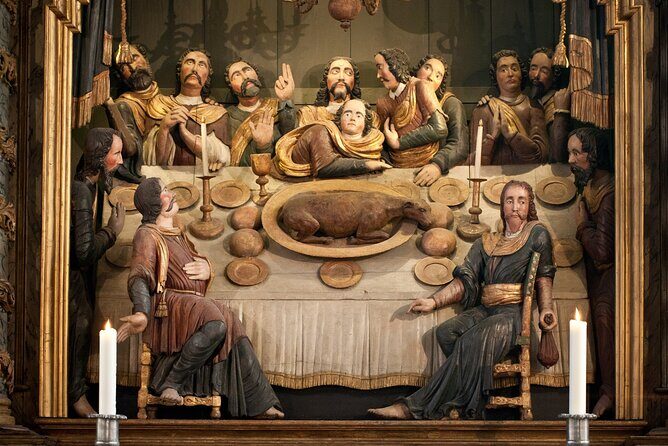
Next comes the Norwegian Parliament, where the tour turns toward governance and national identity. You’ll hear about the Norwegian constitution, and you’ll also learn about remarkable Jewish members of Parliament.
This is where the tour becomes more than heritage sightseeing. It shows you that Jewish life in Norway wasn’t only about survival or private community life—it also touched public institutions. The guide helps you connect the dots between laws, citizenship, and the gradual visibility of a small community inside the national story.
The stop is brief (about 10 minutes), but it’s thoughtfully targeted. You’ll leave with names and themes you can later connect when you’re reading about Norway’s political history back at your hotel.






Stop 4: Grand Hotel area—business, status, and a Nobel connection
At the Grand Hotel area, the tour shifts to a more everyday angle: commerce and how Jewish businesses fit into central Oslo. You’ll hear about Jewish shops at the spot and get a nod to the Nobel Peace Prize connection in the area.
Even if you’re not a trivia collector, this stop helps you picture what community life looked like between the headline moments. It’s one thing to talk about policies and institutions; it’s another to remember that people still had to run shops, manage relationships, and earn a living.
This is also one of those segments where the guide’s ability to connect different threads really matters. The story stays grounded in Oslo’s real streets, so it feels practical rather than abstract.
Stop 5: Karl Johans Gate and the feeling of a lived-in Jewish Oslo
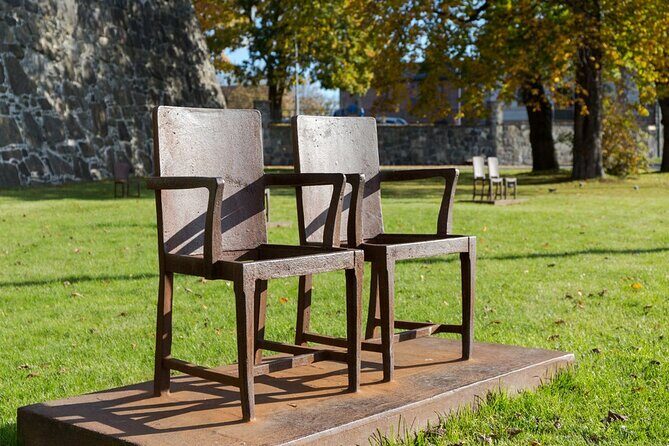
Then you spend the longest stretch on Karl Johans Gate—about 50 minutes—and that time makes a difference. This is the walking segment where you get to slow down and absorb how a neighborhood shaped daily life.
The guide points out that there were many Jewish-owned stores along the way and connects physical sites to Jewish history in Norway and Oslo. You’ll also notice monuments and markers tied to the community’s presence.
For me, this is where the tour gives you the most value per minute. It’s long enough to let the story settle, but not so long that you feel trapped in a single area. If you’re using your first day in Oslo to get oriented, this is a smart segment to have on your schedule.
Tip: wear comfortable shoes. Even in good weather, central Oslo streets add up across seven stops.
Stop 6: The Royal Palace area and wartime-era clues (1940–45)
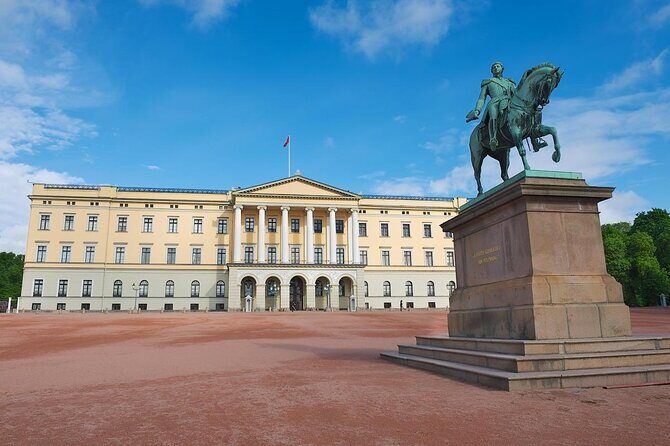
Next up is the Royal Palace area, and this stop brings you into the specific reality of the occupation period (1940–45). The tour focuses on a few location points around the Royal garden that connect to Jewish life during those years.
This part matters because it links the grand image of monarchy with the harsh details of history. Instead of floating over the Holocaust era with generalities, the guide points to where you can stand today and learn how events affected Jewish people.
Because it’s a short stop, you don’t get long silence. You get a concentrated set of connections that you can then carry with you as you walk the city afterward.
Stop 7: Oslo Synagogue, Jewish street context, and access realities
The final major historical anchor is Oslo Synagogue, and the tour frames it with the significance of Jewish religious presence in Norway. You’ll also hear about the idea of a Jewish street in Oslo and learn that this was the first synagogue built in Norway.
Here’s the reality check: the guide notes that it’s not always possible to visit the synagogue itself. That doesn’t make the stop less valuable; it just means you should treat it as a context stop as much as a building stop. Even if you can’t go inside, you’ll still learn what the site represents and why the location matters.
This is often where the tour becomes emotionally heavy in a good way. It’s not just history on a signboard. It’s a lived institution, and the guide’s tone tends to slow down the story so it lands.
The guide factor: what makes Rami Kafarov’s style hit
The big reason this tour works is the guide’s approach. Rami Kafarov (often the guide for this tour) is described as engaging, responsive, and strong on Norwegian history context, which is exactly what you want on a heritage walk.
I especially like that the tour can feel customized. If you’re more interested in political life, the guide leans that way. If you care more about community and daily existence, the story balances toward that too. And if you have questions, you’re not just getting answers—you’re getting explanations that keep the larger story connected.
Rami also has a sense of humor, and that helps. Some heritage tours become so solemn that they stop feeling human. Here, the energy stays respectful but alive.
One more standout: Rami has a brief photo-book you can ask about. It’s the kind of extra that helps you remember what you saw—modern Oslo alongside historic images tied to Jewish life.
How to make the most of your 2-hour walk
If this is your first time in Oslo, you’ll get more out of the tour if you go in with a light plan. Don’t try to “collect” every fact. Instead, pick two themes you care about: early settlement, wartime connections, or Jewish participation in national life.
Bring a question that starts simple. For example: how did Jewish community life shift over time in Norway? Or: how did Jewish leaders appear in public institutions? When you ask that kind of thing, the guide usually has enough context to turn it into a story you can remember.
Also, because this is a private activity, use that advantage. If you’re short on time, ask the guide to spend a little more attention on the segment you care about most.
Who this tour suits best
This Jewish Heritage tour is a great match if you:
- want a first-day orientation to central Oslo through a specific historical lens
- enjoy short stops with clear stories rather than long museum sessions
- like guides who connect minority history to the larger national timeline
- travel with family or friends and want a private, adjustable experience
If you already know a lot of Jewish history in Scandinavia and want only deep academic detail, you might find the pacing more conversational than heavy. But for most visitors, that balance is exactly the point.
Should you book this Jewish Heritage Tour in Oslo?
I think you should book it if you want a meaningful walk that doesn’t feel like a lecture. The combination of central landmarks, thoughtful historical context, and a guide who keeps the story responsive makes the tour feel worth your time, even at a short 2-hour duration.
Book it especially if you’re traveling with 3–5 people, since the per-person value improves fast. And even if synagogue entry isn’t possible on the day, the stop still teaches you what to look for and why those streets matter.
If you’re in Oslo on a day with uncertain weather, check the forecast and be flexible. The tour is weather-dependent, and good conditions make the walking parts more comfortable.
FAQ
How long is the Jewish Heritage tour in Oslo?
The tour lasts about 2 hours.
What is the price, and is it per person?
It’s priced at $256.18 per group (up to 5 people).
Where do we meet, and where does it end?
You start at TigerJernbanetorget, 0154 Oslo, Norway. The tour ends in a different location from where it starts.
Is the tour private?
Yes. It’s a private tour/activity, so only your group participates.
What language is the tour offered in?
The tour is offered in English.
Will I be able to visit the Oslo Synagogue?
The stop includes the Oslo Synagogue area, but it’s noted that it’s not always possible to visit the synagogue building.
Do I need a printed ticket?
No. You’ll receive a mobile ticket.
FAQ
What is the meeting point address?
Start location is TigerJernbanetorget, 0154 Oslo, Norway.
Is the tour offered in English?
Yes, English is the listed language for the tour.
Is there a mobile ticket?
Yes, it includes a mobile ticket.
How much advance notice is typical for booking?
On average, it is booked 107 days in advance, and confirmation is received within 48 hours of booking, subject to availability.
What if the weather is bad?
The experience requires good weather, and if it’s canceled due to poor weather, you’ll be offered a different date or a full refund.
Is service allowed?
Service animals are allowed.
Is there a fitness requirement?
You should have a moderate physical fitness level.