REVIEW · OSLO
Oslo: Oslo Discovery Tour with 2 Museums Included
Book on GetYourGuide →Operated by H.M.Kristiansens Automobilbyrå AS · Bookable on GetYourGuide
Oslo in a hurry still feels like Oslo. This 5.5-hour guided loop mixes big-city landmarks with the outdoors on Vigeland Hill and Bygdøy Peninsula, so you come away with a clear sense of how modern Oslo thinks and how Norway remembers.
I particularly like the comfortable coach plus live commentary that keeps the day moving without turning into a blur.
My second favorite part is the pairing of sights that feel totally different from each other: the Vigeland Sculpture Park walk and the museum time on Bygdøy. It’s a smart mix for first-timers, and it helps you connect the dots between art, exploration, and national identity.
One thing to plan for: the walking isn’t extreme, but it is real. You’ll handle steps and uneven ground at Vigeland and at the outdoor Folk Museum (or the Kon-Tiki Museum in winter), so wear good shoes and don’t underestimate the weather.
In This Review
- Key takeaways before you go
- First stop: meeting at Haakon VIIs gate and getting on the white coach
- Downtown Oslo by air-conditioned bus: from the Royal Palace to Aker Brygge
- Holmenkollen Hill: panoramas, the Ski Jump photo stop, and why this place matters
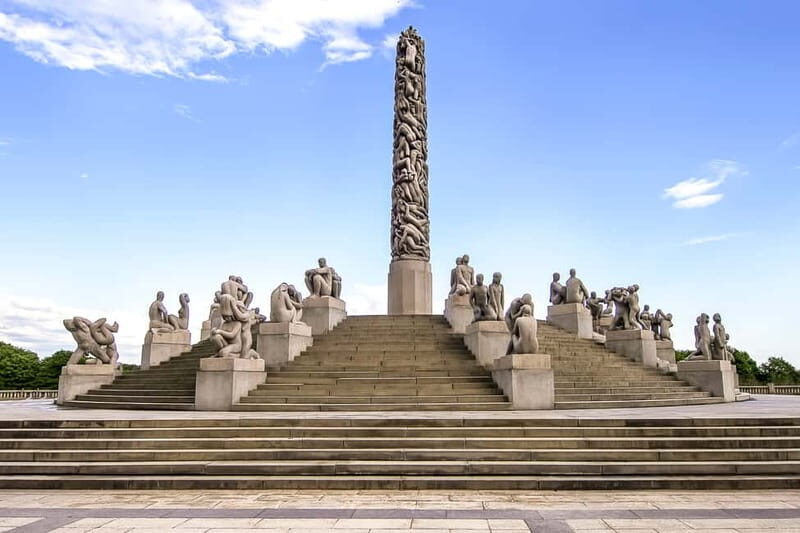
- Vigeland Sculpture Park: the guided walk through more than 200 works
- Bygdøy Peninsula museum time: Fram first, then Folk Museum or Kon-Tiki
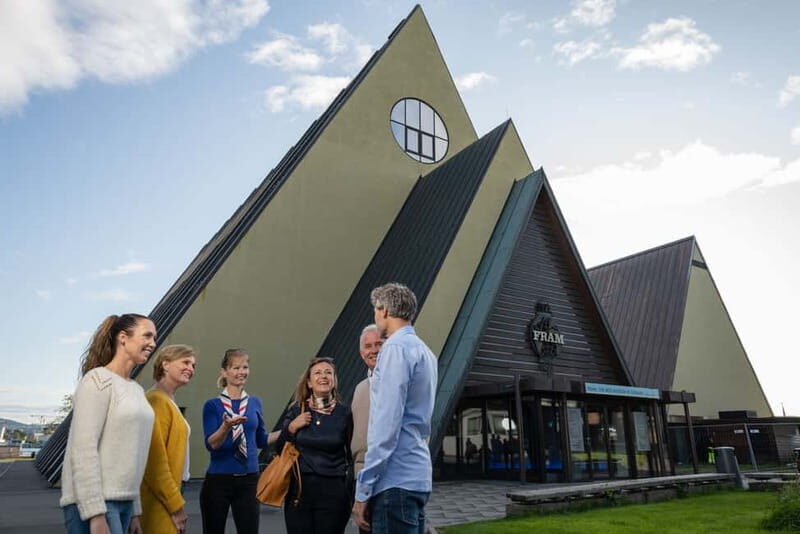
- The Fram Museum (included year-round)
- Folk Museum in summer; Kon-Tiki in winter
- Value for $99: two museum entrances plus guided walking and bus time
- Who should book this Oslo Discovery Tour
- Should you book this tour?
- FAQ
- How long is the Oslo Discovery Tour?
- What museums are included, and does it change by season?
- Where is the meeting point?
- What’s not included in the price?
- Is there walking involved?
- Is the tour guide language English?
Key takeaways before you go
- Holmenkollen Ski Jump photo stop: get the views and the famous jump without needing to plan a separate trip
- Vigeland Sculpture Park guided walk: more than 200 sculpture groups explained on the ground
- Fram Museum included: the original polar ship Fram plus Norwegian exploration stories
- Folk vs Kon-Tiki timing: summer goes to the Folk Museum; winter swaps to Kon-Tiki (with a couple Monday exceptions)
- Tight schedule: you’ll see a lot, but museum time can feel short if you’re a slow reader
First stop: meeting at Haakon VIIs gate and getting on the white coach
Your tour meets at 09:45 at Haakon VIIs gate 1, 0161 Oslo, near the toy shop called Sprell. It’s easy to find on foot from central areas, but do yourself a favor: show up early enough to avoid that last-minute Oslo dash in cold wind.
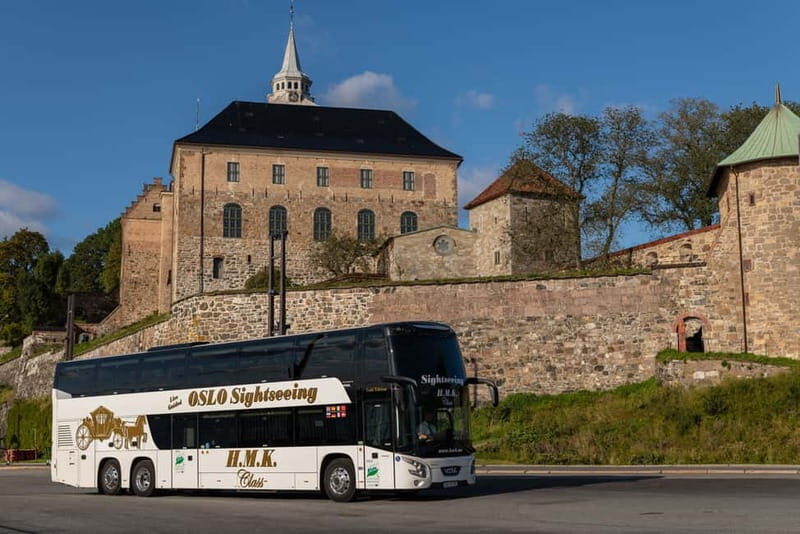
After you arrive, you exchange your voucher on the bus before the tour begins. Then you look for a white coach labeled Oslo Sightseeing on the sides. Once you’re on board, you’ll get the rhythm of the day quickly: short rides, photo stops, and then walking where it counts.
This kind of setup matters. Oslo’s main sights are spread out, and public transit can add stress when you have only half a day. A guided bus keeps the order tight and gives you context you’d otherwise only get by reading labels for hours.
You can also read our reviews of more museum experiences in Oslo


Downtown Oslo by air-conditioned bus: from the Royal Palace to Aker Brygge
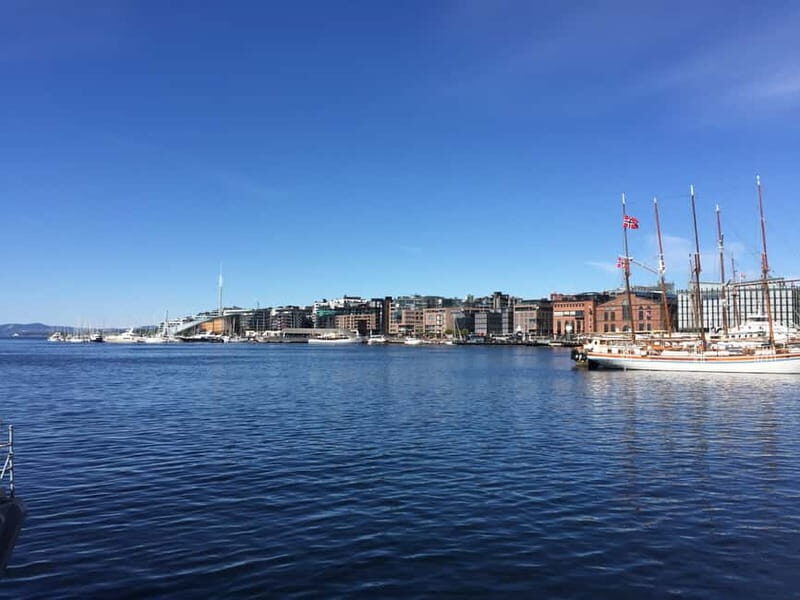
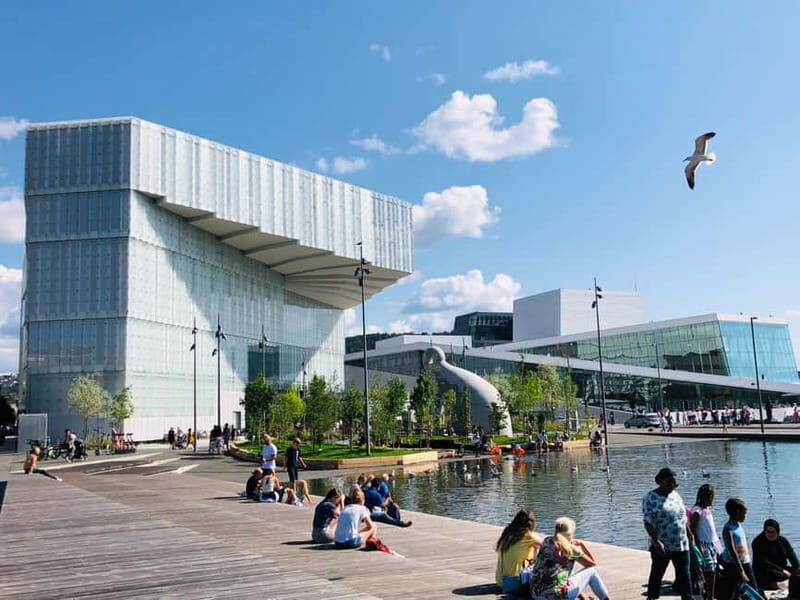
The core of the tour is a guided loop through central Oslo. From the bus, you’ll see (and hear stories about) major landmarks that define the city’s map—things you’d miss if you only focused on one neighborhood.
Here are the stops you’ll pass and learn from during the driving portion:
- Royal Palace
- Oslo City Hall
- Parliament building
- Old Town area with Akershus Fortress and Castle
- National Museum
- Aker Brygge
- Oslo Opera House
- The new Munch Museum
- Oslo Cathedral
- Nobel Institute
- Frogner Park area (the home base for Vigeland)
What I like about this is how the commentary ties the city’s choices together. Oslo doesn’t just look “pretty from a postcard.” It’s designed. You see how government buildings, cultural institutions, and waterfront development sit side by side, then you get a guided explanation for why that arrangement feels the way it does.
The bus also helps with timing. In one of the most common travel situations—cold, windy, or rainy—being inside is not a luxury. It’s a way to keep your day enjoyable instead of miserable.
Holmenkollen Hill: panoramas, the Ski Jump photo stop, and why this place matters
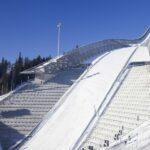
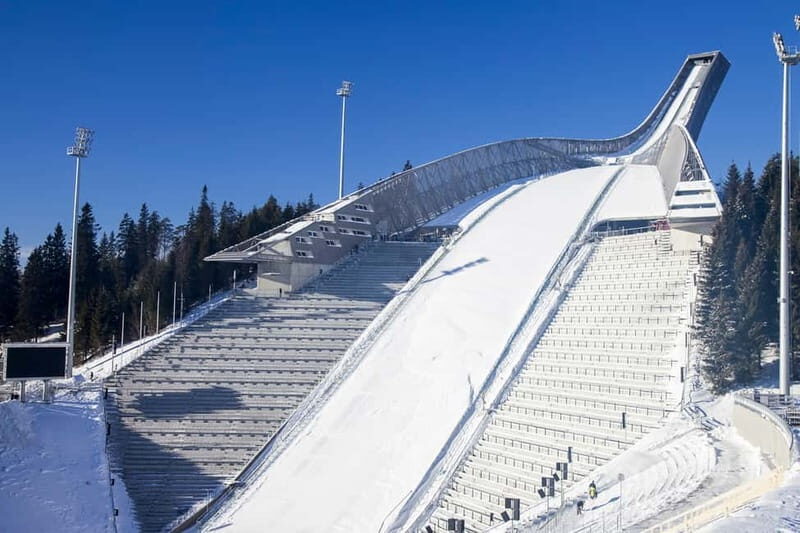
Holmenkollen is the surprise payoff of this tour. You’ll head out to the Holmenkollen area—a residential and recreational zone built on the hill—then you get a photo stop at the Holmenkollen Ski Jump.
This is the one stop where you should step out, take the photos, and actually look around. The views over Oslo and the fjord are the point. Even if you’ve seen images online, the height and the framing feel different in person. It’s also one of those places where Norway’s sports culture becomes visual history.
A practical note: dress like you’re going outside for a short time, because you are. Even when the bus is comfortable and warm, Holmenkollen can feel brisk up on the hill. Bring a layer you can zip up quickly, and you’ll be glad you did.
Vigeland Sculpture Park: the guided walk through more than 200 works
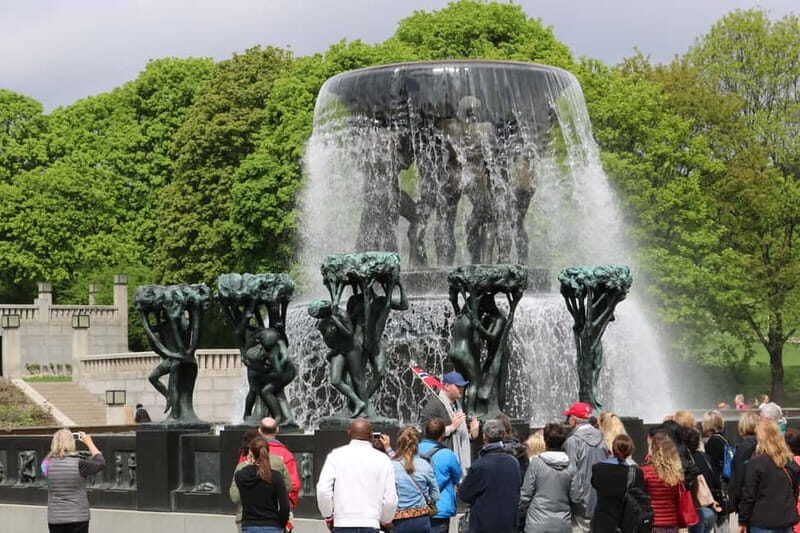
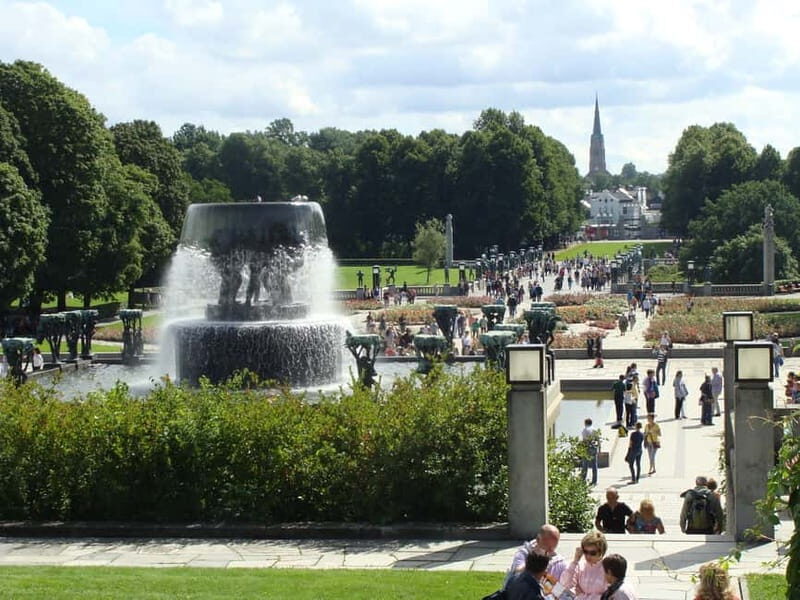
Then you shift into walking mode with Vigeland Sculpture Park (Frogner Park). This is where the tour earns its cultural weight.
You’ll do a guided walking tour through the park and learn about Gustav Vigeland—a major Norwegian sculptor—and the ideas behind the works. The park is known for more than 200 groups of sculptures, created in bronze and granite, and your guide connects the themes so you’re not just looking at figures that all look vaguely philosophical (which, to be fair, they are).
This stop is a highlight for a reason. It’s one of the most accessible ways to understand how Norwegian art can be both public and emotional. If you’ve ever wondered why sculpture parks feel like places you can think, not just places you can photograph, Vigeland is the answer.
Two considerations:
- There’s moderate walking on steps and uneven terrain.
- With bigger groups, hearing can get tricky on the ground. If you want to catch every story, position yourself where you can clearly see and hear the guide, especially during the more active parts of the walk.
If your guide brings personality, it really shows here. People on the tour have credited guides by name—like Elena, Randi, Anitta, and Christopher/Chris—for making the sculptures feel readable, not intimidating.
Bygdøy Peninsula museum time: Fram first, then Folk Museum or Kon-Tiki
The final stretch is on Bygdøy Peninsula, and this is a very good move. You trade city streets for a calmer setting, and you get two distinct museum experiences built around Norwegian identity.






The Fram Museum (included year-round)
Fram Museum is visited as one of the two included museums, with entrance included. The headline is the original polar ship Fram, described as one of the strongest wooden ships that sailed the farthest north and farthest south. Your visit also ties the ship to the wider story of Norwegian polar expeditions.
This is more than a boat with ropes and glass. It’s a way to understand how exploration becomes national pride—and why Norway talks about courage and preparation so often. If you like hands-on history, this is a satisfying stop.
One practical tip: if you’re a detail person, you might wish you had longer. The pace is good for seeing key highlights, but the ship and exhibits take time if you read everything carefully.
Folk Museum in summer; Kon-Tiki in winter
The second museum changes by season:
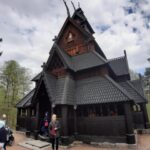
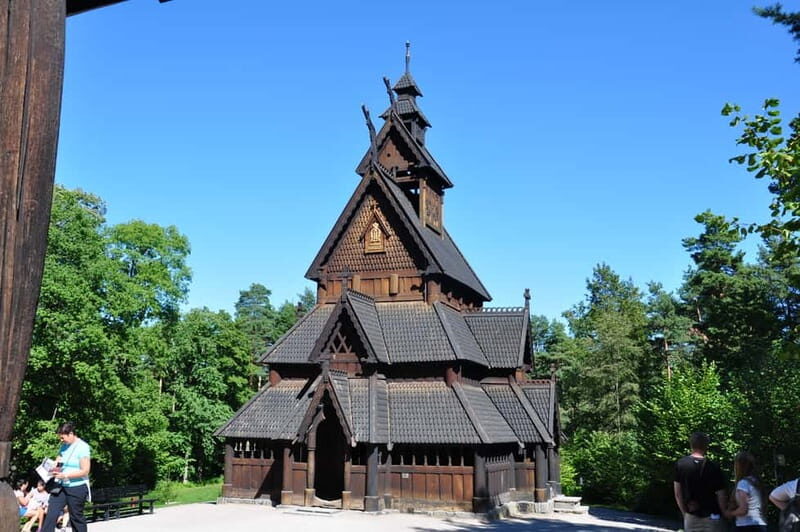
- In summer, you go to the Norwegian Folk Museum. You’ll see an outdoor collection of old Norwegian houses and a stave church.
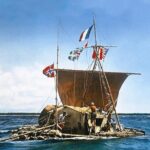
- In winter, you go to the Kon-Tiki Museum, focused on the balsa raft that crossed the Pacific Ocean in 1947.
There’s also a schedule twist: on Mondays in April and October, and during season November–March, the tour visits Kon-Tiki instead of Folk. So if your dates fall on those times, don’t be surprised by the swap.
For the Folk Museum, remember that outdoor means uneven paths and steps. It’s beautiful, but it’s not flat-floor museum comfort. For Kon-Tiki, the emphasis shifts to adventure and engineering—still story-driven, just in a different direction than the polar exploration at Fram.
Value for $99: two museum entrances plus guided walking and bus time
At $99 per person for about 5.5 hours, you’re paying for three things at once:
- Guided driving through major Oslo sights
- A guided walking tour through Vigeland Sculpture Park
- Entrance tickets to Fram Museum and either Norwegian Folk Museum or Kon-Tiki Museum (based on season/date)
That combination is usually where the value comes from. If you tried to replicate this yourself, you’d need museum tickets, transit time, and the added work of stitching stops together in a logical order. Here, the day is pre-arranged for you, and your guide adds context while you’re in transit.
Also, the transportation is specifically described as modern and air-conditioned, which is a big deal in real life. Cold rain in Oslo can turn an otherwise great plan into a slog. A comfortable coach helps you keep momentum and stay in good spirits.
One more value marker from the tour experience: the transport gets strong praise for comfort, and guides have earned consistent compliments for storytelling and pacing. People repeatedly mention enjoying the tight “bus plus walking” balance—enough structure to get oriented, not so much walking that you’re wiped out.
Who should book this Oslo Discovery Tour
This is a strong fit if:
- You’re in Oslo for a short stay and want to get oriented fast
- You want a guided mix of city landmarks, art, and two museums without planning extra tickets
- You enjoy commentary that includes specific anecdotes and context, not just point-and-shoot stops
It’s also a good choice if you like variety. The day moves from government and waterfront views to sculpture in a park to polar exploration and cultural heritage.
You might think twice if:
- You want slow, lingering museum time. Some visitors have felt the museum visits move quickly.
- You’re sensitive to walking on steps and uneven ground. Vigeland and the Folk Museum outdoor areas require sturdier footwear.
- You hate groups. Some people mention that hearing the guide during walking can be harder with a bigger crowd—so pick a spot close to the front if you care about every word.
Should you book this tour?
If you want an Oslo overview that feels organized and efficient, I’d book it. The best part is not any single sight—it’s the way the tour connects Holmenkollen views, Vigeland’s sculpture themes, and then Norway’s exploration and cultural roots at Bygdøy.
Book this when you have limited time and want the day to do the heavy lifting. Skip it only if you already know Oslo well, plan to spend lots of hours in museums independently, or you’re not up for uneven outdoor walking.
Either way, you’ll come away with a clear picture of Oslo beyond the downtown postcard.
FAQ
How long is the Oslo Discovery Tour?
The tour lasts about 5.5 hours.
What museums are included, and does it change by season?
Fram Museum is always included. In summer you visit the Norwegian Folk Museum, while in winter you visit the Kon-Tiki Museum. For some dates (Mondays in April and October and during November–March), Kon-Tiki is visited instead of the Folk Museum.
Where is the meeting point?
Meet at 09:45 at Haakon VIIs gate 1, 0161 Oslo, near the toy shop Sprell. Exchange your voucher on the bus and look for a white coach reading Oslo Sightseeing.
What’s not included in the price?
Lunch is not included, and hotel pickup and drop-off are not included.
Is there walking involved?
Yes. There is moderate walking on steps and uneven terrain in Vigeland Sculpture Park and at the outdoor Folk Museum area.
Is the tour guide language English?
Yes, the live tour guide is in English.