REVIEW · OSLO
The Fram Museum Admission Ticket
Book on Viator →Operated by Frammuseet · Bookable on Viator
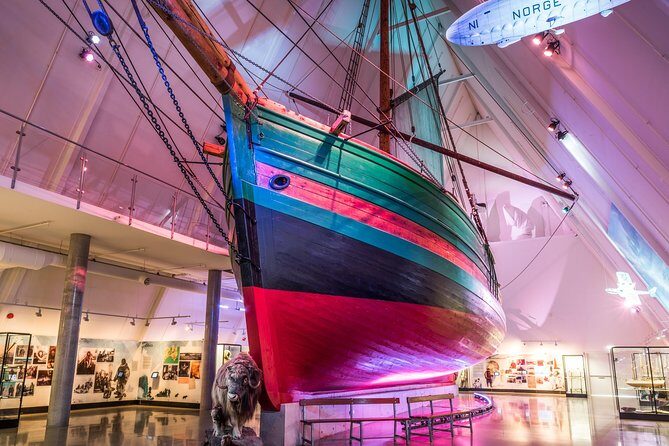
Real ships make this museum feel physical. You’re paying to step right into maritime history, then learn how explorers survived in the High North—on real vessels, not replicas. I especially love the Fram inside a museum building setup, where you can walk around and really get the scale. I also love the story-driven exhibits that mix expedition history with today’s Arctic realities, plus short films that keep the pace moving.
The one thing to consider is simple: it can get busy, so if you’re sensitive to crowds or you want perfect photo-lighting, pick your timing carefully.
In This Review
- Key Things I’d Not Skip
- Why the Fram Museum Feels Different From Usual Oslo Museums
- Price and Value for a 1–3 Hour Oslo Stop
- Entering the Fram Building: Exhibits That Set the Scene Fast
- The Gjøa Building and the Underground Tunnel Walk
- Walking on the Ships: What You Actually Get to Experience
- The N25 Flight 4D Cinema and the Polar Intro Film Rhythm
- How Long It Takes: A Practical Plan for 2 Hours (or Less)
- Timing, Location, and Getting There Without Stress
- Who This Ticket Is Best For (And Who Might Want to Pick Another Day)
- Practical Details That Affect Your Day
- Should You Book the Fram Museum Admission Ticket?
- FAQ
- How long should I plan to spend at the Fram Museum?
- What’s included with this admission ticket?
- Is the ticket available on a phone, and is it offered in English?
- What are the Fram Museum opening hours?
- Can I cancel and get a full refund?
- Are service animals allowed?
Key Things I’d Not Skip

- Board the original ships: You can walk over and through the vessel spaces, which makes the history feel real.
- Fram and Gjøa in one connected complex: The museum uses the buildings as part of the experience, linked by an underground tunnel.
- High North topics beyond the past: Polar bears, melting ice, gas, and oil show how the story is still unfolding.
- The N25 4D film adds momentum: A seated intro film runs frequently, and the cinema experience helps break up the walk-throughs.
- Read the wall text, then explore: The museum is designed so the maps and explanatory panels pay off when you’re standing near the objects.
Why the Fram Museum Feels Different From Usual Oslo Museums
Most museums point at history. The Fram Museum lets you move through it. You walk from exhibits to ships, and the atmosphere is built around cold, cramped, and work-heavy life. That matters, because polar exploration isn’t just bravery—it’s logistics, engineering, routine, and survival decisions made in harsh conditions.
I like the way the museum uses multiple “layers” of learning. There’s the main exhibition space with text panels in ten languages that lay out the three big Fram expeditions. Then there’s the newer Gjøa building with its own focused installations. Finally, you get the cinema side of the story—short, scheduled viewing that keeps you from feeling stuck reading for hours.
There’s also a clever emotional rhythm here: you start learning the long story, then you physically “shrink” into ship life. The building-within-a-building effect of seeing Fram where it’s protected makes it feel both museum-clean and expedition-gritty at the same time.
A few more Oslo tours and experiences worth a look



Price and Value for a 1–3 Hour Oslo Stop
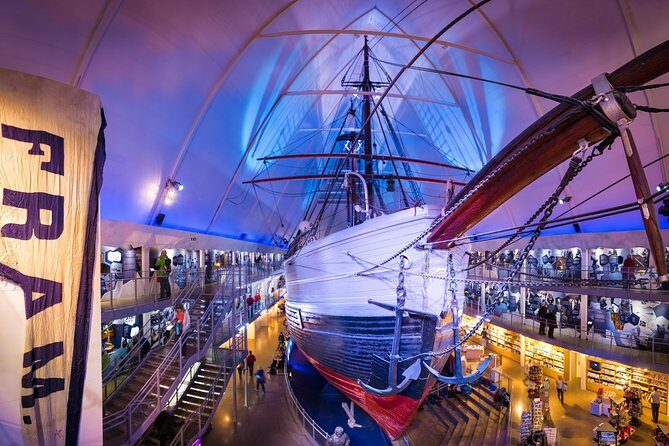
At $19.38 per person, this ticket sits in the value zone for a major Oslo attraction—especially because you’re not just looking at artifacts behind glass. The experience includes access to key areas like Gjøa and the N25 Flight 4D cinema, plus the rest of the museum galleries that lead you toward the ships.
Duration is listed as about 1 to 3 hours, and that range is believable. If you’re a fast walker who reads only the highlights, you can do it closer to the shorter end. If you like maps, route diagrams, and patient reading, you’ll likely stretch it toward two or three hours. The museum is laid out so you can do either without feeling like you’re “missing the one main thing,” because the ships and exhibits reinforce each other.
A small group size is part of the feel too. The experience caps at 14 travelers, which usually means you’re not getting shoulder-to-shoulder everywhere (though popular museums can still get crowded).
Entering the Fram Building: Exhibits That Set the Scene Fast
Once you’re inside, the museum’s main exhibition is where you’ll get your bearings. The Fram building centers on explanatory texts that cover the ship’s three great Fram expeditions. These panels do more than summarize dates. They help you understand what the ship was designed for and what that meant day-to-day—work areas, equipment, and the mindset of long missions.
One practical benefit: the text is available in ten languages, and the ticket is offered in English. If English is your preference, you won’t feel forced to decode everything. If you’re traveling with someone whose English isn’t perfect, the multilingual setup can reduce friction.
The space also helps you plan how you want to spend your time. If you treat the museum like a “stand and read” experience, you can settle in for a while. If you prefer movement, you’ll still have a clear story to follow as you head toward the ship areas.
Tip: If you want the best emotional payoff from walking through the ships, don’t rush straight to the decks. Give yourself time to understand what you’re seeing, even if it’s just the big picture.
The Gjøa Building and the Underground Tunnel Walk
A major reason this museum feels memorable is that it’s not one simple room. The Gjøa building is connected to the Fram building by an underground tunnel—and that tunnel transition is part of the experience, not just a corridor.
The museum notes that in June 2013, the Gjøa building opened, and it focuses on Gjøa, described as the first ship to navigate the whole Northwest Passage. That detail changes the way you look at the artifacts. You’re not only learning about survival in extreme cold; you’re learning about navigation and routes—how explorers moved through ice-covered water and complicated geography.
Inside the Gjøa building, you’ll find exhibitions tied to:
- Gjøa and Maud expeditions
- Airplanes N24 and N25
- The airship Norge
- John Franklin’s legendary expedition
- Expeditions connected to Henry Larsen and Eivind Astrup
- Current High North issues like polar bears, ice melting, and gas and oil
If you like your exploration history with modern context, this section is a win. It’s the part of the museum that answers the unasked question: what does the High North mean now?
Possible drawback here: because the complex is connected and interactive, you’ll want shoes that handle indoor walking comfortably. It’s not a heavy hiking experience, but you are moving.
Walking on the Ships: What You Actually Get to Experience
This museum’s biggest advantage is that you can go where the story lives. Reviews repeatedly highlight the feeling of stepping aboard and moving through real vessel spaces—especially the chance to walk around and get a sense of how tight and work-focused life would have been.
If you’re the type who learns by looking closely, you’ll probably enjoy the way the museum sets up staged areas and lets you wander at your own pace. You’re not watching everything from a distance. You’re seeing proportions—where people moved, where equipment would sit, and how limited the ship “living” area must have been.
A review detail I found especially useful: start thinking about the order of your visit. One strong suggestion is to consider watching the cinema first, then working your way toward the exhibits. That order can help because the film acts like a mood-setter. Then, when you walk aboard, you’re not only reading history—you’re matching what you saw on screen to what you’re standing in.
Also, there’s a “cold” or tunnel transition element that people call out as fun. Even if you don’t care about the wording, the sensation of moving between connected spaces is a nice touch for the overall flow.
You can also read our reviews of more museum experiences in Oslo




The N25 Flight 4D Cinema and the Polar Intro Film Rhythm
The museum includes cinema time as a built-in break from reading and ship-walking. The N25 cinema experience is explicitly listed as included, and the museum also runs a polar introduction movie in a 116-seat cinema every 15 minutes.
That matters for your planning. If you’re on a tight schedule, you can time your visit so you don’t miss the film by only a few minutes. If you’re there early, frequent showings let you adapt if your pace through the galleries runs long.
Even if you usually skip films in museums, this one earns its spot because it supports the core theme: what it feels like to be in the polar environment and why exploration depended on preparation. The point isn’t just spectacle. It’s to help you understand the conditions behind the missions you’re reading about.
One scheduling consideration: in a past visit, the cinema area was reported as inaccessible on the first day and open later. I can’t promise every showing is always available at every hour, so if cinema is high on your list, check what time you can enter once you arrive.
How Long It Takes: A Practical Plan for 2 Hours (or Less)
For most people, the sweet spot is around 2 hours. That’s long enough to read key panels, get a good sense of the ship spaces, and still catch the cinema without feeling rushed.
Here are two pacing options that match the museum’s design:
Option A: The Classic 2-Hour Pass
- Spend a chunk of time in the Fram building to understand the three great expeditions.
- Move into the Gjøa building and focus on the central exhibits tied to Northwest Passage navigation and aircraft/airship history.
- Add the cinema experience when it fits your timing.
- Finish with time to walk through the ship spaces again with new context.
Option B: The Focused 90-Minute Visit
- Use the multilingual panels to quickly build the big story.
- Prioritize the ship areas and skip deep reading where you can.
- Choose one cinema slot that runs soon after you arrive.
Photo and comfort note: If it’s crowded, you’ll lose patience faster than you expect. Go early in the day if you can, and bring layers. Museums can swing between too warm and too cool depending on tunnel and indoor circulation.
Timing, Location, and Getting There Without Stress
You’ll find the museum open 10:00 AM to 5:00 PM, Monday through Sunday, during the listed range of dates. The ticket experience is designed to work within that daytime window, so try to arrive with enough time to settle in before your ideal cinema slot.
One review tip worth repeating: the museum is sometimes described as a bit remote, so check bus routes and schedules ahead of time. Oslo does have solid public transport, but “solid” turns into “stressful” when you’re arriving right at closing.
The good news: it’s marked as near public transportation, and you’ll have an easier time if you plan your arrival and don’t assume last-minute changes will be simple.
Who This Ticket Is Best For (And Who Might Want to Pick Another Day)
This is a great fit if you:
- Love maritime history and polar exploration themes
- Want hands-on movement through ship spaces, not just viewing exhibits
- Like a museum that mixes the past with real modern High North issues
- Appreciate museums that provide texts in multiple languages
It might not be ideal if you:
- Are strongly photo-focused and hate any crowding in indoor exhibits
- Have limited tolerance for walking and navigating connected indoor spaces
- Only want one tiny highlight and dislike films, reading panels, and timed showings
If you’re traveling with kids, the fact that you can move around ship spaces makes it naturally more engaging than a standard gallery-only museum. The museum is also set up so short cinema intervals can help reset attention.
Practical Details That Affect Your Day
A few details can help you enjoy the visit more smoothly:
- Your ticket is a mobile ticket, and confirmation is received at booking time.
- The experience is offered in English.
- Service animals are allowed, but the museum notes service animals require ID.
- Food and drinks are not included, so plan to grab something before or after.
Also, think about your schedule around the ship-walking areas. Even with only a couple hours, you’ll feel like you did more than “just a quick stop,” because the museum experience is physical and story-driven.
Should You Book the Fram Museum Admission Ticket?
If you’re doing Oslo and you care about polar exploration, I’d book this. The value isn’t just the price—it’s the fact that you can walk through historic ships and connect that physical experience to clear, educational exhibits. The Fram and Gjøa setup, plus the connected tunnel and cinema rhythm, makes the whole visit feel like one continuous story.
I’d only hesitate if you dislike crowds or you’re very strict about a tight itinerary with little buffer. In that case, plan a morning arrival and make sure you can fit the cinema showing you want.
If you want an authentic, hands-on Arctic-themed stop that doesn’t feel like a lecture hall, the Fram Museum is one of the best bets in Oslo.
FAQ
How long should I plan to spend at the Fram Museum?
The admission is listed as taking about 1 to 3 hours, depending on how much you read and how long you spend walking through the ships and exhibitions.
What’s included with this admission ticket?
The ticket includes access to Gjøa and the N25 Flight 4D cinema. Admission also covers the museum experience focused on the Fram and related Arctic exploration displays.
Is the ticket available on a phone, and is it offered in English?
Yes. You’ll have a mobile ticket, and the experience is offered in English.
What are the Fram Museum opening hours?
The museum is listed as open 10:00 AM to 5:00 PM, Monday through Sunday, during the provided date range.
Can I cancel and get a full refund?
Yes. It’s listed as free cancellation. You can cancel up to 24 hours in advance for a full refund.
Are service animals allowed?
Service animals are allowed, but the information notes they must have an ID.