REVIEW · OSLO
Oslo: Paradox Museum Entry Ticket
Book on GetYourGuide →Operated by Paradox Museum Oslo · Bookable on GetYourGuide
Your brain will argue with you here. Paradox Museum Oslo is a fun, photo-friendly walk-through of interactive exhibits, built to make you question what you see. The catch: you might not find a staff member at every single picture spot to guide your angles.
I like that it moves at a steady pace. You’re not stuck reading a wall for an hour—you’re doing, testing, and reacting, then snapping photos at the marked points as you go. It’s also well explained with descriptions and QR codes, so you get the how behind the tricks, not just the wow.
One thing to keep in mind is the value vs. time. At $29 per person for a 1-hour timed entry, it’s best if you’re the type who enjoys hands-on oddities. If you want a large, deep museum experience, this may feel shorter than you expect.
In This Review
- Key Highlights to Look For
- Paradox Museum Oslo in One Hour: What It Really Feels Like
- Tickets, Timing, and the One-Way Route Through the Illusions
- The Photo Points: How to Get the Best Shot Without Waiting
- How the Paradoxes Work: QR Codes and Exhibit Explanations
- Staff and Photo Help: Friendly Support, With Limits
- Where It Fits in Oslo: Location, Getting There, and What to Pair With It
- What’s Included, What’s Not, and the Small Rules That Change Your Visit
- Paradox Boutique: The Best Time to Buy Souvenirs
- Who Should Book Paradox Museum Oslo (And Who Might Feel Underwhelmed)
- Should You Book Paradox Museum Oslo?
- FAQ
- How long does Paradox Museum Oslo take?
- Where do I check in for my ticket?
- What is the price?
- Is the museum route one-way?
- Are food and drinks allowed?
- What languages are supported?
- Is the museum wheelchair accessible?
- What’s included with admission?
- What are the closest public transportation stops?
- Is there a host/greeter at the museum?
Key Highlights to Look For
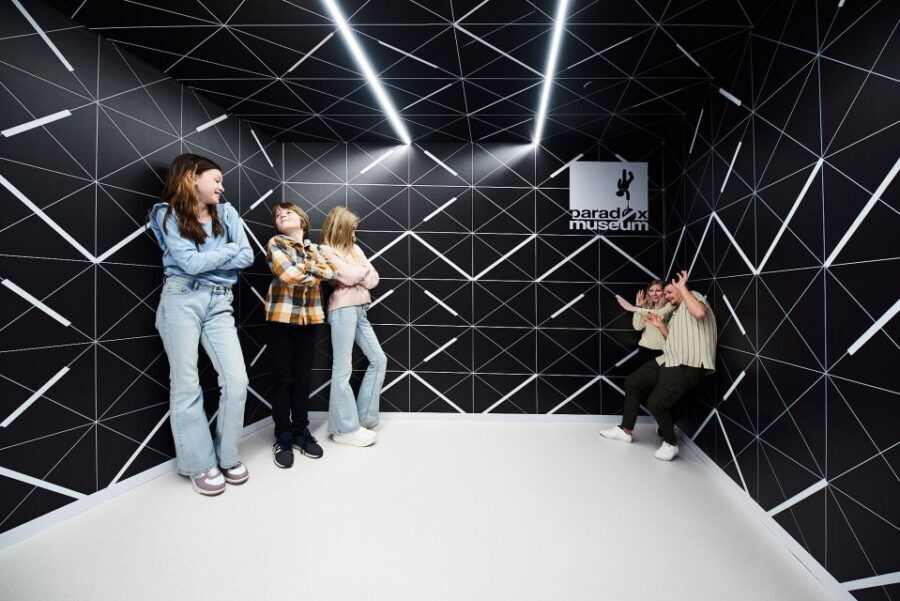
- 70+ interactive exhibits designed around perception, physics, and perspective
- Clearly marked photo points so you can line up shots fast
- Descriptions plus QR codes that explain how each paradox works
- One-way flow with signs to follow, so you don’t get lost in the fun
- Photo help is not everywhere so plan to try your own angles
- Paradox Boutique at the end for souvenirs and games
Paradox Museum Oslo in One Hour: What It Really Feels Like
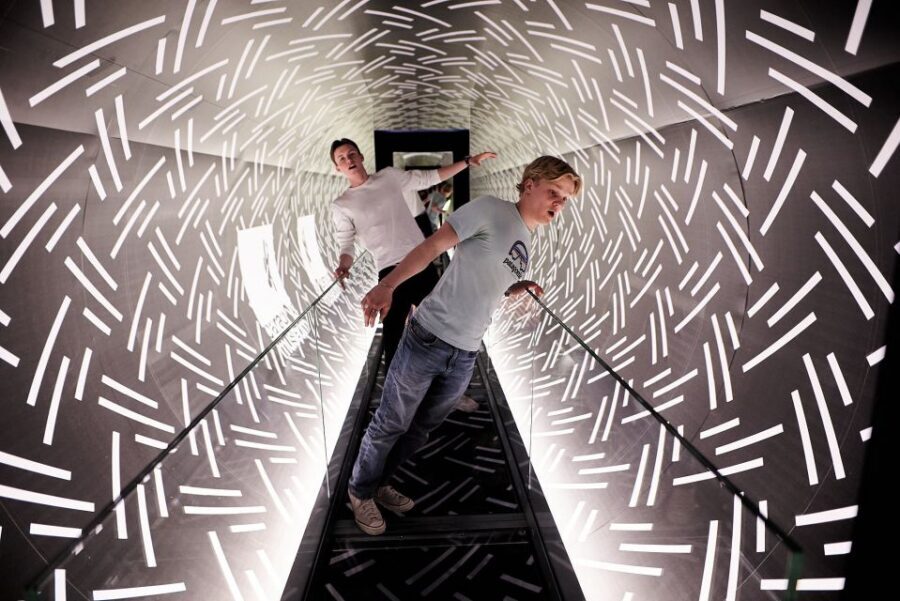
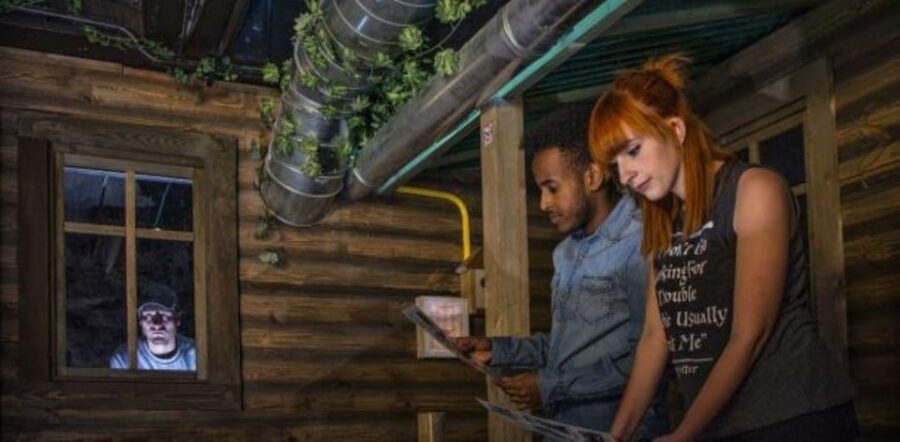
Paradox Museum Oslo is exactly what it sounds like: a place where your eyes and brain don’t fully agree. The museum is built around optical illusions and interactive installations that test perception. Instead of watching demonstrations, you step into the setup, try the pose, change your position, and see how the effect shifts.
What makes it especially enjoyable is the mix of learning and play. You’ll get little bursts of explanation through exhibit descriptions and QR codes, which helps turn the experience from pure entertainment into something you can actually talk about later. And yes, you’ll take photos. Lots of them. The museum is structured for it, with photo-friendly spots that are designed to look good from multiple angles.
The pacing is also part of the charm. It’s a timed entry activity with a duration listed as 1 hour, and the layout is a one-way route. That means you can enjoy the experience without the slow museum drift. You’re guided by signs to each exhibit, which is great when you’re with kids, on a date, or traveling solo and don’t want to spend time figuring things out.
A few more Oslo tours and experiences worth a look


Tickets, Timing, and the One-Way Route Through the Illusions
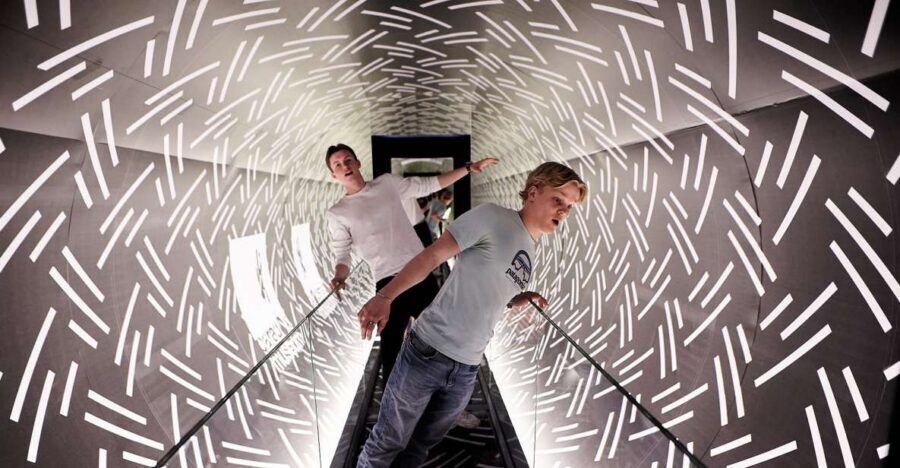
Plan to arrive a little early. You show your ticket at the entrance of the museum and should check in 10 minutes before your booked time. Once you’re inside, the route is a one-way flow with signs to follow to each exhibit.
That one-way setup matters more than you might think. Museums often work like a choose-your-own-adventure. Here, you’re guided into a sequence. The upside: it keeps momentum. You’re rarely stuck waiting for a “next room.” The downside: you can’t easily backtrack if you miss a detail or want to repeat one photo angle.
About timing: most people finish quickly, and it can feel compact. Some visitors describe getting around in less than an hour, especially when they’re alone or moving efficiently from installation to installation. Others took longer—closer to 2 hours—because they slowed down to try more options at each interactive.
So here’s my practical take: if you’re traveling with kids or you like taking time with each installation, consider booking a bit of buffer in your day. Even if your ticket duration is 1 hour, you may want extra time nearby for photos, browsing, and a slow walk to the exit.
The Photo Points: How to Get the Best Shot Without Waiting
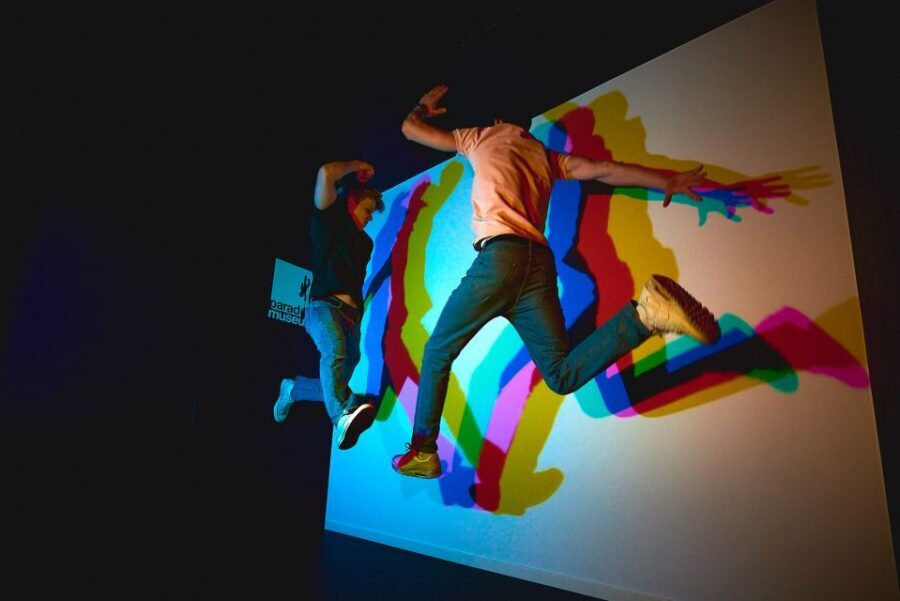
If you care about photos (and in a museum like this, most people do), you’re in luck. The museum is designed with clearly marked photo points, so you can stand in the right spot and get the effect to land properly. You won’t be guessing as much as you would in random street-optical setups.
There’s also a social-media-friendly vibe. Many installations are built around a visual trick—bright lighting, strong contrast, and effects that pop on camera. You’ll see that many exhibits are basically photo scenarios where the “right” perspective makes the illusion work. This is why the marked points are so valuable: you can experiment quickly, then keep moving.
Now the balanced part. Some reviews note that staff aren’t present at each location to help with photos. In other words, you might have to do your own angle testing. The good news is the museum setup still works even if you’re figuring things out on your own. If something feels confusing at the start, that’s normal. Once you get a feel for how the rooms want you to stand, everything gets easier.
My tip: arrive with a calm mindset. Take one round at a normal pace. Then, if there’s one exhibit you loved, go slower the second time you pass a similar setup (or pause longer if you can tell it’s the kind that rewards experimentation). The illusion effect often depends on tiny changes in position.
How the Paradoxes Work: QR Codes and Exhibit Explanations
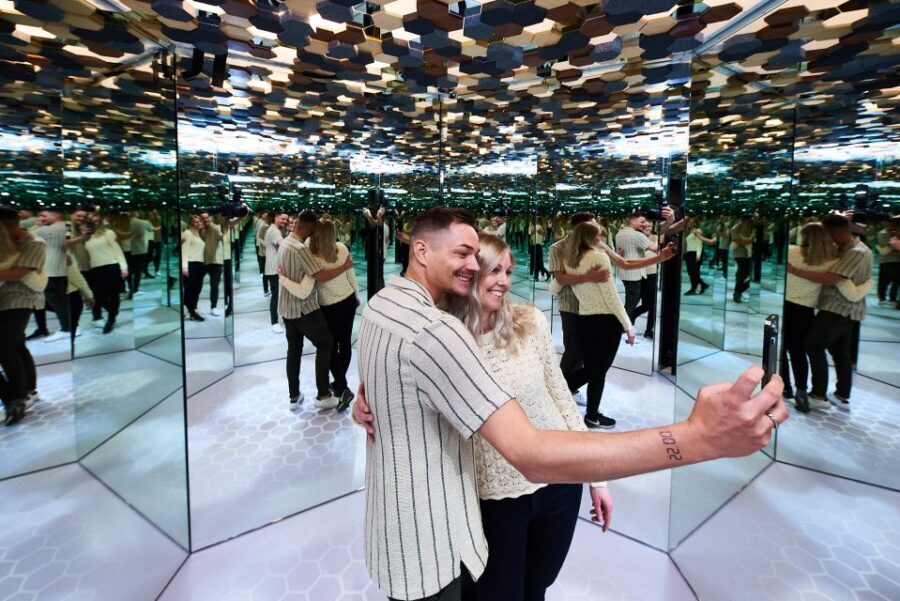
The fun part about Paradox Museum Oslo is that it doesn’t treat you like a passive viewer. You’re interacting with the illusion, and then you can learn what’s happening behind the scenes.
The museum includes learning aids in two main ways:
- Exhibit descriptions that explain what you’re seeing
- QR codes that provide additional information about how each paradox is achieved
This combination is a big quality-of-life feature. Without it, these places can become a set of “cute tricks.” With the explanations, you get the mechanism, the physics angle, and the perception logic. It helps you enjoy the exhibit more because you understand why your brain gets fooled.
Also, some exhibits may feel more familiar than others. A few visitors point out that some early effects are easy to recognize or find online. That doesn’t automatically mean it’s bad. It just means you should come for the experience of seeing it in person and interacting with it under the museum’s lighting and setup.
One more practical note: not every installation is perfect all the time. Some reviews mention an exhibit not working on the day they visited. That’s always a possibility with interactive exhibits. If you encounter something that feels off, keep going. In a collection of 70+ installations, you’re likely to find multiple big hits.
Staff and Photo Help: Friendly Support, With Limits
I was impressed by how professional and friendly the staff are described. People consistently mention helpful guidance, especially when you’re trying to figure out the rules of an exhibit or want extra help with photos.
That said, the museum doesn’t operate like a one-guide-per-exhibit setup. Several reviews indicate that while staff were available to help in at least some areas, there wasn’t staff support at every installation for picture guidance. This is important if you want constant coaching.
If you want to lean on staff help, do it early. The first part of your visit is where you might feel a little uncertain. Some visitors say the beginning can confuse you until you learn how the museum expects you to move and pose. When that happens, ask. The staff are there to help, and one visitor even singled out Kseniia (listed as captain) as amazing.
So think of staff as support for orientation and troubleshooting, not as a permanent photo crew. You’ll still get the experience without help at every photo point, but having someone point out the basic trick can save time.
You can also read our reviews of more museum experiences in Oslo



Where It Fits in Oslo: Location, Getting There, and What to Pair With It
Paradox Museum Oslo is in central Oslo, and that matters for planning. The closest public transportation stops are Nationaltheatret and Stortinget, both just a couple of minutes away. That makes it easy to slot into a half-day plan without a long commute.
Because it’s roughly 1 hour in a timed flow (with some people stretching to 2 hours depending on pace), I’d pair it with nearby Oslo walking time rather than a distant attraction. It works well as:
- A quick, memorable stop between major sights
- An easy rainy-day activity
- A family outing that doesn’t require careful museum reading
It’s also a strong option if you’re traveling with people who don’t all share the same museum tastes. One person loves science; another just wants funny photos. This place hits both, because the illusions are the main event and the explanations are built in.
What’s Included, What’s Not, and the Small Rules That Change Your Visit
Your entry includes:
- Admission to Paradox Museum Oslo
- Access to all exhibition areas
- Access to the Paradox Boutique
Food and drinks are not allowed inside. That’s not a deal-breaker, but it affects timing. If you’re with kids or you plan to spend longer than the 1-hour target, eat before you arrive and bring your appetite for after.
In terms of languages, the host or greeter offers English and Norwegian. That’s useful if you want to ask quick questions at check-in or when you need help understanding the flow.
Wheelchair accessibility is listed, which is good to know upfront. Since it’s a one-way route, having a clear route is typically easier for mobility planning than complex room-to-room wandering.
Paradox Boutique: The Best Time to Buy Souvenirs
Don’t sprint out the door. The Paradox Boutique is part of your included access, and it’s the place to turn the experience into something tangible.
You can find games, souvenirs, and memorable keepsakes. Even if you don’t buy much, it’s worth a slow look because it often matches the museum’s theme: perception tricks and puzzle-style fun. For families, this is usually where the kids get to take home a version of the experience they can repeat.
Think of the boutique as your “wrap-up moment.” You’ve just spent an hour (or more) playing with mind-bending visuals. Now you can browse, relax, and decide what, if anything, you want to keep.
Who Should Book Paradox Museum Oslo (And Who Might Feel Underwhelmed)
This is the kind of activity that tends to please a lot of different groups:
- Families: it’s interactive and described as good for children of all ages
- Friends and couples: it’s playful, visual, and easy to enjoy together
- Students and curious adults: the QR explanations and physics/perception angle make it more than pure gimmicks
You might be less thrilled if you’re expecting a big traditional museum. Some people mention it’s smaller than expected and that they finished quickly. That’s not a flaw—it’s just the format. Paradox Museum Oslo is designed for a short, high-output experience: try, laugh, photo, learn, repeat.
Price is also part of the fit. At $29 per person, it’s not the cheapest thing in Oslo. But if you’re going to take time with interactive exhibits, you get plenty of “moment-to-moment” entertainment. If you’re only looking for a quick look with no interest in doing the interactive parts, it may feel pricey for what you get.
Should You Book Paradox Museum Oslo?
If you like hands-on experiences, clever visual tricks, and photos that actually make sense when you line up the angle, book it. Paradox Museum Oslo is a solid use of time in central Oslo, especially when you want something fun that still gives you explanations through descriptions and QR codes.
I’d say yes if you:
- Want an interactive, family-friendly activity
- Enjoy optical illusions and don’t mind a one-way flow
- Care about photo points and want a place that makes posing easy
- Are the type to ask staff for help when you’re stuck
I’d think twice if:
- You prefer large, deep museums that take half a day or more
- You hate interactive exhibits and mostly want passive viewing
- You’re sensitive to the idea that some photo help may not be available at every location
For most people, it’s a straightforward choice: a short, high-fun stop that leaves you with stories, photos, and a brain that’s a little more skeptical than before.
FAQ
How long does Paradox Museum Oslo take?
The experience is listed as 1 hour. Some people may spend longer depending on how much time they take with each installation.
Where do I check in for my ticket?
Show your ticket at the museum entrance and check in 10 minutes before your booked time.
What is the price?
The ticket price is listed as $29 per person.
Is the museum route one-way?
Yes. It’s described as a one-way flow experience with signs to follow to each exhibit.
Are food and drinks allowed?
No. Food and drinks are not allowed.
What languages are supported?
The host or greeter is listed as English and Norwegian.
Is the museum wheelchair accessible?
Yes, wheelchair accessibility is listed.
What’s included with admission?
Admission includes access to the exhibition areas and the Paradox Boutique.
What are the closest public transportation stops?
The closest stops are Nationaltheatret and Stortinget, both just a couple of minutes away.
Is there a host/greeter at the museum?
Yes. There is a host or greeter listed with English and Norwegian support.