REVIEW · OSLO
Oslo Highlights Private Walking Tour
Book on Viator →Operated by OURWAY Tours - Oslo · Bookable on Viator
Oslo in five focused hours. This private walking tour links the big-culture center of the city with two must-see stops: Vigeland Park and the Fram Museum. I especially love how the route keeps you moving between neighborhoods without feeling random, and how you get guided context for what you’re actually seeing. One thing to consider: if your guide is less structured, the day can feel like lots of steps with not enough direction, so it helps to ask for the plan upfront.
You’ll also get real convenience baked in. Many stops are quick photo pauses, and admission is handled for you (including the Fram Museum). The route takes place in areas with gravel or unpaved walkways and assumes moderate stamina, so comfortable shoes are not optional.
In This Review
- Key highlights to know before you go
- A private five-hour loop that actually covers the good stuff
- Who will like this most
- Nobel Peace Center and Oslo City Hall: why December 10 matters
- Nationaltheatret and the Royal Palace: classic Oslo on foot
- Karl Johans Gate and the Norwegian Parliament: the city’s main spine
- A small practical tip
- Akershus Fortress and the Oslo Fjord views
- Bankplassen and Christian IV’s Glove: Oslo at the human scale
- Vigeland Park: Gustav Vigeland’s one-man sculpture world
- How to get the most out of your hour
- Fram Museum: original polar ships and stories that stick
- Price and value: what you’re really paying for
- A note on guide experience
- Getting comfortable: walking, weather, and terrain reality
- My practical packing checklist
- Who should book this Oslo highlights tour?
- Should you book? My honest take
- FAQ
- What is the duration of the Oslo Highlights Private Walking Tour?
- Where does the tour start and end?
- Is this tour private?
- What attractions are included?
- Are entrance fees and transportation included?
- Does the tour operate in bad weather?
- Is cancellation free?
Key highlights to know before you go
- Nobel Peace Center + City Hall in one flow: you’ll connect the prize setting with the civic spaces that host it.
- Karl Johans Gate as your backbone: this main pedestrian street ties together multiple landmarks with easy walking.
- Akershus Fortress by the water: you get the fjord views while learning how the fortress fits into Oslo’s story.
- One-artist sculpture world at Vigeland Park: hundreds of sculptures made by Gustav Vigeland, all in one designed space.
- Fram Museum included: two original polar ships are the centerpiece, with guided storytelling around polar exploration.
A private five-hour loop that actually covers the good stuff
This tour is designed as a straight-through hits route. You start at the Nobel Peace Center (Brynjulf Bulls plass 1) and end at Oslo Central Station (Jernbanetorget 1), close to the Oslo Opera House. That matters because you’re not ending in a random place; you’re finishing where trains, trams, and walking connections are easiest.
The experience runs about 5 hours, and it’s private, meaning only your group participates. It’s also set up to work in all weather, which is a real thing in Norway—so don’t plan on skipping parts if the sky changes.
The good news: the pace is built around a mix of short exterior stops and two longer, more absorbing sections at Vigeland Park and the Fram Museum. That gives you time to actually look, not just pass by.
You can also read our reviews of more walking tours in Oslo



Who will like this most
You’ll get the most out of this if you like structured walking and you want someone to point out what you’d otherwise miss. It’s a solid pick for a first visit to Oslo or for a trip where you don’t have days to scatter across museums and neighborhoods.
If you prefer to wander slowly on your own, you might find the schedule a bit tight. Still, even then, the two museum anchors (Vigeland + Fram) make this worth considering.
Nobel Peace Center and Oslo City Hall: why December 10 matters
Your morning starts in the former train-station setting of the Nobel Peace Center. It’s dedicated to the Nobel Peace Prize and the annual ceremony on December 10. Even if you don’t plan to spend ages reading every panel, the guided framing helps you understand why these buildings are so tightly linked to the prize.
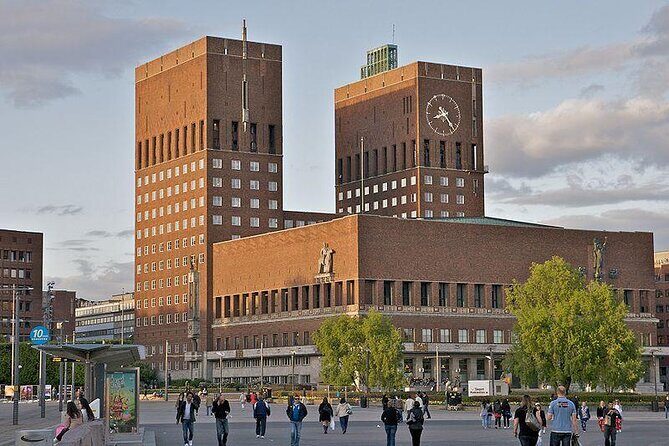
From there, you move to Oslo City Hall, the home of local government and also the venue associated with Nobel Peace Prize award moments. The standout here is how much art and motifs connect back to Norwegian history, culture, and everyday working life. On a walking tour like this, that kind of explanation turns a quick stop into something you can remember later.
I like having these two together because they give you contrast: one is focused on the prize and what it represents, while the other shows the civic machine around it.
Nationaltheatret and the Royal Palace: classic Oslo on foot

Next you pass Nationaltheatret (the National Theatre). It’s been one of Norway’s main stages for classic and innovative productions for over 100 years, and it’s the kind of building that instantly tells you the city values arts and public events. You don’t need a ticket for a long sit-down here; the goal is to get the setting and why it matters.
Then you reach the Royal Palace, the official residence of the monarch where much of the Royal Court works. Again, you’re not meant to linger for hours. It’s more about understanding the role of monarchy in modern Oslo and recognizing what you’re seeing as more than a postcard façade.
If you’re the kind of visitor who loves architecture details and civic landmarks, this section will feel like the calm before the sculpture and polar-explorer intensity later.
Karl Johans Gate and the Norwegian Parliament: the city’s main spine
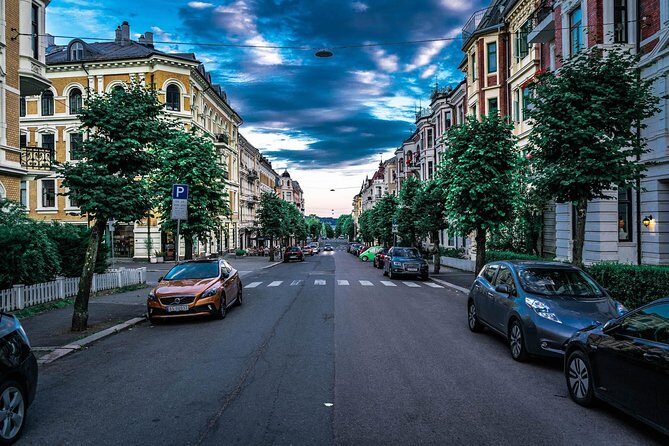
One of the smartest parts of this route is how it uses Karl Johans Gate, a pedestrian street around 1,020 meters long. This is where you go to shop, people-watch, and quickly get a sense of Oslo’s everyday pulse. Since it’s mostly a walking corridor, it’s easy for your guide to weave in stories without constantly changing gears.
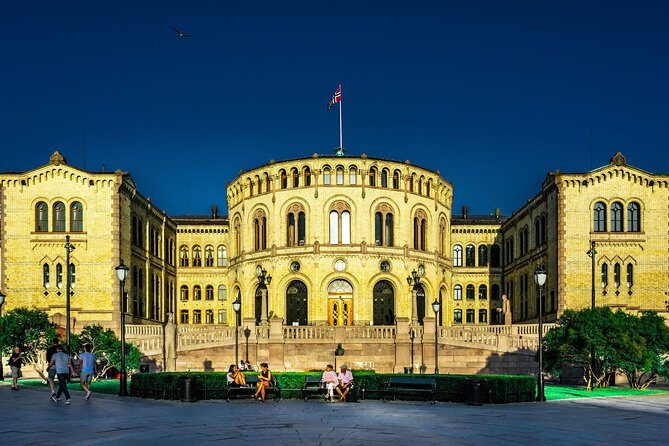
Along that same axis you’ll see the Norwegian Parliament (Stortinget). It sits right on Karl Johans Gate and is tied to a lot of public activity. The practical value of covering it on foot is that you understand its placement in the city, not just as an isolated building.
You can also read our reviews of more private tours in Oslo




A small practical tip
Keep your phone handy for quick orientation. If the day feels like lots of stops in a row, you’ll still be able to track where you are along Karl Johans Gate and get your bearings fast.
Akershus Fortress and the Oslo Fjord views
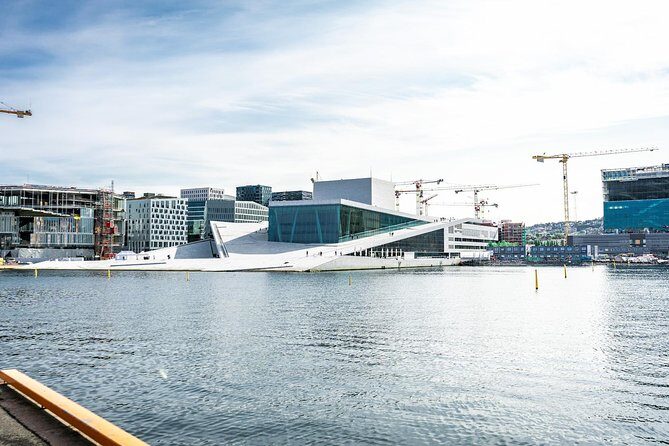
Akershus Fortress (Akershus Slott og Festning) is the tour’s water-and-history pause. It overlooks the Oslo Fjord and has that “this was built to watch the horizon” feeling, even if you’re only spending about 15 minutes here.
You’ll get more out of this stop if you look outward as well as up. The fortress works best when you treat it like a vantage point. Even on a fast day, the fjord views make a big difference in how you remember the city.
Bankplassen and Christian IV’s Glove: Oslo at the human scale
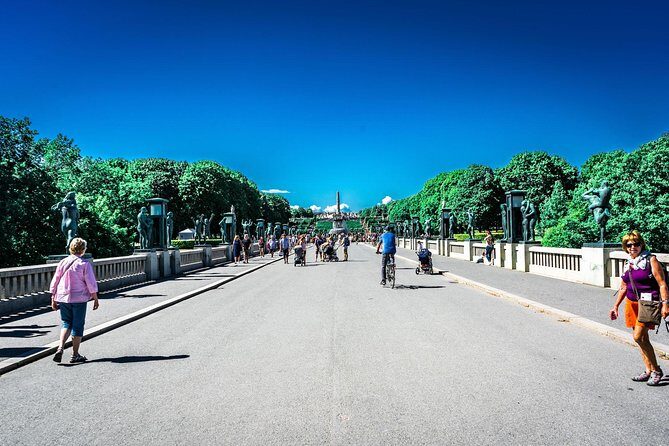
After the fortress, you shift into the older, street-level side of the center.
Bankplassen (The Bank Square) marks where the Bank of Norway was once located. The square also connects to a famous café scene—Engebret Café—that drew well-known Norwegians such as Ibsen and Munch. This is the kind of detail I love on walking tours because it helps you picture the city beyond official buildings.
Then you’ll walk through Christiana Torv to see the statue of Christian IV’s hand. From there, you’ll learn about Kvadraturen, the neighborhood named for the rectangular street plan of Christian IV’s Renaissance town layout.
This section is short, but it’s how the tour feels like it belongs to real Oslo. You’re not just collecting landmarks; you’re seeing how the street pattern shapes movement and how people have gathered here for centuries.
Vigeland Park: Gustav Vigeland’s one-man sculpture world
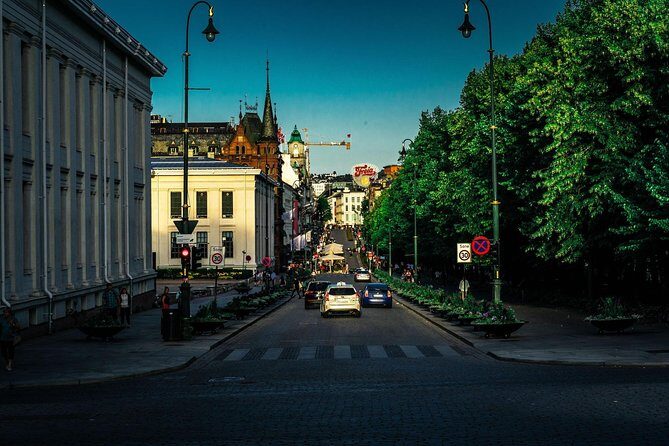
Now for the highlight most people remember long after the walk is done: Vigeland Park.
You get about 1 hour here, and it’s free to enter. The park is known for having over 200 sculptures created by one man only: Gustav Vigeland. That constraint matters. When you’re in the park, you can feel the consistency of his themes and style. It’s not a museum gallery made from multiple artists’ viewpoints; it’s one creative brain expressed again and again.
What makes this stop worth your attention is the guided storytelling about Vigeland himself—why he made these forms, and what the sculptures are trying to say about people, life, and emotion. And yes, you’ll likely pick a favorite sculpture. Even if you don’t think you’re the sculpture type, the variety of poses and expressions can be surprisingly human.
How to get the most out of your hour
Take a few minutes to slow down and pick a route inside the park. If you just follow the guide’s footsteps the whole time, you’ll miss the moments where your eye catches meaning on its own. Use the guide for context, then let your instincts pick what you respond to.
Fram Museum: original polar ships and stories that stick
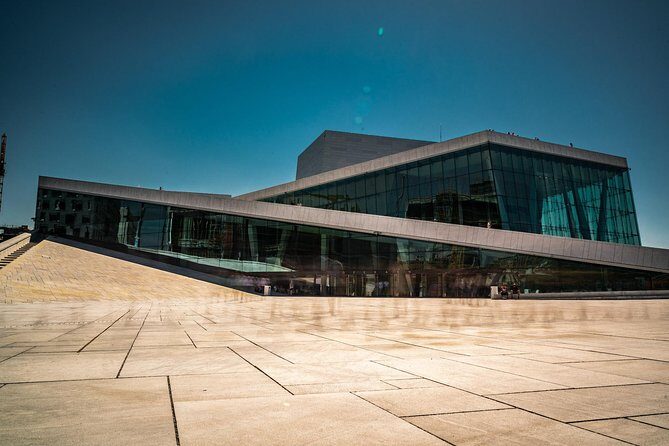
The tour ends its heavy lifting at the Fram Museum, with the Fram Museum entrance included. You’ll spend about 1 hour here, and this is where the day turns from city landmarks into exploration.
The museum tells the story of Norwegian polar exploration and the nation’s polar heroes. The key draws are two original polar ships: the Gjøa and the Fram. These vessels were used to explore the Arctic and Antarctic, two places described as extremely hostile—exactly the kind of setting that makes exploration feel real and not just academic.
I like how this museum stop complements the rest of the tour. Oslo’s civic center and public art are one side of Norway’s identity. The Fram Museum gives you the other side: endurance, planning, and the will to go where maps end.
If you enjoy history that feels physical, this is your payoff. If you’re less into museums, still give this one an hour. The ships are the main event, and seeing original vessels changes the tone of everything you thought you knew about polar exploration.
Price and value: what you’re really paying for
The price is $374.81 per person for a private walking tour, about 5 hours. That’s not cheap, so here’s how I think about value.
You’re paying for three big buckets:
- A professional guide who connects the dots across the city
- Public transport included, so you don’t waste time figuring out how to hop between areas
- Entrance fees included where it counts—especially the Fram Museum (and free entries at several other stops)
In practice, that can work out well if:
- you’re visiting during a period when you’d otherwise pay for separate museum tickets and a guide
- your group wants the convenience of one plan instead of piecing together multiple attractions
- you want someone to interpret what you’re seeing, not just point at it
If you’re the type who’s happy to read on your own and doesn’t need guiding, a self-guided loop could be cheaper. But if you do want the context and pacing, this tour is aiming at that “time saved” advantage.
A note on guide experience
Your experience can rise or fall based on how your guide communicates. One guide, Craig, was highlighted for making sure the group saw what was important. Another experience involved frustration about unclear scheduling and the guide speaking quietly to just one group member instead of the whole group. That doesn’t mean every tour runs the same way, but it does suggest you should be proactive: ask what the flow is, and ask your questions in a way that pulls the guide back to the entire group.
Getting comfortable: walking, weather, and terrain reality
This tour runs in all weather conditions, so dress for Norway’s “it’s fine until it isn’t” style. You’ll also walk on gravel or unpaved walkways for part of the route, which is worth planning for. Shoes with solid traction are the difference between a fun day and a tense one.
The tour says moderate physical fitness is needed. That lines up with the structure: short stops add up, and you’ll be on your feet across the city center.
My practical packing checklist
- Comfortable walking shoes (traction helps on gravel)
- A layer you can adjust quickly
- A small umbrella or rain shell if the forecast looks sketchy
- A phone with offline maps for sanity during photo breaks
Who should book this Oslo highlights tour?
This is a good fit if you want:
- a first-time overview of Oslo’s most recognizable sights
- city center landmarks plus two big “destination” stops (Vigeland + Fram)
- an easy, guided format that doesn’t require ticket hunting
It’s less ideal if you:
- dislike walking in a structured timeline
- need lots of museum time beyond an hour
- get anxious when the plan isn’t clearly explained—if that’s you, ask your guide early for the order of the day
Should you book? My honest take
I’d book this if you want a compact, guided Oslo sampler that includes the two attractions most likely to make you say, wow, that’s unique: Vigeland Park and the Fram Museum. The Nobel and civic stops give you context for modern Norway, and finishing near Oslo Central Station keeps your day efficient.
If you’re budget-conscious, you might compare the cost to buying individual museum tickets and building your own walking plan. But if you place a value on having a guide coordinate the day and keep your time tight, this tour is built for that.
One last thought: because communication quality can make or break any group experience, ask right at the start how the timing works. A good guide will welcome that question and set everyone up for a smooth walk.
FAQ
What is the duration of the Oslo Highlights Private Walking Tour?
It runs for about 5 hours.
Where does the tour start and end?
It starts at the Nobel Peace Center (Brynjulf Bulls plass 1) and ends at Oslo Central Station (Jernbanetorget 1), close to the Oslo Opera House.
Is this tour private?
Yes. It is a private tour/activity, and only your group will participate.
What attractions are included?
The tour includes stops at the Nobel Peace Center, Oslo City Hall, Nationaltheatret, the Royal Palace, Karl Johans Gate, the Norwegian Parliament, Akershus Fortress, Bankplassen, Christian IV’s Glove, Vigeland Park, and the Fram Museum.
Are entrance fees and transportation included?
Yes. Entrance fees and public transport are included, and Fram Museum admission is included. Vigeland Park entry is free.
Does the tour operate in bad weather?
Yes, it operates in all weather conditions. You should dress comfortably and appropriately.
Is cancellation free?
Free cancellation is available up to 24 hours in advance for a full refund.