REVIEW · OSLO
Oslo Scavenger Hunt and Highlights Self Guided Audio Tour
Book on Viator →Operated by World City Trail · Bookable on Viator
Oslo’s streets turn into a game. This self-guided scavenger hunt pairs a GPS audio walk with short riddles so you can explore at your own tempo, starting and stopping whenever you want. Two things I really like about it: you get a flexible route that fits real life, and the puzzles encourage you to look instead of just pass by.
The only real drawback to plan around is that it’s outdoor-only and depends on your phone working properly. If you don’t have mobile data (and you keep a VPN on), the app can misbehave, and the whole experience becomes a lot less fun.
In This Review
- Key things you should know before you go
- How this Oslo audio hunt works (and why it feels worth $10.71)
- Starting at Oslo Central Station without waiting on anyone
- The tech checklist: the difference between fun puzzles and frustration
- Walking reality: 4.7 km sounds easy until it isn’t
- Stop-by-stop: what the Oslo hunt feels like at each landmark
- Frogner Park: start in a scenic mood
- Oslo Cathedral: a big landmark for good orientation
- The Norwegian Parliament: government buildings, outside perspectives
- Oslo City Hall: iconic and built for people-watching
- Nobel Peace Center: a story stop that keeps you curious
- The Royal Palace: royal surroundings without the pressure
- Nationaltheatret: a central hinge in the walk
- Uranienborg Church: a calmer finishing feel
- What’s genuinely great here: riddles, control, and family-friendly pacing
- Where this hunt might not fit your style
- Tips and local recommendations: how to turn the walk into a meal plan
- Who should book this Oslo scavenger hunt
- Should you book it? My practical take
- FAQ
- Do I need a live guide?
- How long is the Oslo hunt?
- What do I need on my phone to make it work?
- Is there an entrance fee to attractions?
- Where does the tour start and end?
- What if the weather is bad or I get sick?
Key things you should know before you go
- Start anytime, 24/7: no fixed departure time, so you can match it to your day
- 4.7 km route, flexible pacing: about 60 minutes of walking time within a 2.5 to 3 hour activity
- Riddles tied to the outdoors: you don’t need attraction entrances or extra tickets
- GPS + audio navigation in the app: helps you keep moving and reduces map stress
- Family-friendly format: short tasks make it work well even with kids
- Plan for tech: charged smartphone, mobile data, and no VPN are part of the deal
How this Oslo audio hunt works (and why it feels worth $10.71)

For about $10.71 per person, you’re buying freedom plus structure. You’re not paying for a guide’s time or a bus ride. You’re paying for an app that tells you where to go next, provides audio direction, and gives you puzzle prompts along the way. That’s a good value model in a city like Oslo, where the sights are spread out enough that a walking route helps, but you still want control.
The other value lever is that the activity is designed around outdoor areas. That means you’re not hit with surprise entrance fees just to keep the hunt going. In practice, it turns famous landmarks into “checkpoints” you can actually reach without juggling ticket lines.
The hunt lasts about 2.5 to 3 hours for most people, with an estimated 4.7 km walk underneath it. You can treat that as a guideline, not a rule. If you stop for photos, duck into a café, or slow down at a park, your timing stretches—because there’s no time limit.
You can also read our reviews of more guided tours in Oslo



Starting at Oslo Central Station without waiting on anyone
You start at Oslo Central Station (Jernbanetorget 1, 0154 Oslo). The nice part is you’re not meeting a person or joining a group at a set hour. You download the World City Trail app, then log in using your 10-digit booking reference. After that, you can begin at any time (24/7).
This is especially handy if your Oslo day is already packed. You can do it early to help you get oriented, or do it later as a relaxed way to connect landmarks you’ve seen on your map. And since the start point is near public transportation, it’s easy to slot in.
One practical tip: start with the route suggestion if you want the smoothest flow. The recommended launch point is the Tiger statue area, even though you can start and finish elsewhere depending on what you need that day.
The tech checklist: the difference between fun puzzles and frustration

This tour is only as good as your phone setup. You need three things to keep it running:
- a fully charged smartphone
- active mobile data connection (not just offline maps)
- VPN disabled, and avoid city Wi‑Fi since it can cause the app to malfunction or disconnect
If you travel with a low battery and weak signal, plan differently. I’d charge fully before leaving your accommodation and consider a power bank. And if you usually rely on Wi‑Fi, don’t assume it will cooperate.
For listening, you can use your phone’s speaker or headphones. Headphones can make the riddles feel more focused, but either option works. Since you’re outdoors for the full experience, it also helps to wear comfortable walking shoes—4.7 km adds up after a while.
Walking reality: 4.7 km sounds easy until it isn’t

The route is about 4.7 km, with around 60 minutes of walking time built into the plan. The total activity usually runs 2.5 to 3 hours because the riddles make you slow down, read, and observe.
That means you should treat this as a sightseeing walk, not a quick “see the city” stroll. You’ll be stopping often enough that you won’t feel like you’re speed-walking from one photo spot to the next. You can also pause for a break and resume later exactly where you left off.
Weather is part of your planning too. The good news is you can reschedule if bad weather or illness stops you. And the length of access is generous: you have access for a full year, so you’re not pressured to cram it into one day.
Stop-by-stop: what the Oslo hunt feels like at each landmark

Think of each stop as a moment to switch gears. You move, you listen, and then you solve a prompt using what you can actually see around you. That outdoor-only approach keeps it grounded and helps you avoid the “why am I paying to stand outside” feeling.
A few more Oslo tours and experiences worth a look





Frogner Park: start in a scenic mood
Frogner Park kicks off the experience. It sets the tone: more open space, less rushing, and plenty to look at while you work through the first puzzle. It’s a strong opener because you’re not thrown into dense streets right away—you ease into the hunt rhythm.
A small consideration: parks can be chilly or windy, especially if you’re doing this outside peak summer weather. Dress for the outdoors, not for the moment you walked out the door.
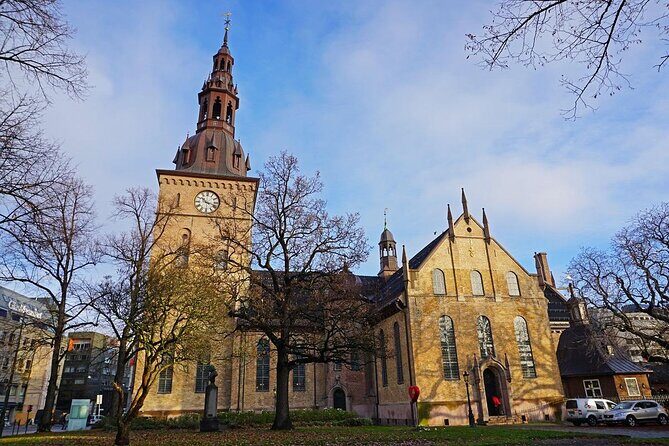
Oslo Cathedral: a big landmark for good orientation
Next comes Oslo Cathedral. This is a classic Oslo landmark that helps you anchor your sense of place. When the puzzle asks you to pay attention, the cathedral area gives you clear visual cues and a sense of “this is the real deal” geometry in the city.
The practical value here is orientation. Even if you don’t spend long at the building itself, the stop acts like a compass point for the rest of the route.
The Norwegian Parliament: government buildings, outside perspectives
Then you reach the Norwegian Parliament. Government buildings are useful puzzle zones because they’re recognizable and easy to observe from the streets and surrounding areas. You’ll be outside, reading clues and listening to stories that fit the checkpoint idea.
The potential downside is crowd flow. Central Oslo areas can get busier at certain hours. If you want quieter puzzle-solving, aim for a time when you’re not dodging tour groups every few minutes.
Oslo City Hall: iconic and built for people-watching
Oslo City Hall is one of the stops people tend to enjoy because it’s visually memorable. It’s also a perfect place for riddles because you can look around—shapes, placements, and details around the square area give you enough to work with.
If you like photos, you’ll probably want an extra minute here. The good news: the tour is flexible. Take it slow and let the puzzle moment turn into a mini break.
Nobel Peace Center: a story stop that keeps you curious
The Nobel Peace Center is next. It’s a stop that naturally invites attention because the name alone carries meaning, and the audio portion adds context as you move through the checkpoint area.
One thing to remember: this is still an outdoor walk. If you’re the type who expects a deep museum visit, you’ll need to adjust expectations. The hunt is built for the area around the site, not for ticketed entry.
The Royal Palace: royal surroundings without the pressure
The Royal Palace rounds out the core “grand Oslo” feel of the route. Again, you’re focusing on what you can see and what the app prompts you to notice. If you enjoy story-driven walks, this stop often works well because it feels ceremonial, even when you’re just passing through.
The best way to enjoy it is to slow down for the audio and do the puzzle honestly—don’t skim. The point of the hunt is to train your attention.
Nationaltheatret: a central hinge in the walk
Nationaltheatret is another landmark stop that keeps your route moving through the city center. It helps break the journey into chunks so you don’t feel like you’re walking endlessly between “big” sights.
If you need a breather, this is a good place to do it. You’ll likely find benches and slower street rhythm nearby, which makes it easier to reset before the final stretch.
Uranienborg Church: a calmer finishing feel
Finally, Uranienborg Church closes the loop with a landmark that feels less like a rush and more like a neighborhood anchor. It’s a fitting ending point for a self-paced hunt because you can finish your puzzle work and then linger if you want a last look around the area.
Then the activity ends based on the setup in the app. The start is Oslo Central Station, and the experience is designed around returning you there or ending near the meeting point area. Either way, the key is that you’re not locked into one rigid “finish at the exact starting spot” feeling—your day stays flexible.
What’s genuinely great here: riddles, control, and family-friendly pacing
The strongest praise in the experience comes from the riddle format. The puzzles are a fun way to stay engaged while walking between landmarks, and they encourage you to use imagination plus observation. You’re not just reading signage—you’re solving little prompts that make the city feel interactive.
This also works well with kids. The format is broken into manageable tasks, and it turns a sightseeing day into an activity kids can participate in without getting bored. If you’re traveling with children who can handle short attention bursts, this is a smart match.
Where this hunt might not fit your style

Even though it’s fun, it’s not for everyone. Here’s when you might hesitate:
- You hate tech dependence. The app needs mobile data and a working GPS experience.
- You want a guided talk. This is 100% self-guided, so you won’t get a live person to answer questions on the spot.
- You expect indoor access. The activity is outdoor-only, and the puzzles are tied to outdoor areas, so there’s no “step inside” payoff built into the hunt.
Also, one review note suggests it would be nicer if the route ended closer to where you started. That’s worth considering if you strongly prefer a tight loop and hate backtracking. The app gives some control, but the plan is still centered on the Oslo Central Station area.
Tips and local recommendations: how to turn the walk into a meal plan

One underrated part is that the app includes hand-picked local restaurant and shop tips. That’s useful because it gives you practical ideas right at the time you’re likely hungry or shopping.
The key is to use these suggestions as starting points. You’ll still want to check what’s open and walking distance from your current position, but having a short list saves decision fatigue.
And since the audio guide is available in six languages—English, German, French, Dutch, Italian, and Spanish—this is easier to share with a mixed group than some tours that only run in one language.
Who should book this Oslo scavenger hunt
I’d put this on your shortlist if you want:
- a low-cost way to see major Oslo landmarks in one walking day
- a flexible plan you can start anytime without waiting for a group
- a way to keep kids engaged with short tasks
- a guided-feeling experience without booking a live guide
It’s also a good option for couples or solo travelers who like to set their own pace. If you’re the type who likes to wander with a purpose, this fits well.
Should you book it? My practical take
Book it if you want a self-guided Oslo walk that turns famous places into a game. The value is strongest when you’ll actually enjoy puzzle-solving and you’re comfortable relying on your phone for GPS and audio.
Skip it if you’re traveling with shaky mobile data, you can’t manage the VPN/mobile-data rules, or you want a conversation with a real person at each site. Also skip if you’re hoping for a mostly indoor tour, because this one is built around outdoor areas.
If you’re in good tech shape and you like to explore with a little structure, this is one of the easier ways to get more out of Oslo in a few hours.
FAQ
Do I need a live guide?
No. It is fully self-guided. Nobody will meet you, and you can start anytime.
How long is the Oslo hunt?
Plan for about 3 hours total on average. Walking time is about 60 minutes for the 4.7 km route, depending on pace and breaks.
What do I need on my phone to make it work?
You need a fully charged smartphone and an active mobile data connection. Disable any VPN and avoid city Wi‑Fi, since those can cause app problems.
Is there an entrance fee to attractions?
No entrance fees are needed for the activity. The puzzles relate to outdoor areas of the attractions.
Where does the tour start and end?
The start point is Oslo Central Station (Jernbanetorget 1, 0154 Oslo). The activity is set up to end back at the meeting point, though the app allows you to choose where to finish.
What if the weather is bad or I get sick?
If bad weather or illness prevents you from going, you can do the tour any other day. You can also contact support to change the tour to a different city.
If you want, tell me your travel month and whether you’re with kids. I can suggest a realistic start time and how to pace the route so you don’t feel rushed.