REVIEW · OSLO
Oslo Self Guided Walking Tour with an APP
Book on Viator →Operated by Trippy Tour Guide · Bookable on Viator
A city-walk guided by your phone. This Oslo self-guided walking tour uses the Trippy Tour Guide app to point you from Jernbanetorget to Frogner Park, with an offline map and narration along the way. It’s a great way to see Oslo’s big-name sights and the calmer in-between corners without waiting for a group.
I like two things most. I love the 25+ narration points that help you read each building as you pass it—why it’s there, what to notice, and how it fits into Oslo’s story. I also love that Oslo Cathedral is included, so one of the most rewarding stops doesn’t require an extra purchase.
One caution: the posted time range (about 2 to 3 hours) can stretch, because the route is packed with major landmarks. If you plan to go inside the places that cost extra—like Akershus Castle and Fortress or the Munch Museum—you’ll want to budget more time than you first think.
In This Review
- Key highlights at a glance
- Why this Oslo walk works: Karl Johans Gate to Frogner Park
- Using the Trippy Tour Guide app (and why offline matters in Norway)
- Tiger Sculpture to Karl Johans Gate: start with Oslo’s big nickname
- Oslo Cathedral (included) and the Parliament stop you can actually use
- Grand Hotel Oslo, the National Theatre, and University Square
- The Royal Palace area and the “Sentrum” contrast that makes Oslo feel real
- Oslo City Hall and the Nobel Peace Center: governance and ideals in one sweep
- National Museum, Deichman Bjørvika, and modern Oslo’s best photo angles
- Munch Museum and Akershus: the two paid entries you decide on
- SALT Sauna and the Oslofjord stretch: winter energy without forcing a plan
- Barcode Oslo, then Frogner Park: finish with Vigeland’s sculptures
- Price and value: how $14.99 turns into a flexible afternoon
- Who this tour suits best (and who might want a different format)
- Should you book this Oslo self-guided walk?
- FAQ
- How long is the Oslo self-guided walking tour?
- Where does the tour start and end?
- Is the tour available in English?
- Does the tour include entry to any attractions?
- What does the Trippy Tour Guide app provide?
- Do I need Wi‑Fi or data to use the map?
- Are there any limits on when I can start the tour?
Key highlights at a glance
- Offline navigation that keeps working: fully offline map means you don’t need Wi‑Fi or data.
- Audio prompts at 25+ points: narration helps you notice details without stopping to research.
- Cathedral entry included: Oslo Cathedral is part of the deal, not an add-on.
- A smart start and finish: from Jernbanetorget station to Frogner Park (Kirkeveien, 0268 Oslo).
- Mostly free viewing, with a few paid options: Akershus and Munch Museum entries cost extra if you want them.
Why this Oslo walk works: Karl Johans Gate to Frogner Park
This route is built around one of Oslo’s easiest “spines” for walking—Karl Johans Gate—then it expands into the neighborhoods and landmarks that make Oslo feel both historic and modern. You start near Jernbanetorget, cross into the city’s ceremonial core, and end where many people naturally want to slow down: Frogner Park.
What makes it practical is the pacing logic. You get short stop times at most sights, which is perfect for a self-guided format. You can skim what you’re not into, then spend extra minutes where the story clicks—like stepping into Oslo Cathedral, or lingering at public monuments that reward even a quick look.
It’s also good value in how it divides “included” vs “optional.” One entry is included (Oslo Cathedral). Most other stops are free to view from the outside or in public areas. That means you can control your total spend while still seeing a lot.
You can also read our reviews of more walking tours in Oslo



Using the Trippy Tour Guide app (and why offline matters in Norway)
This tour runs on the Trippy Tour Guide app and is designed for offline use. That’s a big deal in Oslo, because planning a route by data coverage alone can become an annoying guessing game. With the offline map, you can keep walking even if your phone behaves like a phone and battery starts to act dramatic.
The app also gives you a mobile ticket and detailed directions to both major attractions and smaller, easier-to-miss points. The narration points (25+) act like a walking companion. You’re not just staring at random statues and facades; you get a quick orientation right when you’re in front of the thing.
Finally, this is listed as private in the sense that only your group participates. For a self-guided walk, that usually translates to less “schedule pressure.” You’re not tied to a guide’s speed.
Tiger Sculpture to Karl Johans Gate: start with Oslo’s big nickname
Your first landmark is the Tiger Sculpture. It’s a bronze icon created for Oslo’s 1000th anniversary, and it ties directly into the city’s nickname, Tiger City. Even if you only have a few minutes here, that context helps you understand why Oslo leans so hard into symbols and public art.
Next comes Karl Johans Gate, Oslo’s main street that stretches from Central Station to the Royal Palace. The practical value of this portion is that Karl Johans Gate is an easy walking corridor—shops and cafes along the way, plus historic buildings within easy reach. As you walk, listen to the narration cues and use them like a checklist: you’ll quickly spot which buildings deserve a closer look.
Tip: This first leg is also a mental warm-up. If you’re prone to wandering without direction, the app’s stop-by-stop guidance helps you get your bearings fast.
Oslo Cathedral (included) and the Parliament stop you can actually use

The highlight of the “included” portion is Oslo Cathedral. It’s a brick masterpiece from 1697, and the tour includes entry. Inside, the most talked-about feature is the ornate interior with a starry ceiling and connections to royal history. Practically, this is the kind of stop that rewards a few minutes of quiet. You can take it at your own pace, and you don’t have to factor in extra ticket decisions.
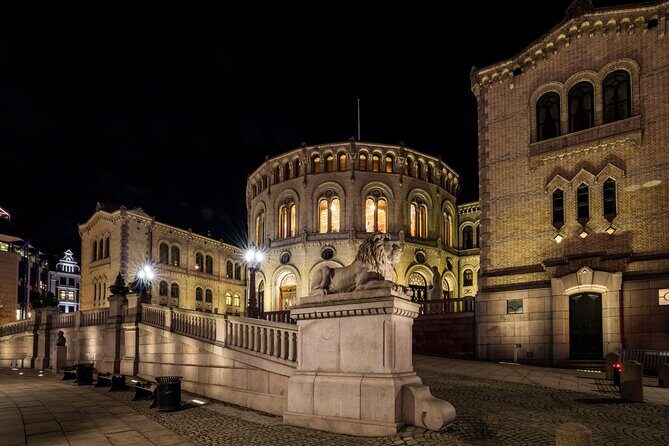
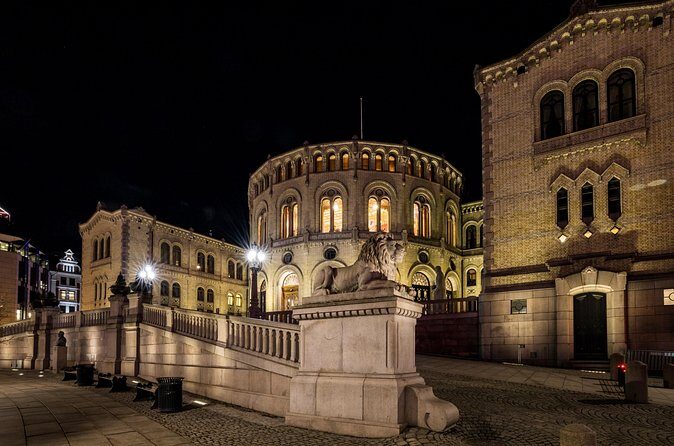
A short walk later is the Norwegian Parliament (Stortinget), Oslo’s yellow-brick landmark opened in 1866. This stop is more about atmosphere and orientation than inside time on this specific walking flow. The good news is that there are free public tours available, so if you’re the type who wants to go one step further, you’ve got an easy next move.
Grand Hotel Oslo, the National Theatre, and University Square

From the Parliament area, you slide into the “ceremony and culture” stretch. Grand Hotel Oslo sits right on Karl Johans Gate and is famously tied to the Nobel Prize tradition—hosting Nobel Prize events since 1874. The facade and clock tower give you a classic Oslo landmark feel without needing long detours.
Then you reach the National Theatre, opened in 1899. The building mixes Classical and Art Nouveau style, so you get two different design languages in one view. Since the tour notes that you can see the exterior easily, it works well as a short pause—especially if you want a photo and a few notes from the narration before continuing.
After that, University Square brings a different flavor. It’s centered on Oslo University’s historic buildings and statues honoring figures like Holberg, Welhaven, and Wergeland. This is one of those spots where a minute or two of attention pays off, because the statues are doing narrative work—turning public space into a compact history lesson.
You can also read our reviews of more guided tours in Oslo






The Royal Palace area and the “Sentrum” contrast that makes Oslo feel real
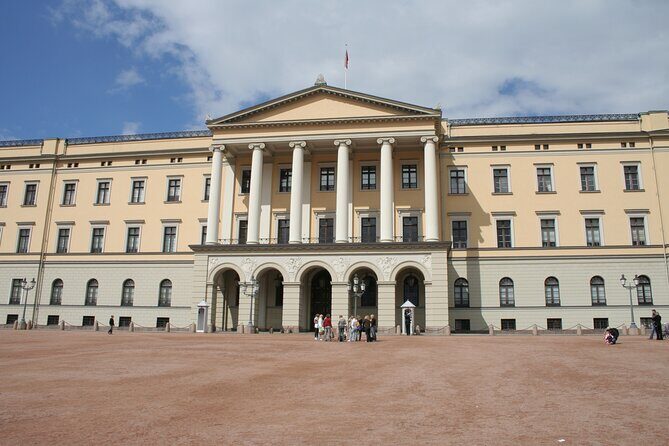
At the end of Karl Johans Gate sits the Royal Palace, built in 1847 in a neoclassical style. For this tour, the key detail is that park entry is free. In practice, that gives you an option: you can enjoy the approach and public grounds without needing a paid entry ticket.
Then comes Sentrum, Oslo’s old center with a layout that traces back to the 15th-century grid. The contrast is part of the point. You’re walking between older street structure and newer buildings, with charm in the cobbled streets and visible public sculpture elements like bronze domes.
If you like cities that show their layers—old planning, new architecture, steady daily life—this is where the walk starts to feel less like a checklist and more like a real neighborhood stroll.
Oslo City Hall and the Nobel Peace Center: governance and ideals in one sweep

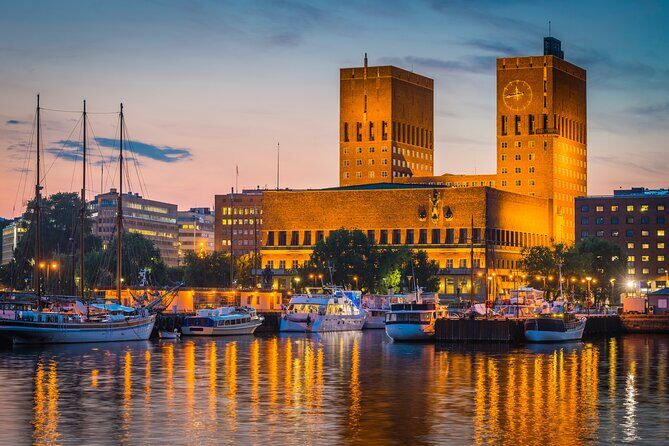
Oslo City Hall (built 1950) is next on the route. The Nobel Peace Prize connection is direct here, and the building’s red-brick towers give you a strong visual anchor. The interior is described as art-filled, but for this walk you can focus on the public areas that are free and use the square for a breather. The tour also points you to a statue of Harald Hardrada, which adds another layer of medieval-era connection in a modern civic setting.
Then you reach the Nobel Peace Center, located in old Vestbanen station. This stop is one of the most “interactive learning” options on the route. The center focuses on laureates’ stories, mixing that yellow-brick station facade with modern design. If you like understanding history through people rather than dates, this is the one to prioritize with real time.
Practical note: Because this is a self-guided experience, you can adjust here. If you want the full exhibit feel, plan longer than the typical short stop window.
National Museum, Deichman Bjørvika, and modern Oslo’s best photo angles
The route keeps moving into the modern museum-and-architecture zone. The National Museum opened in 2022 and is described as a sleek modern building with around 400,000 artworks, including Edvard Munch’s The Scream. If you’re an art person, this is a name-drop that actually means something—because it’s tied to major, internationally known work.
Nearby, Deichman Bjørvika is a 2020 library with a distinctive cantilevered top floor, a grand staircase, and a rooftop terrace. Even if you’re not a bookworm, libraries often give the best “free public culture” experience: you get space, views, and a sense of how locals use public places.
Then you hit the Oslo Opera House—opened in 2008, designed by Snøhetta, and clad in Carrara marble. The standout practical feature is the sloping roof, which is built for walking and city views. It’s one of those Oslo experiences that’s worth planning for time-wise, because the views from the roof work as a payoff to the whole walk.
Munch Museum and Akershus: the two paid entries you decide on
Not every major stop is included. Two entries are specifically called out as not included:
- Akershus Castle and Fortress: entry listed at $15.00 per person
- Munch Museum (Edvard Munch’s area is referenced as an extra paid entry at $20.00 per person): listed as not included
Here’s how I’d think about that choice.
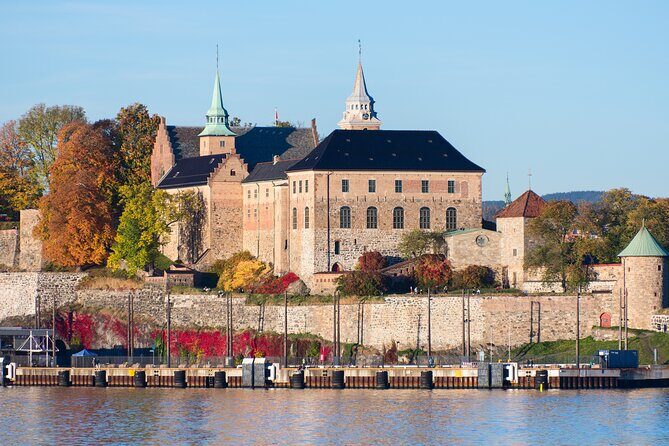
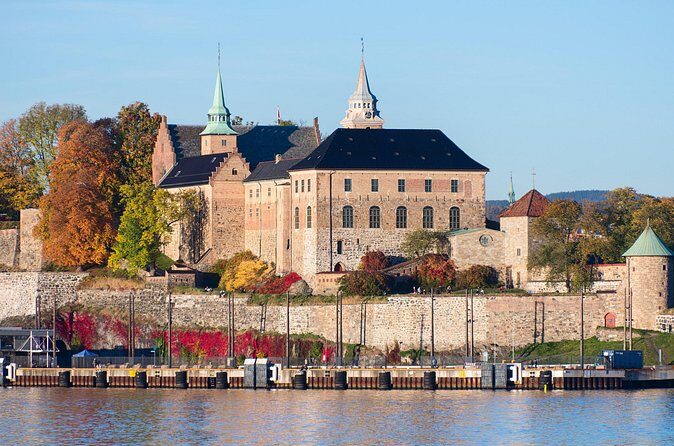
If you want a “walk that stays light,” you can treat both as optional add-ons. Akershus is described as going back to the 13th century, with castle and museum elements plus stunning harbor views. That makes it ideal if you enjoy fortresses, maritime edges, and viewpoints. If you’re less into museums and more into city streets, you can likely enjoy the area without paying extra time for indoor exhibits.
For Munch, the description is clear about why people pay: the museum covers over 28,000 works and includes The Scream. The building has recycled aluminum panels and panoramic views from a 13-floor setup. If Munch is a must for you, budget the extra ticket and treat it as a “real stop,” not just a photo break.
SALT Sauna and the Oslofjord stretch: winter energy without forcing a plan
Along the waterfront theme, the tour calls out SALT Sauna near the Oslofjord. The description frames it as a mix of food, art, and relaxation, with saunas and cultural events. The stop is labeled as free admission in the flow, but use that info as permission to visit and look around—not as a promise that every sauna experience is handled the same way.
The tour also includes a Fjords – Cruise Oslofjorden section that’s more about strolling than an actual ticketed boat ride. It notes the Oslofjord as a 100 km natural area and highlights the floating sculpture She Lies by Monica Bonvicini. It also references traditional sauna culture: warming up, then cooling off in icy water.
If that sounds like something you want to do for real, plan your time with flexibility and check what’s available when you’re there. The tour gives you the cultural framing and the location; you’ll supply the exact experience.
Barcode Oslo, then Frogner Park: finish with Vigeland’s sculptures
Barcode Project is next, a set of 12 high-rises that creates a “barcode” effect along Bjørvika. This is a good contrast stop after centuries of older architecture: modern Oslo can be just as legible when you know what you’re looking at.
Then the walk ends at Frogner Park, specifically where the tour finishes: Frognerparken (Kirkeveien, 0268 Oslo). This is where the experience turns from “seeing sights” into “slowing down.” Frogner Park includes the Vigeland Sculpture Park, built around 212 statues by Gustav Vigeland. It’s also known for rose gardens, lawns, and fountains, which makes it ideal as a final decompression stop.
If you only do one part of Oslo with a park mindset, make it this ending. Even if you didn’t plan to, you’ll likely want time here just to walk the sculpture paths at your own speed.
Price and value: how $14.99 turns into a flexible afternoon
At $14.99 per person, this tour is priced like a budget-friendly way to get structure and context. The real value isn’t only that you pay less than a guided tour. It’s that you get:
- Offline map navigation, so you don’t spend your mental energy on signal
- 25+ narration points, which turns street-walking into guided interpretation
- Directions that keep you moving efficiently between well-known and easier-to-miss spots
- One included paid entry: Oslo Cathedral
If you add optional paid entries (Akershus at $15 and Munch at $20), your total rises, but you’re making choices based on your interests. That’s different from a ticket that forces you into a single “standard” experience.
One more value angle: since it’s self-guided and private for your group, you’re less likely to feel trapped by a fixed schedule. That pairs well with Oslo’s clean, walkable feel.
Who this tour suits best (and who might want a different format)
This tour is a strong match if you want:
- a structured walk with narration (so you don’t miss the meaning)
- flexibility to linger at Cathedral or the Opera House and skim the rest
- an offline-first way to explore without worrying about data
It’s less ideal if you want a live guide to answer spontaneous questions. This is self-guided, so the app handles the story, but it can’t react to your interests the way a human guide can.
Also, if you’re hoping for a strict 2–3 hour window no matter what, you might find it tight. The route is packed, and it’s easy to spend extra time at the cathedral, then accidentally turn it into a longer afternoon.
Should you book this Oslo self-guided walk?
I’d book it if you like independent travel with good guidance. The combination of an offline map, narrated stops, and Oslo Cathedral included makes it a smart way to see a lot of Oslo without overspending or getting stuck in a rigid itinerary.
Skip it (or pair it with a different plan) if you’re set on a guided experience, or if your top priorities are indoor museum time at Akershus and Munch—because those extra ticket stops will pull your schedule out of the simple 2–3 hour range.
If you want a practical “first Oslo city-walk” that ends in a park and leaves you with good photos and clearer context, this one fits well.
FAQ
How long is the Oslo self-guided walking tour?
The tour is listed as about 2 to 3 hours (approx.). The exact time can vary based on how long you spend at each stop.
Where does the tour start and end?
It starts at Jernbanetorget station, Oslo, Norway and ends at Frognerparken, Kirkeveien, 0268 Oslo, Norway.
Is the tour available in English?
Yes. The tour is offered in English.
Does the tour include entry to any attractions?
Yes. Oslo Cathedral entry is included. Akershus Castle and Fortress and Edvard Munch’s Plass are not included.
What does the Trippy Tour Guide app provide?
You get access to the tour on the Trippy Tour Guide app, including 25+ narration points, detailed directions, and a fully offline map.
Do I need Wi‑Fi or data to use the map?
No. The tour includes a fully offline map, so you do not need Wi‑Fi or data.
Are there any limits on when I can start the tour?
The stated opening hours are 8:00 AM to 8:00 PM, Monday through Sunday, for the period listed (07/24/2024 to 02/16/2027).