REVIEW · OSLO
Myths and Legends: An Oslo Walking Discovery
Book on Viator →Operated by Oslo Walking · Bookable on Viator
Ghost stories meet real street corners. This 2-hour Oslo walk connects Viking worldviews, superstition, and fortress legends into one easy city loop. I loved how the guide ties each stop to something tangible you can still see, from the old worldview outside Oslo City Hall to the layered atmosphere around Akershus Castle. I also liked the small group size (max 16), which helps keep the storytelling lively instead of turning it into a lecture. One heads-up: the tone leans curious and playful rather than truly scary, so if you expect a dark horror vibe, you may feel it’s lighter.
If you want a straightforward way to get oriented fast, this is a smart pick. You’re walking central Oslo at 6:00 pm, with City Hall and Oslo Cathedral listed as outside-only, and the tour runs in English. You’ll cover several major landmarks without paying for admissions at the stops, which makes the $42.98 price feel more like paying for the story than for tickets.
In This Review
- Key highlights you’ll actually care about
- A 6:00 pm walk that turns Oslo landmarks into stories
- Where you start and how the route flows to Stortorvet
- Stop 1: Oslo City Hall outside—Vikings, beliefs, and the world they imagined
- Stop 2: Christiania Torv—ghostly apparitions and superstition as protection
- Stop 3: Akershus Castle and Fortress—late-13th-century architecture with legend attached
- Stop 4: Kvadraturen—Oslo’s oldest neighbourhood layer-cake of styles
- Stop 5: Oslo Cathedral on Stortorget—1697 Baroque details and sky-high spires
- The $42.98 value question: paying for story, not tickets
- Guides, tone, and the pacing to watch for
- What to wear and how to plan your evening
- Who this tour is for (and who should skip it)
- Should you book this Oslo myths walk?
- FAQ
- FAQ
- How long is the Oslo myths walking tour?
- What time does the tour start?
- Where do I meet the tour?
- Where does the tour end?
- Is the tour in English?
- What’s the group size?
- Are there any paid admission tickets for the stops?
- Are City Hall and Oslo Cathedral included as outside-only stops?
- Is the tour suitable for people with moderate physical fitness?
- Is free cancellation available?
Key highlights you’ll actually care about
- Small group (up to 16) means more interaction and easier hearing at street level
- Outside-only stops at City Hall and Oslo Cathedral keep it flexible and weather-proof
- Akershus Castle time (about 50 minutes) gives the legends room to breathe
- Ghosts + superstitions at Christiania Torv add culture, not just spooky vibes
- Mixed medieval and later architecture in Kvadraturen helps you see why Oslo looks the way it does
A 6:00 pm walk that turns Oslo landmarks into stories

This tour works because it does two things at once: it gives you a thread of myths and legends, and it keeps pointing you back to the real shapes of the city. Myths are fun, sure. But they also explain how people used to make sense of danger, luck, and the unknown—long before modern explanations existed.
The evening timing helps. Even with no special effects, Oslo’s central streets feel calmer after the main daytime rush, which makes it easier to focus on the characters in the stories. And because the tour lasts around 2 hours, you’re not stuck doing one long slog of walking and waiting.
You can also read our reviews of more walking tours in Oslo



Where you start and how the route flows to Stortorvet

You meet at Fridtjof Nansens plass 8, 0160 Oslo and end near Stortorvet, close to Karl Johans gate and not far from Oslo Cathedral. Practically, this means you’re not walking yourself back across town at the end. You finish in a central spot where it’s easy to connect to public transport or continue exploring nearby.
The tour is also designed for a moderate fitness level. You’re doing a city walking route, not a museum crawl. Plan on staying on your feet most of the time, and keep a steady pace so you don’t get left behind when the guide moves the group along.
Stop 1: Oslo City Hall outside—Vikings, beliefs, and the world they imagined

Oslo City Hall is the perfect opening scene. It’s a big, recognizable landmark, and starting here sets the myth tone without requiring you to enter anywhere. You get a sense of Viking beliefs—especially how they understood the world around them—right from the street.
What I like about this first stop is that it frames everything else. Many later legends and superstitions connect to older ways of thinking: people watching omens, reading meaning into weather and events, and interpreting the unknown through stories. Starting with that mindset makes the later ghost and luck elements feel less random.
Possible drawback: because the stop is outside only, you’re relying on the guide’s explanations and your own sightlines. If it’s windy or noisy (common in city squares), you may want to stand where you can hear clearly.
Stop 2: Christiania Torv—ghostly apparitions and superstition as protection
Christiania Torv brings the fun part: ghost tales and the idea that local superstitions acted like a kind of cultural early-warning system. You’ll hear stories about apparitions and you’ll also learn how people treated superstition as signs—sometimes as protection against bad luck.
This stop matters because it shows superstition wasn’t just entertainment. It was practical in a human way. When life was unpredictable, people turned to rituals, warnings, and shared beliefs. In places like this, you can still feel how the city’s identity is shaped by what people repeated over generations.
If you like folklore that has a reason behind it—not just jump-scare energy—this is where you’ll feel most engaged.
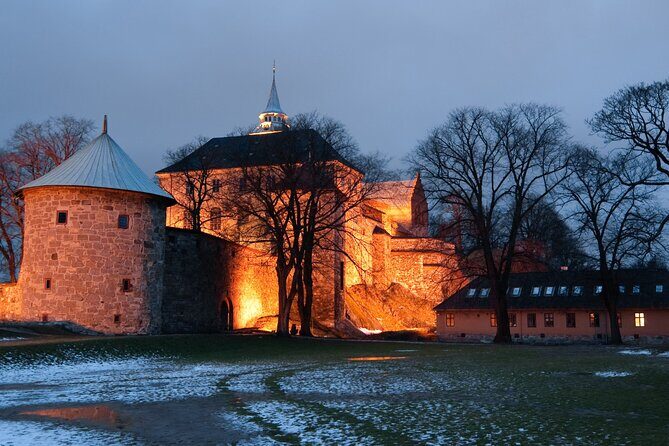
Stop 3: Akershus Castle and Fortress—late-13th-century architecture with legend attached
Akershus Castle and Fortress is the centerpiece of the walk. You get around 50 minutes here, which is a good chunk of time for both views and storytelling. The big draw is how the place looks: imposing stone, strategic feel, and architecture that’s been there since the late 1200s.
The tour also ties that architecture to ghost stories connected to Akershus. Even if you don’t believe in ghosts literally, it’s still compelling. Historic sites collect meaning over time. People project their fears, hopes, and moral lessons onto walls that have witnessed centuries.
What you should expect:
- You’ll spend time admiring the fortress structure and learning what makes it historically significant.
- The guide’s stories help you connect the building to the human drama that usually comes with forts—power, conflict, and survival.
Consideration: Akershus can be more exposed than some city streets. If the weather is rough, dress for it and keep an eye on your footing while you pause for photos.






Stop 4: Kvadraturen—Oslo’s oldest neighbourhood layer-cake of styles
After the fortress, the walk pivots to neighborhood texture at Kvadraturen. This stop is about Oslo’s oldest areas and the way the streets reveal a blend of medieval and later classic architecture.
This is the kind of stop that pays off later when you start wandering on your own. You’ll begin to notice how Oslo’s growth is written into its building styles. One block might feel older in spirit, another might look like a later wave of planning. The guide helps you read that without needing a history degree.
You’ll get about 20 minutes here, which is enough time to build awareness without turning it into a slow detour.
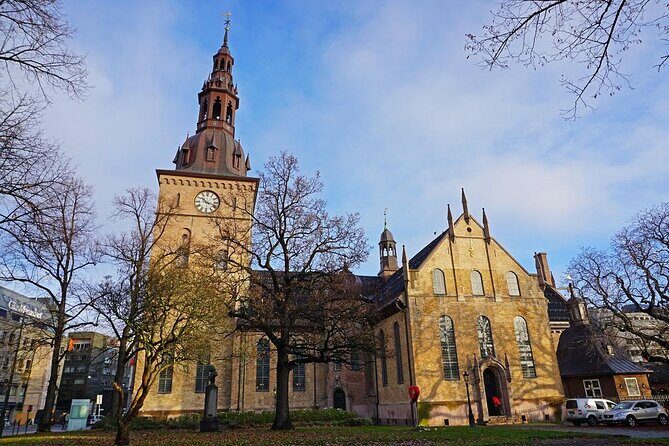
Stop 5: Oslo Cathedral on Stortorget—1697 Baroque details and sky-high spires
You end with Oslo Cathedral, dating to 1697. Like the City Hall start, this is listed as outside only, so you experience the cathedral as part of the city square instead of as an indoor monument.
This stop is all about the visual payoff. You’ll see Baroque decorations and towering spires that rise above surrounding buildings near Stortorget Square. It’s the kind of ending that works: even if you missed something earlier, your brain gets a final, clear landmark to lock onto.
If you like concluding a tour by taking in one grand viewpoint, you’ll enjoy this finale.
The $42.98 value question: paying for story, not tickets
At $42.98 per person, the value depends on what you want out of a city walk. This isn’t a self-guided route with optional apps. You’re paying for a guide to connect myths to the specific places you’re standing in.
A few things make the price feel reasonable:
- Stops are listed as admission free, so you’re not buying entry tickets for major sights during the walk.
- The group cap of 16 people helps the tour feel personal rather than crowded.
- It’s around 2 hours, which is a sweet spot for a guided orientation without burning an entire evening.
If you tend to like guided storytelling and you enjoy folklore, this is the kind of tour where your money goes toward human interpretation. If you want strictly architecture facts with no legends, you might find the myth angle is more central than you expected.
Guides, tone, and the pacing to watch for
The guides are a major part of why this tour performs so well. In past versions, people specifically praised guides named Marija and Ihor for being engaging, warm, and good at turning history into something you can actually follow. There’s also strong feedback about clear English, which matters on a walking tour where you can’t keep stopping to ask for repeats.
One practical note from the way these stories are delivered: pacing can be fast. If you’re the type who likes to stop and take a longer photo or read small details as you go, you’ll want to stay close to the group so you don’t miss the start of the next story.
And about the mood: some people expected it to feel darker. The tour seems designed more for storytelling fun and cultural context than for a horror soundtrack. So go in knowing it’s myth and meaning, not a scare-fest.
What to wear and how to plan your evening
Because you’re walking central Oslo for about 2 hours, keep your plans simple before and after. Wear comfortable shoes you can handle on city pavement. Bring a layer if you’re touring in cooler months, since you’re outside for multiple stops.
For the best experience:
- Arrive a few minutes early at Fridtjof Nansens plass 8 so you start relaxed.
- If you want photos, be ready to move when the guide does. The route flows stop to stop.
The tour is near public transportation, so you can usually build it into your day without renting anything or planning a complicated route to get there.
Who this tour is for (and who should skip it)
This tour is a great fit if:
- You want myths and legends tied directly to real city landmarks
- You’re curious how old beliefs shaped local culture and everyday superstition
- You like a guide who tells stories with energy, not someone who reads facts
You might skip it if:
- You only want indoor sights or museum-style pacing (several key stops are outside-only)
- You want the stories to feel genuinely dark and frightening rather than lightly spooky and culturally focused
- You don’t enjoy walking city blocks for a couple of hours
Should you book this Oslo myths walk?
Yes—if you want a fun, efficient way to understand Oslo through folklore and architecture. The biggest strengths here are the how: tight grouping of stops, strong emphasis on storytelling tied to what you see, and a schedule that fits well into an evening.
I’d especially consider booking if you’re visiting Oslo for the first time and you’d like a guided route that helps you interpret the city instead of just checking landmarks off a list. If you can handle outside stops, keep a steady walking pace, and you’re open to myth-first storytelling, this tour is a high-value way to spend your time.
If you hate anything supernatural, or if you expect a fully dark thriller vibe, you may feel like you picked the wrong flavor. But for most people who like legends with context, it’s an excellent match.
FAQ
FAQ
How long is the Oslo myths walking tour?
It’s about 2 hours long.
What time does the tour start?
The start time is 6:00 pm.
Where do I meet the tour?
You meet at Fridtjof Nansens plass 8, 0160 Oslo, Norway.
Where does the tour end?
The tour ends on Stortorvet, near Karl Johans gate and close to Oslo Cathedral.
Is the tour in English?
Yes, it’s offered in English.
What’s the group size?
The tour has a maximum of 16 travelers.
Are there any paid admission tickets for the stops?
The listed stops are marked as admission ticket free.
Are City Hall and Oslo Cathedral included as outside-only stops?
Yes. Oslo City Hall and Oslo Cathedral are listed as outside only.
Is the tour suitable for people with moderate physical fitness?
Yes, it’s listed as requiring moderate physical fitness.
Is free cancellation available?
Yes. You can cancel up to 24 hours in advance for a full refund.