REVIEW · OSLO
Oslo City Walking Tour with Local Guide
Book on Viator →Operated by Oslo City Walking Tour by Zoe · Bookable on Viator
Oslo clicks fast on foot. This 90-minute city walk through the center helps you map the key spots quickly, and I love that you get free admission at every major stop along the way. You also meet right by Oslo Central Train Station, so it feels easy and low-stress from the start.
The guides are the real engine here. I like the energy people talk about with guides such as Jessie and Nikolas, with open Q&A, humor, and stories that connect what you see to how Norway works today. One drawback to plan for: with 11 stops in about 1.5 hours, it’s a moving walk, so you won’t have long sit-down time at any single site.
In This Review
- Key highlights to look for
- Oslo center in 90 minutes: where this walk earns its value
- Meeting at TigerJernbanetorget: the quickest way to get your bearings
- Stop 1 to Stop 2: Tiger statue to the Oslo Opera House
- Stop 3: Oslo Børs and why a stock exchange belongs on your sightseeing list
- Stop 4: Christiania Square and Christian IV’s Glove
- Stops 5: Akershus Castle and Fortress, 13th century to now
- Stop 6: Aker Brygge and the Nobel Peace Center passing moment
- Stops 7 to 8: Oslo City Hall, National Theatre, and Nationaltheatret
- Stops 9 to 10: University Aula, Karl Johans gate, and the Royal Palace
- Final stop: Storting building and ending at Karl Johans gate
- Price and pace: is this tour a good deal for you?
- Should you book the Oslo City Walking Tour with Local Guide?
- FAQ
- What is the meeting point for the Oslo City Walking Tour?
- Where does the tour end?
- How long is the tour?
- What language is the tour offered in?
- How much does the tour cost?
- Is the tour ticket mobile?
- Does the tour run in bad weather?
- What about cancellation?
Key highlights to look for
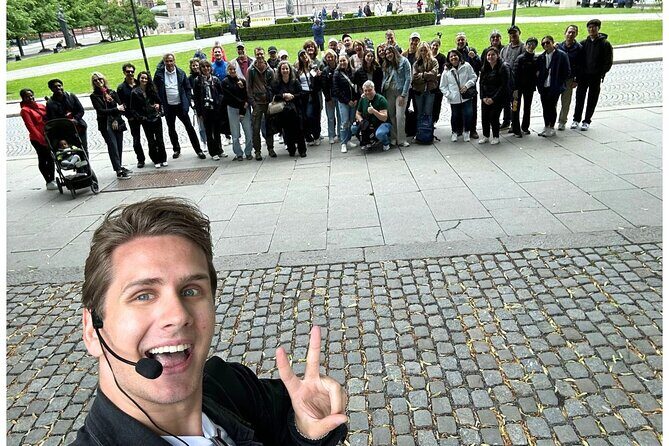
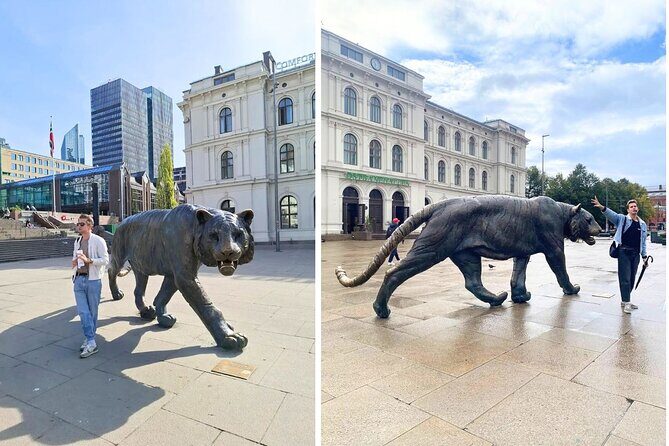
- TigerJernbanetorget start: you begin by the Tiger statue in front of Oslo Central Train Station, an easy landmark for getting oriented.
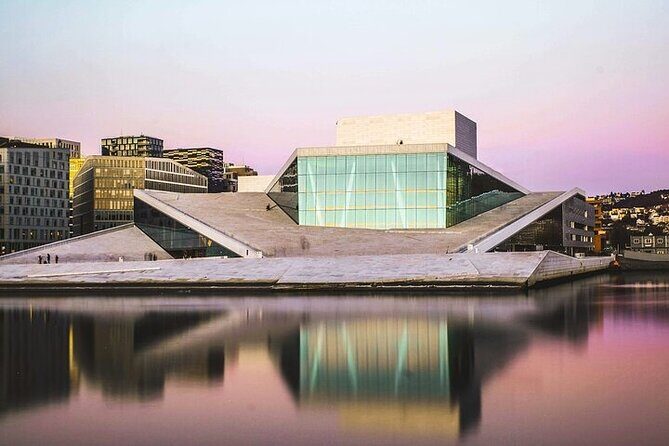
- Opera House exterior focus: you’ll spend time looking at the modern building that hosts the Norwegian National Opera and Ballet.
- Trading in plain sight at Oslo Børs: you get context for Norway’s regulated securities trading scene as you pass the stock exchange.
- Christiania Square’s Christian IV’s Glove: the monument’s meaning is explained by your guide, and the tour keeps it as a surprise.
- Akershus Castle’s many lives: built as protection and a royal residence, later used as a military base and prison, and now tied to the prime minister’s temporary office.
Oslo center in 90 minutes: where this walk earns its value
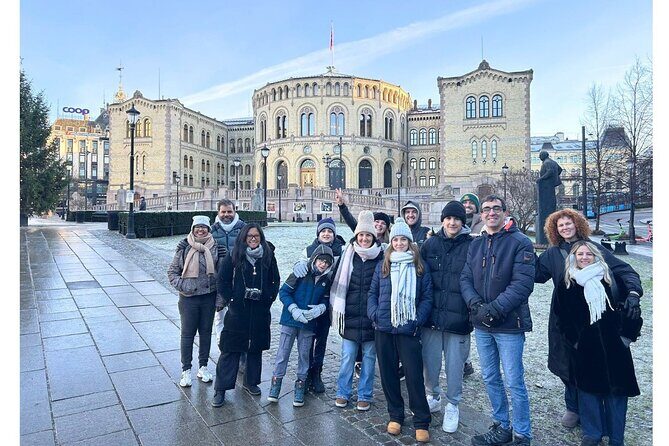
This is a tight, efficient walking loop that targets the heart of Oslo. If you’re the type who likes to understand the “shape” of a city early, this route is built for that. You start at TigerJernbanetorget at the Tiger statue outside Oslo Central Train Station, then work your way toward the royal core and end at the Storting building on Karl Johans gate.
The pricing makes sense for what you’re getting: $24.41 per person for in-person guidance over about 1 hour 30 minutes, with a schedule that’s packed but not frantic. The big practical win is that each listed stop notes free admission, so you’re not juggling extra ticket costs just to see the architecture and learn what matters.
You’ll be with a maximum group size of 22, which is large enough to feel social but small enough for the guide to actually answer questions. It’s also offered in English, and you’ll receive a mobile ticket. The tour runs in any weather, so the schedule stays on track even if you’re dealing with rain or cold.
You can also read our reviews of more walking tours in Oslo



Meeting at TigerJernbanetorget: the quickest way to get your bearings
The meeting point is simple: the Tiger statue at Oslo Central Train Station, with a meet time about 5 minutes before departure. This is a smart choice if you’re arriving by train or you’re staying somewhere near the station. You’re not hunting for a random street corner or a vague address.
From that spot, the walk immediately anchors you in the city center. You’re close to major institutions and public spaces, and the route naturally pulls you from transit-land into cultural-land and government-land. Think of it as a guided map you can feel under your feet.
Also, because the tour begins in such an iconic way, you’ll likely spend less time asking where things are and more time listening to the guide’s explanations. That matters on a 90-minute tour: every minute counts.
Stop 1 to Stop 2: Tiger statue to the Oslo Opera House
Right after you meet, you move toward the Oslo Opera House. The key thing here is not just the destination, but the way the walk sets up a “before and after” contrast. Starting with the rail hub energy, you transition to a modern cultural landmark.
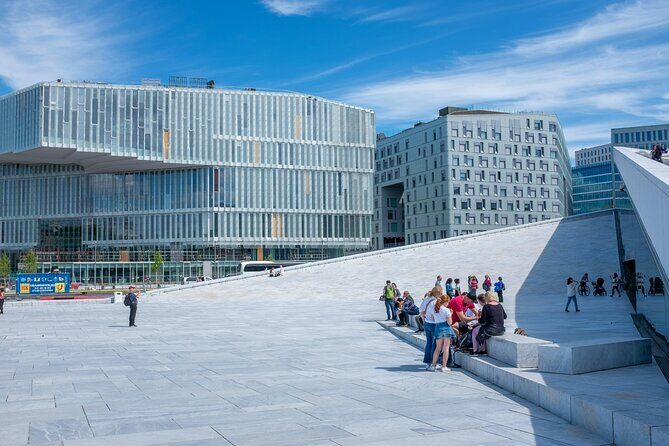
At the Opera House, you’ll get a straightforward introduction: it’s home to the Norwegian National Opera and Ballet, and the guide frames the building as something that will surprise you. Since the tour marks this as free admission, you’re likely focused on what you can see from outside rather than waiting in entry lines.
What I like about this portion is the pacing. You’re not thrown into a long cultural stop immediately. Instead, you ease into it, so your brain is ready for more context when you start hitting the city’s power and institutions later.
A small planning tip: the Opera House area can be a strong photo moment. If you care about pictures, stand where the guide pauses, not where you think you can get a better angle. This is how you stay with the group and still capture the scene.
Stop 3: Oslo Børs and why a stock exchange belongs on your sightseeing list
Next comes Oslo Stock Exchange (Oslo Børs), described as within the Nordic countries and offering Norway’s only regulated markets for securities trading. That’s a lot of meaning for a short stop, and it’s exactly the kind of information you miss if you only walk around for photos.
This is where the tour earns its “local guide” label. The guide isn’t just naming buildings; they’re connecting them to how modern Norway functions. The result is that the city doesn’t feel like a set of monuments—it feels like a working place.
The time here is brief (about 5 minutes), so you’ll want to stay attentive. If you start zoning out, you’ll miss the reason this stop belongs in the route.
Stop 4: Christiania Square and Christian IV’s Glove
From Oslo Børs you head toward Kvadraturen Neighborhood, and the walk includes Christiania Square, where you’ll see Christian IV’s Glove. The tour keeps the significance as a surprise for the day, which is a nice way to prevent the stop from feeling like trivia.
Here’s what you can expect from this kind of stop: you’ll likely learn how a small-looking monument can represent something bigger about history, politics, or identity in Oslo. Even if you’re not a museum person, these details are the stuff that makes a city “click” beyond just skyline views.
This stop is also a good breather. It’s short, but it gives your legs a quick pause while your mind gets a fresh story to hold onto before you reach heavier sites like the castle and government buildings.
You can also read our reviews of more guided tours in Oslo






Stops 5: Akershus Castle and Fortress, 13th century to now
Then you shift to the tour’s most power-heavy moment: Akershus Castle and Fortress (Akershus Slott og Festning). You’re told it’s a medieval site built in the 13th century to protect and provide a royal residence for the city.
Even better, you don’t just hear one era. The guide connects the castle’s changing roles over time:
- used as a military base
- used as a prison
- now associated with the prime minister of Norway’s temporary office
That range is powerful because it shows how the same place can keep mattering while the country’s needs change. It’s a compact lesson in continuity and change, delivered in the open air.
One consideration: this area can feel colder and more exposed than the areas closer to busy streets. Since the tour runs regardless of weather, dress for standing around for a few minutes at a time.
If you love architecture but also like explanations you can remember, this is one of your best stops on the walk.
Stop 6: Aker Brygge and the Nobel Peace Center passing moment
After Akershus, the walk continues toward Aker Brygge. Along the way you’ll pass the Nobel Peace Center, which the tour frames as having exhibitions honoring the Nobel Peace Prize.
This is a different flavor than the castle. Instead of fortress, you get a more modern cultural institution tied to ideas and international recognition. It’s also a reminder that Oslo isn’t only about national power—it’s also about how Norway presents values to the world.
This stop is listed as a short pass, and that’s realistic for a walking tour. You shouldn’t expect deep time inside an exhibition on a route that’s also covering the royal palace and the parliament.
Still, it’s useful: if you want to return later, you now know exactly what to look up and where it is. A small bit of planning later can turn this into a fuller day.
Stops 7 to 8: Oslo City Hall, National Theatre, and Nationaltheatret
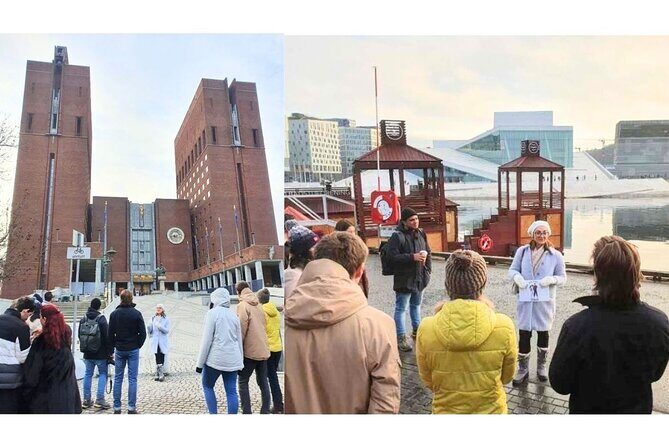
The tour keeps moving through some of Oslo’s big public-facing buildings. You’ll pass Oslo City Hall, plus other major landmarks like the National Theatre and the Royal Palace, with your guide pointing out their elegant facades and explaining their history as you go.
Then you reach Nationaltheatret for another quick viewing stop. These segments are about reading the city visually: how Norway expresses culture and civic identity in architecture you can see clearly from the street.
What I like about this stretch is how it reduces the guesswork. When you travel, you often walk right past important buildings and never know why they matter. Here, you get the “why” right with the “look.”
The trade-off is time. These stops are short, so if you’re hoping for long photo breaks or detailed interior viewing, this format may feel a bit fast.
Stops 9 to 10: University Aula, Karl Johans gate, and the Royal Palace
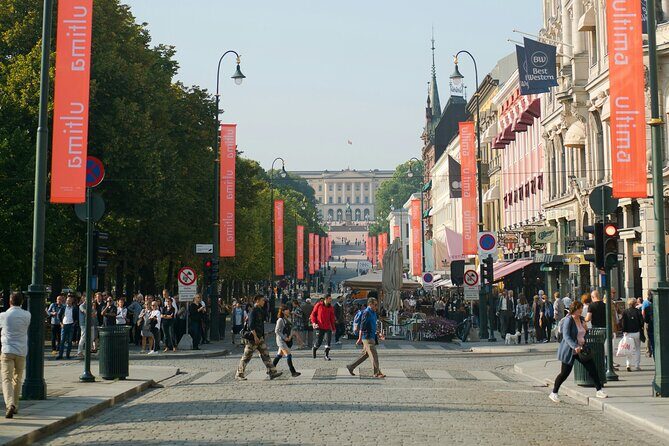
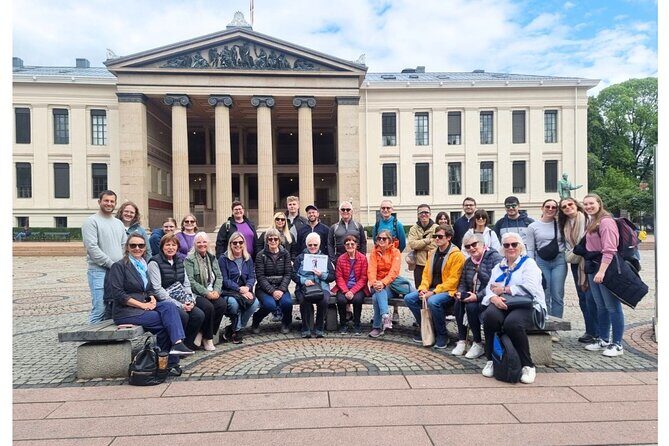
As you approach the end of your guided time together, you stop at the University Aula, located on the university’s old campus. Then the route brings you toward Karl Johans gate, Oslo’s main street.
This is where the walk becomes especially useful for planning the rest of your trip. Karl Johans gate is a natural axis for exploring, and knowing it as a landmark makes the rest of your map-making easier.
You’ll also reach the Norwegian Royal Palace. The guide frames it as part of the city’s central power zone, and you’ll get a proper look before moving to the final government building.
Even if you don’t care about palaces, this is a good “final third” stop. It helps you connect Oslo’s identity: culture and institutions on one side, national leadership on the other, all concentrated where you can reach it by foot.
Final stop: Storting building and ending at Karl Johans gate
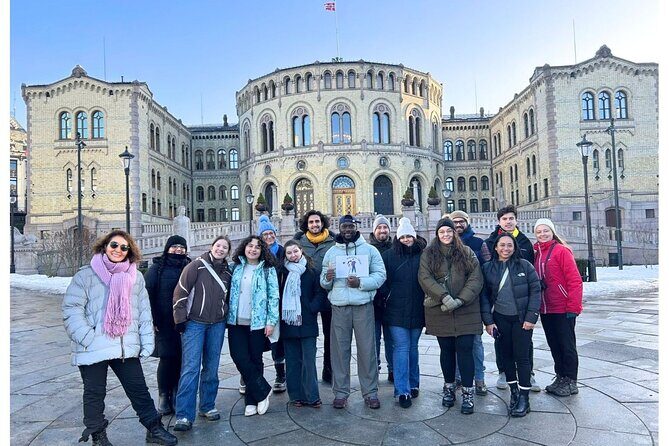
The tour concludes at the Norwegian Parliament building (Storting building). The Storting is Norway’s Parliament, and you finish after admiring the architecture along Karl Johans gate.
This end point is practical. It’s central, easy to navigate from, and it marks a clear emotional arc: you started by transport and moved through culture, commerce, tradition, and then national governance.
For many first-time visitors, this is the perfect “done” moment. After the tour, you can head out with confidence because you already walked the main spine of central Oslo with an explanation attached to each landmark.
Price and pace: is this tour a good deal for you?
At $24.41 per person for about 1 hour 30 minutes, this is priced like an accessible city orientation rather than a premium, all-day excursion. The best part is that admission is noted as free at the listed stops, which helps keep costs predictable.
The pace is the main variable you should think about. With 11 viewpoints in roughly 90 minutes, you’re moving in short segments. It’s a smart pace for learning and orientation, but not ideal if you want to linger. If you prefer slow travel, plan to return later to the stops that call you back.
Who this fits best:
- First-time visitors who want Oslo’s core landmarks in one focused walk
- People who like history told with personality and room for questions
- Travelers who want an English guide and a simple, central route that ends at a major landmark
Who might want a different format:
- Anyone who hates cold-weather standing around, even though the tour runs in any weather
- People who want more time inside sites rather than “see and learn” stops
A final practical note: tips aren’t included, so if you plan to tip, do it based on your own style.
Should you book the Oslo City Walking Tour with Local Guide?
If you want a fast, friendly way to understand central Oslo, I think this is a strong booking choice. It hits the big names without making you pay extra for entry at the highlighted stops, and the guide-driven approach matters here: the energy people associate with guides like Jessie and Nikolas is the kind that keeps a short tour from feeling like a checklist.
Book it if you’re arriving in the city center and want to map the day in your head. Skip it if you’re looking for a long, slow stroll with lots of downtime. For most visitors, though, this “walk-to-understand” format is exactly what you need to start seeing Oslo as more than a set of buildings.
FAQ
What is the meeting point for the Oslo City Walking Tour?
You meet at the TigerJernbanetorget (0154 Oslo, Norway), at the Tiger statue in front of Oslo Central Train Station.
Where does the tour end?
The tour ends at the Storting building, Karl Johans gt. 22, 0026 Oslo, Norway.
How long is the tour?
The duration is about 1 hour 30 minutes.
What language is the tour offered in?
The tour is offered in English.
How much does the tour cost?
The price is $24.41 per person.
Is the tour ticket mobile?
Yes, the tour includes a mobile ticket.
Does the tour run in bad weather?
Yes, the tour takes place regardless of the weather.
What about cancellation?
Free cancellation is available. You can cancel up to 24 hours in advance for a full refund, based on the local start time.