REVIEW · OSLO
Oslo City Walks: Historic River Walk
Book on GetYourGuide →Operated by Oslo Guidebureau AS · Bookable on GetYourGuide
A river can be a shortcut through a city’s past. This Oslo City Walks route follows Akerselva—Oslo’s green lung—linking industrial history, parks, and today’s everyday life. You cover the contrasts fast, without feeling rushed.
What makes it especially interesting is that it’s led by an authorized Oslo guide, so you’re not just walking for views—you’re getting the why behind what you see. You also get a food stop at Mathallen, Oslo’s go-to place to snack and browse.
I really like two parts of this tour: the guided history along Akerselva, and the chance to stretch your legs in the river’s green corridor. The highlights—Beier Bridge with its waterfall and the whimsical Fairytale Bridge—make great photo targets, but the guide’s context turns them into real markers of Oslo’s industrial and environmental story.
One consideration: it’s only 2 hours, so if you want a long, slow wander with lots of extra time to stop for cafés or read everything on your own, you may feel a bit compressed. Comfortable shoes help a lot, because you’ll be walking the whole time.
In This Review
- Key things I’d plan around
- Oslo’s Akerselva River: Why This Walk Feels Different From a Typical Sightseeing Stroll
- Starting at Oslo S and Østbanehallen: The Smoothest Way to Begin
- Grønland to Beier Bridge Waterfall: Industrial Oslo, Now in Green Form
- Fairytale Bridge and the Riverbank Parks: Where Oslo Feels Like a Storybook
- From Polluted Industrial River to Living Ecosystem: The Environmental Part That Makes It Click
- Mathallen Stop: A Food Mecca Break That Works Without Being a Food Tour
- Price and Time: Does $52 Feel Worth It for a 2-Hour Oslo Walk?
- Who Should Book This Walk, and Who Might Prefer a DIY Route
- Quick Practical Tips Before You Go
- Should You Book Oslo City Walks: Historic River Walk?
- FAQ
- How long is the Oslo City Walks: Historic River Walk?
- What time does the tour start?
- Where do I meet the guide?
- Is food included in the tour?
- What is included in the price?
- What languages is the tour offered in?
- Can I cancel and get a refund?
Key things I’d plan around
- Authorized Oslo guide: you’ll get explanations as you go, not a lecture at the start.
- Akerselva, Oslo’s green lung: a city walk that still feels outdoors.
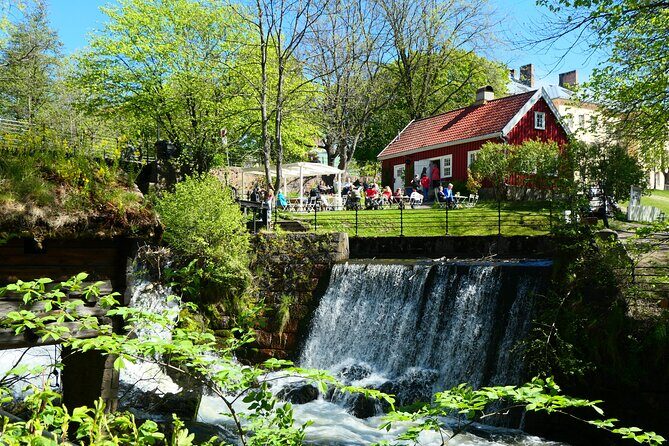
- Beier Bridge and the waterfall: a dramatic river moment built into the route.
- Fairytale Bridge: quick, iconic, and perfect for orientation over the river.
- Mathallen stop: a chance to try Norwegian flavors without a full meal planned for the tour.
- Industrial-to-ecosystem story: you’ll hear how the river changed with environmental work.
Oslo’s Akerselva River: Why This Walk Feels Different From a Typical Sightseeing Stroll
Akerselva is one of those places where Oslo doesn’t hide its working history. The river threads through the city like a backbone, and as you walk, it becomes obvious why locals call it the capital’s green lung. It’s not only pretty. It’s practical. It’s where industry once lived—and where nature is now actively returning.
What I like most about this tour approach is that it treats the river like a timeline. You move from areas associated with Oslo’s earlier industrial energy toward today’s mix of recreation and culture. You’ll see parks and nature trails along the river corridor, but you’ll also learn why those spaces exist. That combination is what turns a stroll into a story you can actually picture.
The walk also leans into contrast. Oslo can look polished from the main streets, but along Akerselva you get a more human scale: water, bridges, greenery, and the marks of industrial change.
You can also read our reviews of more walking tours in Oslo



Starting at Oslo S and Østbanehallen: The Smoothest Way to Begin
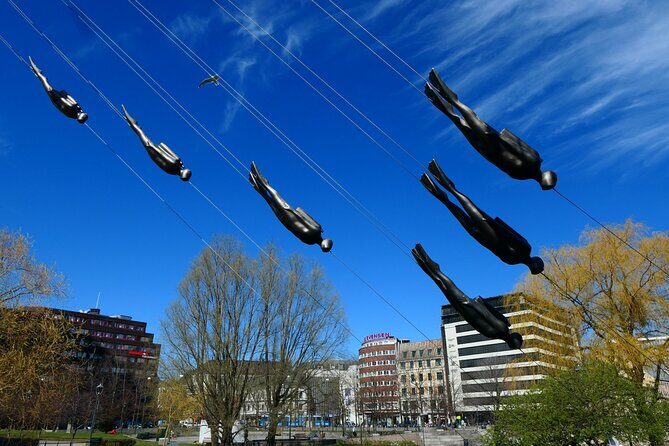
You start at 14:00 at Oslo S, meeting your guide in front of the Oslo Visitor Center. The visitor center is inside Østbanehallen, right by Jernbanetorget 1 (0154 Oslo). It’s a helpful setup because Oslo S is one of the easiest arrival points in the city, especially if you’re coming by train or airport express.
I’d treat this like a “show up ready to walk” kind of tour. Plan to arrive about 10 minutes early so you can check in, adjust layers, and avoid that last-minute scramble that always seems to happen near major stations.
Because the tour is only 2 hours, your best strategy is to start with momentum. You’ll get your orientation on foot early, then the river will do the rest—pulling you from industrial edges to greener stretches without you needing to figure out the route yourself.
Grønland to Beier Bridge Waterfall: Industrial Oslo, Now in Green Form
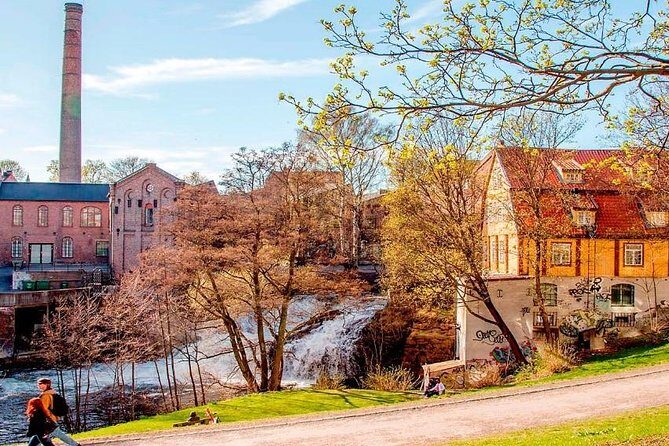
After meeting up, the walk moves into the Akerselva corridor with a clear focus: the river as the cradle of Norway’s industrialisation. You’ll pass through the general area of Grønland, known as a former industrial zone, and you’ll connect it to what the city looks like now—more recreational, more mixed-use, more human-scale.
Beier Bridge is one of the first big visual moments. The route takes you to the impressive waterfall at Beier Bridge, which is exactly the kind of stop you want early in the tour. It gives you an immediate sense of scale and sound. Water is louder than buildings, and that helps your brain stop treating the walk like a transit line.
Here’s why this stop matters beyond photos: a waterfall in a city isn’t just scenery. It’s energy and movement, historically tied to how people used waterways. When the guide explains what you’re seeing in the context of industrial use, the bridge stops being a random landmark and becomes a practical clue about how the river shaped Oslo.
If you’re the kind of traveler who likes your city walks to make sense—rather than just ticking off sights—this section is strong. It sets up the main theme: how a working river can become a living space again.
Fairytale Bridge and the Riverbank Parks: Where Oslo Feels Like a Storybook
Next comes Fairytale Bridge, which really does feel like it belongs in a storybook. Even if you’ve already seen photos online, there’s something about crossing a small river bridge that makes your whole perspective shift. You go from watching the river to stepping into it visually—closer, framed, and different angles for the same scene.
Then you’ll wander through lush greenery along the river where industrial heritage meets modern city life. The key word here isn’t just “green.” It’s the idea of overlap. Oslo isn’t pretending the past wasn’t industrial; it’s using the river’s corridor to hold the past and the present in the same walking space.
I recommend you slow down for this part. Not to stop every five meters—this is still a 2-hour tour—but to let the guide’s points land. Often on city walks, you only get the visuals. Here, you’re getting both visuals and interpretation, and the park-and-heritage blend becomes more meaningful when you’re not rushing through it like a checklist.
This stretch is also where the “nature trails along the river” concept becomes real. You’re not leaving the city, but you’re also not trapped in it. It’s a rare balance, and it’s one of the reasons this tour is popular with people who want a calmer side of Oslo.
From Polluted Industrial River to Living Ecosystem: The Environmental Part That Makes It Click
One of the tour’s strongest value points is the explanation of how Akerselva has changed. You’ll learn how it went from being a polluted industrial river to a living ecosystem with flora and fauna, thanks to extensive environmental work.
I like this angle because it’s grounded. You’re not being asked to take environmental claims on faith—you can see the river, the greenery, the river corridor feel, and you can connect those impressions to the restoration work being discussed. It also makes your walk feel purposeful. You start looking at the river differently: not as a background, but as an evolving system.
Even if you don’t consider yourself an environmental person, the story helps you travel smarter. It gives you a framework for what you’re seeing: why the city invests in these river spaces, why bridges and paths are built where they are, and why Oslo treats the river as an asset rather than an afterthought.
This is also where the guide matters most. A good explanation can turn “pretty river walk” into “I get the logic of how Oslo redeveloped around water.” And in a short 2-hour format, that kind of clarity is what you’re paying for.
You can also read our reviews of more city tours in Oslo





Mathallen Stop: A Food Mecca Break That Works Without Being a Food Tour
The walk includes a stop at Mathallen, described as Oslo’s food destination. This is the perfect kind of addition for a city walk: it gives you options without turning the tour into a full meal plan.
Food is not included, so you’ll browse and choose for yourself. That’s actually a benefit. You can pick a snack size that matches your energy level and budget, and you’re not locked into a single tasting. If you’re hungry, this is a great time to grab something Norwegian or something international that fits your taste. If you’re not hungry yet, you still get the fun of walking through a food market environment and picking up ideas for what to eat later.
Practically, this stop also gives your legs a break. After bridges, river views, and greenery paths, Mathallen lets you reset while staying in the same neighborhood “story” of Oslo—industrial roots around the river, then culture and everyday life showing up now.
Price and Time: Does $52 Feel Worth It for a 2-Hour Oslo Walk?
At $52 per person for about 2 hours, this isn’t an ultra-cheap stroll. But you’re not paying for just motion; you’re paying for an authorized Oslo guide plus a structured route with specific highlights. In other words, the value is in the context and the “right places, in the right order” effect.
Here’s how I’d judge the price if I were deciding:
- If you want to understand why Akerselva matters—industrial development, environmental restoration, and what the bridges and river corridor represent—then $52 buys you a lot of sense-making in a short window.
- If you only want the scenery and you’re comfortable figuring out the river walk yourself, you might not feel the same value. The route hits real landmarks, but the guide is the differentiator.
Also note what’s not included: food and transport. That means you’ll need to handle your own snack choice at Mathallen and any getting-to-the-meeting-point part. On the upside, because food isn’t bundled, you can keep it flexible and avoid paying for a meal you might not want.
Overall, I think the pricing makes sense for travelers who value guided interpretation. It’s also a great “first Oslo walk” option if you want to get oriented while learning something concrete.
Who Should Book This Walk, and Who Might Prefer a DIY Route
This tour fits best if you like city walking with a point. You’ll probably enjoy it if you:
- want an organized introduction to Akerselva and Oslo’s industrial-to-nature shift
- like practical landmarks—Beier Bridge and Fairytale Bridge—paired with explanations
- want a food stop that doesn’t lock you into a set menu
It might be less ideal if you:
- hate walking for any amount of time without long breaks
- want to spend extra time in Mathallen beyond a short stop
- prefer to move on your own schedule and don’t care as much about guided history
But even then, the river corridor is easy to love, and the highlights are quick wins. Your decision mainly comes down to whether you’ll use the guide’s context.
Quick Practical Tips Before You Go
- Bring good walking shoes. This is a walking-focused experience.
- Dress according to the weather. Oslo’s river areas can feel cooler, especially near water.
- Plan to arrive around 10 minutes early at the Oslo Visitor Center inside Østbanehallen.
- If you want a snack at Mathallen, decide on a budget so you don’t get surprised at checkout.
Small prep like this makes the difference between enjoying the walk and thinking about your feet.
Should You Book Oslo City Walks: Historic River Walk?
If you want a short Oslo experience that mixes city history, bridges, parks, and a real-life environmental story, I’d book it. The combination of an authorized guide, Akerselva’s distinctive setting, and a practical Mathallen stop makes this feel like a smart use of time—especially if it’s your first visit to Oslo.
Book it even if you’re not a huge history buff. The story is tied to what you can see on the river. And if you enjoy food markets, the Mathallen stop gives you a satisfying next step without forcing a full meal on the schedule.
If you tell me your travel dates and what you’re into (history, photos, food, or just relaxing walks), I can also help you decide whether this fits better than other Oslo neighborhoods for your day.
FAQ
How long is the Oslo City Walks: Historic River Walk?
The tour lasts approximately 2 hours.
What time does the tour start?
It starts at 14:00.
Where do I meet the guide?
Meet your guide in front of the Oslo Visitor Center, inside Østbanehallen at Jernbanetorget 1, 0154 Oslo.
Is food included in the tour?
No. Food is not included, though there is a stop at Mathallen.
What is included in the price?
You get a walk with an authorized Oslo guide.
What languages is the tour offered in?
The live tour guide is available in English and Norwegian.
Can I cancel and get a refund?
Yes. You can cancel up to 24 hours in advance for a full refund.