REVIEW · GEIRANGER
Geiranger Fjord: Downhill Self-Guided Bike Tour
Book on GetYourGuide →Operated by Excursions.no · Bookable on GetYourGuide
Norway’s fjord views hit fast when you start high. This downhill, self-guided bike ride drops you from the Djupvatnet area down toward Geiranger, with big moments like Flydalsjuvet built into the route. I love how the scenery feels constant—no long stretches of boring road—and how the pace is yours.
Second, I really like the way this tour sets you up without slowing you down. You meet in town for a short safety chat, then you’re kitted out with a helmet, gloves, and a visibility vest before being driven to the top, so you can focus on riding, not fiddling with gear.
One drawback to keep in mind: it’s self-guided on a busy main road. If it’s wet or traffic is heavy, you’ll need calm hands and real patience—there’s no protected mountain-bike trail to fall back on.
In This Review
- Key highlights worth your attention
- Geiranger Fjord downhill bike: the short version of what you’re actually doing
- Where the ride starts: meeting in Geiranger and getting kitted up
- The climb you don’t pedal: why the transfer is a big part of the value
- Riding downhill through fjord country: what the route feels like
- Flydalsjuvet viewpoint: the photo stop that turns the ride into a memory
- Safety on a self-guided descent: how to ride smart on a busy road
- What to wear and pack so you’re comfortable (even when the weather shifts)
- Timing and pace: how to make the most of your 2.5 hours on the bike
- Who this ride fits best (and who should skip it)
- Price and value: is $156 worth it for a 3-hour downhill view hit?
- Weather dependence: what can change on fjord roads
- Should you book this downhill Geiranger fjord bike tour?
- FAQ
- How long is the downhill bike tour?
- Where do I meet for the tour in Geiranger?
- What’s included in the price?
- Is there a guide riding with you during the descent?
- What age is the minimum for this tour?
- What do I need to bring?
- What if the road to the top starting point is closed?
- What happens if the weather is bad?
- Is this ride suitable for everyone with mobility or health concerns?
Key highlights worth your attention
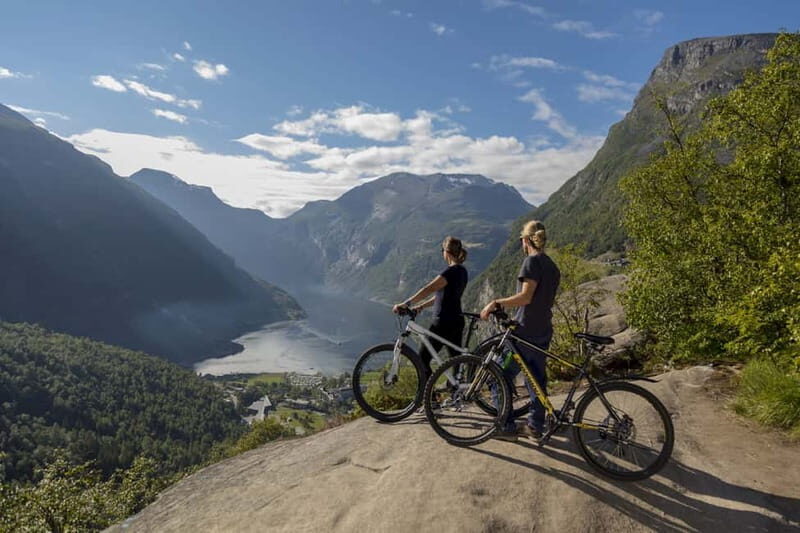
- Djupvatnet Lake start (about 1,030 meters above sea level) for a real downhill thrill
- Flydalsjuvet viewpoint for some of the best fjord-over-the-roads photos on the route
- Small group (max 8) and a short English safety talk before you ride on your own
- Road conditions and traffic mean cautious riding beats speed
- Weather-dependent route, with an alternative start offered if the main road is closed
- Gear included (bike, helmet, gloves, visibility vest) so you travel lighter
Geiranger Fjord downhill bike: the short version of what you’re actually doing
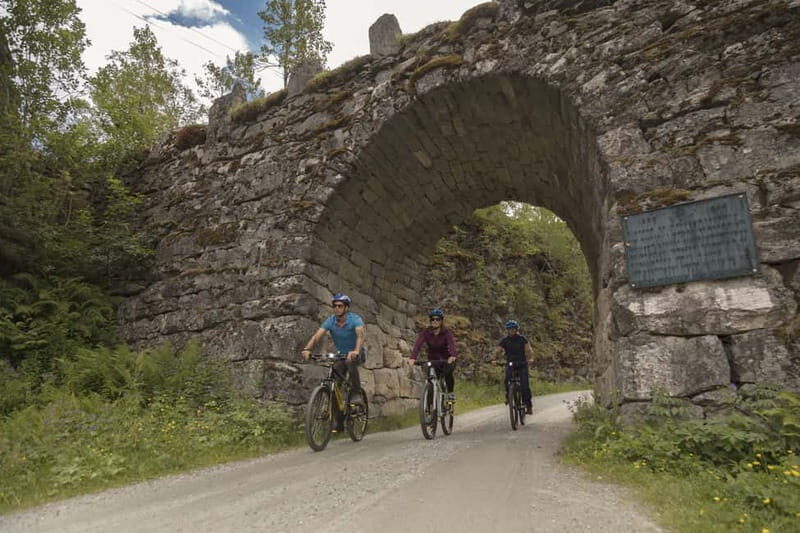
This isn’t a rugged off-road mountain-bike adventure. It’s a downhill ride using the dramatic fjord road scenery as the soundtrack. You’re driven up from Geiranger and then you ride back down, with several scenic pull-offs along the way—especially around Flydalsjuvet—where you can stop for photos and take in how the fjord stacks up below you.
The whole experience is timed to be easy to fit into a trip day. Even though the total duration is 3 hours, the cycling time is about 2.5 hours, and that leaves room for a safety talk, outfit time, and those “just one more photo” stops.
You’re also not stuck in a long line of people. With a small group capped at 8, the tour feels controlled rather than chaotic, and you get the freedom of choosing your own stopping points—something that matters a lot when the views are the whole point.
You can also read our reviews of more cycling tours in Geiranger
Where the ride starts: meeting in Geiranger and getting kitted up
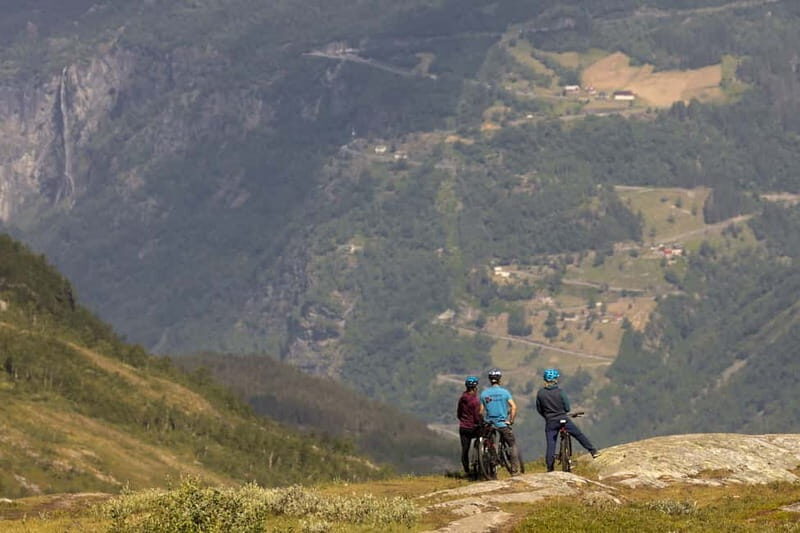
The meeting point is at the local supplier’s office at Geirangervegen 10, right before the coffee shop Cafe Ole. This is one of those practical setups that’s easy to find in town, and it matters because you’ll want to be early rather than rushing.
Once you check in, you get an English safety talk. This is not a full guided ride. After that, you’re kitted out with:
- a bike
- helmet
- bicycle gloves
- visibility vest
That kit is more than “nice to have.” The gloves help when roads are cool or damp. The vest helps you stay visible on a road shared with cars and larger vehicles. And since you’re on a descent with turns and changing light, the helmet is the obvious baseline.
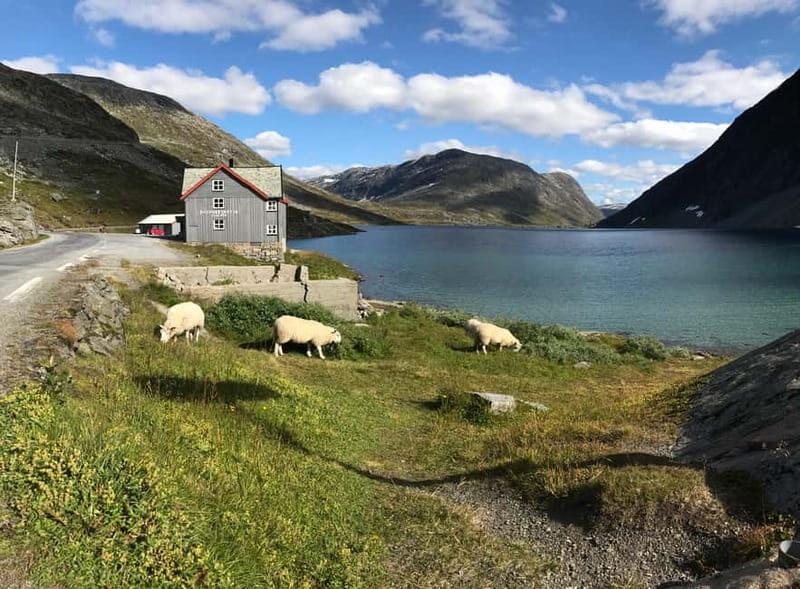
Then they drive you up to the starting area near Djupvatnet Lake, about 1,030 meters above sea level. In other words: you don’t earn the view by grinding uphill for hours—you get the reward first, then you ride down.
The climb you don’t pedal: why the transfer is a big part of the value
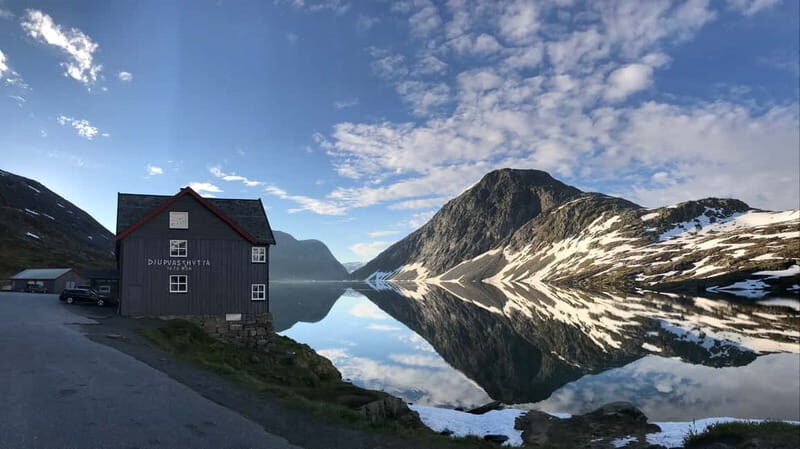
If you’ve ever done a downhill bike plan that left you sweating at the top, this transfer setup will feel like a gift. Transport to the starting point is included, and it does two smart things for your day:
1) It lets you skip the steep grind at altitude and focus on the fun part—speed control, braking, and enjoying the fjord views.
2) It reduces fatigue, so you arrive with more attention for the road itself. That’s important here because this route uses a main road shared with other traffic.
There’s also a built-in contingency plan. If the road to the Djupvatnet start point is closed, they offer an alternative starting point from the Eagle Bend viewpoint. That’s a practical detail that keeps your tour from turning into a total washout if conditions change.
Riding downhill through fjord country: what the route feels like
From the top, you’ll ride downhill along the fjord’s sinuous road. The core experience is simple: you’re letting gravity do the work while you steer through scenery that keeps changing.
This is where the small-group setup and self-guided format both matter. You’ll ride at your own pace, and you can stop when you want—without waiting for a guide or trying to keep up with someone else’s idea of a good photo stop.
Two important reality checks, though:
- It’s still a shared road. The descent runs through an area where you may see camping vans and big tour buses. That means you’ll want to ride predictably, not aggressively, especially around bends and busy pull-off points.
- It can be wet and windy. Even when you’re excited, cold hands and slick pavement make braking behavior different. The tour is dependent on good weather conditions, but you should assume that if conditions are damp, the ride requires extra caution.
The good news: bikes are set up to be easy to operate, and the route is designed so you can enjoy the scenery without needing technical mountain-bike skills. In short: think controlled downhill road riding with dramatic stops.
Flydalsjuvet viewpoint: the photo stop that turns the ride into a memory
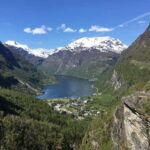
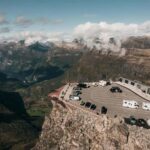
Flydalsjuvet is the standout named moment on this ride. It’s the kind of viewpoint where your brain goes quiet for a second, because the fjord views come at you from the road—above, steep, and layered.
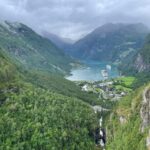
What makes this stop so useful for you is timing and perspective. Because you’re high above the fjord early in the ride, the viewpoint gives you a clear “here’s the whole story” view. Then, as you keep descending, you can compare what you saw from above with what you get closer to Geiranger.
From a practical standpoint, build in time to stop. People rave about the ride partly because they can pause frequently for photos and still stay on schedule. That’s a sign the operation has the timing right—but you still need to be reasonable: stop long enough to enjoy the view, then roll again.
You can also read our reviews of more guided tours in Geiranger
Safety on a self-guided descent: how to ride smart on a busy road
This is where I’d give you the “adult supervision” equivalent, even though there’s no guide riding with you. The tour includes a safety talk in English, and after that you’re on your own.
So your job is to ride like someone who respects traffic and conditions:
- Ride predictably. No sudden swerves near pull-offs or where buses may slow down.
- Brake smoothly. Wet roads can turn a confident stop into a sketchy one fast.
- Stay alert at curves. That’s where visibility and turning radius can surprise you.
- Give yourself extra time if it’s raining. Even if you still get the ride, you’ll want to treat it as a “safe pace” day.
One of the most helpful bits from experience with similar fjord-road biking is this: a self-guided ride is great when you’re confident, but it’s also harder if you’re not used to bikes in traffic. If you’re the type who gets tense when cars are close, take that seriously and consider how you’ll handle it if the road feels busy.
Also: there’s no dedicated mountain-bike trail here. You’re dealing with road surfaces meant for vehicles, not cyclists in their own world.
What to wear and pack so you’re comfortable (even when the weather shifts)
The tour gives you safety gear, but clothing is on you. Bring:
- Warm clothing
- a windbreaker
- sportswear
- snacks
- water
This matters more than it sounds. Fjord weather can change quickly, and the top of the ride is cooler than town. Even a small layer makes a huge difference for grip, comfort, and focus. Snacks are helpful because you’ll want energy for the full 2.5 hours of riding, plus photo stops.
If you only pack light, you might still enjoy it—but you’ll probably feel it in your hands and back. And since the ride involves being seated and controlling speed for a long downhill stretch, comfort affects how much you enjoy the scenery.
Timing and pace: how to make the most of your 2.5 hours on the bike
Total time is 3 hours, with about 2.5 hours cycling. In practical terms, that gives you enough time to enjoy the route without needing to race.
Your best strategy: ride smoothly, stop often enough to enjoy the viewpoint moments, and don’t let photo stops stretch into long delays. The road itself can be busy at peak times, and the viewing areas are where traffic may slow down or gather.
If you want the “go at your own pace” benefit, aim for frequent but efficient stops. That way you get the best views—like Flydalsjuvet—without feeling rushed at the end.
Who this ride fits best (and who should skip it)
This experience is designed for people who are comfortable riding a bike and handling a downhill road environment.
It’s best for:
- confident cyclists who can manage speed and braking
- adults and older teens who want scenery-first travel
- people who like self-guided flexibility and don’t want to stick to a group’s rhythm
- anyone who wants a dramatic fjord viewpoint from above without hiking for hours
It’s not suitable for:
- children under 12
- people with back problems
- people with heart problems
- anyone who can’t ride a bike competently
- unaccompanied minors (minors must be accompanied by an adult)
If you’re on the fence because you worry about traffic or weather, honestly ask yourself: would you feel okay riding a bike on a busy road with large vehicles nearby? If that sounds stressful, you’ll likely enjoy the views more with a different style of excursion.
Price and value: is $156 worth it for a 3-hour downhill view hit?
At about $156 per person for a 3-hour outing, you’re paying for a specific recipe: transport up, bike + safety gear, and a route that’s essentially built around signature fjord viewpoints.
Here’s where the value really shows:
- Transportation is included, so you don’t have to solve the hardest part of the logistics on your own.
- Gear is provided (helmet, gloves, vest), which saves you from renting or buying basics.
- The ride time is long enough to feel like an experience, not a quick taste.
You’re not paying for an on-bike guide, which brings the price down compared with fully guided options—but it also means the responsibility is on you for road awareness. If you’re comfortable with that trade-off, the price feels fair for the payoff: fjord views from above plus a named viewpoint stop you’ll remember.
Weather dependence: what can change on fjord roads
The tour depends on good weather conditions. That’s a key detail because fjords can bring wind and rain, and your comfort and safety depend on the road surface and visibility.
If conditions make the planned start inaccessible, you still won’t necessarily lose the day: there’s an alternative starting point from the Eagle Bend viewpoint if the road to Djupvatnet is closed.
So if your trip includes a day with decent forecast windows, this is one of those activities where you should be flexible in how you schedule. Don’t lock yourself into it on the only rainy day you have.
Should you book this downhill Geiranger fjord bike tour?
If you want a fjord experience that feels active, scenic, and easy to fit into your time in Norway, I think this is a solid choice—especially if you’re comfortable riding and you’re okay sharing a road with buses and vans.
Book it if:
- you’re happy riding self-guided after a short safety talk
- you want Flydalsjuvet views without long hikes
- you’d rather descend and enjoy scenery than spend the morning climbing
Skip it (or think hard) if:
- you’re nervous riding in traffic
- you can’t ride a bike comfortably
- you have back or heart concerns that make a downhill road ride risky
- the idea of wet, cold conditions would ruin the experience for you
If you match the basic fitness and confidence requirements, you’ll likely end the ride with that rare combo: big scenery, real movement, and freedom to pause when the view deserves it.
FAQ
How long is the downhill bike tour?
The total experience lasts about 3 hours, with approximately 2.5 hours spent riding.
Where do I meet for the tour in Geiranger?
Meet at the local supplier’s office at Geirangervegen 10, directly before Cafe Ole.
What’s included in the price?
The price includes transportation to the starting point, the bike, a helmet, bicycle gloves, and a visibility vest.
Is there a guide riding with you during the descent?
No. You get an English safety talk, but there is no guide accompanying you on the bike ride.
What age is the minimum for this tour?
You must be at least 12 years old, and you must be accompanied by an adult.
What do I need to bring?
Bring warm clothing, a windbreaker, snacks, water, and sportswear.
What if the road to the top starting point is closed?
If the road to Djupvatnet Lake is closed, an alternative starting point from the Eagle Bend viewpoint is offered.
What happens if the weather is bad?
The tour is dependent on good weather conditions. It may not run if conditions aren’t suitable.
Is this ride suitable for everyone with mobility or health concerns?
It is not suitable for people with back problems or heart problems, and you must be able to ride a bike.