REVIEW · GEIRANGER
Geiranger: Bus Tour with Multilingual Audio Guide
Book on GetYourGuide →Operated by Excursions.no · Bookable on GetYourGuide
You only need a short window to see the big stuff. This Geiranger bus tour hits the famous fjord views from above, with photo stops and an audio guide in eight languages. I like the mix of quick movement and real viewpoint time, plus the air-conditioned bus keeps things comfortable in changing Norway weather. One thing to consider: it’s mostly a drive, and the stops are brief, so you’ll want a ready camera and patience at the curves.
I really enjoy how the route gives you perspective fast. You start at Flydalsjuvet, then ride the Eagle Road with its 11 hairpin bends to Eagle Bend for the fjord-and-waterfall views. The audio narration adds context about the UNESCO Geirangerfjord area while you’re looking out the window. A possible drawback is that the audio experience can vary—if another group’s sound carries, your language track may be harder to hear, and the Seven Sisters view may feel more like a look-see from the bus than a long stop.
In This Review
- Key Things To Know Before You Go
- Geirangerfjord Views From the Road, Not a Long Hike
- How the 80-Minute Tour Actually Feels on the Ground
- Flydalsjuvet: The Gorge View That Changes Your Sense of Scale
- Driving the Eagle Road: 11 Hairpin Turns With Real Nerves (In a Good Way)
- Eagle Bend and Seven Sisters Waterfall: The Final Payoff at 515 Meters
- The Audio Guide in 8 Languages: Useful Context, With One Real-World Caveat
- Comfort, Safety, and Who This Tour Fits Best
- Price and Value: Why $78 Can Make Sense Here
- Where to Stand, What to Do During Photo Stops
- Quick Reality Check: What Might Not Be Perfect for You
- Should You Book This Geiranger Bus Tour?
- FAQ
- Where is the meeting point for the tour?
- How long is the Geiranger bus tour?
- What languages are included in the audio guide?
- Is transport included, and is there hotel pickup?
- Which viewpoints and sights are included?
- Is there a guarantee for cruise ship passengers?
- Is the tour suitable for people with heart problems?
- What wheelchair types are allowed?
Key Things To Know Before You Go
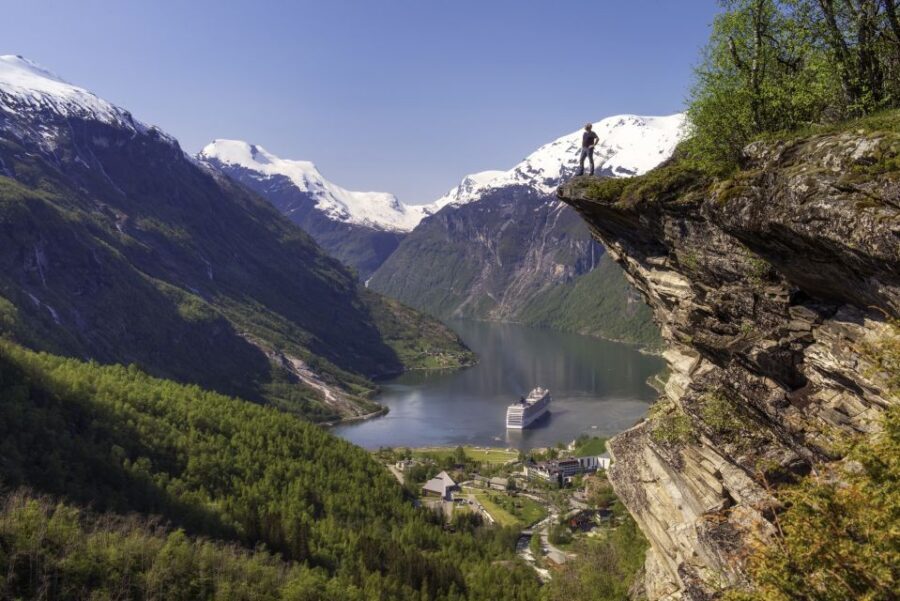
- Two major photo viewpoints: Flydalsjuvet for the gorge view and Eagle Bend for the fjord + waterfall sightline
- The 11 hairpin turns are the show: the Eagle Road drive is exciting, and you’ll feel the elevation change
- Multilingual audio is built in: English, Spanish, Italian, German, French, Russian, Dutch, and Chinese
- You’re riding for perspective: it’s designed for quick “from above” comprehension, not slow wandering
- Cruise timing matters: there’s a back-on-time guarantee for cruise ship passengers
- Meeting is simple: find the guide in a light-blue jacket near the pier and public bus stop, with EXCURSIONS.NO signage
Geirangerfjord Views From the Road, Not a Long Hike
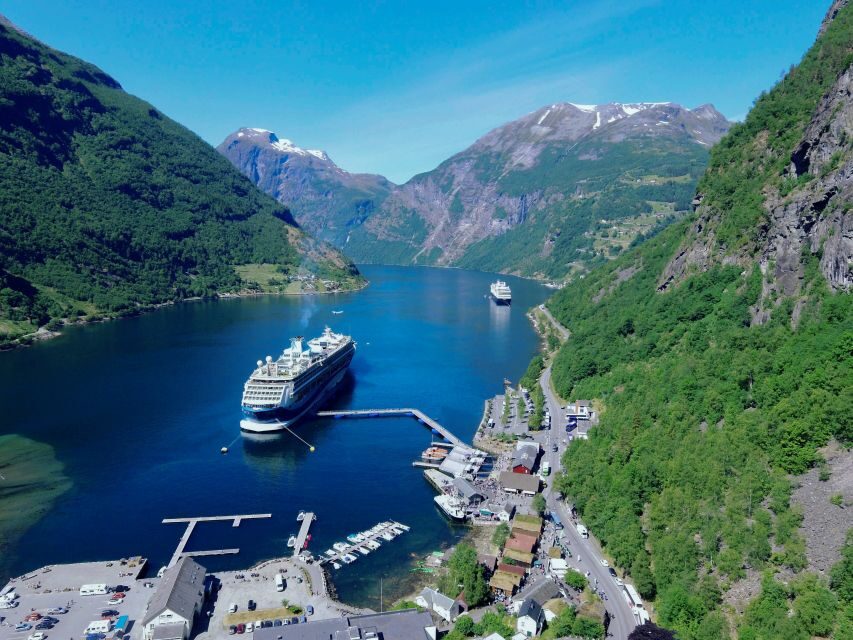
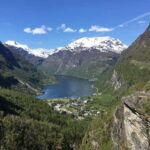
Geiranger has a way of making you look twice. From street level the fjord is stunning, but from above it gets unreal—wide water, steep walls, and waterfalls dropping in ways your brain struggles to measure. This tour is built for that exact effect: you get height and scale without committing to a strenuous hike.
I like that the bus is climate-controlled. Norway weather can flip quickly, and being inside means you can focus on viewing instead of shivering or sweating. It also makes sense for groups with different energy levels—some people want photos, some want context, and the bus keeps everyone moving together.
The tone here is practical sightseeing. You’ll spend most of your time riding, listening, and getting glimpses. If you want a slow day with lots of wandering, you might feel slightly rushed. But if your priority is to “see Geiranger at a glance,” this format is a strong match.
You can also read our reviews of more guided tours in Geiranger

How the 80-Minute Tour Actually Feels on the Ground
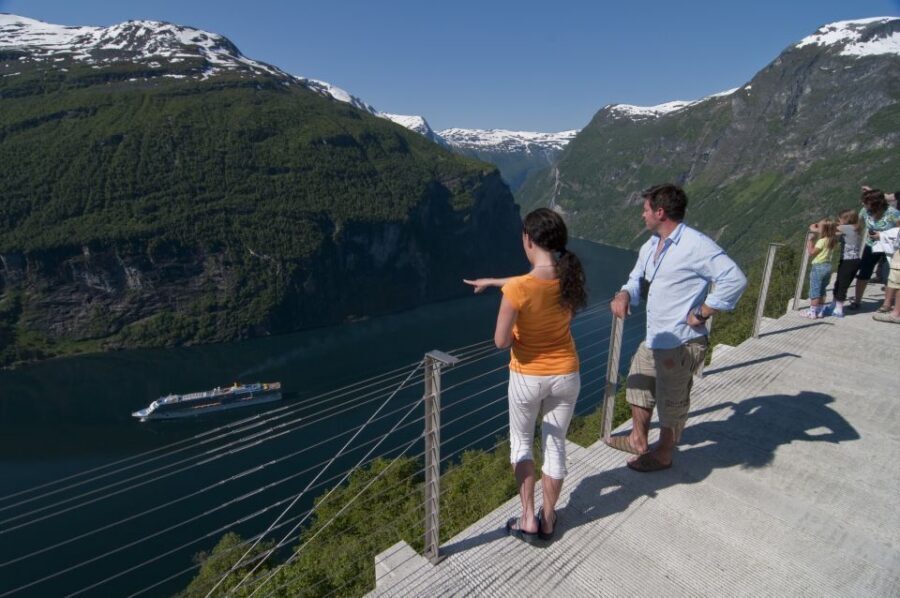
Eighty minutes sounds short, and it is. That’s the point. This tour is designed for maximum viewpoint payoff in a tight schedule, especially if you’re on a cruise day or have limited time between connections.
You’ll start near the pier and public bus stop area (look for signage/flag marked EXCURSIONS.NO). Your guide wears a light-blue jacket, so it’s pretty easy to identify the right group without playing guessing games.
Once onboard, expect a steady rhythm:
- Drive along the famous Geiranger road
- Listen to the audio guide for context as you pass key areas
- Stop briefly at standout viewpoints
- Finish with the higher Eagle Bend perspective, where the fjord and waterfalls are the final payoff
Because stops are short, your best move is preparation. Wear comfortable shoes even though you’re mostly seated. Keep layers handy. And if you have a camera, get to a window seat early so you’re not standing in the aisle the moment you hear the word stop.
Flydalsjuvet: The Gorge View That Changes Your Sense of Scale
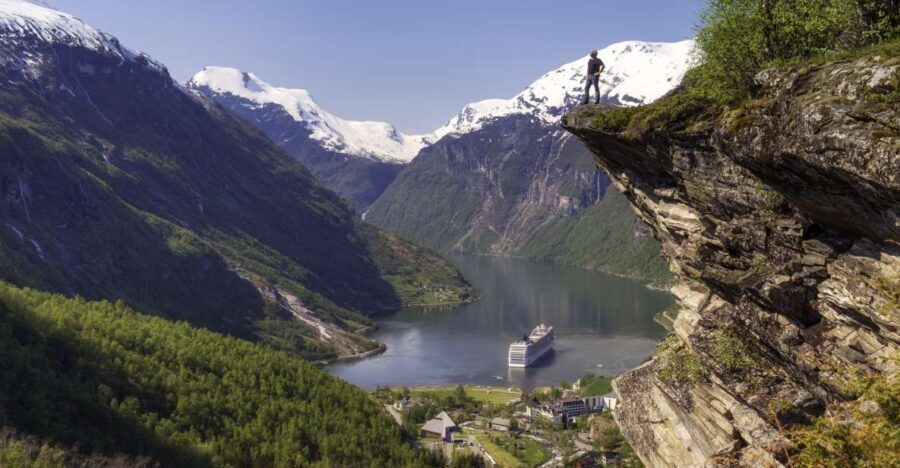
Flydalsjuvet is the kind of viewpoint that makes you understand why geologists and photographers both get excited. You’ll be looking down from about 330 meters above sea level into a dramatic gorge with a canyon depth of around 70 meters, plus the Geirangerfjord below.
What makes this stop valuable isn’t just the view. It’s the way it teaches scale. From here, the fjord isn’t a “pretty water feature.” It becomes a system—water carved into rock over time, then framed by cliffs and waterfalls.
Photo time is likely short, so aim your shots in layers:
- Take a wide view first so you capture the fjord layout.
- Then zoom or switch to a tighter framing for the gorge depth.
- Finally, grab a waterfall shot if the light is cooperating.
If you’re traveling in busy season, treat this as a quick photo mission. Then enjoy the rest from the bus, where you can keep moving and still absorb the scenery.
Driving the Eagle Road: 11 Hairpin Turns With Real Nerves (In a Good Way)
The Eagle Road segment is where this tour turns into a “I’m glad I did that” experience. You’ll pass through the village of Geiranger and then work your way up toward Eagle Bend, approaching the views through 11 hairpin turns.
Hairpin bends can sound scary on paper. In real life, the driver’s skill matters—and you should feel safe. The road is narrow, and you’ll likely meet other vehicles around the curves. The best part is that the bus makes this manageable: you get the thrill without the stress of navigating yourself.
A couple of practical tips:
- If you get motion-sick, sit where you feel most stable and keep your gaze on the horizon when you can.
- Bring a light jacket. Even with a warm bus, the air near viewpoints can feel cooler once you step out for photos.
This is also where the audio narration helps. When you’re dealing with curves and height, it’s easy to forget what you’re actually looking at. The guide track gives you something to “place” in your mind—so the fjord view connects to the story of the UNESCO site instead of being random scenery.
Eagle Bend and Seven Sisters Waterfall: The Final Payoff at 515 Meters
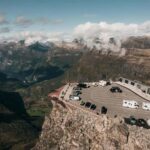
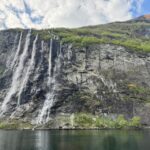
Eagle Bend is the tour’s big finishing viewpoint. You’ll reach about 515 meters above sea level on the final approach, and on the last turn you get a grand view over the fjord, the village, and the Seven Sisters Waterfall area.
What I like about this moment is how it ties everything together. You’re high enough to see how the fjord and the settlement relate, not just individual cliffs or one waterfall at a time. It gives you that “map in your head” effect—once you see it from this angle, Geiranger’s geography clicks.
One caution: the Seven Sisters portion may feel more like a view from the bus and viewpoint moment than a long photo stop. If you’re hoping for lots of wandering and extended time at the waterfall, plan for a shorter window. Still, the sightline is what you came for, and you’ll likely get strong photos if you’re ready when the bus pauses.

The Audio Guide in 8 Languages: Useful Context, With One Real-World Caveat
This tour includes an audio guide in English, Spanish, Italian, German, French, Russian, Dutch, and Chinese. That’s a lot of languages for one tour—and it means you can follow along even if you don’t speak Norwegian.
The narration adds value by explaining what you’re seeing and why Geirangerfjord matters as a UNESCO World Heritage area. In a short tour, that context prevents the “pretty photos, no lasting understanding” feeling.
One practical caveat: sound can be shared in group settings. If another language track is being played at the same time on a neighboring bus or within the group, your audio may be harder to hear. If you rely on audio heavily, keep your volume up and be prepared to look a little more, listen a little less, if multiple sounds are present.
Comfort, Safety, and Who This Tour Fits Best
This is a good choice when you want scenery without a big physical commitment. Since you’re staying on a bus, it works well if:
- You have limited time in Geiranger
- You’d rather see multiple key viewpoints in one shot
- You want a guided explanation without hiking
There are a couple of comfort/safety considerations:
- The tour is not suitable for people with heart problems, given the nature of the route and the elevation.
- Non-folding wheelchairs aren’t allowed. A foldable wheelchair was helped by the driver in at least one situation, but don’t plan on this tour as a fully flexible wheelchair experience based on that alone.
Also, expect the ride to feel “active.” You’re going through hairpin turns, and that motion is part of the experience. If you want a totally smooth, calm ride, this may feel more intense than you’re expecting.
On the plus side, the organization seems solid. People described the bus as comfortable and even luxurious, and the driver’s control of the curve-and-traffic moments was praised. If you’re prone to anxiety on narrow roads, that’s a comfort signal worth taking seriously.
Price and Value: Why $78 Can Make Sense Here
At $78 per person, this tour isn’t a bargain. It is, however, good value when you compare it to what you’re buying: time, transport, and access to viewpoints that are hard to connect efficiently on your own without a car.
Think of what’s included:
- Transport by air-conditioned vehicle
- A guided sightseeing experience with photo stops at Flydalsjuvet and Eagle Bend
- A classic road drive on the Eagle Road with the 11 hairpin bends
- The Seven Sisters Waterfall view area
- Multilingual audio narration
- A back-on-time guarantee for cruise ship passengers
If you’re on a tight schedule, paying for “shortcut geography” is smart. You’re not paying for extra time; you’re paying for the right sequence and the right angles in a short window.
If you have a full day and a rental car, you might replicate some viewpoints. But the time savings and built-in narration make it easier to do well—especially when weather shifts or roads get busy.
Where to Stand, What to Do During Photo Stops
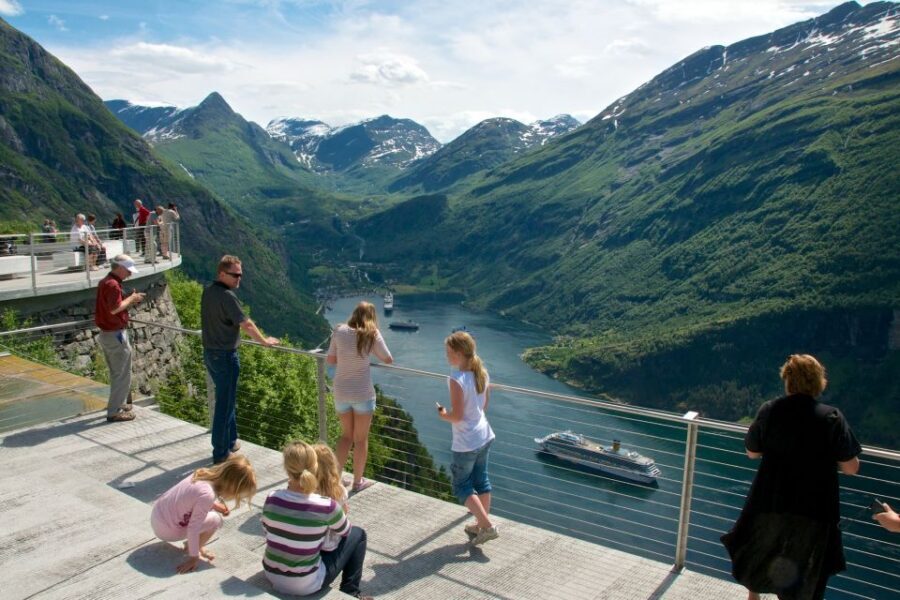
Since each stop is brief, your success depends on how you handle minutes.
Here’s how I’d approach it:
- At each stop, do one wide shot first to lock the composition.
- Then take one or two tighter photos focused on the most dramatic feature (gorge depth at Flydalsjuvet, waterfall + village at Eagle Bend).
- Don’t block traffic on the viewing area. Move along quickly once you’ve got what you need.
Also, if you care about audio, plan your listening time during the drive segments. The audio narration is most useful when you’re moving between viewpoints and can still look out the window as the story lines up.
Quick Reality Check: What Might Not Be Perfect for You
This is a highlights tour. That’s good, but it’s also the reason you may feel like it goes by fast.
Two things to watch:
- Stop duration: If you want longer “hang out” time at each viewpoint, you might wish for a bit more at Flydalsjuvet or Eagle Bend.
- Audio clarity: In mixed-language situations, your audio track might be harder to hear if another track is loud nearby.
If those points would annoy you, this may not be your ideal format. But if you’re looking for the best Geiranger views in the least time, the structure is the reason it works.
Should You Book This Geiranger Bus Tour?
Book it if you want a smart, time-efficient way to understand Geirangerfjord from above. You’ll get major viewpoints (Flydalsjuvet and Eagle Bend), a memorable drive with 11 hairpin bends, and useful context from a multilingual audio guide. The $78 price tends to feel fair when you factor in the transport, timing for cruise days, and the “right angles” sequence.
Skip it (or consider a slower alternative) if you want extended time at each location or you dislike tours that feel mostly like a moving photo drive. Also skip if you fall into the heart-problems category noted for suitability.
If you’re deciding today and you’ve got limited hours, I’d lean yes. This tour is made for exactly that: getting the scale of Norway’s fjords into your camera and your memory fast.
FAQ
Where is the meeting point for the tour?
Your group meets between the pier and the public bus stop. The guide wears a light-blue jacket, and you should look for a sign or flag that says EXCURSIONS.NO.
How long is the Geiranger bus tour?
The tour runs for about 80 minutes.
What languages are included in the audio guide?
The audio guide is available in English, Spanish, Italian, German, French, Russian, Dutch, and Chinese.
Is transport included, and is there hotel pickup?
Transport by air-conditioned vehicle is included. Hotel pickup and drop-off are not included.
Which viewpoints and sights are included?
You’ll have photo stops at Flydalsjuvet and Eagle Bend, plus you’ll get a view of the Seven Sisters Waterfall. The drive includes the Eagle Road with 11 hairpin bends.
Is there a guarantee for cruise ship passengers?
Yes. There’s a back-on-time guarantee for cruise ship passengers.
Is the tour suitable for people with heart problems?
No. The tour is listed as not suitable for people with heart problems.
What wheelchair types are allowed?
Non-folding wheelchairs aren’t allowed. The tour does specify restrictions on wheelchair type rather than offering full open-ended accessibility.