REVIEW · GEIRANGER
Geiranger: Zipline Park Experience
Book on GetYourGuide →Operated by Explore Geiranger AS · Bookable on GetYourGuide
Cables over Geirangerfjord beat plain sightseeing. I love getting up close to Dynamite Waterfall and feeling the spray, and I also love the double zip lines that throw you out over rocky gorges and river views. The whole course sits in the UNESCO-listed Geiranger Park, so every turn feels like you’re moving through the fjord.
One consideration: the via ferrata route can feel more demanding than you’d guess, and you won’t have a guide stuck beside you the whole time.
In This Review
- Key highlights worth planning for
- Geiranger Zipline Park: what makes this one feel different
- Two options: zipline-only versus via ferrata + zipline
- Zipline-only (about 30 minutes)
- Via ferrata + zipline (about 1.5 hours)
- Getting there, checking in, and getting your gear
- The via ferrata section: protected, physical, and very personal
- Ziplines over river, gorges, and waterfalls: the fun part
- Nepalese bridges: balancing over the Geiranger River
- Dynamite Waterfall: the spray-and-accomplishment finish
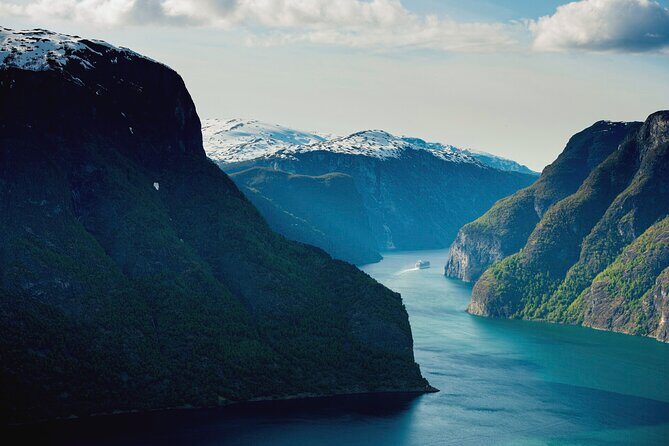
- Views in a UNESCO setting: what you actually see
- Price and value: what $78 buys you in real terms
- Timing, groups, and how long you’ll be moving
- Safety, weather, and the fitness checklist you should not ignore
- What to bring so you’re not miserable after the last cable
- Who this Geiranger zipline park fits best
- Should you book Geiranger zipline park?
- FAQ
- How long does the Geiranger Zipline Park experience take?
- What’s the difference between zipline-only and via ferrata + zipline?
- What’s included in the price?
- Do I get an English-speaking guide?
- Where do I meet for the activity?
- Is the park open in bad weather?
- Are there height, weight, or age limits?
- Is food or drink included?
Key highlights worth planning for
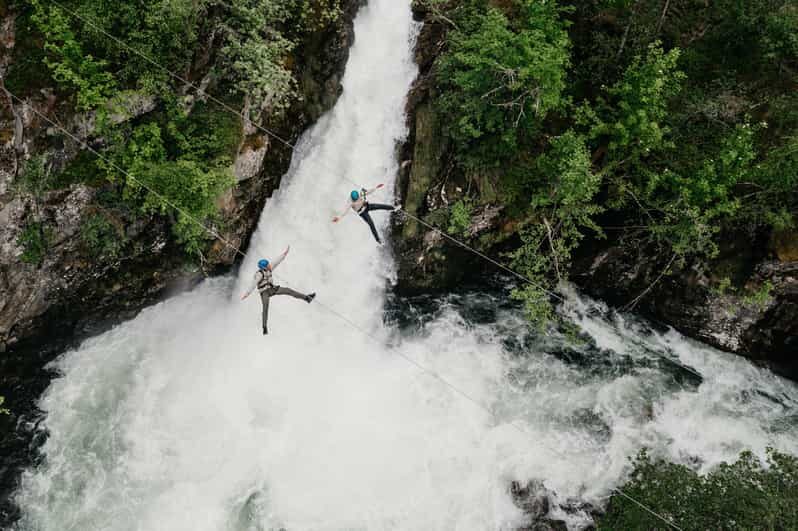
- Dynamite Waterfall close-up: you finish near it, and the via ferrata route takes you right above it.
- 4 double zip lines: you fly in stages over the gorges, rivers, and waterfalls.
- Nepalese bridges over the Geiranger River: fun, but also a balancing moment.
- Two course options: zipline-only for a shorter hit, or via ferrata + zipline for a longer trek.
- Small group (up to 8): less crowding, more space to gear up and take it in.
Geiranger Zipline Park: what makes this one feel different
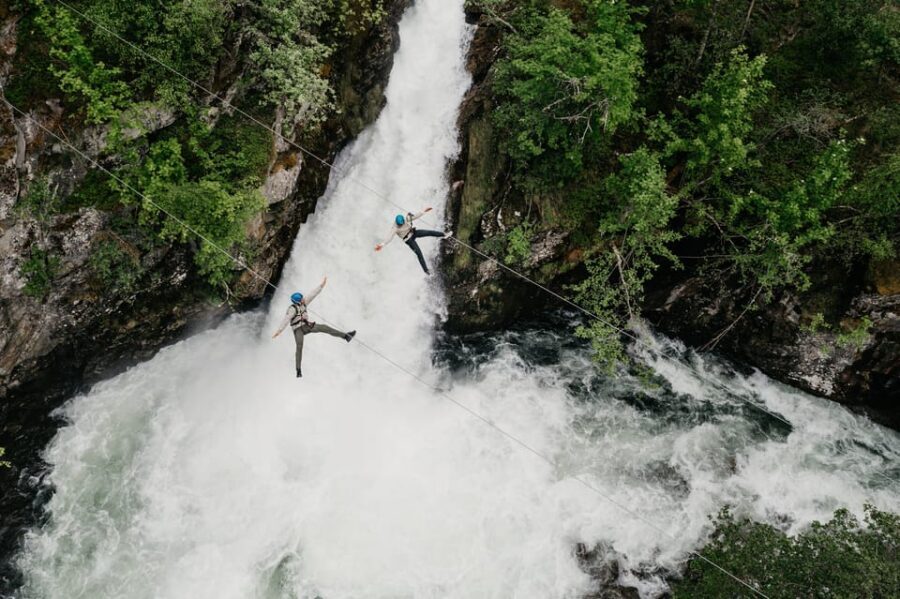
This isn’t just cables and a photo at the end. At Geiranger Zipline Park, you start with a real trail experience, cross the river on a Nepalese bridge, and then ride ziplines that move you between fjord views, gorges, and waterfall angles.
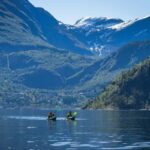
The setting does a lot of work for you. Geiranger Park is UNESCO-listed, and you’ll keep seeing the fjord system as you go. Even when your brain is busy checking your harness and footing, the view is there, steady and dramatic.
Two parts really sold me on the value: the Dynamite Waterfall moment (you’re standing above fresh water, close enough to feel it), and the fact that the course includes both movement over the river and movement through forested terrain. If you only do the ziplines, you still end at the waterfall. If you do the full route, you build up to it like a finish line.
You can also read our reviews of more tours and experiences in Geiranger.

Two options: zipline-only versus via ferrata + zipline
You basically choose how athletic you want this to be.
Zipline-only (about 30 minutes)
You learn how ziplines were used for transporting food and goods during the 19th century, then you get your safety briefing in the park. After that, you run through four ziplines that connect from one platform to the next.
The key difference here is that you skip the longer trail elements. You’ll still get the big views and finish close to the ticket office at the Dynamite Waterfall area. This option is best if you want an adrenaline hit without turning the day into a hike.
Via ferrata + zipline (about 1.5 hours)
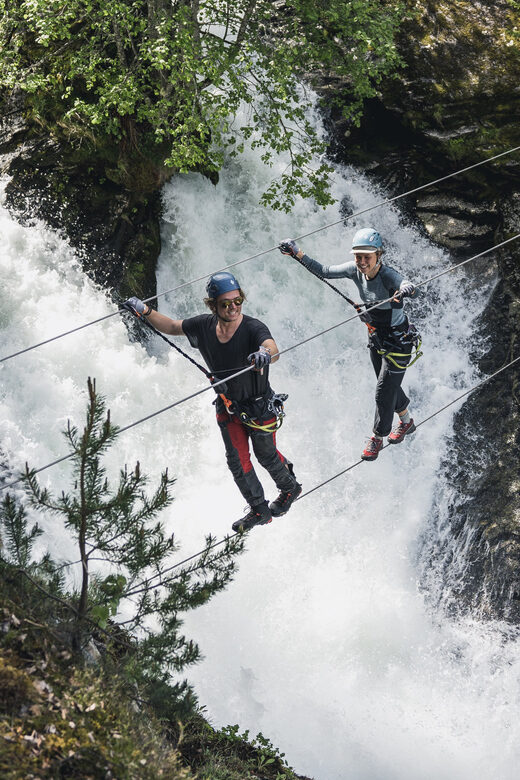
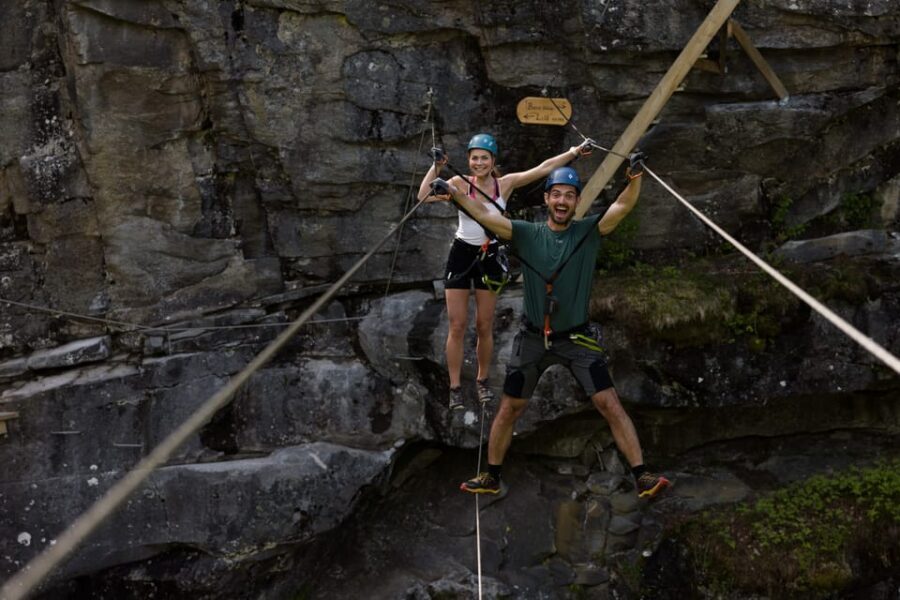
This is the more complete experience. You head out onto a protected trail with 4 Nepalese bridges and 4 double zip lines. You cross the Geiranger River early on, then you continue along the river on the route.
On the second part of the trail, you can make choices based on how you’re feeling: you can walk right for an easier climb, or turn left for a more challenging hike. Then you finish the via ferrata and cross the river again, just above Dynamite Waterfall, where you get that up-close splash and a walk through a deciduous forest.
If you like the idea of earning the zipline views instead of just arriving at them, this is the option.
Getting there, checking in, and getting your gear
Your day starts at a ticket office right by the action.
When you’re on the main road, look for a large gate with banners and beach flags. Walk through the gate and down the road about 30 meters. The ticket office is on your right, and it’s an old black wood cabin.
There’s also a parking lot next to the office, which helps a lot if you’re driving. If you’re arriving by foot from a cruise port, the walk can be around 25–30 minutes uphill (and some people take the scenic stairs by the waterfall near the campground). If stairs or long climbs are a concern for you, plan on giving yourself extra time either way.
Once you arrive, the process is simple:
- you enter the park
- you pick up your equipment
- you get a safety briefing (via ferrata routes typically get theirs at the office; zipline-only typically gets it in the park)
The via ferrata section: protected, physical, and very personal
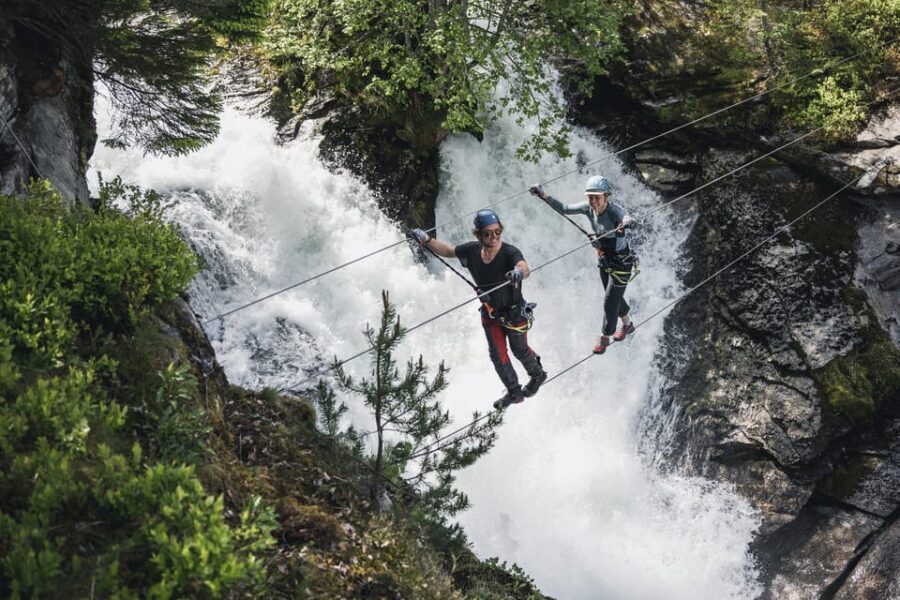
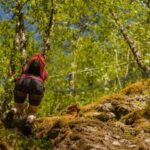
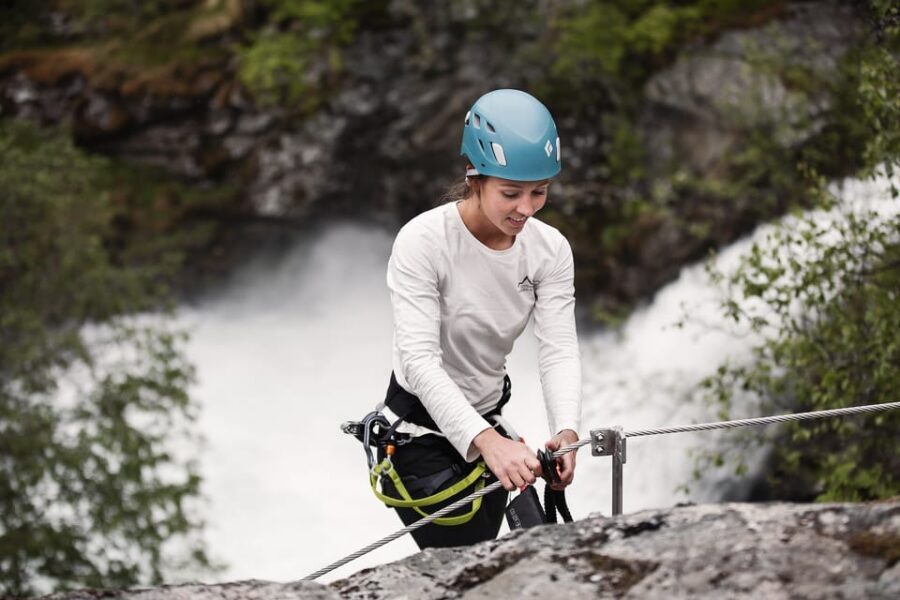
The via ferrata portion is a “you do it yourself” style experience once the safety briefing is done. That can be great, because you control your pace. It can also be a little intimidating at first, since you’re using metal hand and foot grips, ladders, and uneven terrain while looking at the river and gorges below.
A few things to know before you judge your energy:
- It can be more strenuous than you expect, especially if you’re not used to climbing motions or steady grip work.
- It’s not set up like a guided walk where someone holds your hand the whole way.
- If you’re doing the full route, you’ll likely be hot and working your upper body by the end.
Boots matter. If it’s wet, you’ll want sturdy hiking shoes with real grip. One common practical tip is to bring water and snacks because there isn’t food or drink available at the top areas during the course.
If you’re nervous about heights, be honest with yourself. The course design gives you plenty of support, but the exposure is real, and you’ll feel it on crossings and climbs.
Ziplines over river, gorges, and waterfalls: the fun part
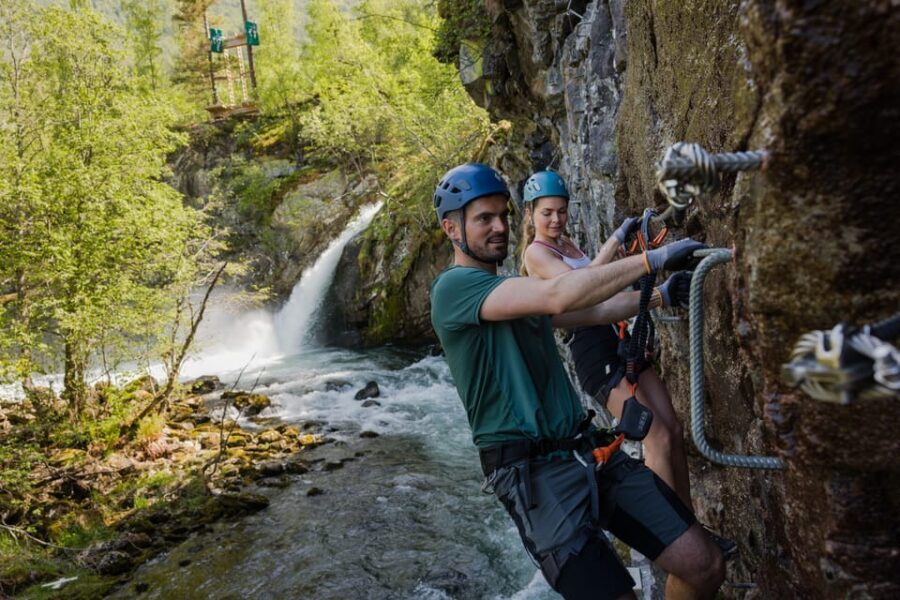
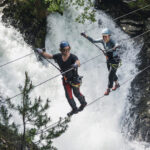
Once you reach the platforms, the vibe shifts fast. You’re clipped into a safety system, and then it’s pure motion: four ziplines in total, with double segments that let you fly in stages and watch how your route threads between natural features.
The course design is clever. Your ziplines connect platforms in a way that keeps changing the angle you’re seeing:
- rocky gorge stretches
- river segments
- cascading waterfall views
- fjord angles that pop when you crest or slide into the next line
Even if you’re not the world’s most fearless person, this part tends to click because the harness system does the heavy lifting. You still need calm, but you don’t need superhuman confidence.
One practical note: some instruction can be hard to hear if the waterfall noise is right in the background, so don’t assume you’ll catch every word from across the platform. Ask questions before you start if you’re unsure about anything.
Nepalese bridges: balancing over the Geiranger River
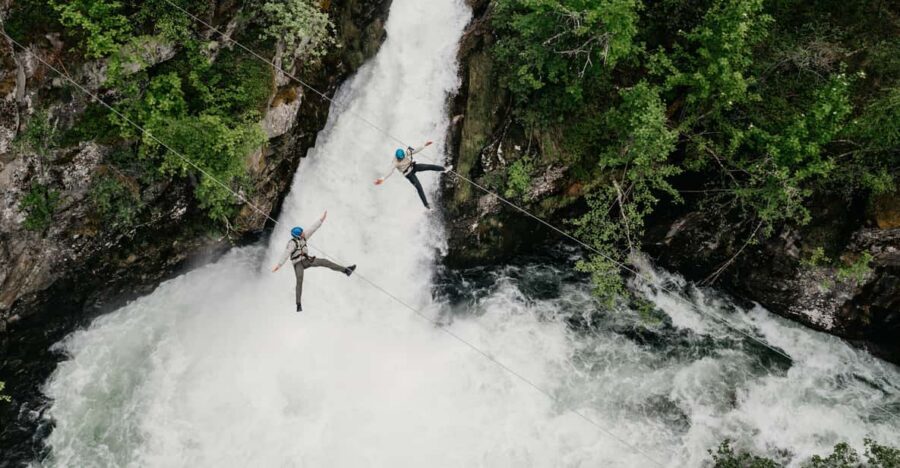
These bridges are one of the biggest “oh wow” moments, because they’re physical and exposed.
During the via ferrata option, you cross the river on four Nepalese bridges along the protected trail. You’ll also cross at least once on the route closer to the Dynamite Waterfall section, depending on the path you take and how the trail segments connect.
Why it matters: balancing on a suspended bridge forces your brain to slow down. You can’t just focus on the view. You’re managing footing, breath, and handholds. It’s also a great place to take a quick breather before you move back into climbing or zipline platforms.
If you’ve got strong balance skills, you’ll likely enjoy it as a highlight. If balance is a weak spot, you can still do it, but go slower than you think you need to.
Dynamite Waterfall: the spray-and-accomplishment finish
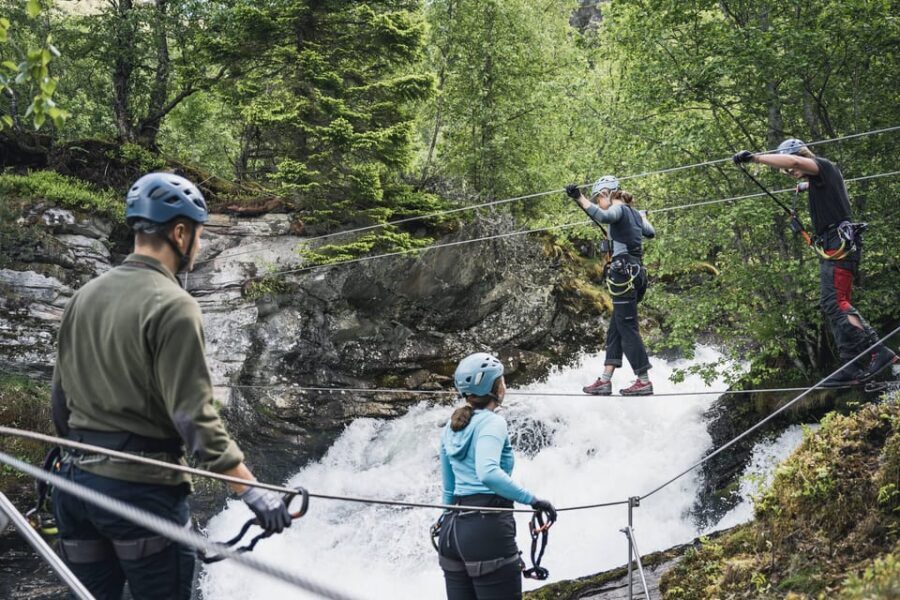
The Dynamite Waterfall is the emotional core of the park.
If you’re on the full via ferrata + zipline route, the course brings you to a crossing just above the waterfall. From there, you get that close-up moment where the fresh water is near enough to feel. Then you walk through a deciduous forest as the course winds down.
If you’re doing zipline-only, you still finish at the Dynamite Waterfall area close to the ticket office. That means you’re not just leaving the park after a quick thrill and turning around. You end with a very Norway-in-the-mountains payoff: water, power, and a cool mist as you catch your breath.
Expect this to be a good “we did it” stop, especially if your group has mixed comfort levels. Even people who find the cables intense often remember the waterfall as the moment that made the whole course worth it.
Views in a UNESCO setting: what you actually see
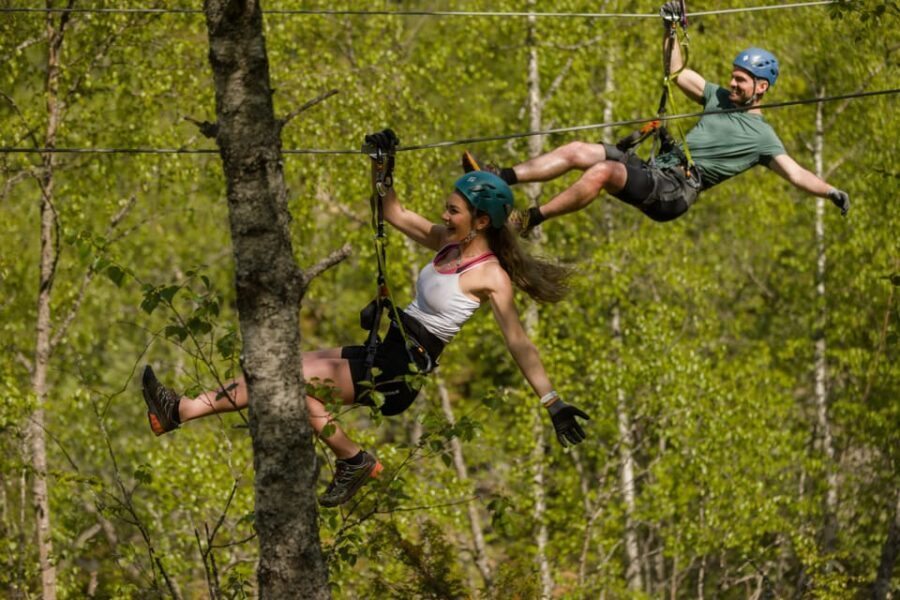
The fjord views are a big part of why people choose this over a standard zipline park. With Geiranger Park, you’re repeatedly scanning between:
- river corridors
- gorge drop-offs
- cascading waterfall angles
- fjord panoramas that show how the landscape layers downward
The trick is not to fixate only on the horizon. When you’re on ziplines or crossing bridges, keep your focus on the next step or next platform. Let your eyes take the view in between tasks.
This is the kind of activity that makes sightseeing feel active. You’re moving through the park instead of just standing and pointing.
Price and value: what $78 buys you in real terms
At about $78 per person, this sits in the “midrange fun” category for Norway adventure activities.
Here’s the value logic:
- You get equipment and a safety briefing.
- You’re booking a course with multiple elements (ziplines plus bridges, and potentially a via ferrata trail).
- You finish near a major natural feature (Dynamite Waterfall) instead of just leaving after the last cable.
So if you compare it to basic zipline-only parks, the difference is the setting and the added trail structure. If you compare it to full-day hiking tours, it’s shorter but more intense, which can be a win if your schedule is tight in Geiranger.
If you’re trying to choose between options: pick zipline-only if you want a focused adrenaline activity. Pick via ferrata + zipline if you want the complete course and don’t mind physical climbing work.
Timing, groups, and how long you’ll be moving
The duration is listed as 30 minutes to 1.5 hours, depending on your option and starting time.
Group size is limited to 8 participants, which you’ll feel in the flow. It’s easier to stay patient at the check-in stage. It’s also easier to get equipment issues handled quickly if they happen.
Instructor support depends on the section. You’ll get the required safety briefing, and the zipline portion includes guides supporting you at the platforms. The via ferrata portion, on the other hand, is largely self-directed after the setup, so your group should be comfortable following instructions and troubleshooting your own pace.
Safety, weather, and the fitness checklist you should not ignore
The park runs in rain or shine, but it can still close in serious weather. It will close if wind is strong or during a thunderstorm.
That means your “Norway weather” reality is built in. Pack with layers, and don’t count on having control over wind conditions.
Also take the limits seriously:
- not suitable over 120 kg / 260 lb
- not suitable for kids under 25 kg / 60 lb
- not suitable for people under 130 cm / 4 ft 3 in
- not suitable for pregnant women
- not suitable for people with mobility impairments
If you’re nervous about heights, be upfront with yourself. This activity has exposure and climbing. It might be manageable with steady breathing and careful pacing, but you shouldn’t treat it like a casual walk.
What to bring so you’re not miserable after the last cable
Based on what people actually run into on this course, I’d plan like this:
- sturdy hiking boots (especially if it’s wet)
- water and snacks, since there’s no food or drink available at the top areas
- a change of clothes if you’re doing the full route, since you’ll likely get damp near the waterfall
- possibly climbing gloves if you want better grip; there’s also an option to buy them at the shop
And one more practical tip: listen closely during the first briefing and ask for clarification early. The course is designed so you learn how to clip and move safely, then you execute. If something feels unclear, fix it at the start.
Who this Geiranger zipline park fits best
You’ll enjoy this most if you:
- want a mix of adrenaline and scenery
- like physical activities more than passive sightseeing
- can handle heights with a calm, steady mindset
- want a course that works well for groups with mixed comfort levels (the waterfall finish helps everybody feel rewarded)
This is less ideal if you:
- need fully guided, step-by-step assistance throughout the via ferrata trail
- don’t want any exposure or climbing
- fall outside the stated height/weight limits or have mobility concerns
- expect a relaxed, low-effort experience
If you’re traveling with teens and adults and your group is reasonably fit, the full via ferrata + zipline route can be a strong “everyone earned it” day.
Should you book Geiranger zipline park?
Book it if you want an activity that pairs fjords + real natural features with a course that feels like more than a single thrill ride. The Dynamite Waterfall finish makes it memorable, and the small-group setup helps keep it manageable.
Skip it (or choose zipline-only) if you’re unsure about the physical demands of via ferrata. The via ferrata part is protected, but it’s still climbing work, and it’s largely unguided after the initial instruction.
If wind or storms scare you, remember the park closes in strong wind and thunderstorms. Check conditions close to your time slot and keep your schedule flexible.
If you want a classic Norway day that includes water power, river crossings, and cable flight, this is a solid pick for Geiranger.
FAQ
How long does the Geiranger Zipline Park experience take?
It runs from about 30 minutes to 1.5 hours, depending on whether you choose zipline-only or via ferrata + zipline. Check starting times for the exact slot length.
What’s the difference between zipline-only and via ferrata + zipline?
Zipline-only focuses on the four ziplines and finishes near Dynamite Waterfall. Via ferrata + zipline adds a protected trail with Nepalese bridges and climbing before the ziplines, usually taking about 1.5 hours.
What’s included in the price?
The activity includes equipment, a safety briefing, the zipline experience, and via ferrata if you select that option.
Do I get an English-speaking guide?
You can expect instruction and support in English and Norwegian. You’ll receive safety briefings, and the zipline portion is supported by guides at the platforms.
Where do I meet for the activity?
Meet at the ticket office by the large gate with banners and beach flags on the main road. Walk about 30 meters down the road; the ticket office is in an old black wood cabin on your right.
Is the park open in bad weather?
The park operates in rain or shine, but it will close if wind is strong or during a thunderstorm.
Are there height, weight, or age limits?
Yes. It’s not suitable for people over 120 kg (260 lb) and kids under 25 kg (60 lb). It’s also not suitable for people under 130 cm (4 ft 3 in), and it has exclusions for pregnant women and people with mobility impairments.
Is food or drink included?
No. Food and drinks are not included, so it helps to bring water and snacks for the course—especially if you’re doing the full via ferrata route.