REVIEW · TROMSO
From Tromsø: Advanced Dog Sledding Tour at Camp Tamok
Book on GetYourGuide →Operated by Norwegian Travel · Bookable on GetYourGuide
Sledding gets real fast in the Arctic. This advanced Camp Tamok tour combines a remote snow valley run with hands-on musher-style driving, plus time with the dogs and a cozy Sámi tent meal. I love that you actually get the reins (not just a passenger ride), and I love the way the camp sets you up to stay warm with proper kit. The main drawback is also the biggest one: it’s physically demanding, and you’ll need balance and strength for uphill sections and narrow turns.
You start with a 90-minute bus ride from Tromsø into Lappland winter country, then gear up at Camp Tamok and get a clear safety briefing. You’ll ride in pairs—two people share one sled—so you learn fast and keep moving. I’d only skip it if you’re not comfortable with cold exposure while seated, or if your fitness level doesn’t match an “advanced” course.
Here’s the good news: if you like active outdoors days and you take instruction seriously, this is the kind of dog sled experience that sticks in your memory for all the right reasons.
In This Review
- Key points worth knowing before you go
- Advanced dog sledding in Tamok Valley: what you’re really buying
- The Tromsø to Camp Tamok day: pacing, comfort, and timing
- Gear at Camp Tamok: how the included kit changes the whole trip
- The sledding itself: shared sleds, driving skills, and a halfway switch
- Why this tour feels like CrossFit on snow (and why people still love it)
- Meet the huskies (and why their energy sets the tone)
- The lavvu lunch: warm stew, hot drinks, and a proper reset
- Small-group logistics: why max 12 matters in winter
- Price and value: is $313 worth an advanced Arctic workout?
- Best time to book: daylight versus the magic of running in darkness
- Who should book this, and who should skip it
- Should you book Camp Tamok advanced dog sledding from Tromsø?
- FAQ
- What’s the main activity on this tour?
- How long is the tour?
- What winter clothing is included?
- Is the sledding fully guided?
- What happens after the sledding?
- Where do I meet the group in Tromsø?
Key points worth knowing before you go
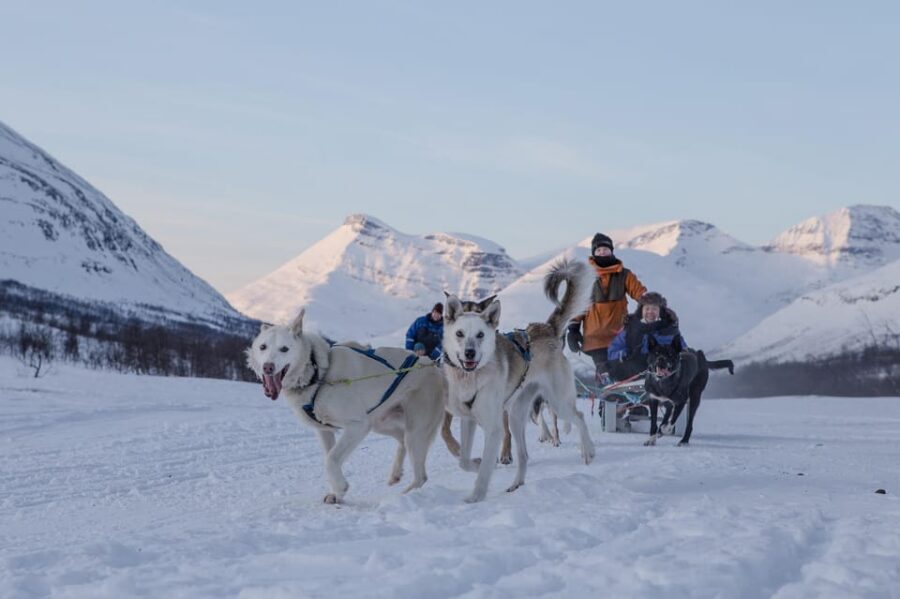
- Self-drive “musher” experience: you steer your sled, not just sit and watch
- Pair format with a mid-ride role swap: switch from driving to riding halfway through
- A real workout on snow and hills: expect running, pushing, and balance tests
- Warm Sámi tent finish: hot stew and drinks by the fire in a lavvu
- Husky yard time included: cuddles and photos after the ride
- Small group size (max 12): better instruction and safer organization
Advanced dog sledding in Tamok Valley: what you’re really buying
This tour is built around the idea that you’ll help make the sled run. That’s why it’s labeled advanced: you’ll steer, you may need to slow down or control speed, and on some parts you’ll have to help the dogs push the sled—especially uphill or when the trail gets freshly covered. If you want the mild, “sit back and enjoy” version, this isn’t it.
What I like most is the balance. It’s not just about speed. You get a real lesson in how dog teams behave and how you work with them. When you do it right, the ride feels like teamwork: you help on the hard parts, then the dogs stretch their legs and fly on the smoother stretches.
The other thing you’re buying is the full camp rhythm. You travel out of Tromsø, you spend focused time at Camp Tamok, and you end with warmth—food, hot drinks, and a calmer moment in the Sámi lavvu after the adrenaline.
You can also read our reviews of more tours and experiences in Tromso.

The Tromsø to Camp Tamok day: pacing, comfort, and timing
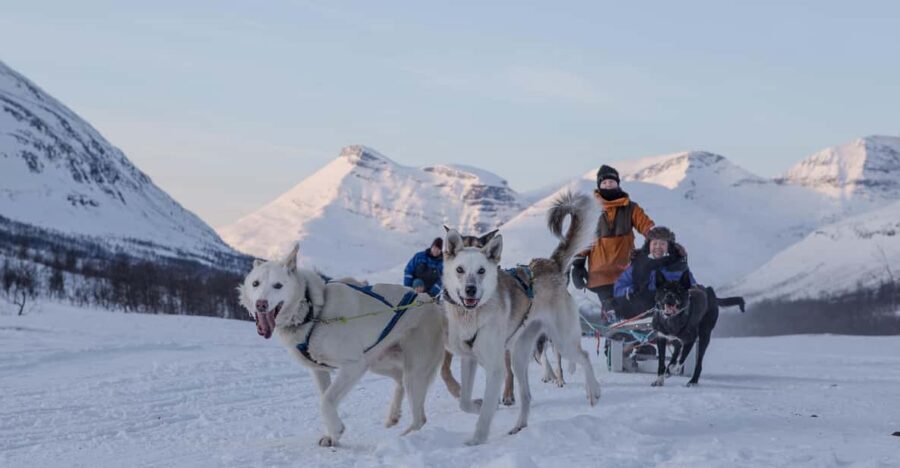
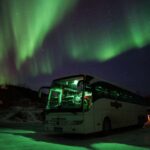
The day starts at Tromsø Havn Prostneset, inside the main entrance hall. Your coach ride is about 1.5 hours each way, and it’s part of the experience: you get those classic Arctic winter views as you leave the city behind and head toward the Tamok area.
Once you arrive, the pace becomes very “Arctic camp.” You’ll get warm clothing and gear, then you’ll move through safety briefing and sled instructions. After that, you’re outside for the main activity, and you don’t get a lot of downtime in between steps—on purpose, so your group stays coordinated and stays warm.
A practical tip: plan for a long day. Even if the sledding itself feels like it flies by, the full tour is about 7 hours including travel and the meal reset. If you tend to get cold easily, take that seriously and dress in layers under whatever you’re given.
Gear at Camp Tamok: how the included kit changes the whole trip
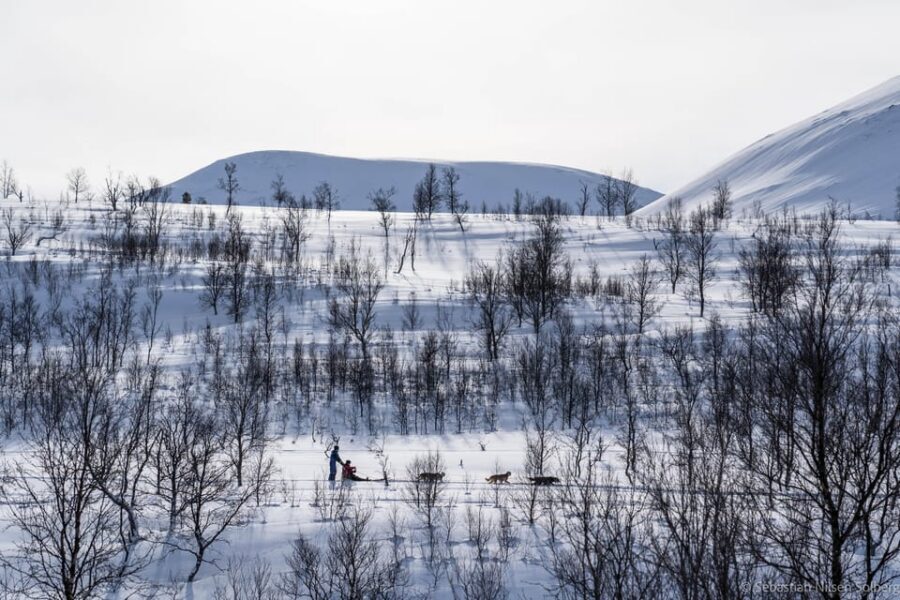
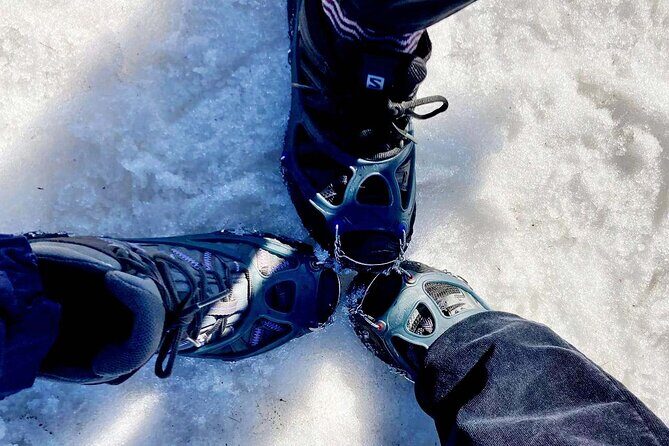
You get a thermal suit, winter boots, mittens, and a hat. That matters more than people think. In this kind of ride, your comfort depends on whether you can keep heat in and wind off—especially if you’re the passenger for part of the run.
In real use, the kit setup works best when you use it fully. Some riders note the driving position can feel lively, while the passenger role can get chilly because you’re seated and moving at speed. I’d rather you overprepare than spend the day thinking about your hands.
A couple additions that help in the cold, based on what I’ve seen riders recommend: bring a scarf and consider extra face protection if you’re sensitive to wind. Also, make sure your own base layers are truly weather-appropriate—thermals help.
The sledding itself: shared sleds, driving skills, and a halfway switch
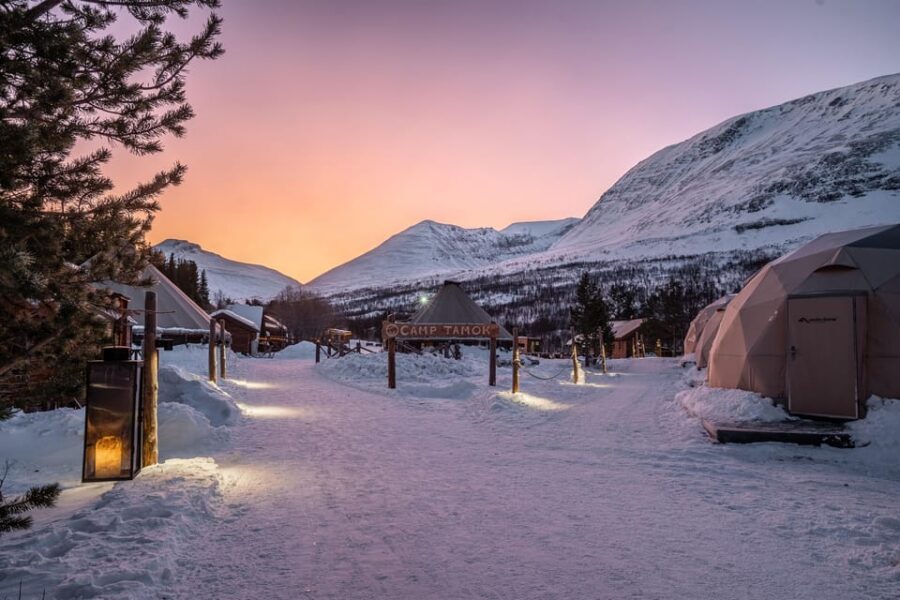
The core format is simple and surprisingly effective: you pair up with one other person, and two of you share one sled. One person drives (the musher role), and the other rides seated. After about halfway, you switch roles so each person drives.
That role swap is the point. If you’re active and want to steer, you’ll get time behind the reins. If you’re more cautious and want the ride without the work, you’ll still spend part of the day as a passenger. It also means you need to be honest about your fitness and balance, because both people must qualify when you swap.
Learning happens quickly. You’ll get instruction on what to do at speed, how the sled behaves, and how to handle turns and stopping. Once you’re out there, steering takes attention. The course can include narrow sections and sharp bends, so your body position matters.
One detail to respect: the sled runners can feel tight and twitchy at first. You’re basically working with the track under you while hopping on and off when needed. After a few repeats, it clicks for most people.
Why this tour feels like CrossFit on snow (and why people still love it)
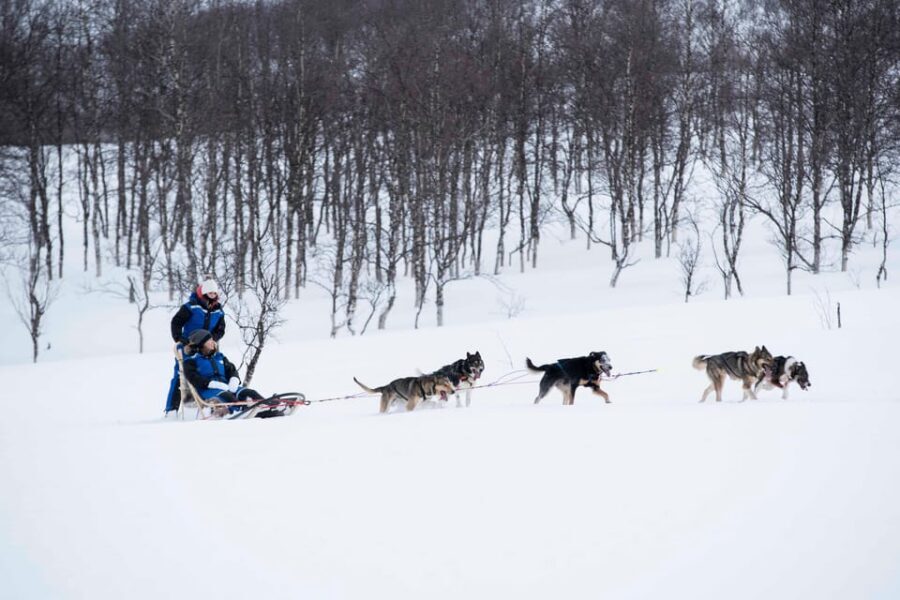
This is not “easy mode.” On some trail parts, the snow can be fresh and soft or the route can go uphill. In those moments, you’ll help the dogs push the sled. That can mean running alongside and applying effort uphill, then getting back on quickly when the team is ready.
Stopping and starting can happen. You may need to step off and help, then hop back on as the dogs accelerate. Some people describe it like controlled chaos at times—step, push, run, re-board. If you’ve ever tried to sprint uphill in winter gear, you’ll understand why fitness matters.
Downhill is a different challenge. You control the dogs’ speed using what you’ve been taught, so you’re not just along for the ride. One more safety note that riders repeat: don’t loosen your grip on the sled, because the wrong move can mean the sled tips or runners shift. In these conditions, “fine” can turn into “messy” fast.
So why do people rate this so highly? Because when you do it right, it’s a real accomplishment. You come away feeling like you didn’t just watch Arctic life—you took part in it. And you see how eager the huskies are to work.


Meet the huskies (and why their energy sets the tone)
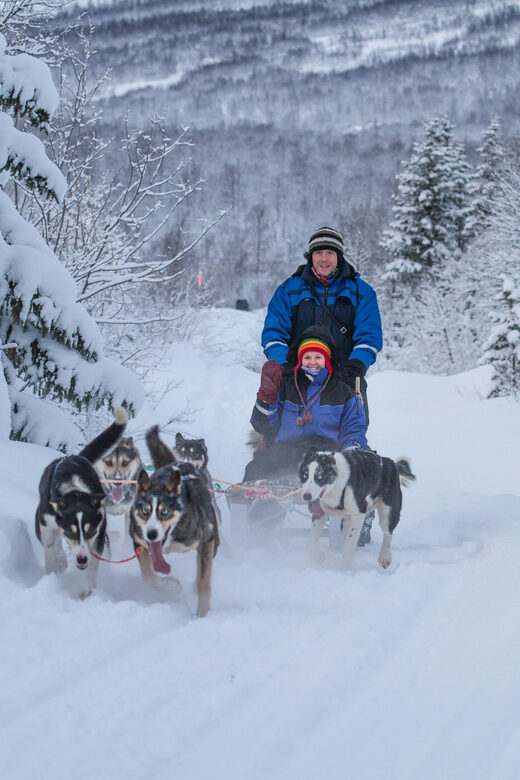
At Camp Tamok, you’re not just dropped into an activity slot. You’ll spend time with the dogs in the yard after the ride. That’s when the whole place softens a bit. You can cuddle and take photos, and the dogs are often described as friendly and energetic—many seem eager to get moving even before the sledding starts.
A few guides are mentioned by name in different runs, which tells you something about the experience consistency. People praise guides like Rebecca, Paula, Sigi, Alex, and Manos for safety-first instruction and for keeping the mood upbeat. You’ll feel that in how they manage transitions—gear, briefing, switching roles, and helping when the course gets tough.
Also, pay attention to how the dogs respond to commands. Some riders note that certain dogs respond to specific language cues. That’s not a reason to skip, especially since instruction is in English, but it’s a reminder to focus on what your guide tells you to do and say.
The lavvu lunch: warm stew, hot drinks, and a proper reset
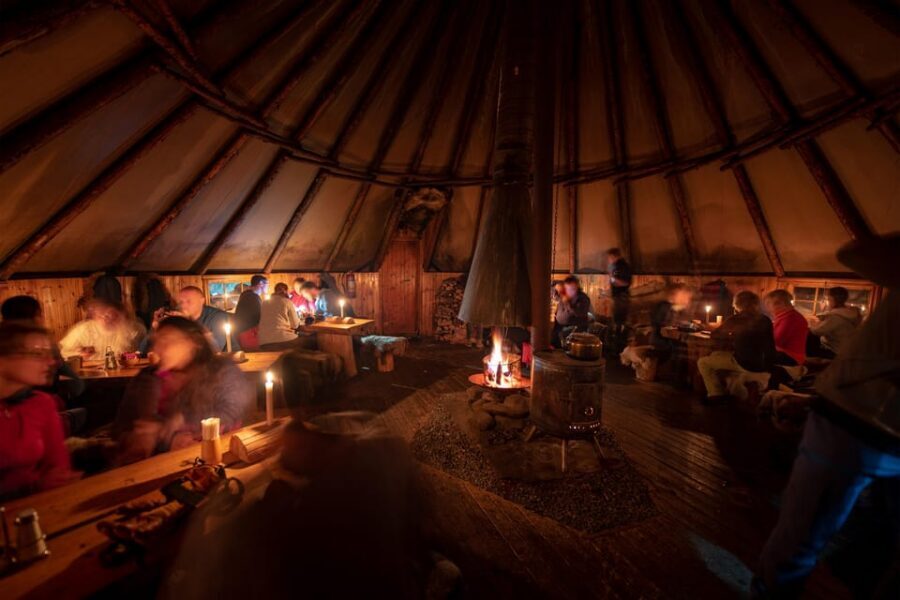
After the sledding, you warm up inside a traditional Sámi tent (lavvu). You’ll get a hot meal and drinks by the fire. The exact stew can vary—people describe reindeer stew, lamb stew, and even fish soup on some days—but the important part is consistency: it’s hot, it’s filling, and it hits the spot after cold exertion.
Hot berry drinks show up often in rider notes, including hot blackcurrant-style juice. It’s one of those simple pleasures that makes the day feel complete. You’re not rushing to the next thing; you’re settling in with heat, food, and a calmer atmosphere.
One practical win: the camp setup includes warmed areas like a heated restroom and a changing space for getting geared up—plus a comfortable place to sit and eat. It’s a big deal when your day involves repeated outside exposure.
Small-group logistics: why max 12 matters in winter
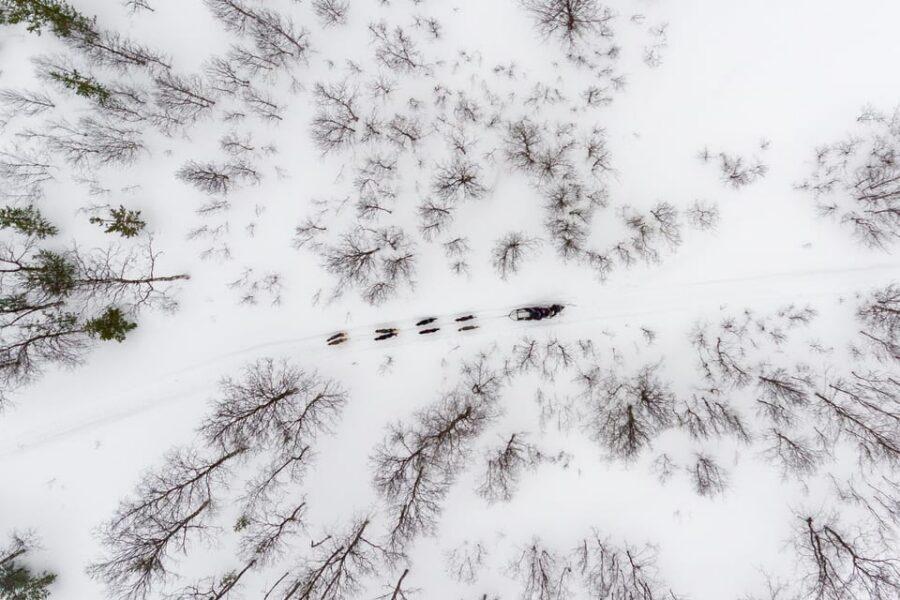
With up to 12 participants, you’re not lost in a huge crowd. That matters because dog sledding is a multi-step process. You need space for gearing, time for instructions, safe staging for sled launches, and quick assistance if someone struggles on the hill or re-boards slowly.
That small-group size also affects your experience during role switching. You’re paired with one other rider, and the guides can watch both of you for safety before swapping. It’s one reason the physical requirements are strict: if someone can’t meet them, the guides may deny them entry for health and safety.
Price and value: is $313 worth an advanced Arctic workout?

At about $313 per person, this isn’t a budget activity. The value comes from what’s included and what you actually do.
You’re getting:
- Round-trip transport between Tromsø and Camp Tamok
- All key winter gear (thermal suit, boots, mittens, hat)
- An English-speaking guide and instruction
- A self-drive sled format with a halfway switch
- Time with the huskies in the yard
- A hot meal in the lavvu and warm drinks
If you were to piece that together yourself—gear rental, a remote transport plan, and guided sled instruction—you’d spend more and still likely miss the full camp setup. Plus, advanced tours are usually priced higher because they require more oversight on the course. That oversight is part of what you pay for.
Still, be realistic about your goals. If your dream is calm sightseeing from a warm sled, this advanced format will feel like work. If your dream is to learn, steer, and earn your speed, the price starts to make sense.
Best time to book: daylight versus the magic of running in darkness
Timing matters in Tromsø because winter days can be short. One helpful tip from riders: if you’re going late December and you want more visible scenery, choose a morning slot. You’ll likely get more light to enjoy the valley and the trail.
That said, the darkness can be part of the thrill too. Even riders who experienced an afternoon run in low light still called it magical. The key is your comfort level: if you’re easily stressed by cold + low visibility, pick the time that helps you feel steady.
Who should book this, and who should skip it
This tour fits best if you:
- Are comfortable with a physically active winter day
- Have good balance for steering and re-boarding
- Want hands-on driving time (not just a passenger sit)
- Enjoy working with animals and following safety instruction
It’s not suitable for:
- Children under 16
- Pregnant women
- People with mobility impairments or wheelchair users
- People over 264 lbs (120 kg)
- People with animal allergies
- Anyone who can’t meet the physical demands when roles swap
If any of those apply, skip it. The tour is run for safety, and the guides can deny drivers or passengers to join for health and safety reasons.
Should you book Camp Tamok advanced dog sledding from Tromsø?
If you’re the type who wants more than a photo, I think you’ll like this. The best version of the day is when you treat the workout as part of the adventure: help on the hills, listen hard in the briefing, and take the switch seriously so you and your partner both meet the standard.
Book it if you’re excited by the idea of steering your own sled and working as a team with the huskies. Skip it if you’re hoping for a purely relaxing ride with minimal physical effort.
If you’re on the fence, ask yourself one question: do you want an Arctic day that feels like doing something, not just watching it?
FAQ
What’s the main activity on this tour?
You’ll go dog sledding at Camp Tamok and drive your own sled in an advanced self-drive format. You share one sled with another person, and you switch roles halfway so each person drives and rides.
How long is the tour?
The tour duration is about 7 hours total.
What winter clothing is included?
The tour includes a thermal suit, winter boots, mittens, and a hat. You should also bring a scarf and wear weather-appropriate clothing and thermal layers.
Is the sledding fully guided?
Yes. You’ll get a safety briefing and sledding instructions before you set off, and you’ll ride in a guided camp setup with an English-speaking guide.
What happens after the sledding?
You’ll visit the husky yard for cuddles and photos, then warm up in a Sámi lavvu with a hot meal and drinks by the fire.
Where do I meet the group in Tromsø?
Meet inside the main entrance hall of Tromsø Havn Prostneset (the tour lists Samuel Arnesens gate 5 as the starting location).