REVIEW · OSLO
Oslo: City Center Walking Tour
Book on GetYourGuide →Operated by Oslo City Center Walking Tour · Bookable on GetYourGuide
Oslo gets easier with someone else leading. This city center walk stitches together the Opera House, royal landmarks, and the Nobel Peace Center into one practical loop, so you’re not wandering just to feel productive. I particularly love the small groups and the way guides bring the sights to life with clear, upbeat storytelling. One thing to keep in mind: it starts on time and runs about 90 minutes, so you’ll want to save extra lingering for after the tour.
You’ll meet at the Tiger statue outside Oslo Central Train Station and follow the route city-style, on foot, with plenty of look-around moments at each stop. If you want an efficient first-day plan, this hits a lot of Oslo’s “wow” buildings without turning your day into a bus schedule.
In This Review
- Key Things That Make This Tour Worth Your Time
- Getting Started at the Tiger Statue Outside Oslo Central
- Oslo Opera House to Oslo Børs: Modern Oslo, Up Close
- Christiania Torv and Akershus Fortress: Symbols and Strong Walls
- Aker Brygge to Nobel Peace Center: Where Meaning Meets the Waterfront
- City Hall, National Theatre, and the Royal Palace: Oslo’s Formal Stage
- University Aula to Karl Johans gate: The Main Street of Oslo
- Price and Value: Is $22 a Fair Deal?
- What to Expect Day-Of (and What to Bring)
- Should You Book This Oslo City Center Walking Tour?
- FAQ
- Where is the meeting point?
- How long is the tour?
- What language is the guide?
- Is the tour wheelchair accessible?
- Does the tour run in bad weather?
- What major sights will we see?
- How much does it cost?
- Is there free cancellation?
- Can I reserve without paying right away?
- Is there a local guide included?
Key Things That Make This Tour Worth Your Time
- Tiger statue meeting point right by Oslo Central Station, easy to find and low-stress to start
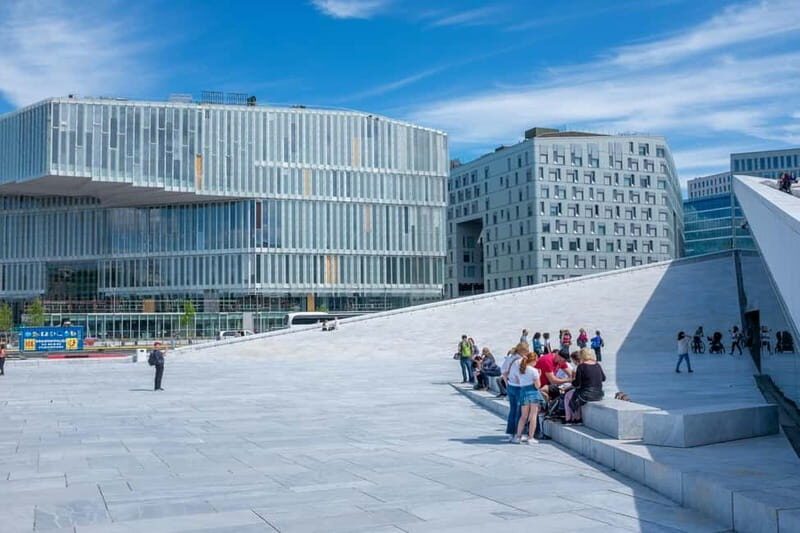
- Opera House orientation with a photo-friendly walkthrough of one of Oslo’s biggest architectural icons
- Akershus Fortress context so you understand why this 13th-century stronghold matters today
- Nobel Peace Center stop at Aker Brygge that connects the prize to the place it lives
- Karl Johans gate and the Storting finale for a satisfying finish at Norway’s Parliament
- English-speaking, small-group guides with an approachable pace (even in colder months)
Getting Started at the Tiger Statue Outside Oslo Central
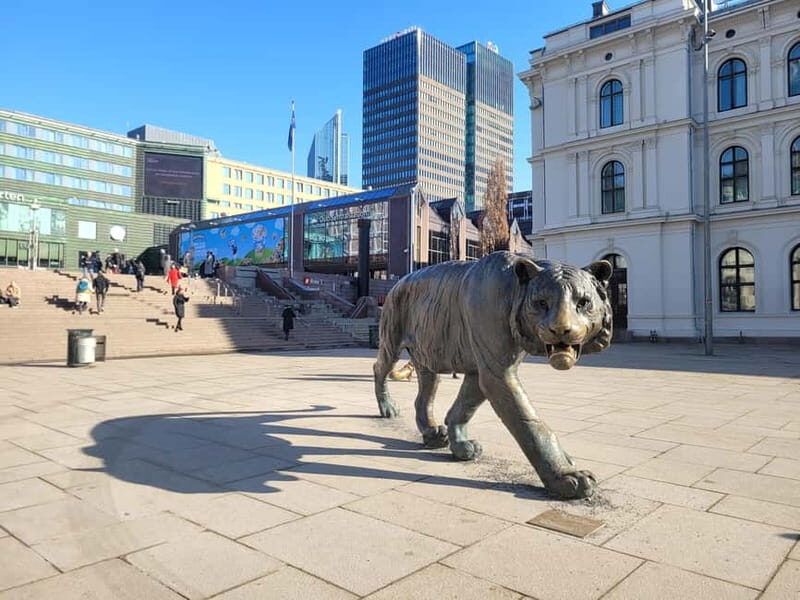
The whole experience feels manageable from minute one because you start in a simple place: the Tiger statue in front of Oslo Central Train Station. Look for the guide holding a CITY WALKING TOUR OSLO sign. If you’re arriving by train (or just trying to orient fast), this is a smart choice. You’re not scrambling across neighborhoods just to kick things off.
What I like about this kind of start is how it sets expectations. You know you’re in the center, you know you’ll be walking, and you know the guide will handle the “what am I looking at?” part. That matters in Oslo, where the city can look modern and polished, yet still hide a lot of layered meaning in monuments, buildings, and waterfront areas.
The tour also runs rain or snow, starting on time. If the weather turns, bring warm layers and footwear with grip. The route is walkable, but slick sidewalks are not the time to test brand-new shoes.
You can also read our reviews of more walking tours in Oslo



Oslo Opera House to Oslo Børs: Modern Oslo, Up Close
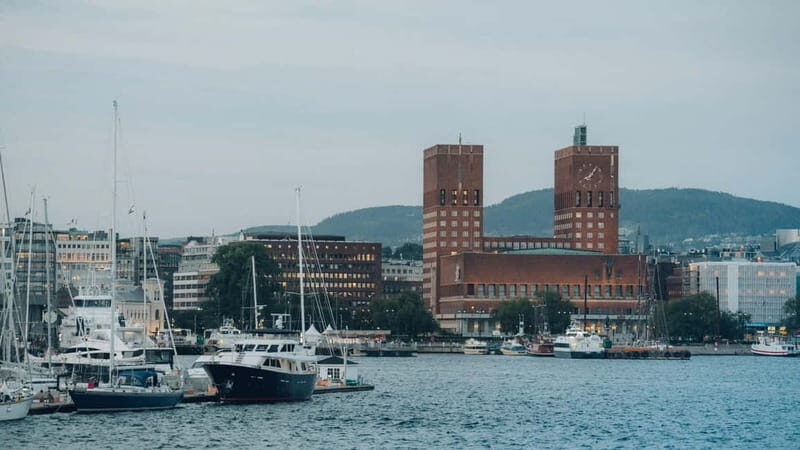
The walk launches toward the Norwegian National Opera and Ballet, and that’s a good move. Even if you’ve seen photos, the Opera House feels different in person—less like a picture and more like a place you can actually move around in. The guide’s focus here helps you read the building, not just admire it.
From there, you head toward Oslo Børs (the stock exchange). This stop is great if you like understanding how cities actually function. It’s easy to think of landmarks as scenery, but finance shapes daily life, and Oslo Børs is Norway’s regulated securities trading market. You get a sense of why this area matters, and it also breaks up the walking rhythm with a different kind of point of interest—less royal, more civic-and-economic.
This portion of the tour is ideal for shaking off jet lag. You’re moving, seeing landmarks at street level, and learning context without needing to sit through a museum experience. If you enjoy quick architecture and city planning talk, this stretch will feel like your personal Oslo orientation lecture—without the classroom vibes.
Christiania Torv and Akershus Fortress: Symbols and Strong Walls
At Christiania Torv, you’ll come across Christian IV’s Glove. I like that the guide frames this kind of monument as a story. Even without spoilers, it’s the sort of detail that makes a city tour feel worth paying attention to. Instead of just snapping a photo, you learn what the monument represents and why it shows up where it does.
Next comes Akershus Fortress. This is where the walk shifts from streetscape to stone-and-stories. You’re visiting a 13th-century medieval castle that originally protected the city and also served as a royal residence. The payoff is how the guide connects the architecture to changing roles over time. You’ll hear how it has been used as a military base and even as a prison, and that it’s now a temporary office for the Prime Minister of Norway.
This stop is a good reminder that Oslo isn’t just sleek and new. The city layers authority, defense, and governance into visible places. When you stand near a fortress, you understand the strategic thinking behind location. When you hear how the site shifted functions, you understand how power evolves.
If you’re the type who likes history but doesn’t want a lecture marathon, Akershus is a sweet spot. You’re outdoors, you can see the scale, and you get just enough background to make the fortress feel real.
Aker Brygge to Nobel Peace Center: Where Meaning Meets the Waterfront
From Akershus, you move toward the Aker Brygge area, where the Nobel Peace Center sits. This is one of the more emotional parts of the day, mainly because it connects a global idea—the Nobel Peace Prize—to a specific place in Oslo.
Aker Brygge itself works as a visual transition. It’s a waterfront neighborhood vibe, and the walk gives you a sense of why this part of town attracts attention and movement. Then the Nobel Peace Center comes in as the intellectual anchor. You pass by the center and learn about how it showcases the prize and the ideals it represents.
Even if you don’t go inside a museum, this stop can still change how you see the city. Oslo’s identity is often described through buildings and museums, but the Nobel theme makes it feel values-driven. It’s one of those stops that gives you something to think about after you return to your hotel.
Practical tip: if it’s cold, plan to keep moving through this stretch. The waterfront can feel brisk, and the tour is designed for steady pacing rather than long stops in one spot.
City Hall, National Theatre, and the Royal Palace: Oslo’s Formal Stage
As the walk continues, you’ll pass a chain of major civic and cultural buildings: Oslo City Hall, the National Theatre, and the Royal Palace. This is the part where the guide helps you read facades like a story. You’re not just looking at what’s pretty. You’re learning what these buildings signal about the city’s identity and traditions.
Oslo City Hall is easy to spot and easy to photograph, but it’s more satisfying when you understand its role and why it shows up in the center of civic life. The National Theatre adds a different flavor: the arts as part of public culture, not an afterthought. And then comes the Royal Palace, which helps tie the royal thread back into a modern street route.
If you’re visiting in winter, this stretch is also a good test of whether the walking pace works for you. People often assume walking tours are either slow and stop-and-chat, or fast and stressful. This one is pitched as guided and paced, so you can absorb details without feeling like you’re power-walking.
From what I’ve heard from past departures, guides like Nicola and Jessie have been praised for making the group feel welcome and for keeping the pace relaxed while still delivering lots of information. That blend matters. A tour can be full of facts, but if the energy is flat, the city won’t land the way it should.
You can also read our reviews of more city tours in Oslo






University Aula to Karl Johans gate: The Main Street of Oslo
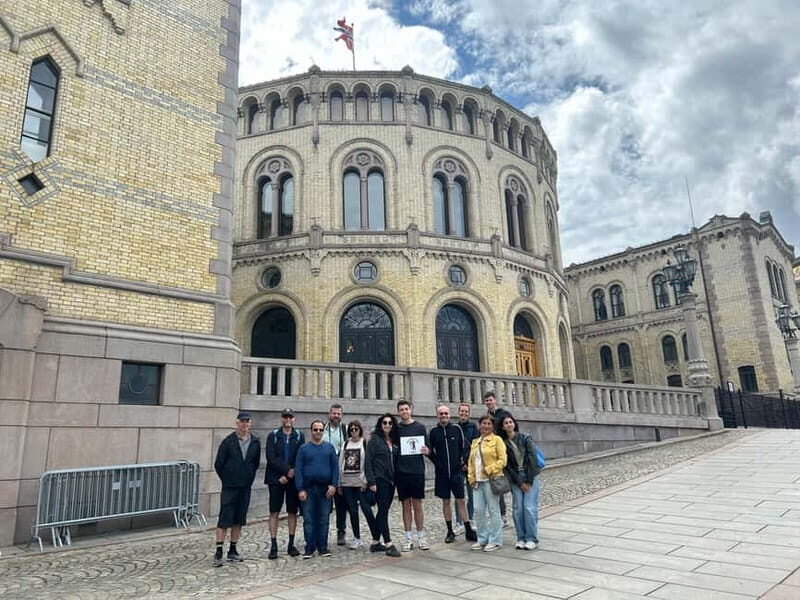
As you near the end, you’ll pass the University Aula on the university’s old campus. This stop is a nice breather because it’s less about government and more about education and public life. It gives you a sense of how Oslo grew—cultural institutions, civic buildings, and learning spaces showing up close together.
Then you’ll reach Karl Johans gate, Oslo City’s main street. This is a major artery in the city, and it’s one of those places where the architecture feels like it’s all facing the same direction, as if the street itself is an introduction to Oslo.
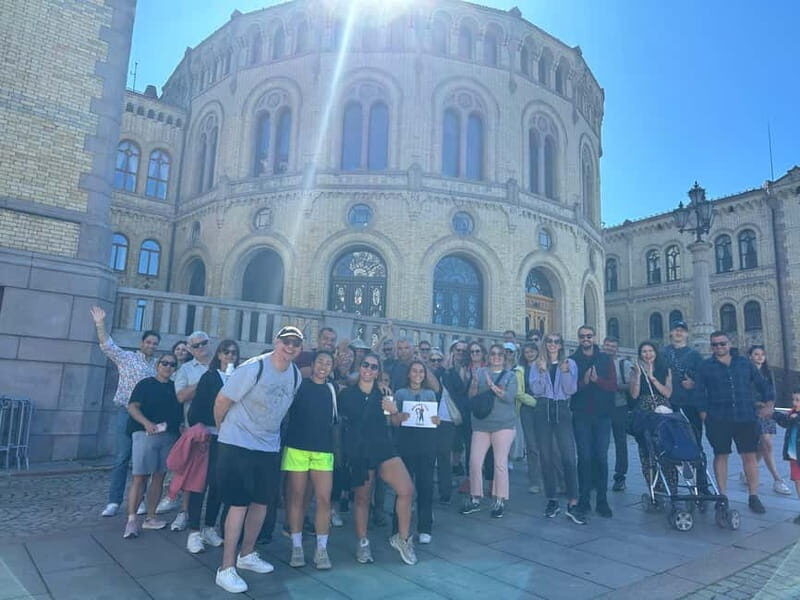
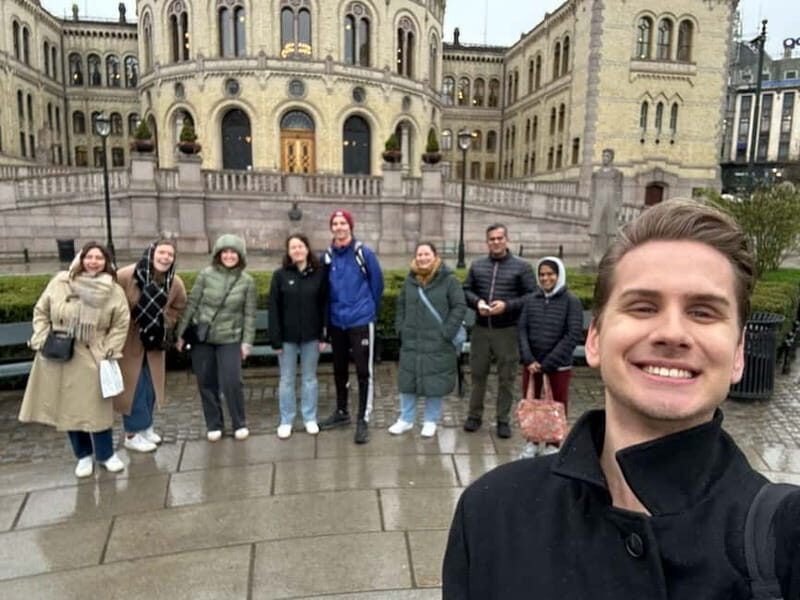
Along Karl Johans gate, you’ll see the Storting building, Norway’s Parliament. And that sets up the final moment of the tour: the end point at the Norwegian Parliament. Finishing here is smart. It turns your walking route into a narrative arc—starting with orientation, moving through identity landmarks, and ending at the place where national decisions get made.
Price and Value: Is $22 a Fair Deal?
At $22 per person, this isn’t a budget-freebie, but it also isn’t priced like a private tour. The value comes from concentration: you cover a big chunk of central Oslo’s must-see architecture and symbols in about 90 minutes, guided the whole way.
Here’s what makes that price feel reasonable:
- You get a local guide handling the explanations so you’re not Googling each building mid-walk.
- You hit multiple top Oslo sites—Opera House, Akershus Fortress, Nobel Peace Center area, Royal Palace, and the Storting—without needing separate transport.
- Small groups help the experience feel personal. You’re more likely to ask questions and get a clear response, especially with an English-speaking guide.
If your priority is seeing everything on your own schedule with no structure, you might skip this. But if you want to understand what you’re looking at while still keeping your day moving, paying for a guided walk is one of the most efficient values you can buy in Oslo.
One possible consideration: the tour length is described two ways—one place lists 105 minutes, while the run time is also described as about 90 minutes. That difference likely reflects time for getting everyone together and the actual pacing. Either way, it’s short enough to fit into a busy itinerary, but long enough to feel like more than a quick “photo walk.”
What to Expect Day-Of (and What to Bring)
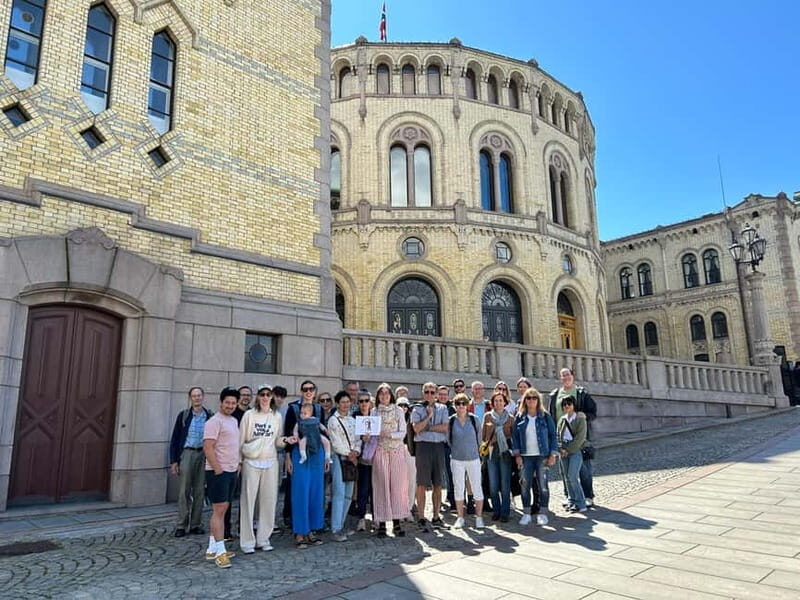
Since the tour starts on time in rain or snow, your outfit matters more than usual. I’d plan for cold air if you’re visiting outside the warm season. Dress in layers. Bring gloves if you run cold hands, since you’ll likely want to keep your camera ready.
You should also wear shoes you trust. The route is walked throughout, and while it’s not described as a punishing trek, you’ll cover enough ground that uncomfortable footwear becomes your only thought.
In terms of pace and group vibe: past participants have praised guides for staying friendly and welcoming, with a good tempo that doesn’t leave you sprinting between landmarks. You’ll still do plenty of walking, but it’s guided in a way that supports questions and stops without turning into a long wait.
Should You Book This Oslo City Center Walking Tour?
Book it if:
- This is your first time in Oslo and you want a fast, structured orientation.
- You care about why buildings and monuments matter, not just what they look like.
- You like small groups and an English-speaking guide who keeps things friendly and moving.
Skip it if:
- You want a very slow, ultra-photographic walk with long pauses at each stop.
- You prefer to explore entirely on your own and don’t want explanations along the way.
For most first-day visitors, this is an efficient and satisfying way to see Oslo’s center. You finish with the Storting area in front of you, having learned enough to recognize patterns in the city’s architecture and meaning. It’s not trying to do everything in Oslo—it’s doing the important core well.
FAQ
Where is the meeting point?
Meet in front of Oslo Central Train Station by the Tiger statue. The guide will be standing there holding a sign that says CITY WALKING TOUR OSLO.
How long is the tour?
The duration is listed as 105 minutes, and the tour is also described as lasting about 90 minutes and starting on time.
What language is the guide?
The live tour guide speaks English.
Is the tour wheelchair accessible?
Yes, the tour is wheelchair accessible.
Does the tour run in bad weather?
Yes. The tour starts on time rain or snow.
What major sights will we see?
You’ll see stops that include the Oslo Opera House, Oslo Børs, Christiania Torv (Christian IV’s Glove), Akershus Fortress, and the Nobel Peace Center area, plus landmarks such as Oslo City Hall, the National Theatre, and the Royal Palace, ending at the Norwegian Parliament.
How much does it cost?
The price is $22 per person.
Is there free cancellation?
Yes. You can cancel up to 24 hours in advance for a full refund.
Can I reserve without paying right away?
Yes. You can reserve now and pay later.
Is there a local guide included?
Yes. A local guide is included with the tour.