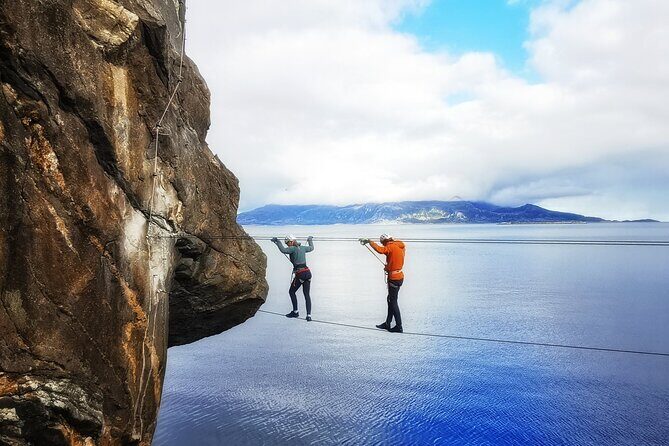
You get ocean views while your legs do the talking. This guided via ferrata at Bratten starts down at sea level and climbs an exposed vertical cliff to an exit about 57 meters above sea level, with big views of the ocean and surrounding mountains. I like that you’re kitted out with safety equipment on arrival and walked through what to do before you start, and I also like that the route uses holds that can feel manageable even when the wall looks serious. The main drawback to plan for: this is exposed climbing and it calls for physical strength and solid comfort with heights.
The climb itself runs on a smooth flow: meet at the activity park, get safety instructions, head along the sherpa trail to the starting point, then climb with your guide directly with you. A small group size also keeps things more personal, which matters when you’re learning how the safety system works.
In This Review
- Key Things That Make This Climb Worth It
- Bratten Activity Park: Where the Adventure Starts
- From Sherpa Trail to Sea-Level Start: How the Route Gets You Ready
- Climbing the Vertical Wall: What It Feels Like Up There
- Guides, Safety Equipment, and the Confidence Factor
- Views Over Bodø: Ocean Scenery That Actually Changes the Climb
- Weather, Clothing, and Physical Readiness: Your Checklist
- Time on the Wall: What 2.5 Hours Means
- Price and Value: Is $127.86 Worth It?
- Who Should Book the Viking Wall at Bratten?
- Should You Book Viking Wall at Bratten?
- FAQ
- Where does the Viking wall experience meet?
- How long is the experience?
- Is it guided and in English?
- How high is the via ferrata exit?
- Do I need to be physically fit?
- How many people are in a group?
- What route does the climb follow?
- What should I wear?
- Is the experience weather dependent?
- What if I’m booking alone?
Key Things That Make This Climb Worth It
- Sea-level start, 57-meter exit: you’re climbing from right by the water up to strong vantage points
- Small group cap (max 7): easier for the guide to keep an eye on you
- Guide-led climb all the way: you’re not left to figure it out mid-wall
- Safety gear and instructions first: you’ll know how to use the equipment before moving onto the route
- Exposed but hold-supported: the holds help you progress while still letting you challenge yourself
- Weather matters: you’ll plan around conditions since the experience requires good weather
Bratten Activity Park: Where the Adventure Starts
This via ferrata experience begins at Bratten Activity Park, with the exact meeting point listed as Bratten 7, 8014 Bodø, Norway. When you arrive, the guides meet you right there and set you up with the safety equipment before anything vertical happens. That early instruction time is a big deal. When climbing is exposed, knowing how the gear works lowers your mental load fast.
The experience is guided and offered in English, which helps if you’re not fluent in Norwegian. It also runs as a structured experience with a clear end point back at the meeting area, so you’re not stuck wondering how the logistics work.
One practical upside: the starting area is near public transportation. That matters if you’re building this into a day around Bodø sights, or if you don’t want to rely on a rental car.
You can also read our reviews of more tours and experiences in Bodo.

From Sherpa Trail to Sea-Level Start: How the Route Gets You Ready
After your safety intro, you’ll head along a sherpa trail to the starting point at sea level. I like this transition because it gives your body a chance to wake up and your brain a chance to switch from flat-ground mode to vertical mode. You’re still on the ground, but you’re already moving toward the wall, and that makes the climb feel less like a sudden jump.
The via ferrata routes are described as exposed and requiring physical strength. That doesn’t mean it’s just for athletes, but it does mean you should take the exposure seriously. If you tend to freeze when you’re looking down, practice patience here: this is where the guide’s role starts to matter.
Also, plan your clothing for the weather. You’ll be moving outdoors, and you’ll want clothing that works both for safety and for comfort while you’re climbing. Cold hands and slippery clothing can turn a fun challenge into a frustrating one, even if the holds make progress easier.
Climbing the Vertical Wall: What It Feels Like Up There
Once you start climbing, your guide stays with you from sea level up the vertical cliff. The via ferrata exit is at about 57 meters above sea level, and that vertical climb is the heart of the experience.
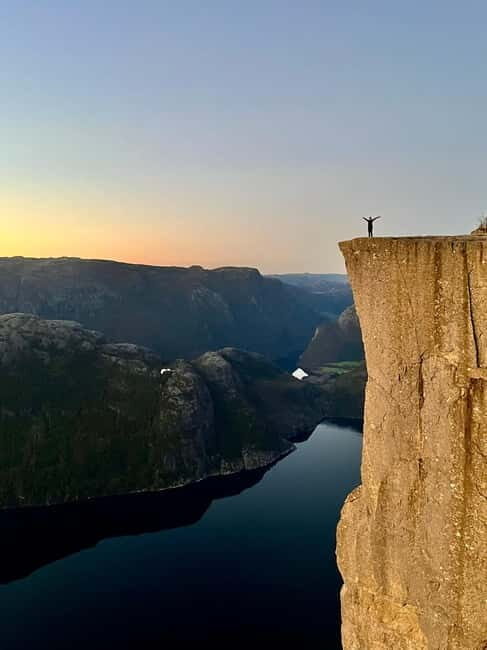
The route is exposed, so you should expect a real sense of openness around you—no hiding behind a rock face. The good part is that the views show up as you climb. You get a clear look at the ocean below and the surrounding mountains, and that turns the climb into more than just getting to the top.
One detail I take seriously from the experience description: the routes require physical strength. In practice, that means you’ll use your arms and legs together. Even if the holds help, you still need the grip strength and body control to move steadily without rushing.
And yes, you can challenge yourself. The experience notes that the holds make the climb feel possible for people who might not be rock climbers, while still letting you hold onto the rock and push your comfort level.
Guides, Safety Equipment, and the Confidence Factor
A lot of outdoor activities say you’ll get safety gear. Here, you get safety gear plus instructions before you climb. Guides meet you at Bratten, hand out the equipment, and go over how to use it before you even reach the start.
That sequence matters because via ferrata climbing has a rhythm: you learn how to clip, move, and stay controlled, then you build confidence as you go. When the guide explains the system up front and stays with you during the climb, you’re more likely to stay calm and focused.
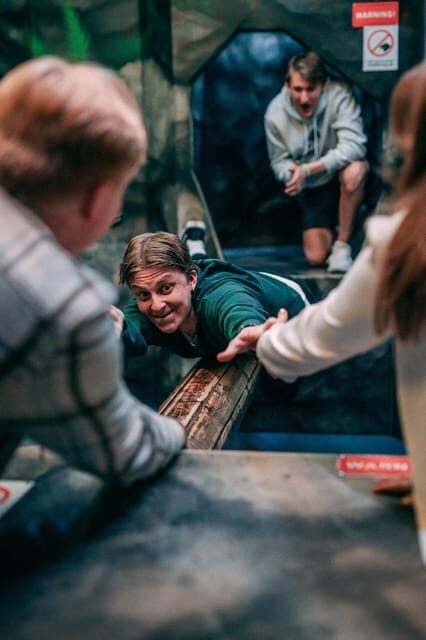
The guide style also shows up in how the experience lands for people. A key strength is friendliness, with stories and good conversation during the climb. That sounds like a small thing, but it helps when you’re on an exposed wall. A guide who keeps the mood steady makes it easier to concentrate on the next move rather than the scary bits.
Group size is capped at 7 travelers, which keeps the whole process from feeling rushed. With a smaller group, the guide can watch foot placement and hand grips more closely, and you’re less likely to feel like you’re waiting behind someone who needs extra help.
Views Over Bodø: Ocean Scenery That Actually Changes the Climb
The best payoff here is the view shift as you climb. Starting at sea level means you’re near the water from the first moment, and that stays in your field of view as you go higher. By the time you reach the via ferrata exit at around 57 meters above sea level, the ocean and surrounding mountains become a real backdrop to your effort.
What I like about this kind of setup is that the views aren’t only at the top. You get them during the climb itself, which keeps motivation up when your arms start to feel warm. It’s also a reminder that you’re in a coastal environment near Bodø, not in a generic cliff somewhere. The scenery is part of the experience, not just the reward at the end.
Just remember: views go both ways. The more open and exposed the route feels, the more your mind notices the drop. That’s why the gear confidence and guide support matter.

Weather, Clothing, and Physical Readiness: Your Checklist
This activity requires good weather. That’s not just a policy note; it affects safety and comfort. If conditions are poor, the experience may be canceled, and you’ll be offered another date or a full refund.
So dress for the weather you’ll actually face in Bodø. You’ll be outdoors for roughly 2 hours 30 minutes total (approx.), and that includes the time from meeting, equipment, travel to the start, climbing, and getting back. Wind, rain, and cold can change grip and movement. Plan clothing that stays secure and doesn’t get in your way while you climb.
Also, treat the fitness requirement as real. You should have a strong physical fitness level. Exposed climbs demand more than casual hiking stamina. If you haven’t climbed anything before, start with a realistic expectation: you’ll be working your body, learning a new movement style, and staying steady on a vertical route.
Time on the Wall: What 2.5 Hours Means
The total time is about 2 hours 30 minutes. On paper, that’s not long. On the cliff, it feels different. You’re likely to spend time learning the safety equipment, moving along the sherpa trail, and climbing at a steady pace with your guide. The result is a compact adventure where you get the full via ferrata experience without it turning into an all-day commitment.
This duration also makes it easier to fit into a visit to Bodø. If you’re planning a short trip, 2.5 hours is a manageable slice of time, and the experience ends back at the meeting point, so your day stays predictable.
Price and Value: Is $127.86 Worth It?
At $127.86 per person, this isn’t a budget activity. But it also isn’t just paying for a view. You’re paying for guided via ferrata instruction, safety equipment, and a climbing route that runs vertically above the ocean.
The value gets stronger when you look at what’s included and how it’s delivered:
- You get safety gear and instructions before you climb
- Your guide joins you on the ascent
- The group size is capped at 7, so the experience doesn’t feel like mass tourism
- The route includes the full progression from sea level to an exit at about 57 meters above sea level
Also, the experience is confirmed at booking time and uses a mobile ticket, which reduces friction on the day. One more practical note: it’s often booked around 39 days in advance on average, so if you have a specific date in mind, you’ll want to plan ahead rather than assume last-minute availability.
Who Should Book the Viking Wall at Bratten?
This experience is best for people who want a real outdoor challenge without needing prior climbing experience. The holds are described as making it easier to progress, and there’s room to challenge yourself by gripping the rock more directly.
It’s a good fit if you:
- Are comfortable with outdoor climbing exposure
- Have the physical strength to move steadily on a vertical wall
- Want a guided experience with safety support
- Prefer small groups
It’s less of a fit if you:
- Strongly dislike heights or exposed routes
- Struggle with arm strength and grip endurance
- Don’t handle weather changes well, since the climb depends on good conditions
Should You Book Viking Wall at Bratten?
If you’re in the Bodø area and you want an experience that combines coaching, safety, and dramatic sea views, this is a strong choice. The biggest reasons to book are the guided flow from safety setup to climb, the small group feel, and the route’s clear payoff at about 57 meters above sea level.
My only caution: treat it as an exposed, physically demanding activity. If you go in prepared—good clothing, realistic fitness, and a calm mindset—you’ll likely find it fun in a very hands-on way, not just pretty from a distance.
FAQ
Where does the Viking wall experience meet?
The meeting point is Bratten 7, 8014 Bodø, Norway.
How long is the experience?
It runs for about 2 hours 30 minutes (approx.).
Is it guided and in English?
Yes. The experience is guided and offered in English.
How high is the via ferrata exit?
The via ferrata exit is at about 57 meters above sea level.
Do I need to be physically fit?
Yes. Travelers should have a strong physical fitness level, and the routes are exposed and require some physical strength.
How many people are in a group?
This activity has a maximum of 7 travelers.
What route does the climb follow?
You’ll climb from a sea-level starting point up a vertical cliff, with the exit at roughly 57 meters above sea level. You also follow a sherpa trail to the starting point.
What should I wear?
Dress according to the weather. Proper clothing is important for safety and to have a good experience.
Is the experience weather dependent?
Yes. It requires good weather. If canceled due to poor weather, you’ll be offered a different date or a full refund.
What if I’m booking alone?
Trips need at least two bookings to be performed. If you book solo, you’ll be offered a refund or another time for the activity.