REVIEW · STAVANGER
Stavanger: 24-Hour Hop-On Hop-Off Bus Pass GrayLine
Book on GetYourGuide →Operated by Hop On AS · Bookable on GetYourGuide
Stavanger is made for taking it slow. This 24-hour hop-on hop-off bus pass turns the city into a choose-your-own-adventure, with a double-decker ride and a narrated audio guide you can listen to at your pace. I love that you can hop off to explore places like Stavanger Cathedral and the Petroleum Museum area, then hop right back on without rebuilding your plan. I also like the practical add-ons: onboard Wi‑Fi, headsets included, and audio in seven languages. One thing to keep in mind: the route can feel like it moves quickly between stops, so decide in advance where you want your longer time.
You start at Strandkaien 40, right by the cruise terminal area, and you finish there too—simple and easy if your day includes ports or train connections. The audio is designed to cover history and culture while steering you toward the main highlights, which is a smart way to avoid wandering around without context. My only caution is attention: if you want lots of time at multiple stops, be ready to be decisive so you don’t end up rushing at the end of the loop.
In This Review
- Key Points I’d Focus On
- Entering Stavanger from the Cruise-Terminal Side: Strandkaien 40
- How the Hop-On Hop-Off Works in Real Life (12 Stops, 24 Hours)
- The Double-Decker Ride: Views Plus the Built-In Narrator
- Stop-by-Stop in Stavanger: What to Do at Each Area
- Gamle Stavanger & the Cruise Terminal Area
- Bus and Railway Station
- In Front of Stavanger Cathedral
- Petroleum Museum
- Victoria Hotel, Skagenkaien
- St. Petri Church
- Museum of Archaeology, University of Stavanger
- Stavanger City Museum
- Sverd i fjell
- Iron Age Farm
- Stavanger Art Museum
- Breidablikk Museum
- Audio, Headsets, and the 7-Language Comfort Factor
- Price and Value: Is $46 Actually Worth It?
- Who This Pass Fits Best (and Who Might Feel Rushed)
- Should You Book This Stavanger Hop-On Hop-Off Pass?
- FAQ
- Where do I board the Stavanger GrayLine bus?
- How long is the pass valid?
- Can I hop on and off more than once?
- Is the audio guide included, and what languages are offered?
- Is Wi-Fi available onboard?
- Is the tour wheelchair accessible?
Key Points I’d Focus On

- Double-decker sightseeing across major Stavanger landmarks without the stress of driving or parking
- 24 hours from first activation, so you can stagger your sightseeing and still keep control
- Audio guide in 7 languages (English, German, Dutch, Spanish, French, Italian, Norwegian) with headsets provided
- 12 hop-on hop-off stops, including Stavanger Cathedral, Petroleum Museum, Ledaal, and Gamle Stavanger & the cruise terminal area
- Onboard Wi‑Fi plus included city discounts to stretch your day
- Wheelchair accessible with ramps and designated spaces for audio connection
Entering Stavanger from the Cruise-Terminal Side: Strandkaien 40

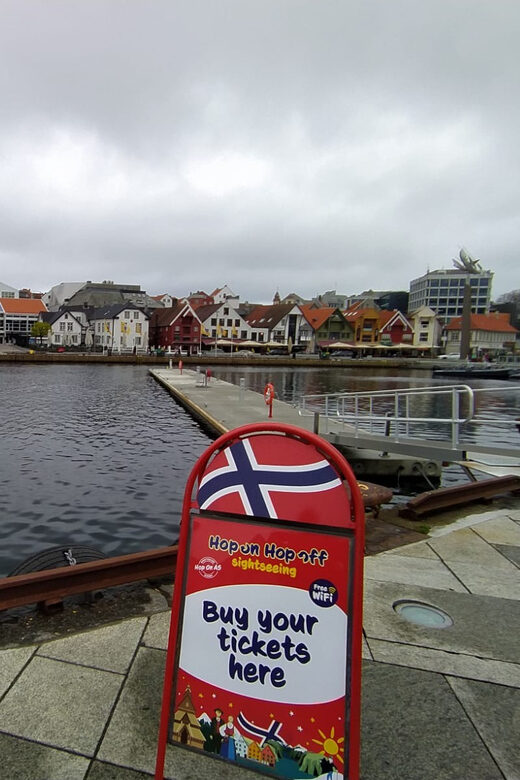
I like starting a sightseeing day from a place that’s already “oriented” for travelers. Here, you board at Strandkaien 40, in front of the Maritime Museum, where staff can give you a map and tour info. That means you can quickly connect what you hear on the audio to where you are, instead of trying to guess your bearings from a map app.
This is also a handy setup if your trip includes a cruise stop. One of the listed hop-on points is Gamle Stavanger & CruiseShip Terminal, and another is the Stavanger Cruise Terminal itself, so the bus layout is built for arriving visitors. Even if you’re not on a ship, it keeps the route logical: you’re near the waterfront first, then you work your way through the city highlights.
If you prefer to plan your day around one “anchor” stop—cathedral, museum, or Old Stavanger—the Strandkaien start makes it easy to choose your direction and timing.
You can also read our reviews of more tours and experiences in Stavanger.



How the Hop-On Hop-Off Works in Real Life (12 Stops, 24 Hours)

This pass is valid for 1 day from first activation, and you can hop on and hop off at the listed stops as many times as you want. That matters because Stavanger sightseeing isn’t one-size-fits-all. Some people want a quick look at a landmark and move on; others want to linger at a museum or a historic area. This ticket respects both styles.
The route includes these hop-on points, looping back to where you started:
- Gamle Stavanger & Cruiseship terminal
- Bus and Railway Station
- In front of Stavanger Cathedral
- Petroleum Museum
- Victoria hotel, Skagenkaien
- Petroleum Museum (listed again)
- St. Petri Church
- Museum of Archaeology, University of Stavanger
- Stavanger City Museum
- Sverd i fjell
- Iron Age Farm
- Stavanger Art Museum
- Breidablikk museum
- (Finish back at) Strandkaien 40
A small practical thought: because some stops appear more than once (like the Petroleum Museum area), you can use that to reset your plan. If you hop off for a bit and decide you want more time, you’re not locked out from getting back onto the same general zone.
The Double-Decker Ride: Views Plus the Built-In Narrator

There’s something about a double-decker bus that makes a city feel more walkable, even when you’re staying in transit. You get higher perspective as you pass between areas, and the audio guide helps you connect the dots as you go.
The audio guide is included and comes with headsets, so you’re not stuck sharing sound with strangers. It runs in seven languages—English, German, Dutch, Spanish, French, Italian, and Norwegian—so you can match your preferred language without paying extra.
The narration is designed to cover history, culture, and the main highlights. That’s the real value here: it saves you from guessing what matters. Instead, you hear the context first, then you decide how much time you want on the ground.
Also, the driver languages listed include Dutch, English, French, German, Italian, Norwegian, and Spanish. You likely won’t need a conversation for this to work, but it’s comforting if you have a quick question about the route or where to board.
Stop-by-Stop in Stavanger: What to Do at Each Area
You’ll likely get the best day if you treat each stop like a mini goal: one attraction, one walk, one moment of photos. Below is how I’d think about each hop-off point, and what each one is best for.
Gamle Stavanger & the Cruise Terminal Area
This is a strong place to start or reset, especially if you like atmospheric old-street energy. Being near the cruise terminal area also helps you understand the city’s waterfront layout quickly.
If you’re aiming for the most “Stavanger-feels-like-a-postcard” stroll, this stop is a good candidate for your first hop-off. Just plan a short walk, because you’ll want to stay flexible within your 24 hours.





Bus and Railway Station
This stop is useful when you want an easier transition between Stavanger’s transport nodes and sights. I treat it as a practical waypoint: hop off if you need to reposition, hop back on if you’re continuing the loop without committing to a long ground time.
If your day includes train timing, this is the stop that makes your schedule feel less fragile.
In Front of Stavanger Cathedral
For many visitors, Stavanger Cathedral is the clear “main landmark” moment. Standing near it gives you that wow-factor with minimal planning. Use this stop when you want the cathedral area to be your longer pause, not just a quick photo.
Because the audio guide is already covering key highlights, you’ll know what you’re looking at as you arrive. That’s a big reason this pass works better than a random transit ride.
Petroleum Museum
The Petroleum Museum stop is repeated on the route, which is a hint that it’s a big anchor. If your interests include industry, modern Stavanger identity, or museum-style sightseeing, this is where you’ll probably spend more time.
Practical tip: because it’s one of the most heavily “featured” sights on many Stavanger days, it’s smart to do it earlier rather than later. That way, if you want to return for more time, the repeated stop makes it easier to match your pace.
Victoria Hotel, Skagenkaien
This is the kind of stop that works well for scenic breaks. You can hop off, get oriented along Skagenkaien, and decide if you want a short waterfront walk or a quick reposition before moving onward.
I like using stops like this as short legs—just enough time to stretch your legs and keep your energy up for the next museum or historic area.
St. Petri Church
Church-area sightseeing can be quick or slow depending on your mood. This stop makes it easy to combine faith-history curiosity with a flexible walking plan.
If you prefer quieter pauses, this is a good place to hop off and spend 20–40 minutes listening to the audio and taking your time without committing to an entire museum block.
Museum of Archaeology, University of Stavanger
This is one of the more “learn while you look” stops. The audio guide is designed to cover history and culture, and archaeology museums tend to reward that kind of framing.
If you’re the sort of traveler who enjoys seeing how past and present connect, this is a natural place for a longer stop. If you’re more “see the highlight, move on,” you can still treat it as a focused visit and then continue the route.
Stavanger City Museum
City museums are great when you want the local story—how Stavanger became Stavanger. Since the audio narration is meant to give you context, this stop is ideal for syncing what you hear with what you see.
I’d use this stop to fill in gaps. If earlier stops left you with questions, this is where the audio’s big-picture themes tend to make more sense.
Sverd i fjell
This stop sounds like it belongs to the “sculpture or landmark you stop for” category. If you like short walks that feel meaningful, this is a prime hop-off for a quick photo moment plus a bit of time on the ground.
Because it’s not framed as a museum stop, I’d expect it to work best as a mid-route pause when you want something memorable without committing to a full indoor visit.
Iron Age Farm
This is another stop that suggests “experience history through a place,” not just through a building. If you enjoy atmospheric, theme-driven sightseeing, this is one to plan for when you have the energy to wander a bit.
I also like putting stops like this around midday or early afternoon, when you’re less likely to feel rushed and more likely to actually enjoy the time outside.
Stavanger Art Museum
Art museums can be flexible: you can do a quick circuit, or you can slow down and pick a few works. With an audio guide already covering broader themes, you can use the museum stop to go from general story to personal interest.
If art is your focus, this is a strong candidate for a longer hop-off. If you’re balancing interests, you can still get value by using it as a short, high-impact visit.
Breidablikk Museum
This stop is ideal for travelers who enjoy variety—another angle on culture and local context. I’d treat it as a “bonus” stop: if you still have energy and want more, hop off here; if not, you can keep the loop moving without feeling like you missed the core highlights.
Because it’s included on the route, you don’t have to make it your only plan—your 24 hours give you room to decide.
Audio, Headsets, and the 7-Language Comfort Factor

The audio guide is included, and the setup is made to be easy: headsets are provided, and the narration is available in seven languages. This is a huge quality-of-life detail. It keeps the experience from becoming a guessing game if you’re traveling with someone who prefers a different language.
The audio is also described as entertaining, not just informational. That matters because bus sightseeing can get repetitive if the narration is dry. With a city like Stavanger—different neighborhoods, waterfront zones, and a mix of museums and landmark stops—you want a storyteller who can keep your attention as the scenery changes.
One more thing I appreciate: onboard Wi‑Fi. It’s not essential to enjoy the tour, but it’s useful for quick checks—translating a stop name, confirming opening hours if you plan to add walking time, or looking up directions once you’re back off the bus.
Price and Value: Is $46 Actually Worth It?
At $46 per person for 24 hours, the deal only makes sense if you’re going to use the flexibility. If you plan to hop off at just one stop and treat it like a one-way ride, you’ll feel the cost more.
But if you’re the kind of traveler who wants to see Stavanger’s key sights without micromanaging transit, the value stacks up:
- You get a double-decker ride plus guided narration
- You can hop on/off multiple times across a day
- You get headsets and an audio guide in seven languages
- You get onboard Wi‑Fi
- You also receive various city discounts (details aren’t listed here, but it’s included)
Think of it as paying for time-saving logistics and interpretation. Stavanger is easy to get around on foot in parts, but the hop-on hop-off model helps you avoid spending your day figuring out how to connect waterfront, cathedral area, and museum stops.
If you’re traveling with mixed interests—one person wants old Stavanger vibes, another wants museum time—this ticket helps everyone stay satisfied without splitting up for too long.
Who This Pass Fits Best (and Who Might Feel Rushed)
This is a good fit if you want:
- A low-stress way to see multiple districts in one day
- A guided intro that helps you understand what matters
- Flexibility, because you can choose when to hop off and when to return
- Comfort features like headsets and onboard Wi‑Fi
It’s also a solid choice if your schedule includes port time or you want to build a sightseeing block around a cruise terminal zone.
Where you might want a second thought: if you hate moving on before you feel ready. The overall experience can feel “stop-and-go,” and the more you try to do at every location, the easier it is to feel rushed. Use the 24 hours to spread things out: do one museum and one landmark area first, then decide what’s left.
Should You Book This Stavanger Hop-On Hop-Off Pass?

If your goal is to get your bearings fast and still see the highlights—Stavanger Cathedral, the Petroleum Museum area, Ledaal, and the mix of museums and historic zones—this pass is a smart way to do it. You’re paying for flexibility plus guided context, not just transportation.
I’d book it if you:
- Want a guided day without complicated planning
- Prefer choosing your own pace between stops
- Need audio in a specific language, with headsets included
I’d skip or reconsider if you:
- Only plan to visit one or two sights and don’t intend to hop back on
- Want long, unbroken time at multiple museums without any bus-style time pressure
FAQ
Where do I board the Stavanger GrayLine bus?
You board at Strandkaien 40, in front of the Maritime Museum, where staff are available with a map and tour information. You can also hop on at the other listed stops along the route.
How long is the pass valid?
The hop-on hop-off bus ticket is valid for 1 day, starting from the first activation.
Can I hop on and off more than once?
Yes. The pass lets you hop on and hop off at the stops along the route as many times as you want within the 24-hour validity period.
Is the audio guide included, and what languages are offered?
Yes. The audio guide is included with headsets, and it’s available in English, German, Dutch, Spanish, French, Italian, and Norwegian.
Is Wi-Fi available onboard?
Yes, Wi‑Fi is included on board.
Is the tour wheelchair accessible?
Yes. The buses have wheelchair ramps and designated spaces with an audio guide connection.