Akerselva sounds like a walk, not a plan. This self-guided audio tour turns Oslo’s old industrial river corridor into a pay-what-it-feels-like kind of story, with you pacing the route and stopping whenever the views earn it. I like that it’s straightforward to run on your phone (and you can keep going even with spotty data), and I love the way the route mixes water, bridges, and street art into one easy greenway stroll. One possible drawback: if you don’t find the exact start area quickly, you can waste time—so set up and double-check before you start walking.
You begin at Vaterland Bridge (just south of Oslo Plaza, in Grünerløkka) and finish outside Hønse-Lovisa’s House at Sandakerveien 2. Plan about 45 minutes to 2 hours 15 minutes for the full meander, depending on how often you pause for the audio, photos, or the cafe landing. The route is 1.8 miles and is wheelchair-friendly, though some sections are steep—so bring your patience (and your best shoes) if you’re navigating grades.
In This Review
- Key things to know before you go
- Getting Oriented on Vaterland Bridge
- Using VoiceMap on your phone without getting stuck
- The Ankerbrua start: why the first bridge matters
- Walking the Akerselva green corridor at your pace
- Street art along the river: Oslo’s “outdoor gallery”
- Passing the waterfall: when the audio meets the real thing
- Oslo landmarks close to the route: city energy without the detour
- Ending outside Hønse-Lovisa’s House for a reset
- Price and value: what $7.99 buys you in real terms
- Accessibility and walking comfort: great, with one honest catch
- Who this works best for (and who might want a different plan)
- Should you book the Akerselva River Meander audio tour?
- FAQ
- How long is the Akerselva River meander audio tour?
- Where does the tour start?
- Where does the tour end?
- What’s the price?
- What device and app do I need?
- Is there offline access?
- Is the tour in English?
- Are there any tickets or museum admissions included?
- Is the walk wheelchair-friendly?
- Is this tour refundable?
Key things to know before you go
- VoiceMap offline access: audio, maps, and geodata available without mobile service
- Self-paced route: 45 minutes to 2 hours 15 minutes, with stops on your schedule
- Akerselva’s transformation: an industrial corridor turned into a green walking escape
- Street art stops: you pass works by Jussi TwoSeven, Julien de Casablanca, and Anna Woods
- 1.8-mile walk with grades: wheelchair-friendly, but steep in places
- Cafe finish with waterfall views: your endpoint is an art gallery and cafe
Getting Oriented on Vaterland Bridge
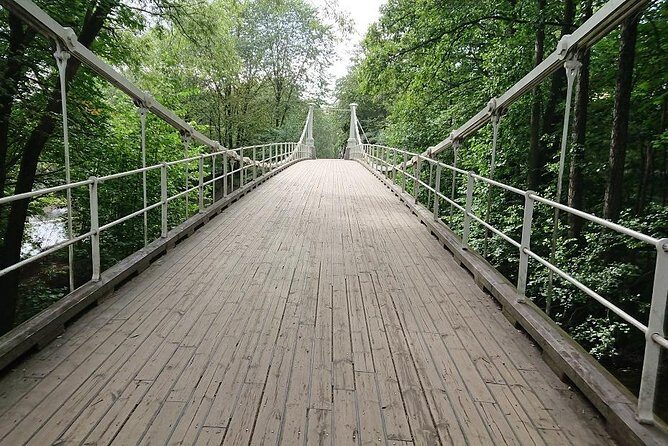
This tour’s whole vibe comes from one simple idea: follow the river and let the audio guide your feet. The start point is Vaterland Bridge in Grünerløkka, right by the urban buzz near Oslo Plaza. From the moment you start, you’re walking in the direction of the river as the route “meanders upstream.”
Before you head out, I strongly suggest you do two things. First, download anything you need through the VoiceMap app so you’re not fighting signal while you’re trying to find the river path. Second, get your bearings early: this is a walk where the exact start area matters, because the audio cues are tied to the route.
If you’ve ever had the frustrating moment where an app says you’re “there” but you’re actually not, this is that kind of tour—so take 2 minutes at the start to confirm you’re at the right spot. When it lines up, the whole experience feels easy.
You can also read our reviews of more guided tours in Oslo

Using VoiceMap on your phone without getting stuck
You’re using your smartphone for the tour, and headphones help. That’s it. There’s no host to meet, no ticket window, no waiting. The included VoiceMap app provides lifetime access to the English audio, plus offline access to audio, maps, and geodata—handy in a city where your battery is precious.
Here’s the practical trick: keep the app active while you walk. The tour is designed around audio cues that depend on your phone’s ability to track your position. If you let the phone go to sleep, or you accidentally wander off the intended path, you can end up walking without audio at the moments you wanted the story.
Also, don’t plan on “winging it” once you start. This is one of those self-guided tours where your best experience comes from staying with the route the audio expects. If you ever lose alignment, stop, re-check where you are in the app, and only then move forward.
The Ankerbrua start: why the first bridge matters
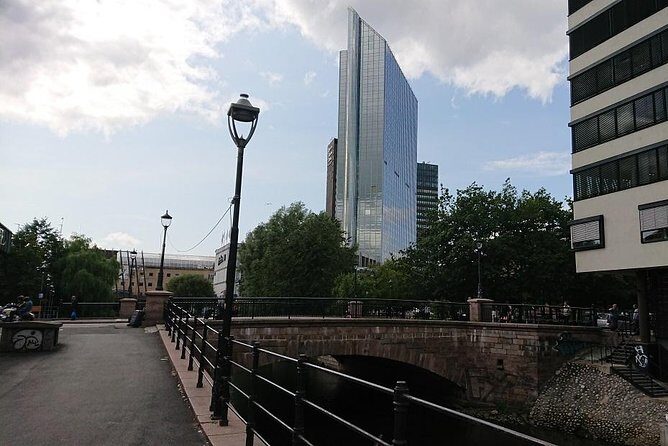
Your first major moment is Ankerbrua. The tour starts on the bridge, which is a smart move for two reasons. One, bridges give you a quick overview—water, direction, and the general flow of the river corridor. Two, it helps your phone lock onto your location early, so the rest of the audio feels more reliable.
From there, the route nudges you into the neighborhood briefly before bringing you back over a bridge as you continue. Think of this as the tour “settling you in.” You’re not hiking through remote countryside. You’re in the city, and the river is the spine.
If you like your stories to start with physical context—what you can see while you hear it—this opening will work for you. You’ll feel like you’re learning the place, not just passing through it.
Walking the Akerselva green corridor at your pace
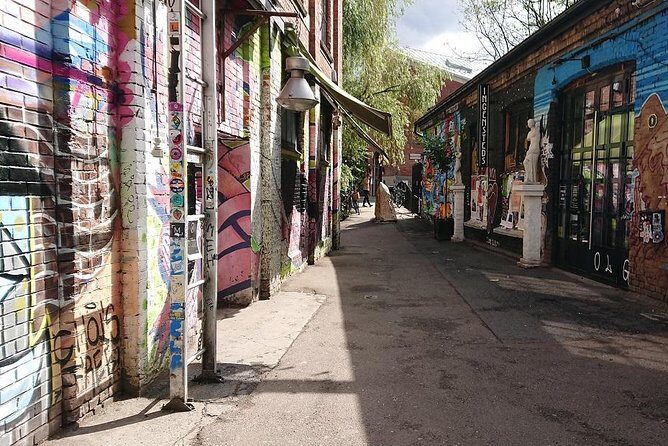
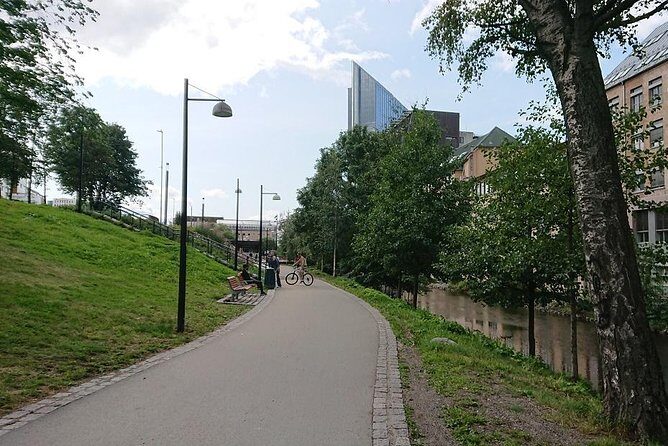
The heart of this experience is the river meander itself. This route follows the Akerselva upsteam (so you’re working against the current, in a walking sense). The walk is listed as about 1.8 miles, and you get the classic combination of Oslo water scenery plus the sense of an old city repurposed for people.
The best part is control. You can pause as often as you want, replay a section if something caught your eye, or slow down for street art. If you’re traveling with anyone who wants to stop for photos every 10 minutes, this is the kind of tour that keeps everyone happy.
Drawback to consider: it’s a walk, not a tram ride. Even if it’s wheelchair-friendly overall, some sections are steep. That means your timing will depend on your pace and how often you’re stopping to listen, photograph, or avoid tricky footing.
Street art along the river: Oslo’s “outdoor gallery”
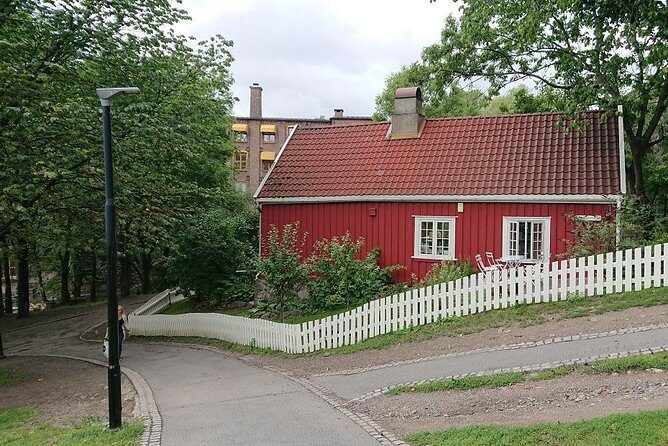
One of the most memorable parts of this walk is the art. Along the river you pass works by internationally known street art artists, including Jussi TwoSeven, Julien de Casablanca, and Anna Woods. The route doesn’t treat the river as just scenery—it treats it as a canvas.
Why this matters: street art changes the emotional tone of an industrial-to-green story. Instead of only hearing about history from a distance, you see the present layer right alongside it. It feels like Oslo didn’t wipe the past away. It repurposed the space and added new voices.
When you hear the audio talk about how this corridor used to be industrial, you’ll likely notice how that contrast plays out in what you see around you—water, concrete lines, bridges, and then the human creativity plastered onto the surfaces.
A few more Oslo tours and experiences worth a look




Passing the waterfall: when the audio meets the real thing
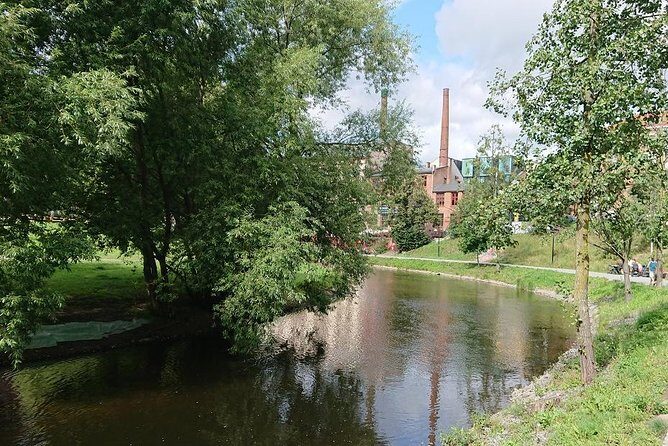
At some point you’ll pass by the waterfall. The details here aren’t named for you on the essentials list, but the experience is clear: you’ll be walking, and then you’ll hit that moment where the river sound changes and the visuals get louder.
This is where self-guided audio really pays off. If you’re listening through your headphones and the audio cues line up with what you’re seeing, it turns a basic “look, water” moment into a mini highlight. If you miss it, you’ll still see the waterfall—but you’ll lose some of the story that helps you understand why this spot is part of the river’s identity.
I’d treat this as a cue to slow down. Let the waterfall be the anchor point of your timing, even if you think you’re “ahead.”
Oslo landmarks close to the route: city energy without the detour
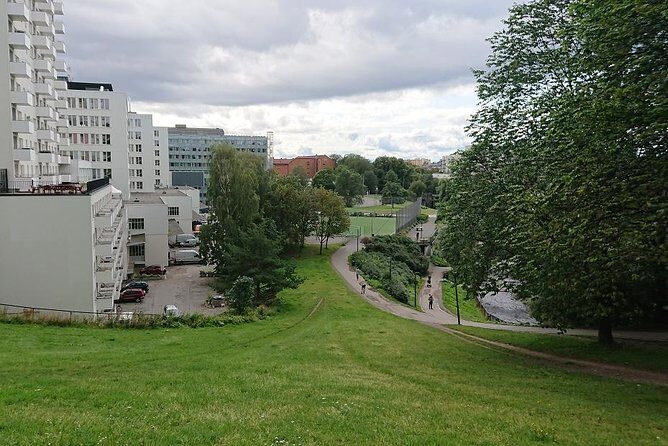
As you continue along Akerselva, the audio keeps you connected to the wider city. You pass close by:
- Oslo Spektrum
- Oslo Visitor Centre
- Mathallen Oslo
These are useful references because they help you understand where you are in Oslo’s map. You’re not just walking along water—you’re walking alongside places where tourists and locals overlap. If you’re pairing this with other plans, these nearby landmarks can help you mentally position yourself for the rest of the day.
One thing to watch: because these places are close, you might hear traffic or feel the urban edge near the route. It’s not a wilderness walk. That’s part of the charm, but if you’re craving total quiet, manage expectations.
Ending outside Hønse-Lovisa’s House for a reset
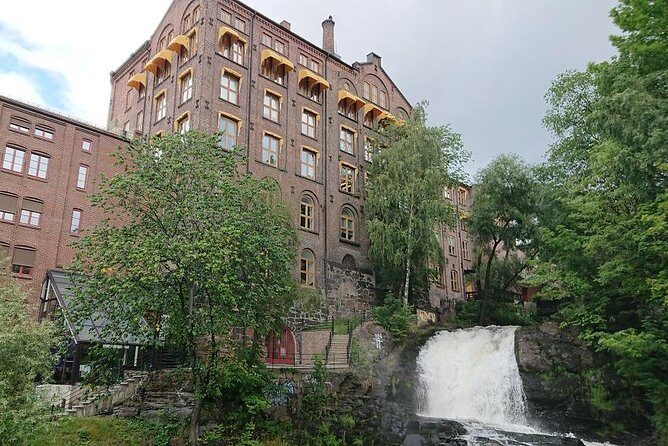
The tour finishes outside Hønse-Lovisa’s House, an art gallery and cafe setting at Sandakerveien 2. I like endings that give you an easy “landing pad.” After 45 minutes to 2 hours 15 minutes of walking and listening, you don’t want to think too hard—you want a place where you can sit down, order something, and let your feet cool off.
The info says it’s open year-round, and your finish point is available daily with broad hours (the listing spans from 10/07/2019 to 06/17/2026 with daily access). Even if you don’t plan to buy anything immediately, the cafe environment plus the river-view vibe makes this a satisfying conclusion.
Also, consider timing: arrive hungry or at least ready for a snack. Your legs and your curiosity will likely work together here.
Price and value: what $7.99 buys you in real terms
At $7.99 per person, this tour is priced like a small add-on that can quietly replace a bigger “attraction day.” The value isn’t just that it includes audio. It includes lifetime access in English, plus offline access to maps and geodata through VoiceMap.
That means you’re not paying only for one walk. You’re paying for a walking guide you can re-run later—useful if you come back to Oslo, or if you’d like to do the route with different pacing. And since tickets and museum entrances aren’t included, you’re not stuck paying extra to get the main experience.
One practical caution: you still need a smartphone and headphones. The tour doesn’t provide them. If you forget, you can end up with a very pretty stroll that’s missing the main point.
Accessibility and walking comfort: great, with one honest catch
The route is listed as wheelchair-friendly, which is a big plus for a self-guided river walk. But it also says it’s steep in places. So the real-world question isn’t only “can you wheel it?” It’s whether the steep sections work for your mobility needs and your comfort level.
If you’re using a wheelchair, plan to go slower and expect some grade. If you’re on foot, choose shoes with grip, especially if you’re walking near water.
And because it’s self-guided, you’re in charge of how you handle challenges. That’s empowering—just don’t let the independence fool you into rushing.
Who this works best for (and who might want a different plan)
This tour fits you if you want a low-cost, flexible way to see Akerselva and learn what changed over time—without booking a guided group. It’s especially good if you like to listen while you walk and you enjoy street art stops as part of your sightseeing routine.
You’ll also like the structure if you’re the kind of traveler who appreciates knowing what’s coming next. The stops are tied to specific locations along the route, so you can look forward to bridges, street art moments, the waterfall area, and the finish at Hønse-Lovisa’s House.
I’d be a little cautious about this tour if you dislike self-navigation or if you tend to get frustrated when an app’s directions aren’t instantly obvious. The route is manageable, but it’s still a “find the start, follow the path” experience.
Should you book the Akerselva River Meander audio tour?
Yes, I think you should book it—if you’re the type who enjoys walking sightseeing and you’ll actually use the audio. For $7.99, you’re buying a smart mix of river scenery, street art, and easy self-pacing, and you can take it offline so your day stays smooth.
Skip it (or consider a different format) if you know you’ll have trouble finding the exact starting area, or if you prefer human guidance on the ground. This one shines when you treat it like a gentle guided walk you control.
If you do book, give yourself a few minutes at the start to confirm you’re in the right place in VoiceMap, keep the app active while you walk, and plan to end at Hønse-Lovisa’s House so the whole outing feels complete.
FAQ
How long is the Akerselva River meander audio tour?
The duration is listed as approximately 45 minutes to 2 hours 15 minutes, depending on how long you pause and listen.
Where does the tour start?
The tour starts at Vaterland Bridge in Grünerløkka, Oslo.
Where does the tour end?
The tour ends outside Hønse-Lovisa’s House at Sandakerveien 2, Oslo.
What’s the price?
It costs $7.99 per person.
What device and app do I need?
You use your smartphone, with the VoiceMap app for Android and iOS. Headphones and your phone are not included.
Is there offline access?
Yes. The tour includes offline access to audio, maps, and geodata.
Is the tour in English?
Yes, the tour audio is included in English.
Are there any tickets or museum admissions included?
No. Tickets or entrance fees to museums or other attractions along the route are not included.
Is the walk wheelchair-friendly?
It’s listed as wheelchair-friendly, though steep in places.
Is this tour refundable?
No. It is non-refundable and cannot be changed for any reason.