REVIEW · BERGEN
Walking tour: Medieval Spirit of Bergen + sweet Arctic gifts
Book on Viator →Operated by Vinol Tours · Bookable on Viator
Bergen hits you fast: medieval trade, stone churches, and sea views. On this 2-hour walk, I love how you get real context at major landmarks, and you also get hands-on stops like the Fish Market where food is part of the story. One thing to consider: it is mostly outside sight-seeing, so if you’re hoping for lots of indoor museum time, you may want extra stops after the tour.
What makes it especially appealing is the mix of places tied to the Hanseatic era and the Norwegian crown, all stitched together in a clear route you can actually follow. You’ll likely hear stories in English from guides such as Renato, Olaf, or Fabiola, and the pacing is steady enough for questions and photos—just pack for Bergen’s wet weather, because that part is real.
In This Review
- Key Points You’ll Care About
- Getting Your Bearings in Medieval Bergen (and Staying Dry)
- Meeting at Tourist Information (Strandkaien) and How the Timing Works
- Fish Market Stop: Old Traditions, Real Food Energy
- Bryggen Hanseatic Wharf: UNESCO Wharves and Merchant-House Logic
- St. Mary’s Church: The German Connection Outside the Door
- Bergenhus Fortress: Where Medieval Power Shows Up in Stone
- Rosenkrantz Tower and Haakon’s Hall: Medieval Sites You See Best from Outside
- Rosenkrantz Tower
- Haakon’s Hall
- Platekompaniet Square: The City’s Modern Meeting Spot
- Price and Value Check: Is $57.88 Fair for 2 Hours?
- Who This Tour Fits Best (and Who Might Want Something Else)
- Weather, Comfort, and Small Prep Tips That Make It Better
- Should You Book Medieval Spirit of Bergen + Sweet Arctic Gifts?
- FAQ
- Where does the tour start?
- How long is the walking tour?
- What does the tour cost?
- Is the tour offered in English?
- Is there a UNESCO World Heritage stop?
- Are admission tickets included?
- Do you go inside St. Mary’s Church?
- Can you enter Haakon’s Hall during the tour?
- Is there a limit on group size?
- Is free cancellation available?
Key Points You’ll Care About
- Fish Market stop with included admission and a chance to taste dishes tied to Norwegian fjord fishing
- UNESCO Bryggen wharf with included entry and enough time to understand the merchant-house layout
- Bergenhus Fortress views plus key medieval sites like Haakon Hall and Rosenkrantz Tower from the outside
- St. Mary’s Church (German church story) explored from the outside, not inside
- Small-group feel with a maximum of 18, plus English-speaking guidance and a paper ticket
Getting Your Bearings in Medieval Bergen (and Staying Dry)
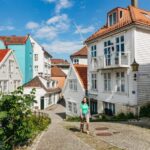
This is the kind of tour that helps you get your bearings fast. You start in the city center near Bergen’s visitor hub, then walk a tight loop through the medieval core: trade wharves, Hanseatic buildings, royal fortress walls, and the squares locals use every day.
I like that the route is built around “why this place matters,” not just “what you see.” You learn how Bergen’s position as a coastal trading city shaped the people who lived here, the language used in services, and even how merchant houses were arranged.
The biggest practical note? Bergen weather often means mist, drizzle, or rain. Wear a rain layer you can move in. Bring shoes with grip. The tour is short, but it’s still a walk.
You can also read our reviews of more walking tours in Bergen
Meeting at Tourist Information (Strandkaien) and How the Timing Works
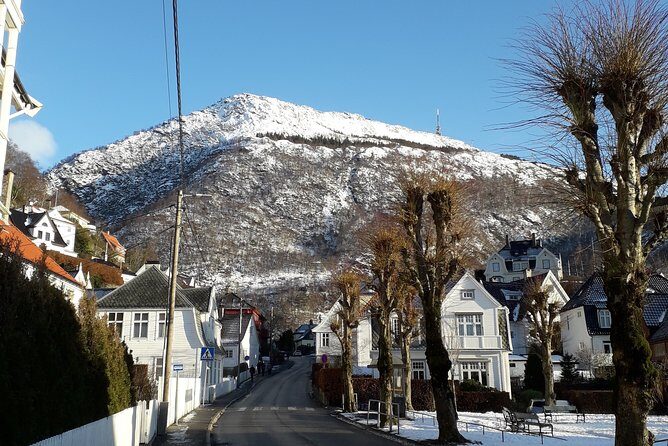
You meet at the Tourist Information in Bergen at Strandkaien 3 (5012 Bergen). The tour ends back at the same meeting point, so you’re not left thinking about transit.
It runs about 2 hours. That time is long enough to cover several standout sites without feeling rushed, and short enough that it won’t steal your whole day. The day-to-day reality is that medieval Bergen is spread across a few key zones, and this route connects them efficiently.
The tour uses a paper ticket, and it’s offered in English. Service animals are allowed, and the description says most people can participate—just remember you’ll be walking.
Fish Market Stop: Old Traditions, Real Food Energy
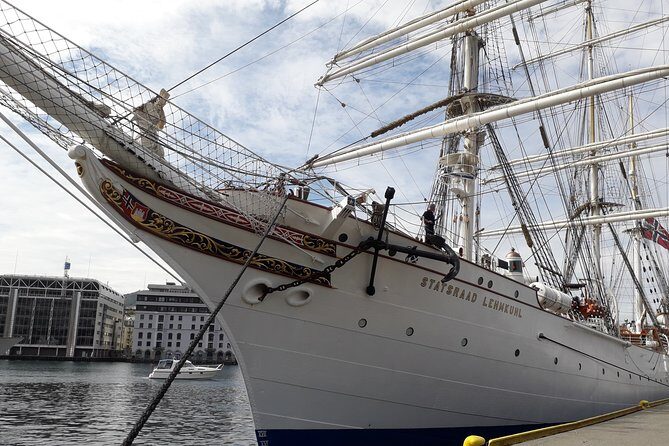
The tour begins at one of Norway’s oldest fish markets. Expect a 15-minute stop with admission included, and a food-forward approach. You can see fish, understand what’s available, and you can taste dishes that are prepared from many kinds of fish caught in Norwegian fjords.
This is more than a quick glance. It’s a good way to understand Bergen’s identity—sea trade and fishing weren’t a side story here; they were the engine. Seeing how food ties into daily life also helps later stops make sense, because the wharf culture and merchant buildings weren’t separate from the fishing economy.
Potential drawback: because it’s only about 15 minutes, you won’t be doing a full food crawl. If you’re a big foodie who wants to linger, plan to come back after the tour ends.
Bryggen Hanseatic Wharf: UNESCO Wharves and Merchant-House Logic
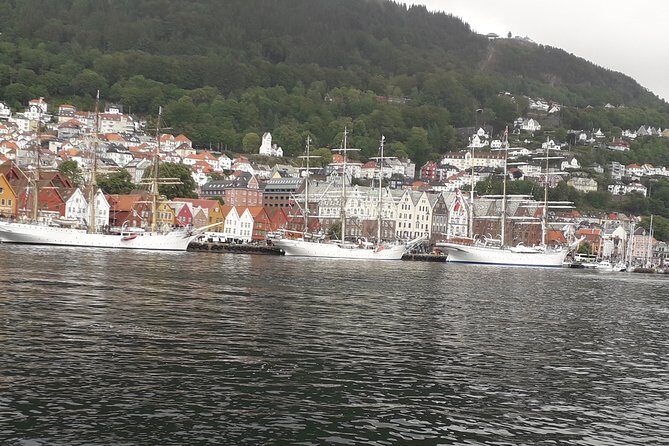
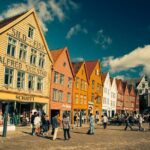
Next up is Bryggen Hanseatic Wharf, the famous waterfront with UNESCO status (listed in 1979). You get about 40 minutes, and the admission is included.
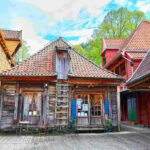
This stop is the tour’s anchor. Bryggen wasn’t just a pretty row of buildings—it was a working system for merchant life under the Hanseatic League. The buildings are organized in an architectural pattern designed for trade businesses that shared rules and spaces. Once you understand the layout, the wharf stops looking like random wooden structures and starts looking like a plan.
The time here is useful. You’re not rushed through a couple of photos and then moved along. You get enough minutes to orient yourself: where the wharf line sits, how the buildings cluster, and why this area mattered for centuries.
What you should know: even if you love architecture, you’ll still learn faster if you ask questions. Guides on this tour—like Renato or Fabiola, based on the kinds of comments made about their guiding style—tend to answer clearly and keep the facts grounded in daily life, not just dates.
St. Mary’s Church: The German Connection Outside the Door
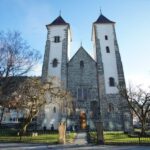
You then head to St. Mary’s Church, often tied to the story of Bergen’s German community. This is the oldest stone church in Bergen, erected between 1130 and 1180.
The tour explores it from the outside. That’s an important expectation to set: interior entry is not part of the program. You’ll still learn the key context—this church was also called the German church because, for centuries, services were used by the Hanseatic society in Bergen. Until the end of the 19th century, services there were held in German.
Why this outside-only stop still works: it connects with Bryggen. If you’re thinking about how merchant communities actually functioned, churches are a clue. Language and religious space are where culture becomes visible, even when the economic story is happening at the wharves.
If you want more interior time, you’ll likely need to add an extra visit on your own after the tour.





Bergenhus Fortress: Where Medieval Power Shows Up in Stone
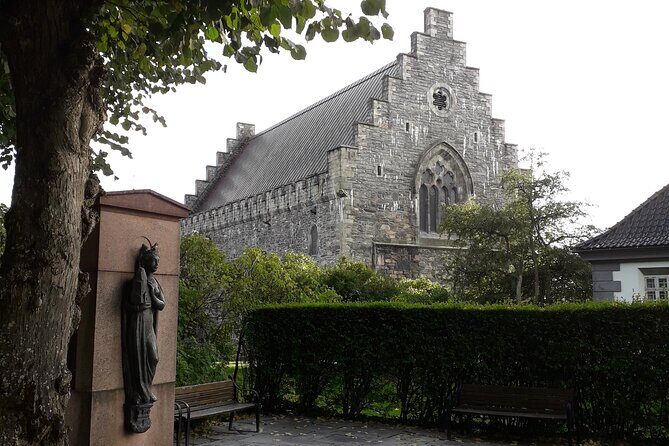
Bergenhus Fortress is where the tour shifts from trade to authority. You get about 20 minutes here, and the admission is free.
This is the kind of place you feel in your body. Massive stone, clear defensive design, and a sense that the ground itself is historic. Bergenhus became a seat for Norwegian kings from around 1100, and on-site you can connect the dots to the royal medieval structures you’ll hear about: Haakon Hall and Rosenkrantz Tower, both erected in the middle of the 13th century.
The views are a payoff too. From the fortress bastions, you can see the city and the fjord setting, with islands along the coastline. It’s a good moment to pause, check photos, and get a mental map of how Bergen sits between sea routes and inland connections.
Practical consideration: the stop is strong, but short. If you’re the type who could spend an hour walking fortress walls, treat this as your taste and then plan a longer follow-up on another day.
Rosenkrantz Tower and Haakon’s Hall: Medieval Sites You See Best from Outside
The tour includes two more medieval structures, both primarily from the outside.
Rosenkrantz Tower
You’ll spend around 10 minutes at the Rosenkrantz Tower. It’s a defensive tower and also museum space, with a viewpoint higher up—but during this walking tour you’ll examine it from the outside.
That’s fine, because the tower’s position makes it easy to understand. It’s visible from many parts of old Bergen, so it functions like a landmark you can later spot while walking around on your own.
Haakon’s Hall
Next is Haakon’s Hall, built in 1261. This is described as still in use and a setting where foreign delegations can be received. During the tour, you’ll look at it from outside for 10 to 15 minutes.
If you want to go inside, you’ll need tickets. This tour doesn’t include interior entry here. Still, it’s worth the stop because you see one of the most historically anchored royal spaces in the city.
Tip: if you’re tempted to speed through these exterior viewing stops, don’t. The value is in learning how these sites relate to the crown and defense system—and how they frame the rest of your day’s walking.
Platekompaniet Square: The City’s Modern Meeting Spot
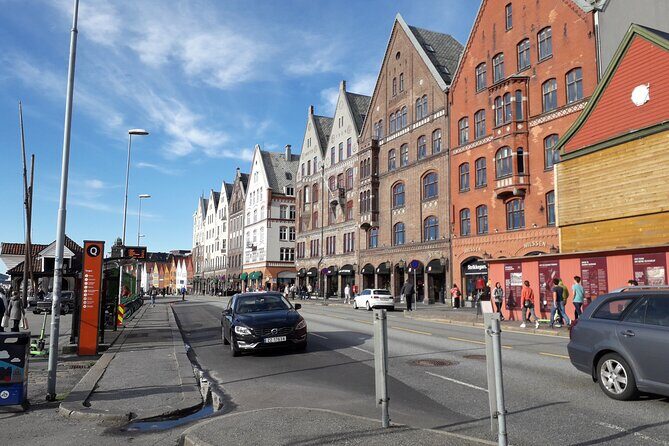
The route finishes at Platekompaniet / Torgallmenningen, the main pedestrian square in Bergen and a common gathering place. You’ll spend about 10 minutes here.
The reason I like including a square near the end is simple: you go from medieval walls and wharves into the living city. It helps you reset and find your next plan—maybe a café, a short walk to a viewpoint, or continuing your own exploration.
One quirky detail in the tour description: it notes an included admission ticket for this stop. In practice, this is more likely a small included component tied to the scheduled visit than a big paid attraction. Either way, you’ll still get what you came for: a clear wrap-up point back in the center.
Price and Value Check: Is $57.88 Fair for 2 Hours?
At $57.88 per person, this tour sits in the “short but meaningful” category. The best way to judge value is not the time alone—it’s what you’re paying for and what’s included.
Here’s the value logic that matters:
- You get English guidance over multiple major sites in one connected route.
- Some admissions are included, including the Fish Market and Bryggen wharf (and an included item at Platekompaniet as listed).
- Several other stops are free (like Bergenhus and the external exterior viewing of the towers and churches), so you’re not overpaying for things that would cost nothing to see from the outside.
- The tour is priced per group for better value and also described as private, meaning you should expect a more tailored conversation than a very large bus tour.
Group size is capped at 18, which keeps the experience feeling manageable. In the real world, that’s what lets the guide slow down when you ask something specific, instead of powering through a fixed script.
If your priority is big museum time, this may feel short. If your priority is getting the medieval story straight while you’re standing in the exact locations, this price feels fair.
Who This Tour Fits Best (and Who Might Want Something Else)
This walking tour fits best if you want:
- A clear introduction to Bergen’s medieval core
- Strong context for UNESCO Bryggen
- A practical route that reduces guesswork
- A guide who can answer questions in plain English
You’ll probably enjoy it even more if you like photo stops and quick orientation, since the route includes high-recognition sites and viewpoints. Guides such as Renato, Olaf, and Fabiola are specifically described as friendly and highly engaged, with a passion for explaining what you’re seeing and why it mattered.
You might want a different tour if:
- You mainly want indoor museum time (this route is mostly exterior viewing at royal and church sites)
- You want a long food experience (the fish market tasting window is short)
Weather, Comfort, and Small Prep Tips That Make It Better
Bergen weather is the main wildcard. The tour description and guide comments point to the same reality: be prepared for wet conditions.
My practical checklist for this kind of two-hour walk:
- A rain jacket you can move in
- Shoes with solid traction
- A small umbrella or hood (pick one; you don’t need both if it’s windy)
- A layer you can remove if you warm up
Bring questions too. This tour is structured, but the best learning happens when you ask what you’re seeing—how Bryggen worked, how the Hanseatic community lived, and why the fortress matters. The guides in this program are described as answering easily and keeping the pace reasonable so you can get those details.
Should You Book Medieval Spirit of Bergen + Sweet Arctic Gifts?
If you want a short, high-impact orientation to medieval Bergen, this is an easy yes. You hit the key story points: fishing life, Hanseatic trade at Bryggen, the German connection at St. Mary’s Church, and the royal-medieval power of Bergenhus with Haakon Hall and Rosenkrantz Tower framing the views.
It’s also a good choice if your schedule is tight. Two hours can fit into nearly any day plan, and you end where you started—so it doesn’t complicate your evening.
I’d only hesitate if you’re chasing lots of indoor time. This tour is designed for walking and outside viewing, with ticketed entry focused on specific sites like the fish market and Bryggen.
If the sweet Arctic gifts are part of what attracted you, you’re getting that added treat too, even though the details aren’t spelled out in the basic info.
FAQ
Where does the tour start?
It starts at Tourist Information in Bergen, Strandkaien 3, 5012 Bergen, Norway.
How long is the walking tour?
The duration is about 2 hours.
What does the tour cost?
It costs $57.88 per person.
Is the tour offered in English?
Yes, it’s offered in English.
Is there a UNESCO World Heritage stop?
Yes. Bryggen Hanseatic Wharf is a UNESCO World Heritage Site.
Are admission tickets included?
Yes. Admission tickets are included for the Fish Market and Bryggen Hanseatic Wharf, and an admission ticket is listed as included at Platekompaniet. Other stops (like St. Mary’s Church outside, Bergenhus Fortress, Rosenkrantz Tower exterior view, and Haakon’s Hall exterior view) are free as described.
Do you go inside St. Mary’s Church?
No. The tour is scheduled to explore St. Mary’s Church from the outside.
Can you enter Haakon’s Hall during the tour?
You only view Haakon’s Hall from the outside during this walking tour. To enter the hall, tickets are needed.
Is there a limit on group size?
Yes. The maximum number of travelers is 18.
Is free cancellation available?
Yes. You can cancel for a full refund up to 24 hours before the experience starts.