REVIEW · BERGEN
Private Guided City Sightseeing – Bergens Top Attractions
Book on Viator →Operated by Guided Fjord Tours · Bookable on Viator
A private highlights loop can be a lifesaver in Bergen. This one pairs a professional driver with a local guide so you can cover the key sights without turning it into a logistics project. You’ll trace the city’s story from medieval power at Bergenhus to the Hanseatic waterfront at Bryggen.
I especially like the comfort of a private vehicle. It keeps the day smooth, even when the weather changes, and it reduces the walking you have to do just to get from place to place.
One thing to consider: the price is high for a city tour, so it makes the most sense when you value personal guiding time, ticket help, and a tight route.
In This Review
- Key things that make this tour work
- Private van time beats Bergen’s crowd math
- Bergenhus Fortress: stone power at the harbor entrance
- Bryggen Hanseatic Wharf and the harbor-side feel of old Bergen
- Fish Market: between the fjords and the 7 mountains
- Fløibanen funicular to Mount Fløyen: the view is the point
- Fantoft Stave Church: preservation with a dramatic past
- Gamlehaugen: a royal mansion with layers behind the walls
- Troldhaugen and Edvard Grieg: music history you can see
- St. Mary’s Church: Bergen’s oldest church stop
- Price and value: what $589.54 per person buys
- Who should book this private Bergen highlights tour
- Should you book this private highlights tour?
- FAQ
- How long is the private guided city sightseeing tour?
- What time does the tour start?
- Is this tour private or shared?
- Is pickup offered?
- What language is the guide?
- Are tickets included for all stops?
- Does the tour use mobile tickets?
- Is free cancellation available?
- Is there a recommended booking window?
- Are service animals allowed?
Key things that make this tour work
- Private group touring: limited to your group for a more tailored pace and questions on the spot
- Pickup from hotels and cruise ports: fewer stress points before you even start sightseeing
- Ticketed stops included: Bergenhus Fortress, Fløibanen (funicular), and the Grieg museum are part of the deal
- The guide controls timing: you’ll spend more time at sights and less time guessing where to go next
- A sequence that makes sense: medieval → Hanseatic → market → views → churches → culture
- Top-rated on guide quality: a 4.8 rating with 94% recommending the experience
Private van time beats Bergen’s crowd math
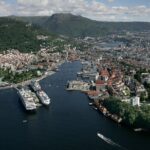
Bergen can feel like a choose-your-own-adventure city. You’ve got fjord angles, steep hills, and a waterfront that draws people in fast—especially when ships are in port. The real win here is simple: you get a driver and a guide working as a team, so you can spend your energy looking up at the houses and down at the details, not reading bus schedules.
You also get a tight loop of “greatest hits” locations without the usual zigzag. That matters if you only have one morning or afternoon. The tour is about 5 hours and starts at 9:00 am, so you’ll be early enough to enjoy calmer moments at the main sites.
Another practical plus: the tour is in English, and it uses a mobile ticket. If you’re coming from a cruise or a hotel, pickup is included from all cruise ports and hotels in Bergen, which is exactly the kind of small thing that can make or break a day.
You can also read our reviews of more guided tours in Bergen
Bergenhus Fortress: stone power at the harbor entrance
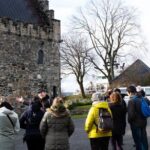
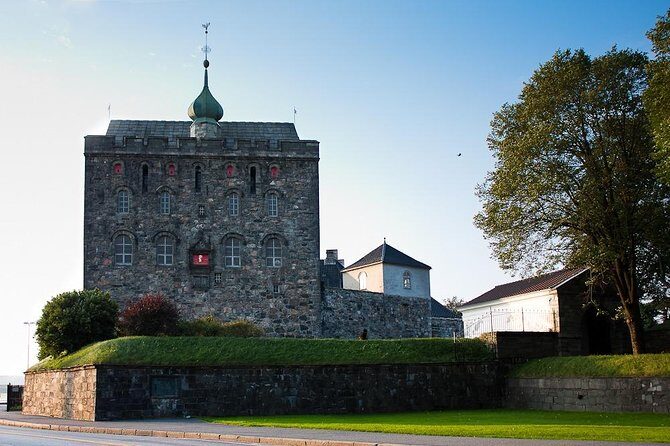
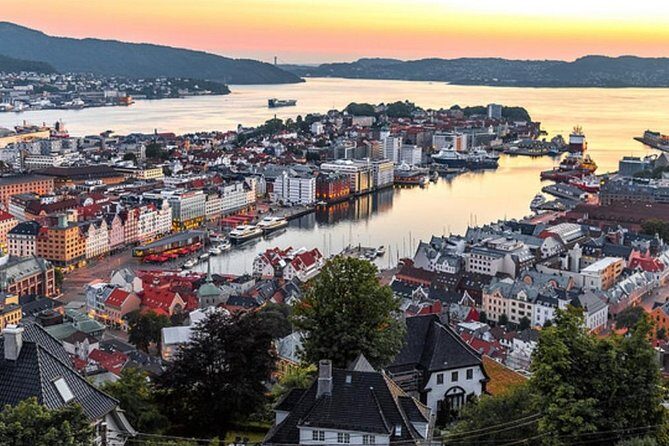
Your first major stop puts you right where Bergen’s story began: at Bergenhus Fortress, sitting at the harbor entrance. This is one of Norway’s oldest and best-preserved stone fortifications, with layers that stretch back to the 1240s, and later building phases through World War II.
What I like about leading with Bergenhus is how it sets the context for the rest of your day. You’re not just ticking off a pretty building—you’re seeing how a port city built its authority. The area was once known as Holmen, tied to the royal residence, cathedral and churches, and the bishop’s residence. Even if you’re not a medieval-history person, the sheer age of the site makes it click.
A highlight inside is Håkon’s Hall, built between 1247 and 1261 by Håkon Håkonsson. The timing and scale matter: it was the largest and most imposing royal building when Bergen was the political center of Norway. If you catch the story about the 1261 wedding of Magnus Håkonsson Lagabøte and the Danish princess Ingeborg, you’ll get a sense of how much the city mattered—2,000 guests is not a casual number.
You’ll spend about 30 minutes here, and admission is included. That’s a good length for most people: enough time to see the key rooms and take in the structure, without feeling like you’ve been trapped in a museum corridor all morning.
Bryggen Hanseatic Wharf and the harbor-side feel of old Bergen
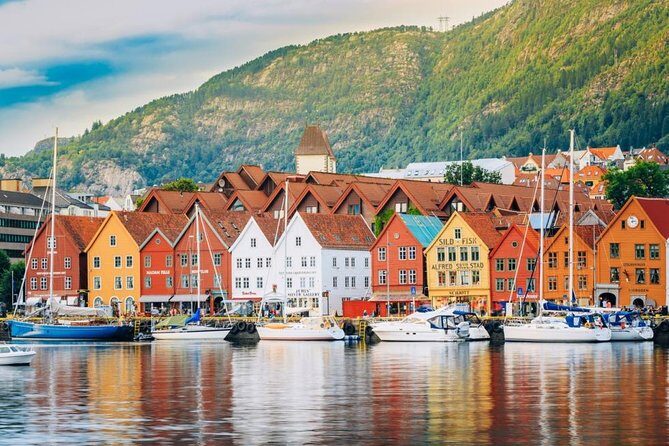
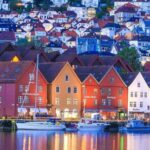
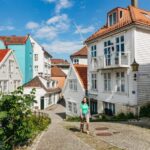
Next is Bryggen Hanseatic Wharf, the colorful waterfront that anchors Bergen’s postcard look. Bryggen is a UNESCO World Heritage site, described as one of the best-known Middle Ages urban areas in Norway. The “why” is important: these were not just warehouses. This was the living interface between Bergen and the outside trading world.
What I like here is that Bryggen doesn’t ask for a deep background. Even on a short stop, you can see the pattern—tight rows, timber-forward buildings, and the way the wharf lines connect to the harbor. It helps you picture how Bergen functioned as a trading hub for centuries.
You’ll typically have about 30 minutes at Bryggen, and admission is free. That makes it easy to linger just a little longer if the light is good or if your guide points out small details like old building layouts, ship-queue logic, or trading history.
One small consideration: because Bryggen is famous, it can be crowded. The advantage of this private format is that your guide can adjust your timing and keep you moving with fewer pauses of standing around.
Fish Market: between the fjords and the 7 mountains
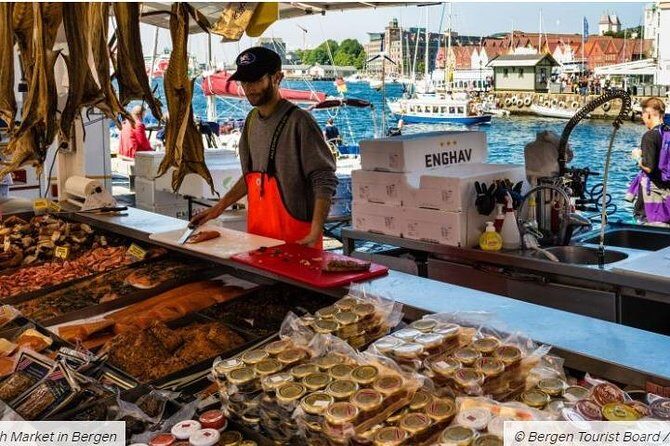
Then you swing to the Fish Market, an outdoor market that also has an indoor counterpart (Mathallen opens year-round). This is where Bergen feels practical. It’s not just scenery. You’re in a spot that has served as a meeting place for merchants and fishermen since the 1200s.
The location is part of the magic: the market sits in the heart of the city between the fjords and Bergen’s seven mountains. Even if you don’t plan to buy anything, it’s a good place to understand daily life. The mix is usually seafood plus produce—fruit, berries, vegetables—and you’ll often see flowers and plants too.
This stop is about 30 minutes, and admission is free. If you’re hungry, check out the ready-to-eat seafood options or look for a quick snack so you don’t hit dinner later feeling like you skipped the fun part.
Historical context helps too. The market’s location moved over time—when the Hanseatic League grew influence, there were steps taken to prevent outsiders from controlling the most important trading place. Later, in 1556, the Fish Market became established at the inner part of Vågen. Even with short time, your guide can connect those dots so the area stops being just a food stop and becomes a story stop.
Fløibanen funicular to Mount Fløyen: the view is the point
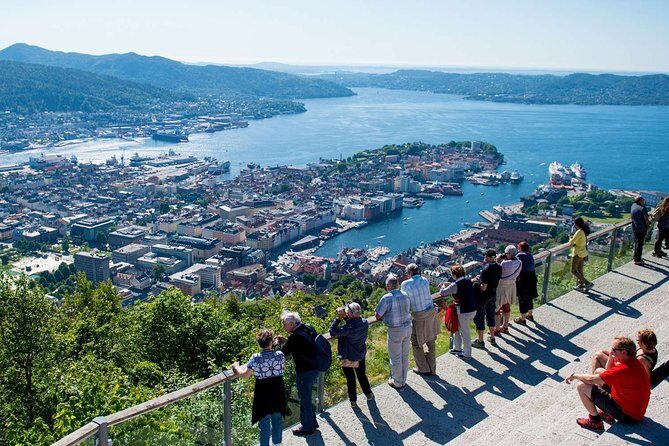
Now for the day’s big breathing space: Mount Fløyen via the Fløibanen funicular. The funicular line has been running since 1918 and carries over 1.8 million passengers a year. It’s not only a transfer to viewpoints—it’s a Bergen experience.
You’ll head up for about 1 hour, and admission is included. The ride starts near the city center, roughly 150 meters from the Fish Market and Bryggen, so you don’t lose much time scrambling to get elevation.
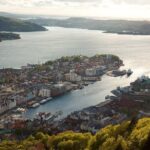
From Fløyen, you’re about 320 meters above sea level. That altitude is what lets you see Bergen’s cityscape in detail and take in the seaward approaches and surrounding fjords. If the weather cooperates, this is where your photos actually make sense. Even on grey days, the angle gives you orientation. You can see how the neighborhoods climb away from the harbor.
There’s also practical stuff at the top—a restaurant, cafeteria, souvenir shop, and play area—so you’re not forced into leaving immediately. Your guide can steer you toward the most efficient walking loop for views without turning the stop into a long hike.
You can also read our reviews of more city tours in Bergen

Fantoft Stave Church: preservation with a dramatic past
After views, you return to a different kind of Bergen icon: Fantoft Stave Church. This is a stave church with roots in the wider stave church story, not a fresh-build fantasy.
The church was originally built in 1150 at Fortun in Sogn, but the Bergen-area version traces its replacement lineage to 1879 with Fortun Church. It was then saved from demolition: consul Fredrik Georg Gade purchased it and arranged to move it in pieces to Fana near Bergen in 1883.
The part you won’t forget is the fate that followed. In 1992, the church was destroyed by arson tied to early Norwegian black metal circles. Reconstruction started soon after, and it took six years to rebuild, with the reconstruction completed in 1997.
You’ll have about 30 minutes here, and admission is free. For me, the value of this stop isn’t only architectural. It’s the reminder that preservation can be complicated—someone saves a building, then history hits again, and the community rebuilds.
A practical note: because this is an outdoor-leaning site, the weather matters. If it’s raining hard, ask your guide about where to stand for the best views and photos with the least hassle.
Gamlehaugen: a royal mansion with layers behind the walls
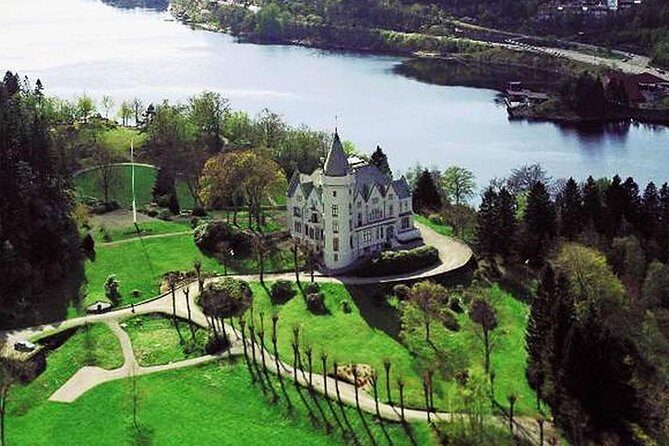
Next is Gamlehaugen, a mansion in Bergen and the residence of the Norwegian Royal Family in the city. This one adds a different flavor than churches and wharves. Instead of trading history, you’re looking at wealth, politics, and Bergen’s changing land use.
Gamlehaugen’s story stretches back to the Middle Ages, then shifts after major events like the Black Death, which led to the farm being abandoned. Later, it became farmland again in 1665 as part of Fjøsanger manor, and the property eventually separated in 1809.
Your guide can also explain the “big names” angle—Christian Michelsen, a politician and shipping magnate who became the first Prime Minister of Norway after the union with Sweden dissolved. He commissioned the main building and lived there for most of his later life.
This is a short stop (about 30 minutes) and admission is free. The drawback here is also the trade-off: with limited time, you’ll likely get an overview rather than a deep interior experience. Still, it’s a helpful bridge between the old-world grandeur of Bergenhus and the culture stop that comes next.
Troldhaugen and Edvard Grieg: music history you can see
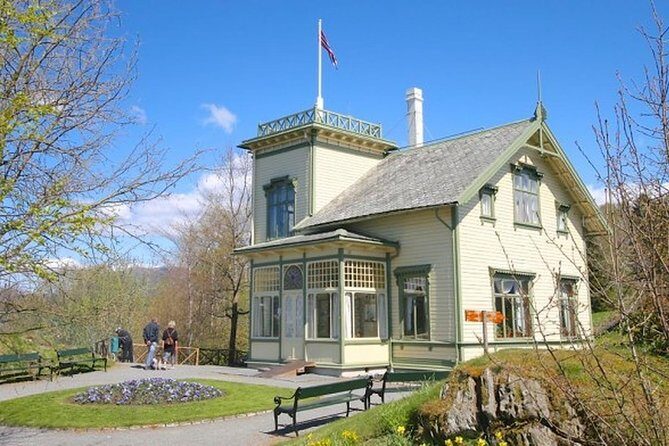
Then it’s into Bergen’s most famous composer’s world: Troldhaugen, the home of Edvard Grieg and his wife Nina Grieg. This area includes the Edvard Grieg Museum, Grieg’s villa, the hut where he composed music, and the gravesite.
You’ll spend about 1 hour, and admission is included. I like Troldhaugen because it’s not just a list of dates. It gives you a physical sense of the work environment—where a composer created and lived.
Inside the villa, one detail stands out: Grieg’s Steinway grand piano, given as a silver wedding anniversary present in 1892. Your guide may mention that it’s used for private concerts and special occasions, including intimate concerts tied to Bergen International Festival. Even if you don’t catch a concert, it helps you understand why this place is treated like a living part of Norwegian culture.
There’s also Troldsalen, a concert hall completed in 1985 with excellent acoustics and floor-to-ceiling windows behind the stage. The view back toward the composer’s hut and Lake Nordås is one of the reasons people remember the area beyond the exhibits.
If you want a culture anchor in your Bergen day, this stop earns its slot.
St. Mary’s Church: Bergen’s oldest church stop
Your final church stop is St. Mary’s Church, which is the oldest existing building in Bergen. It was built in the mid-1100s, and from the end of the Middle Ages it served as the German church in Bergen. The church is noted for having the most elaborate medieval church art among Norway’s medieval churches.
Time is short here—about 15 minutes—and admission is free. This means you’ll want your guide’s attention on what to look for: specific church art details and the reason this building survived when others didn’t.
If you’re trying to keep the day from feeling like “church after church,” consider how you pace yourself here. St. Mary’s is worth it because it’s the oldest anchor point. It closes the day with something tangible and old.
Price and value: what $589.54 per person buys
At $589.54 per person for a 5-hour private tour, the sticker shock is real. The key question is value: what are you buying for that money?
You’re paying for:
- Private vehicle + professional driver, which saves time and energy
- A local guide who gives tips and context, not just announcements
- Pickup from cruise ports and hotels, so you don’t waste your limited time finding the start
- Included admission at key paid stops: Bergenhus Fortress, Fløibanen funicular ride, and Troldhaugen Grieg Museum
- A tighter route that helps you reach places at times that work
Also, the quality signals matter. The tour rates 4.8 overall with 94% recommending, and you can feel the focus in how guides operate: punctual, friendly, good at pacing, and willing to adjust when the city throws a curveball.
One example from guide performance: Paul is described as prompt and professional, driving a quiet, clean van and structuring timing to help avoid big crowds. Another guide, Michael, is noted for efficiency and for keeping the day moving while still checking in about comfort levels. If you want your day to feel like it has a plan (and not like you’re herding yourselves around), that’s the service you’re paying for.
Is it expensive? Yes. Is it often worth it? If you’re a couple, a small family, or you’re traveling with anyone who benefits from reduced walking, the value tends to land. If you’re solo with plenty of time and you enjoy public transit, you might be able to DIY cheaper. But you’d give up the “someone else handles the sequencing” part.
Who should book this private Bergen highlights tour
This tour is a strong fit if:
- You want maximum key sights in limited time without turning the day into transfers and detours
- You like context at major stops, from medieval rulers at Bergenhus to trade history at Bryggen
- You care about comfort, especially with shorter daylight hours or changeable weather
- You’re traveling with mobility needs and want a guide who can support a comfortable pace
It may be less ideal if:
- You want a slow, wandering day with lots of time in one neighborhood
- You’re comfortable planning everything yourself and don’t mind navigating on your own
A nice bonus: service animals are allowed, and the tour is near public transportation, though pickup is the main access point.
Should you book this private highlights tour?
If you’re choosing between self-guided wandering and guided structure, I’d lean guided—this route is built around Bergen’s must-sees with ticketed anchors and smart pacing. The biggest reason is time saved. The second is guidance quality: guides like Paul, Michael, and Arne are repeatedly described as prompt, warm, and able to adapt, including swapping timing when cruise ships are in port or when weather shifts.
Book it if your top goal is a clean, efficient Bergen overview with plenty of meaningful stops. Skip it (or consider something more flexible) if your schedule is very open and you’d rather spend extra hours inside one site or in one neighborhood.
Either way, start your morning early and keep your expectations realistic: 5 hours isn’t every street in Bergen. It’s the city’s strongest highlights, delivered in a way that keeps you moving—and still lets you look up.
FAQ
How long is the private guided city sightseeing tour?
It runs for about 5 hours.
What time does the tour start?
The start time is 9:00 am.
Is this tour private or shared?
It’s a private tour. Only your group participates.
Is pickup offered?
Yes. Pickup is offered from all cruise ports and hotels in Bergen.
What language is the guide?
The tour is offered in English.
Are tickets included for all stops?
Not all stops. Admission is included for Bergenhus Fortress, Mount Fløyen and the funicular, and the Troldhaugen Edvard Grieg Museum. Other stops listed as free include Bryggen, the Fish Market, Fantoft Stave Church, Gamlehaugen, and St. Mary’s Church.
Does the tour use mobile tickets?
Yes, mobile tickets are included.
Is free cancellation available?
Yes. You can cancel up to 24 hours in advance for a full refund.
Is there a recommended booking window?
On average, it’s booked about 79 days in advance.
Are service animals allowed?
Yes, service animals are allowed.