REVIEW · BERGEN
Walking Tour in Bergen of the Past and Present
Book on Viator →Operated by I Love Bergen · Bookable on Viator
Bergen is two cities in one walk. I like this tour because it gives Bergen’s big overview without making you sprint between sights, and it pairs royal-era landmarks with everyday local life. You also get an English-speaking local guide (people name guides like Dane and Jeff) and a small group that makes it easy to ask questions. One thing to keep in mind: it’s outdoors only, so you won’t go inside ticketed museums or churches.
The route is smart for newcomers. You start at Bergenhus Fortress, then move into UNESCO-listed Bryggen, and finish with modern Bergen vibes around Skostredet and the Fish Market area. I also like that the guide explains both the past and the practical stuff (work, food, costs, taxes), including pass-by pointers like the funicular station—without forcing an extra ride.
In This Review
- Key highlights you will feel in practice
- Bergen Past and Present: fast orientation that actually helps
- Bergenhus Fortress and Håkon’s Hall: where the royal story begins
- UNESCO Bryggen and the Hanseatic trade system you can picture
- St. Mary’s Church: oldest still standing, and why you may not go inside
- Fjellsiden uphill walk: everyday life in Bergen, not just famous views
- Funicular station pause: you learn the hiking culture without paying extra
- Skostredet food street and the fish market finish
- Price and value: what $33.47 gets you (and what it doesn’t)
- Group size, pacing, and who this tour fits best
- Should you book Bergen Past and Present?
- FAQ
- How long is the Bergen Past and Present walking tour?
- Is the tour offered in English?
- What sights do you cover during the walk?
- Do you go inside Håkon’s Hall or St. Mary’s Church?
- Do you take the funicular?
- What is the group size limit?
- What if the weather is bad or the fortress is closed?
- Is there free cancellation?
Key highlights you will feel in practice
- A tight 2 hours that covers old Bergen and how people live now
- UNESCO Bryggen, explained clearly with the Hanseatic League story and trade layout
- No paid interiors included (you see outside, and you can skip the queues)
- Up the hill to Fjellsiden for wooden-house district context and daily-life talk
- Funicular station stop only so you can choose whether to go up later
- Max 16 people for more personal pace and Q&A time
Bergen Past and Present: fast orientation that actually helps
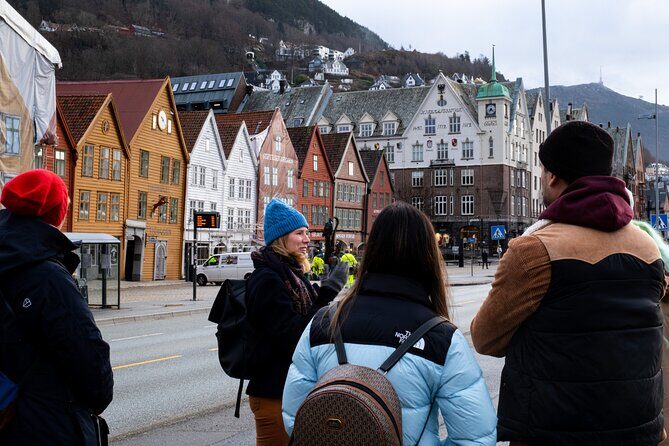
If you only have a day in Bergen, it’s easy to waste time bouncing between famous spots. This tour is built to prevent that. In about two hours, you get the order of things: royal Bergenhus first, then Bryggen as the trading engine, then the uphill neighborhood of Fjellsiden, and finally modern Bergen around food streets and the harbor-front atmosphere.
I like the balance. The first part is about who had power and why Bergen mattered—palace leftovers, medieval connections, and the unions that shaped Norway’s political world. Then the second part shifts to how Bergen works on a normal day: the rhythm of food and work, and the nuts-and-bolts behind living in Norway. That second half is what turns a sightseeing walk into a trip that makes sense.
The other practical win is pacing. This is not a running tour. It’s also not so short that it feels like a drive-by. You’ll walk cobblestones and uneven spots, so wear proper shoes, but the physical effort stays reasonable for a moderate-fitness level.
You can also read our reviews of more walking tours in Bergen
Bergenhus Fortress and Håkon’s Hall: where the royal story begins
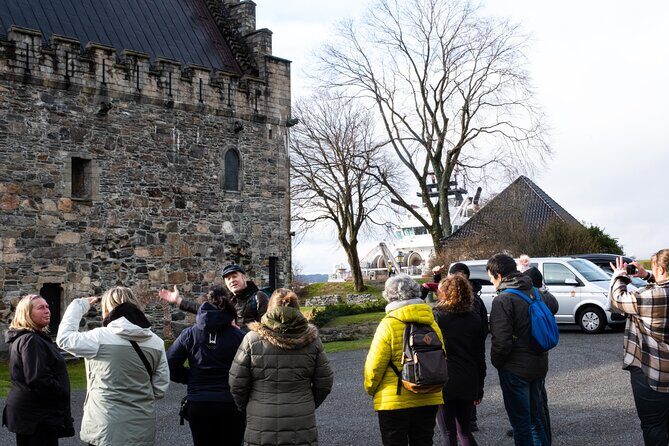
Your walk starts near Bradbenken 1 at the edge of Bergenhus Fortress. This is the best kind of opening for a Bergen visit because it gives context fast: when Bergen was the capital, this is where the palace complex sat. Even if you only see parts from the outside, you immediately get why later areas like Bryggen mattered so much—power and trade didn’t live in separate worlds.
Next comes Håkon’s Hall area. This is the major medieval palace section still standing today. Here you learn about Bergen when it was an independent country and how Norway later moved into unions with Denmark and Sweden. It’s the sort of history that can feel abstract in a museum, but on a fortress site it snaps into place.
Important heads-up: you do not enter Håkon’s Hall. It’s a museum with its own admission fee. The tour keeps the cost down and keeps you moving. The one rare wrinkle noted by the operator is that the fortress can be closed on occasion due to a private event. If that happens, the tour will be adjusted.
UNESCO Bryggen and the Hanseatic trade system you can picture
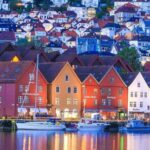
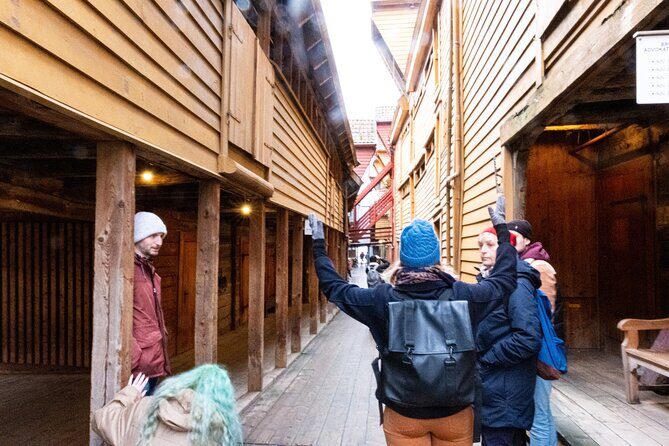
Then you step into Bryggen Hanseatic Wharf. This is the UNESCO World Heritage site that tells Bergen’s trade story in a very physical way. Merchants traded here for around a thousand years, and the Hanseatic League—German merchants—helped make it a trading power.
What I like is that you don’t just hear that Bryggen is old. You learn how the wharf worked: the systems merchants used, the reasons the trading network grew, and what day-to-day commerce would have looked like along the waterfront. You also get a sense for why these buildings survived long enough to become the recognizable postcard scene you came for.
You also won’t go into any of the buildings. Today, many structures are shops and small businesses, not museums. For some people that’s a disappointment if they want indoor exhibits. For most visitors, it’s a relief: you save money and time, and you get to focus on the real thing—how the waterfront forms the story.
Bryggen is one of the stops where the small-group feel really helps. In a crowd, you might just speed through. With fewer people, it’s easier to hear the details and still linger at the spots that catch your eye.
St. Mary’s Church: oldest still standing, and why you may not go inside
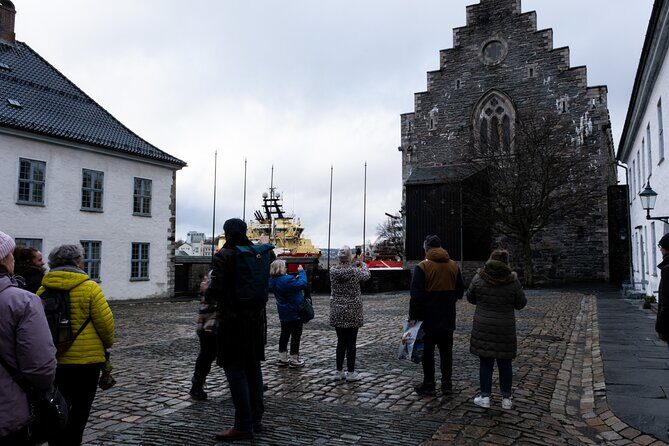
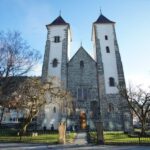
After Bryggen, the tour heads to St. Mary’s Church. This is the oldest still-standing building in Bergen, built in the 12th century, and it still functions as a church today.
Again, the tour stays outdoors. You do not go inside, because entry has a separate admission fee. That approach keeps this walk moving and keeps the tour price straightforward, but it does mean you won’t get the full interior experience here unless you plan it separately.
If you want a quick rule of thumb: use this stop for exterior context and for spotting it in your later self-guided wandering. If you’re the type who always seeks interiors, you might want to budget extra time and money to return on your own for the church visit.
Fjellsiden uphill walk: everyday life in Bergen, not just famous views
After the history stops, you start climbing up into Fjellsiden, a well-preserved district of wooden houses. This is where the tour earns its name Past and Present in a practical way. The guide doesn’t just point at old buildings. You talk about everyday life in Norway: what people eat, when they work, what a house costs, and how taxes fit into the picture.
This part can be especially valuable if you’ve been thinking about Norway beyond scenery. Bergen can look like a set of pretty postcards until someone connects it to real decisions—housing, schedules, daily priorities. Fjellsiden makes those topics feel grounded.
One thing to expect: the exact walking route can change depending on the guide’s interests. So you may see slightly different side streets and viewpoints, but the theme stays the same: daily life and how the city’s structure shaped living patterns.
Also, shoes matter more here. Older neighborhoods often bring uneven pavement, steps, and natural slopes. The good news is the tour is paced for comfortable walking, not marathon energy.


Funicular station pause: you learn the hiking culture without paying extra
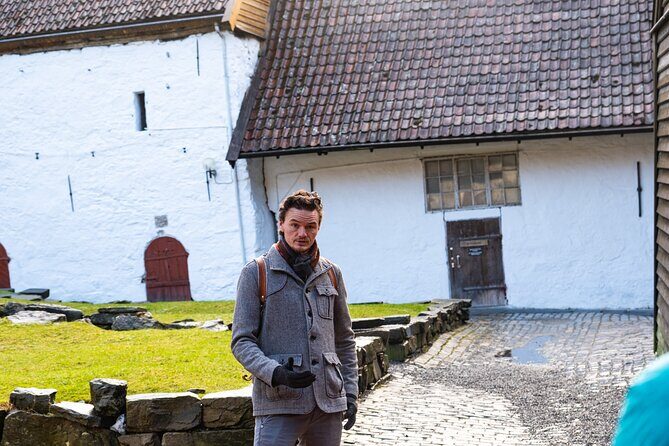
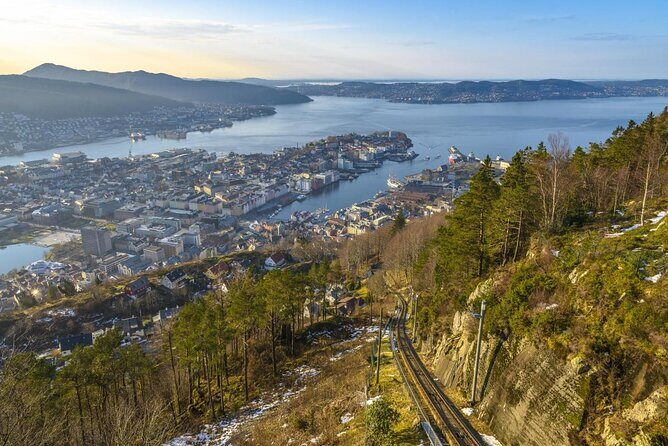
As you continue, you pass by the funicular station. The guide uses it as a teaching moment—outdoor life and hiking culture matter in Norway, and Bergeners really do build time around getting outside.
You do not take the funicular on this tour. The operator specifically notes that it would add extra time and cost (an extra hour and a 150 NOK add-on). The point is to keep the walk to a tight schedule and preserve your flexibility.
This is smart for two reasons. First, you can decide whether you want the ride later when you can go at your own pace. Second, if you’re thinking about a sunset viewpoint or a planned hike, you can connect the idea to your actual itinerary instead of forcing it into this tour.
Skostredet food street and the fish market finish
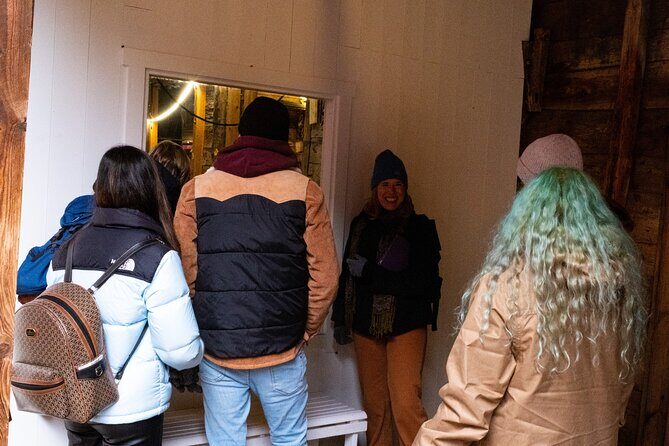
The last stretch shifts to modern Bergen. The guide brings in food culture, including the fact that Bergen is a UNESCO City of Gastronomy. You walk along Skostredet, a street lined with restaurants, and you hear how today’s food scene fits the city’s character.
This is also where the guide’s local tips can really pay off. In the tour experience, guests often mention that guides share practical food and dinner recommendations, and those suggestions can save you time later when you’re hungry and decision-fatigued.
You finish outside the Fish Market area and close to the Bergen tourist office (near Vågsallmenningen 2). Even if you don’t plan to buy anything right away, ending here is a natural feeling because it lands you back near the harbor-front rhythm.
Price and value: what $33.47 gets you (and what it doesn’t)
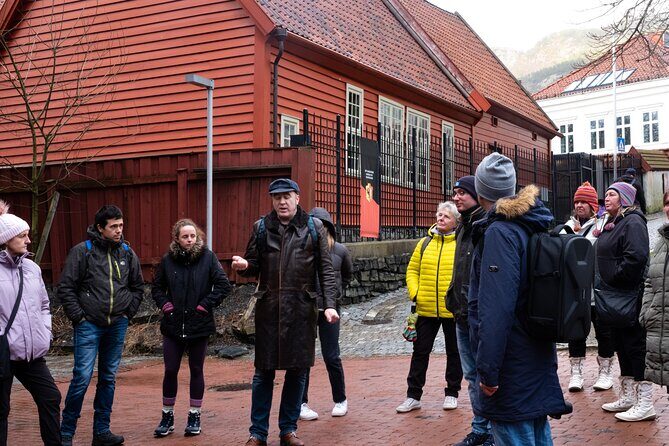
At $33.47 per person, the headline value is that you’re paying for the guide and the walking structure, not for a stack of museum admissions. The tour includes an authorized guide plus guided walking of Bergenhus Fortress and UNESCO World Heritage Bryggen, with no hidden fees.
What you should expect to pay separately, if you want it: Håkon’s Hall museum entry and St. Mary’s Church interior entry both cost extra. The funicular is also not included, and it would add time and money if you later choose to use it.
So is it worth it? In my view, yes if you want orientation and context more than a checklist of indoor stops. The money goes toward someone explaining what you’re seeing and helping you understand how Bergen changed—from power to trade to daily life to food culture. If you’re the type who only enjoys museums with tickets and interiors, you might feel like you’re skipping parts. But if you like walking, photos, and getting the story while you move, this price lands in a good spot.
Group size, pacing, and who this tour fits best
This is a small-group tour with a maximum of 16 travelers. That matters more than it sounds. In a small group, you can hear the guide without craning your neck, and you have a better chance of getting your questions answered, whether you’re curious about history details or about practical Bergen life.
The tour also has a moderate physical fitness expectation. You’ll be walking and going uphill into Fjellsiden. You’re not going to do extreme climbs, but you should plan for slopes, uneven pavement, and weather changes.
Who it suits:
- First-time visitors who want a Bergen overview that makes the city feel understandable
- People who like local context and Q&A, not just photo stops
- Travelers who want a guided walk with restaurant and food culture pointers
Who might want something else:
- Visitors who need lots of indoor museum time
- Anyone with mobility limits who can’t handle uneven cobblestones and uphill sections (the tour only notes moderate fitness, not step-free access)
Should you book Bergen Past and Present?
Book it if you want a smart, efficient introduction to Bergen that balances major historic sites with how people live now. It’s a strong pick when you have limited time and you don’t want to waste hours figuring out what matters.
Skip it only if your ideal day is mostly ticketed interiors and museums. This walk is built for outdoor learning: you see the big structures, you learn the systems and stories, and you finish near the Fish Market so the city feels real at the end of the day.
FAQ
How long is the Bergen Past and Present walking tour?
It lasts about 2 hours.
Is the tour offered in English?
Yes. The tour is offered in English, and you’ll receive a mobile ticket.
What sights do you cover during the walk?
You’ll visit key areas including Bergenhus Fortress (Bergenhus), the Håkon’s Hall area from the outside, Bryggen Hanseatic Wharf (UNESCO), St. Mary’s Church from the outside, the Fjellsiden neighborhood, Skostredet, and the Fish Market area/tourist office.
Do you go inside Håkon’s Hall or St. Mary’s Church?
No. The tour is outdoors only, and it does not include entry to ticketed buildings like Håkon’s Hall museum or the church interior.
Do you take the funicular?
No. You pass by the funicular station so you can find it, but you do not ride it. Riding it would add extra time and cost.
What is the group size limit?
The tour has a maximum of 16 travelers.
What if the weather is bad or the fortress is closed?
The experience requires good weather. If it’s canceled due to poor weather, you’ll be offered a different date or a full refund. On rare occasions, the fortress can be closed due to a private event.
Is there free cancellation?
Yes. You can cancel up to 24 hours in advance for a full refund. If you cancel less than 24 hours before the start time, the amount you paid won’t be refunded.