REVIEW · BERGEN
City Walking Tour – Bergen On Foot
Book on Viator →Operated by Martins Bergen Tours · Bookable on Viator
Bergen feels alive at street level. This walking tour links the city center to Bryggen in about two hours, with an English guide and a small group (16 max). I really like the way it mixes famous names like Edvard Grieg and Henrik Ibsen with everyday Bergen details, and I also like that it’s designed for English-speaking visitors from the first minute.
I’d also call out the personal feel. With a guide like Martin—German-born and raised in northern Norway—you get history with perspective, including pointed context on WWII in the region when the conversation naturally turns that way. A second guide also shows up sometimes in people’s memories, described as from England and a musician/songwriter, which says a lot about how story-first this tour tends to be.
One thing to consider: parts of the walk involve standing in place with limited seating options, so if you need lots of stops to sit, plan accordingly.
In This Review
- Key takeaways before you go
- Why Bergen on foot makes sense in just two hours
- Getting to the start: Strandkaien 3 and the “don’t trust only Maps” tip
- Part 1: the city center walk around the fish market, theatre, and old fire station
- A realistic drawback to plan for
- Part 2 at Bryggen: Hanseatic League, German merchants, and dried cod
- What to watch for while you’re there
- Guide style matters: Martin’s WWII perspective and the value of Q&A
- Price and value: $31.22 for 2 hours, small group, and real local context
- Outdoor reality check: moderate walking, weather, and where you might want breaks
- Ending near St. Mary’s Church: turning the walk into a full Bergen day
- Should you book this Bergen walking tour?
- FAQ
- How long is the Bergen on foot walking tour?
- What is the price per person?
- Is the tour offered in English?
- How many people are in the group?
- Where do I meet the guide and where does it end?
- Do I get a mobile ticket?
- Do I need special fitness for this tour?
- Are service animals allowed?
- Is there free cancellation?
- What if the tour is canceled due to not meeting a minimum number of travelers?
Key takeaways before you go
- 16 travelers maximum keeps the group easy to manage and question-friendly
- English-language guide for clear explanations and practical recommendations
- City center + Bryggen in one shot, so you don’t have to pick between history and views
- Bryggen’s cod-and-Hanseatic story turns wooden warehouses into something you can actually picture
- Outdoor walking means pack for weather; bring a raincoat just in case
- A real meeting-point warning: don’t rely only on Google Maps—verify the exact address
Why Bergen on foot makes sense in just two hours
Bergen is at its best when you’re close enough to notice small things: the shapes of old buildings, the daily rhythms near the waterfront, and the way streets funnel you toward big views. This tour is built for that. In roughly 2 hours, you cover both the lively center and the signature Bryggen wharf area without feeling like you’re doing a marathon.
The structure also helps your brain. You start by learning how the city works—where people gather and which landmarks matter—then you shift to Bryggen, where the story becomes trade, money, and sea routes. By the end, you’ve got a mental map that makes self-guided exploring easier.
And because the group is capped at 16, the tour doesn’t feel like a lecture herd. You’re more likely to get direct answers when you ask why something matters, not just what it is.
You can also read our reviews of more walking tours in Bergen

Getting to the start: Strandkaien 3 and the “don’t trust only Maps” tip
The tour begins at Strandkaien 3, 5013 Bergen, Norway and ends at St. Mary’s Church, Dreggsallmenningen 15, 5003 Bergen, Norway. That’s a great setup if you plan to keep exploring afterward—ending near a major church area can be a natural jump-off point for the rest of your day.
Here’s the practical part: Bergen meeting points can be tricky if you’re following a phone map without double-checking the exact address. One visitor note that stuck with me is to not depend only on Google Maps. If you’re running late, communicate with the guide—there’s evidence that waiting can happen when people message ahead.
Also keep an eye on timing. The tour runs about 2 hours, and it’s not designed around long waiting gaps. If you want to feel calm, arrive a few minutes early and be ready to start on time.
Part 1: the city center walk around the fish market, theatre, and old fire station
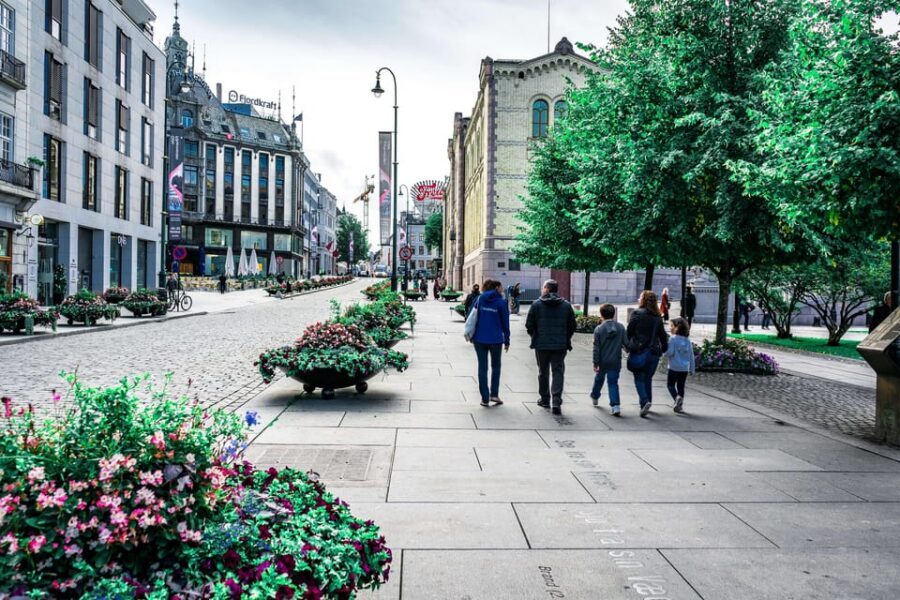
The first chunk of the tour moves through Bergen’s lively center with a clear goal: you get context for both the past and the present. You’ll pass several standout landmarks, including the fish market, the theatre, and the old fire station. Each one is treated like a doorway into how the city grew and how it functions now.
What I like about this approach is that it doesn’t turn Bergen into a museum-only stop. The guide focuses on people and daily life in the here and now, not just dates and building facts. That’s especially useful if you’re only in town for a short visit and want to understand why Bergen feels the way it does.
You’ll also hear about major cultural figures connected to the city. Names like Edvard Grieg and Henrik Ibsen come up along the walk, which makes the city feel less generic. Instead of “nice buildings,” you get a sense of who mattered here and why.
A realistic drawback to plan for
This part of the tour is still a walk, and you’ll spend some time in areas where there isn’t a quick place to sit. It’s not described as strenuous, but the standing time can add up if you’re sensitive to long periods without breaks.
Part 2 at Bryggen: Hanseatic League, German merchants, and dried cod
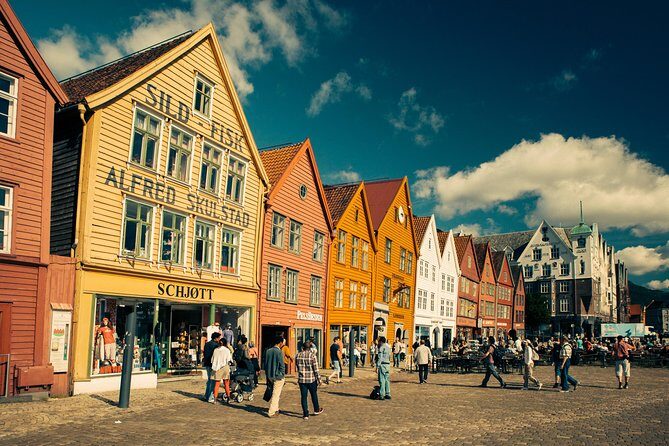
Then you shift to Bryggen, the area most people picture when they think of Bergen. The tour frames it clearly: those colorful wooden houses are the symbol of the city, and today you’ll find cafes, restaurants, and bars among them.
But the best part is what the guide connects to what you’re seeing now. Around 400 years ago, the air here would have been dominated by dried cod, stored for trade. German merchants bought cod from Norwegian fishermen and exported it across Europe. That trade helped make Bergen a major trading metropolis in Scandinavia in its time.
This is where Bryggen becomes more than a postcard. You can stand in front of the houses and actually understand the machinery behind them: fishing, storage, merchant networks, and the business logic of a port city. When the Hanseatic League gets explained, it stops being a vague medieval word and turns into a story about routes, contracts, and people working the waterfront.
You can also read our reviews of more city tours in Bergen





What to watch for while you’re there
When you reach Bryggen, don’t just look at the buildings—look for details the guide highlights. The goal is to build a mental picture: where goods moved, what merchant activity looked like, and how the district’s purpose evolved into today’s food-and-drink scene. Even if you’ve seen Bryggen photos before, this kind of framing makes it easier to notice what’s actually different.
Guide style matters: Martin’s WWII perspective and the value of Q&A
The guide is a big part of why this tour earns such strong ratings. One recurring name is Martin, and what stands out is that his storytelling doesn’t stay stuck in one time period. He can give you history and connect it to current life in Bergen.
Two specific guide angles show up in visitor descriptions. First: Martin is described as German-born and raised in northern Norway, which helps explain why his explanations can feel more nuanced than a one-note overview. Second: at least one guide alternate is described as from England and also a musician/songwriter, which hints at a smooth, narrative delivery style—more story, less list reading.
You’ll likely appreciate that the pace seems built for questions. People noted the guide’s ability to answer in a detailed way, not just a short fact. If you like asking why Bergen looks the way it does, or how certain historical events affected everyday life, this tour format supports that.
One more practical benefit: guides tend to include recommendations after the walk. That matters because Bergen has lots of good options, but it helps to know what to try when you have limited time.
Price and value: $31.22 for 2 hours, small group, and real local context
At $31.22 per person for roughly 2 hours, you’re paying for more than movement and photos. You’re paying for a guided lens—someone who can connect landmarks like the fish market and Bryggen to how Bergen worked, economically and culturally.
The small group size is part of the value equation. A capped group changes the experience. You get a more personal pace and more chances to ask questions, which means the tour feels like understanding a place rather than just walking through it.
Also, the tour is English offered and uses a mobile ticket, which keeps friction low. If you’re arriving from a cruise schedule or juggling other activities, that kind of simplicity is practical. And if you’re planning ahead, the fact that many people book around 32 days in advance is a clue that earlier dates can be better for your schedule.
Outdoor reality check: moderate walking, weather, and where you might want breaks
This experience is described as requiring moderate physical fitness. That usually means it’s walkable for most people, but it’s not designed as a gentle rolling stroll with constant seating.
Bring a raincoat. Not because the tour is marketed as a rainy-day thing, but because Bergen weather can surprise you, and this is an outdoor walk with real time outside. If it rains, you’ll still want to keep moving—warm, dry layers help.
Also keep expectations straight. This is a walking tour with meaningful stops and explanations. It’s not a sit-and-sight menu. If you’re someone who needs frequent seating, plan your day so you can relax after.
Ending near St. Mary’s Church: turning the walk into a full Bergen day
The tour ends at St. Mary’s Church area, specifically Dreggsallmenningen 15. That’s a convenient finish because you’re placed near a central landmark that can anchor your next choices—whether you want another short walk, a museum visit, or an easy meal nearby.
What makes this tour especially useful is that it helps you move through Bergen with confidence. After you hear why the fish trade mattered and how the city center shaped daily life, you’ll be better at spotting what’s important on your own. That kind of orientation pays off later, even if you don’t do anything fancy with it.
Should you book this Bergen walking tour?
Book it if you want a fast, structured introduction to Bergen that covers both the signature postcard area (Bryggen) and the working-feeling city center landmarks (fish market, theatre, old fire station). It’s also a strong choice if you care about explanations—especially the kind that connect cultural figures like Edvard Grieg and Henrik Ibsen to where you’re standing.
I’d think twice if sitting often is a must for you. Since some parts involve standing in place with limited seating, you might prefer a tour format with more frequent breakpoints.
If you’re arriving in Bergen with limited time, or you want your first day to feel like it gives you a real grasp of the city, this is a solid use of $31.22 and your time—especially with the 16-person cap and English guide.
FAQ
How long is the Bergen on foot walking tour?
It runs for about 2 hours (approximately), with the city center portion taking around 1 hour 15 minutes and Bryggen taking about 45 minutes.
What is the price per person?
The price is $31.22 per person.
Is the tour offered in English?
Yes, the tour is offered in English.
How many people are in the group?
The tour is capped at a maximum of 16 travelers.
Where do I meet the guide and where does it end?
You start at Strandkaien 3, 5013 Bergen, Norway and end at St. Mary’s Church, Dreggsallmenningen 15, 5003 Bergen, Norway.
Do I get a mobile ticket?
Yes. The tour includes a mobile ticket.
Do I need special fitness for this tour?
You should have moderate physical fitness. It involves walking and some standing.
Are service animals allowed?
Yes, service animals are allowed.
Is there free cancellation?
Yes, free cancellation is available up to 24 hours in advance for a full refund.
What if the tour is canceled due to not meeting a minimum number of travelers?
If it’s canceled because the minimum isn’t met, you’ll be offered a different date/experience or a full refund.