REVIEW · GIMSOY
Lofoten: Guided Horse Riding Tour Over Hov and Hovsund
Book on GetYourGuide →Operated by Hov Gård · Bookable on GetYourGuide
Horses and sea air in Lofoten. This guided ride pairs Icelandic horses with Arctic beach scenery on Gimsøya Island, with a guide who talks you through Viking-age leftovers and what makes Norway’s famous dried fish a real local craft. I especially liked the calm, confidence-building horse handling at the start, and the way the route mixes coastline views with human stories you can actually see. The main catch: it’s a slow-paced tour and it can’t be turned into a more advanced ride, so don’t expect faster gaits like a full beach gallop.
Before you head out, you meet at the stables at Hov Horse Farm in Gimsøysand, get your helmet and fitted gear, and learn how to handle the reins step by step. Guides like Sarah and Julia show up in the feedback as patient and friendly, which matters here because the whole experience is built around comfort and control, not speed.
In This Review
- Quick hits on Hov and Hovsund horseback riding
- Entering the Hov Horse Farm routine (what happens before the ride)
- Mounting your Icelandic horse and getting control fast
- The Hov coastline: relaxed beach riding where the sea does the talking
- Hovsund fishing village: dried-fish sights while you’re already in motion
- Viking-age remnants along the route: small traces, big context
- The pace question: relaxing is the point, not a compromise
- Gear, rules, and safety: what you should pack and what to skip
- English guidance: how the tour stays understandable and fun
- Timing and meeting point: make your start stress-free
- Price and value: what $145 gets you in Lofoten
- Who should book this tour (and who should skip it)
- Should you book Hov and Hovsund horseback riding?
- FAQ
- How long is the horseback riding tour?
- Where do I meet the guide?
- Do I need prior riding experience?
- What riding gear is included?
- What should I bring and wear?
- What are the rider limits and who isn’t suitable for the tour?
- Are professional cameras or backpacks allowed?
- Is the guide available in English, and can I cancel?
Quick hits on Hov and Hovsund horseback riding
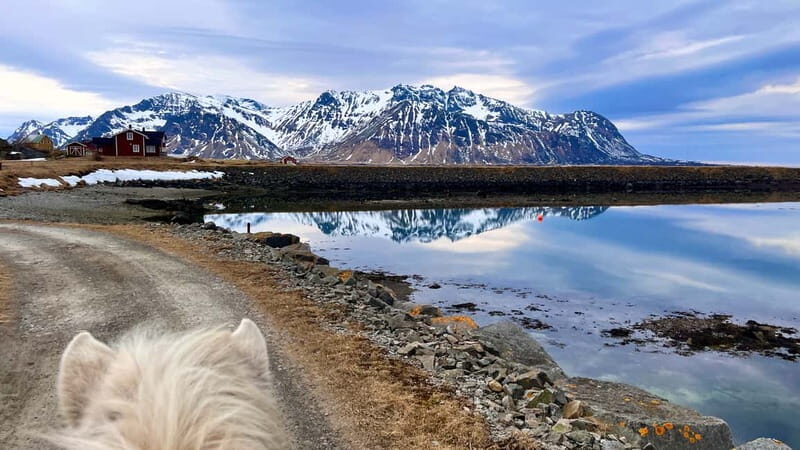
- Calm, friendly Icelandic horses that help first-timers feel secure
- Arctic beach time at a relaxed pace along the coastline on Gimsøya Island
- Viking-age remnants and fishing-village stops that turn scenery into stories
- A look at how dried fish is handled and made as you ride through the area
- Short instruction before you leave the barn, including helmet fit and reins basics
Entering the Hov Horse Farm routine (what happens before the ride)
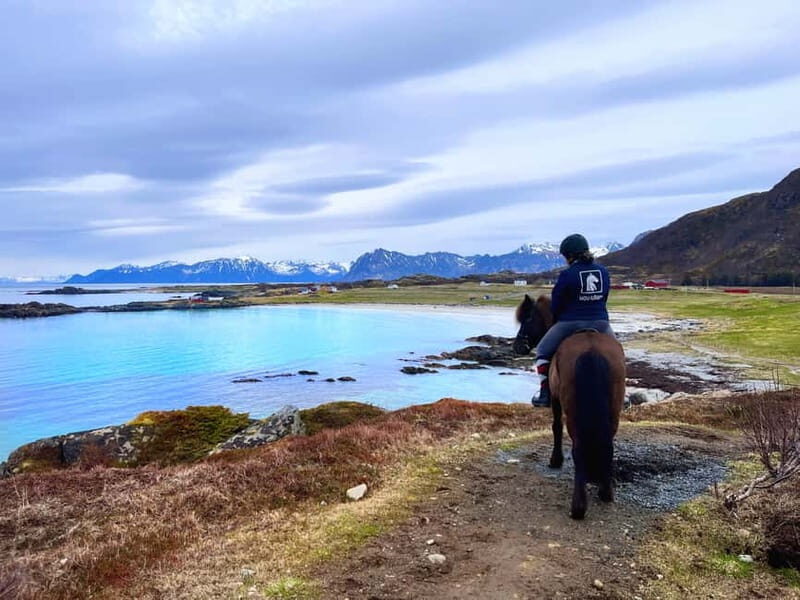
The tour starts at Hov Horse Farm in Gimsøysand, where you find your guide at the stable. Plan to arrive ready to get geared up right away, because the whole experience runs on that smooth, pre-ride rhythm: meet the guide, meet your horse, then get moving.
You’ll be fitted with a helmet, plus gloves and rubber boots. You also get rain/warm outfits for the ride, which is a big deal in the North where the weather can change its mind fast. You bring comfortable shoes and long pants, but the tour covers the core riding protection and insulation, so you’re not stuck dressing like a mountaineer.
Safety is treated seriously here. When you book, you’re required to provide rider details in English (name, weight, height, age, and experience level). That helps the team match horses and keep the ride safe for both riders and animals. The maximum rider weight is 95 kg, and the tour isn’t set up for people who want to push speed or advanced riding moves.
You can also read our reviews of more tours and experiences in Gimsoy.
Mounting your Icelandic horse and getting control fast
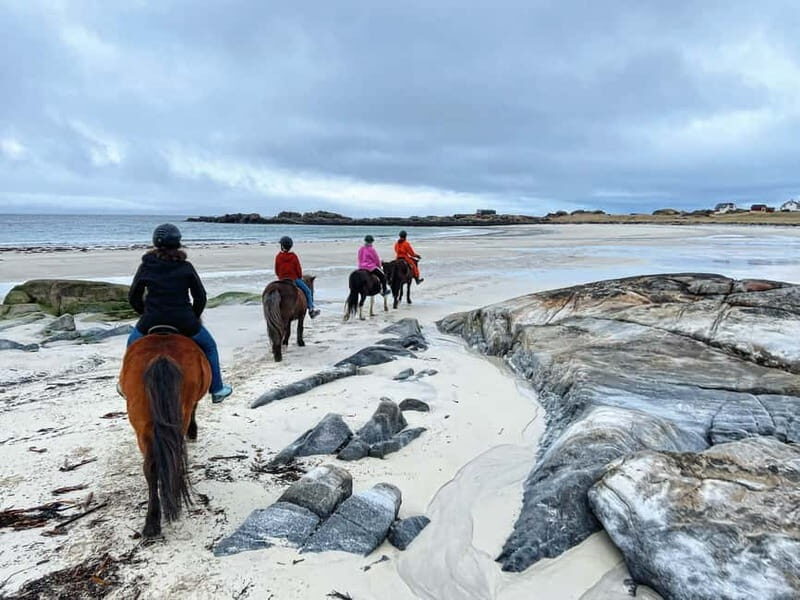
This ride is designed for people who have never ridden, and the instruction reflects that. Before you leave, your guide shows you how to handle the reins, and you get time to settle into your position and horse cues.
One detail I think is worth your attention: Icelandic horses can feel different than the horses many people picture from movies. You might see a quick technique explanation or short visual help that focuses on riding Icelandic horses specifically. Either way, the goal is the same—get you comfortable enough that you stop thinking about your hands and start paying attention to the coastline.
You’ll also get matched with a horse. In feedback, riders highlight that the staff helps pair people with the right animal, including when it’s someone’s first time. If you’re nervous, that matters. This isn’t about conquering a horse; it’s about moving through Lofoten in a way that feels calm and natural.
The Hov coastline: relaxed beach riding where the sea does the talking
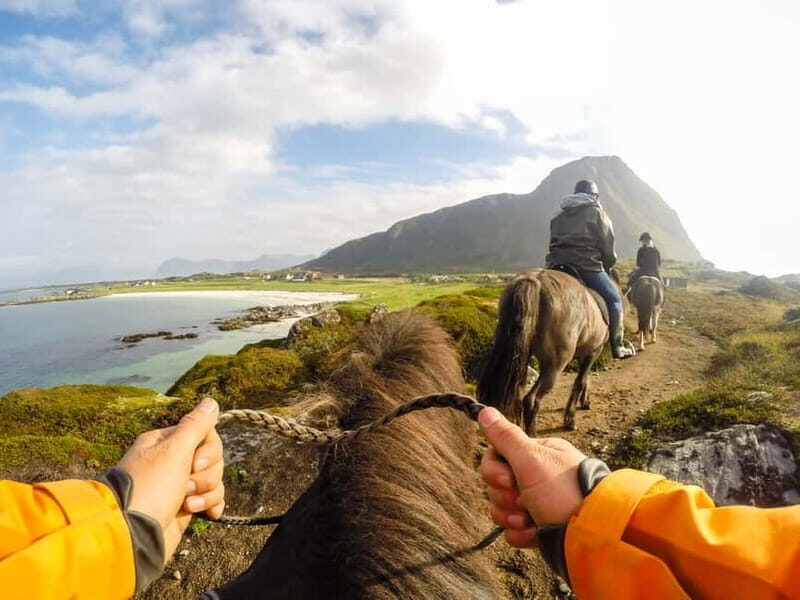
Once you head out, you ride at a slow pace across Hov, which is described as an Arctic beach. This is where the tour earns its atmosphere. The coastline gives you long views, and because the pace is unhurried, you can actually notice what’s around you instead of bracing for the next turn.
In summer, you may spot bird life—especially the sea eagle. You’re not guaranteed wildlife, but the route is set up so that when something does appear overhead or near the shore, you have time to look up and enjoy it. A relaxed pace also helps with the subtle skills: staying balanced, keeping a soft rein contact, and letting the horse’s movement guide you.
Practical note: it’s easy to underestimate what “slow pace” feels like on a beach. Even when you’re not going fast, you’re still walking and riding over uneven terrain. It’s a good kind of effort—your legs will work, and your mind will settle.
Hovsund fishing village: dried-fish sights while you’re already in motion
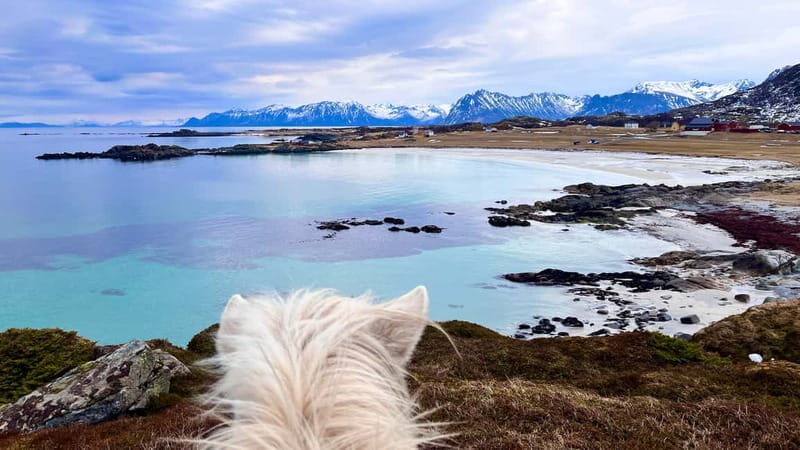
After you’ve had that beach time, the ride turns toward Hovsund, a fishing village area. You’ll get a gentle climb and more spectacular views on the way. This is when the ride starts to feel like a connected story rather than a single scenic loop.
Along the route, you can catch glimpses of the traditional fish-drying racks. That’s tied to the highlight about seeing how Norway’s famous dried fish is handled in the area. Because you’re passing it by horseback, you’re not just looking at a postcard view—you’re seeing the village workflow in a quieter, more personal way.
There’s a real value to this timing. If you do dried-fish sights on foot, you can end up racing the weather or missing the context around the racks. On horseback, you’re already moving through the area, at a pace that gives you time to notice the details that make the process feel real.
Viking-age remnants along the route: small traces, big context
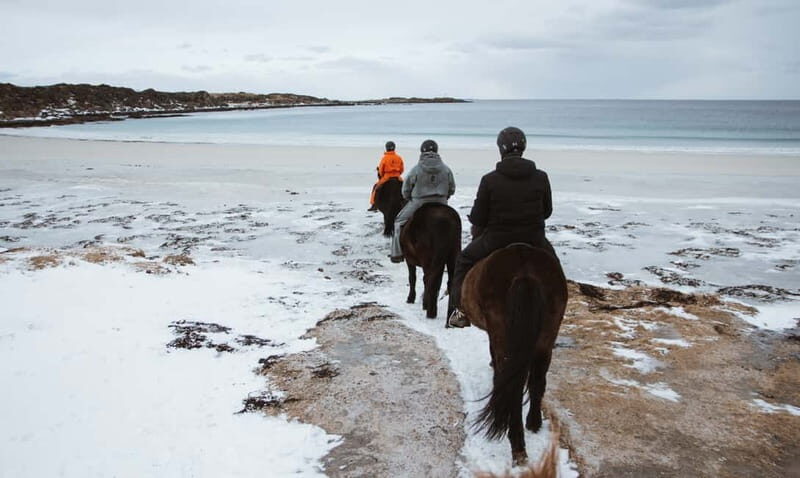
One of the most praised parts of this experience is the way it mixes landscape with history you can see. The ride passes Viking remnants and travels through the kind of old settlement areas that speckle the route. You’re not shown museum displays; you’re guided toward what still exists in the terrain and nearby features.
The guide’s role matters here. They’re there to point out what you’re looking at and give quick context so it doesn’t turn into random ruins you can’t place. Riders often call out that the explanations are part of what makes the ride feel meaningful, not just pretty scenery.
If you like your history grounded in place, this kind of stop is a good fit. You get just enough background to connect the past with the coastline you’re riding through right now.
The pace question: relaxing is the point, not a compromise
This tour is slow-paced by design, and it can’t be adapted for more experienced riders. That’s the biggest consideration to know up front.
One rider who already had experience said it still worked for them, because the scenery and guidance kept things interesting. But another highlighted a disappointment: you don’t get to go fast on the beach. At most, the tour keeps to a relaxed rhythm, with limited quicker movement near the end (described as trot work in a small circle).
So here’s the honest way to think about it: this is a ride for calm control, views, and learning. If your dream is speed, strong challenge, and big horse work, you may find the pacing too gentle. If your dream is a comfortable way to see Lofoten’s coastline from horseback, you’re in the right place.
Gear, rules, and safety: what you should pack and what to skip
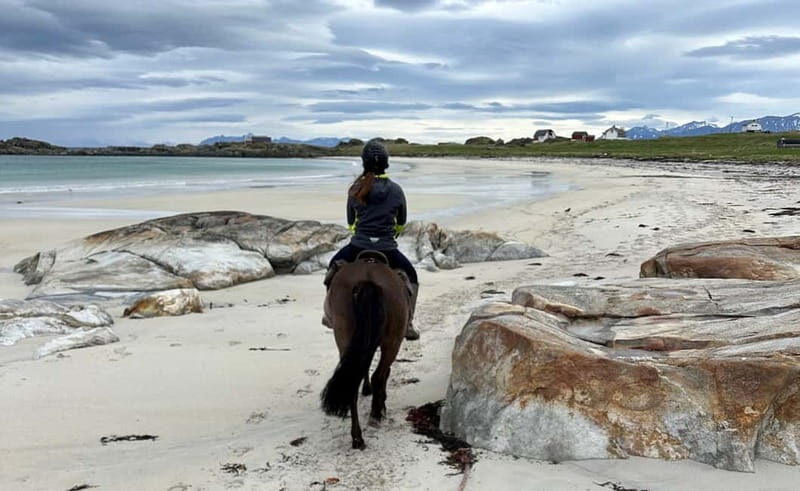
Your packing list is simple. Bring:
- Comfortable shoes
- Long pants
You should also plan for wet and cold conditions, since the tour provides rain/warm outfits for the ride. Even in good weather, coastal wind can be real, and having the right layer makes it much easier to enjoy the ride without rushing to stay warm.
Rules to remember:
- Professional cameras are not allowed
- Backpacks aren’t allowed
Also remember the rider limits. The tour isn’t suitable for children under 8, pregnant women, or riders over 95 kg. If you’re close to the weight limit, double-check before booking so you’re not disappointed later.
English guidance: how the tour stays understandable and fun
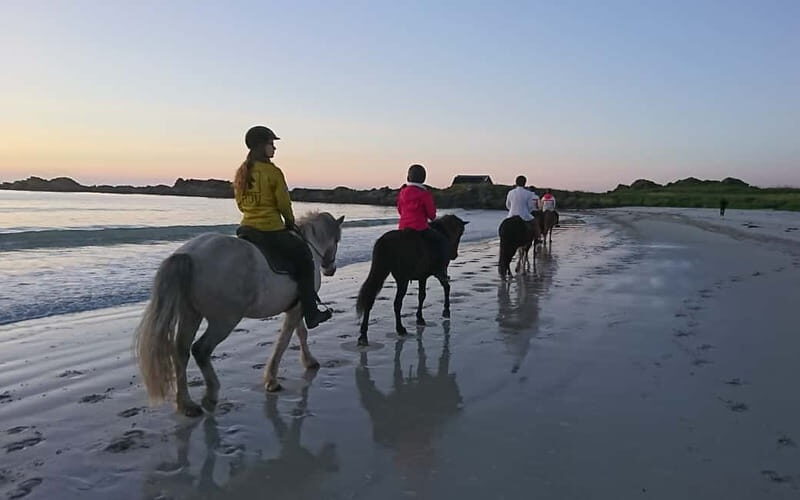
The guide is a live English speaker, and the tour is structured so you don’t need background knowledge to follow what’s happening. You get a quick introduction to riding and a chance to ask questions before you leave the stable.
In feedback, guides are praised for being friendly, informative, and patient—especially with people on their first ride. Some guides also help with pictures during the experience, which is useful because you’re riding, not just standing still with a phone on a stick.
If you like learning without feeling lectured, this is a good balance. The information stays tied to what you can actually see: coast, village, fish-drying racks, and Viking traces.
Timing and meeting point: make your start stress-free
The total time is about 1.5 hours. That’s long enough to feel like a real horseback outing, but short enough that you won’t lose half your day to weather or logistics.
You meet your guide at the stables at Hov Horse Farm in Gimsøysand, so build in time to reach the farm. Hotel pickup and drop-off are not included, so plan your own transport to the stables.
Because starting times depend on availability, it’s worth checking the schedule early. In peak summer, the best times tend to go first, and with outdoor tours, timing can affect wind and cloud cover.
Price and value: what $145 gets you in Lofoten
At about $145 per person for 1.5 hours, it’s not the cheapest activity in Lofoten. But it also isn’t just paying for a horse and a path.
You’re paying for:
- A live guide
- A trained, rider-friendly Icelandic horse
- Helmet, gloves, and rubber boots
- Rain/warm riding outfits
- Instruction on how to handle the reins
Food and drinks aren’t included, and there’s no pickup. Still, compared with tours where you rent basic gear yourself, the included equipment here is a meaningful part of the value—especially if you didn’t pack rain protection or proper footwear.
If you want a distinctly Lofoten experience that feels local and practical, this is a strong option. It’s also the kind of tour where paying for good guidance matters, because it’s the guide who turns “we rode along the coast” into “we understood what we were seeing.”
Who should book this tour (and who should skip it)
This is ideal for you if:
- You want a beginner-friendly introduction to horseback riding
- You like the idea of seeing Hov and Hovsund coastline without rushing
- You enjoy short, clear explanations about what you’re passing
- You want a guided way to see Viking remnants and fish-drying racks
You might want to skip or consider an alternative if:
- You’re craving faster, more advanced riding (the pace can’t be adapted)
- You’re traveling with a child under 8, or if you’re pregnant
- You’re above the 95 kg maximum rider weight
- You need to carry a backpack or use a professional camera
Should you book Hov and Hovsund horseback riding?
I think you should book if your priority is a calm, guided horseback ride that makes Lofoten’s coastline feel personal and story-driven. The best part is the combination: friendly Icelandic horses, clear instruction, and a route that includes beach riding plus real village sights like fish-drying racks and Viking-age remnants.
It’s not the choice if you’re chasing speed or advanced riding. But if you want relaxed control, good guidance in English, and scenery you can actually look at (not just endure), this tour is easy to recommend.
FAQ
How long is the horseback riding tour?
The tour lasts about 1.5 hours.
Where do I meet the guide?
Meet your guide at the stables at the Hov Horse Farm in Gimsøysand.
Do I need prior riding experience?
No. The tour does not require any riding experience.
What riding gear is included?
The tour includes a riding helmet, gloves, rubber boots, and rain/warm outfits for the ride.
What should I bring and wear?
Bring comfortable shoes and long pants.
What are the rider limits and who isn’t suitable for the tour?
The maximum rider weight is 95 kg. It’s not suitable for children under 8, pregnant women, or people over 95 kg.
Are professional cameras or backpacks allowed?
Professional cameras are not allowed, and backpacks aren’t allowed.
Is the guide available in English, and can I cancel?
Yes, the tour has a live English guide. Free cancellation is available up to 24 hours in advance for a full refund.