REVIEW · BERGEN
Bergen: City Sightseeing Hop-On Hop-Off Bus Tour
Book on GetYourGuide →Operated by City Sightseeing Europe · Bookable on GetYourGuide
Bergen is best seen with a plan. This hop-on hop-off bus tour stitches together the key sights of Norway’s second-largest city, with an included audio guide and the freedom to get off and wander. I especially like how practical it is when the weather turns, and how the loop helps you get your bearings fast without committing to one long walking route.
Two things you’ll likely love: the audio guide (with headphones) in multiple languages, and the simple flexibility of a ticket valid for 24 or 48 hours. One drawback to think through: the full route is only about 55 minutes, so it can feel short if you expected nonstop touring time or if you hate waiting for buses to arrive.
If you’re a cruise passenger, this works nicely because the route connects to major central spots (including cruise terminals), and your ticket stays valid for your chosen day within a 12-month window. Just remember: the bus gets you close, but attraction entry fees aren’t included.
In This Review
- Key Highlights You’ll Actually Use
- How the Bergen Hop-On Loop Works (Stops, Timing, and Smart Hopping)
- Price and Value: What $51 Buys You in Bergen
- Stop-by-Stop: What Each Bergen Bus Stop Lets You See
- Stop 1: Skolten/Bontelabo Cruise Terminal, King Hakon’s Hall, Rosenkrantz Tower
- Stop 2: Bryggen
- Stop 3: Fish Market, Tourist Information, Bergen Fjord Cruise
- Stop 4: Magic Ice, Nykirken
- Stop 5: Bergen Aquarium, Nordnes Park
- Stop 6: Fredriksberg Fortress
- Stop 7: The National Stage
- Stop 8: Jekteviken Cruise Terminal
- Stop 9: Festplassen, The City Park
- Stop 10: Fish Market, Ulriken Shuttle Bus
- Stop 11: Floyen Funicular Station
- Stop 12: Saint Mary’s Church, Bryggen’s Museum
- Stop 13: The Fisheries Museum
- Audio Guide Use: Make It Worth the Seat
- Weather-Proof Bergen: When the Bus Is the Best Tool
- Should You Book This Bergen Hop-On Hop-Off Bus Tour?
- FAQ
- Is the Bergen City Sightseeing ticket valid for 24 or 48 hours?
- Where is the first bus stop, and when do buses run?
- How long does the full bus route take, and how often do buses depart?
- What languages are available on the audio guide?
- Can I use a mobile or printed voucher?
- Does the ticket include entrance fees to attractions?
- Is there free cancellation?
Key Highlights You’ll Actually Use
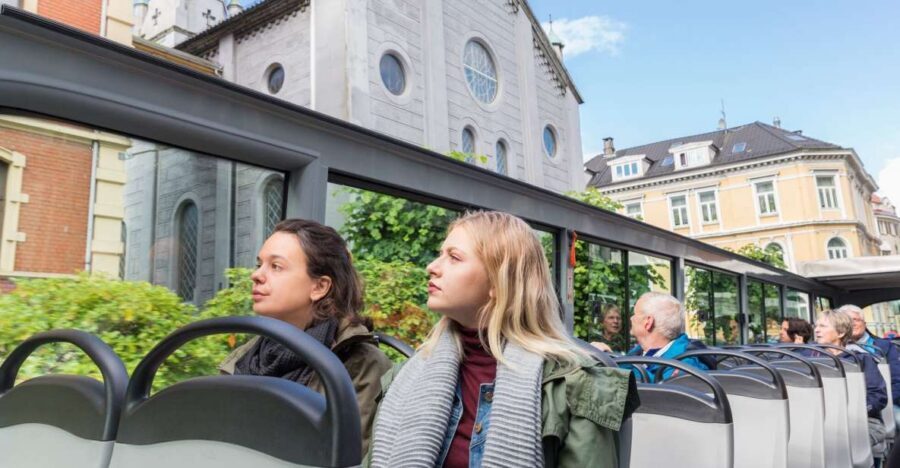
- 24 or 48-hour flexibility to fit Bergen into real schedules, not fantasy ones
- Audio guide in 8 languages with headphones, plus option to use audio on your own device
- One route, 13 stops linking aquarium, museum areas, churches, parks, and fish-market sights
- Buses every 30 minutes so you’re not stuck waiting long between hops
- Free Wi-Fi and a discount booklet for nearby shops and attractions
- Bergen Aquarium stop with sea lions, otters, penguins, and shellfish
How the Bergen Hop-On Loop Works (Stops, Timing, and Smart Hopping)
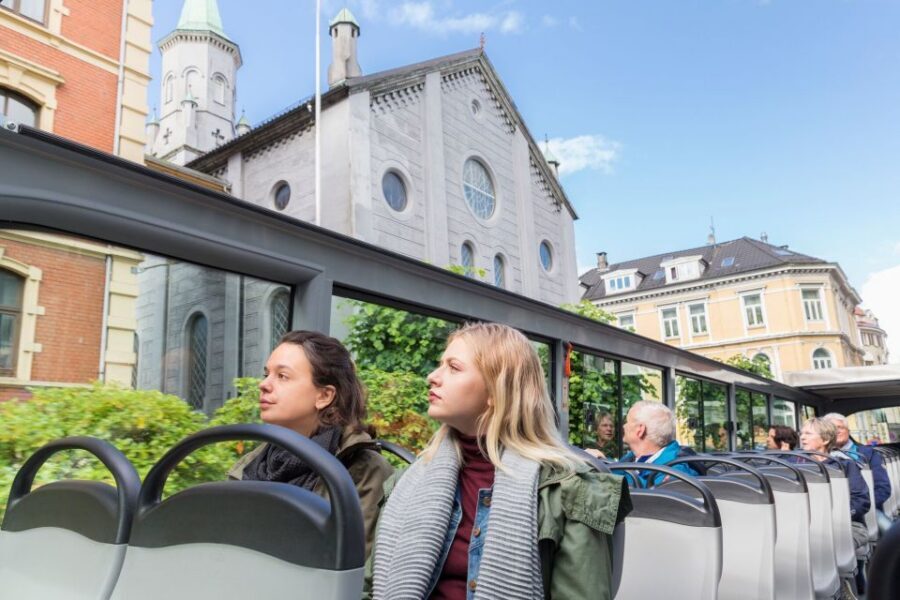
This is a single hop-on hop-off route with 13 stops. The whole circuit runs about 55 minutes, and buses depart roughly every 30 minutes, so you can do a first ride for orientation and then return for the stops you care about most.
The first departure from Stop 1 (Skolten Cruise Terminal area) is at 10:00, with the last departure at 16:00. That means your “last chance” to board is afternoon, so I’d plan to do your farthest stop earlier rather than gambling on a late hop-off.
You can board at any allocated stop along the route. In other words, you’re not married to one exact pickup point, even though the route officially starts at the Skolten Cruise Terminal.
For ticket validity, you choose a 24-hour or 48-hour ticket. The tour also includes a 12-month flexible window that’s especially useful for people traveling with ships, where shore time can be tight and weather can change plans.
You can also read our reviews of more city tours in Bergen


Price and Value: What $51 Buys You in Bergen
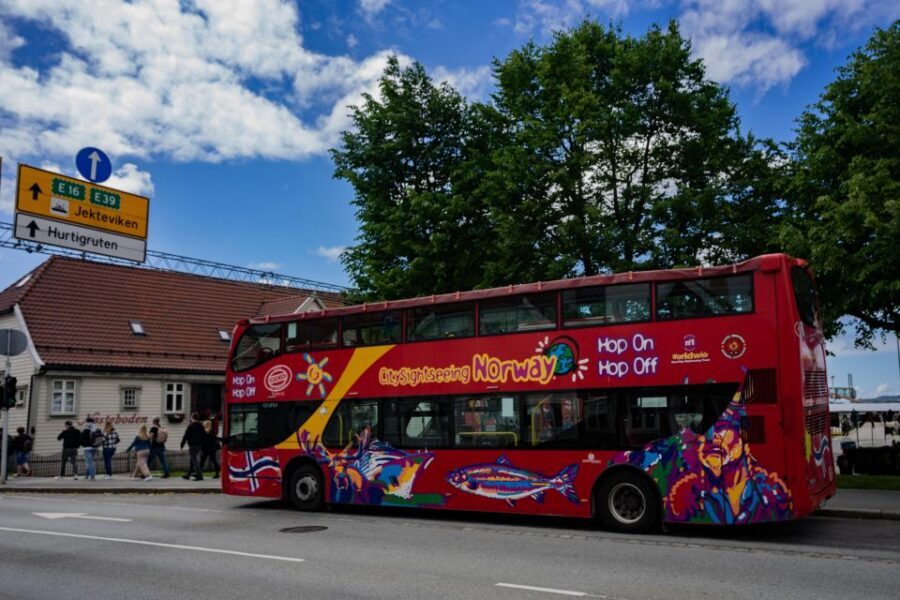
At about $51 per person, this isn’t a “cheap sightseeing add-on.” It’s closer to paying for convenience: transportation + an audio guide + the ability to step on and off without building a navigation map from scratch.
Here’s what you do get that matters for value:
- Audio guide in 8 languages with headphones (and audio on your own device is also referenced)
- Free Wi-Fi onboard
- A booklet with discounts for shops and attractions
- A route that ties together big names like Bergen Aquarium and the Bryggen area
Here’s what you don’t get:
- Entrance tickets to attractions
- Food and drinks
So the math depends on how many paid attractions you’ll actually enter. If you’re planning to do the aquarium and maybe one or two museum stops, the ticket can feel fair. If you want to do mostly wandering on foot and skip paid sites, you might question whether the bus is the best use of time.
Also, pricing can vary by where you book. If you see it cheaper elsewhere, grab it; if it looks pricier on a certain checkout screen, it’s worth comparing with how little time you have in Bergen.
Stop-by-Stop: What Each Bergen Bus Stop Lets You See
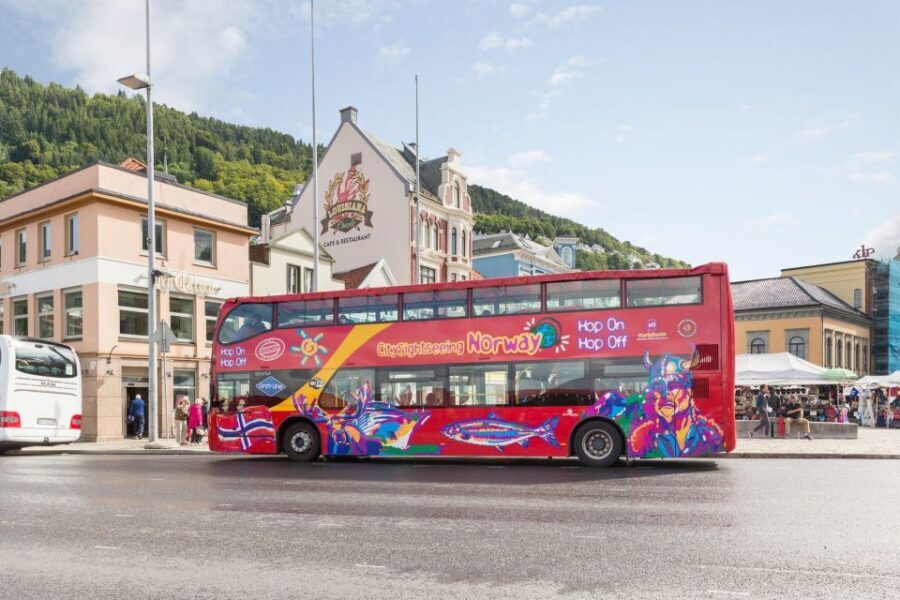
Think of the route as a chain of “anchor areas.” You hop off where you want to spend time, then ride to the next anchor when you’re done.
Stop 1: Skolten/Bontelabo Cruise Terminal, King Hakon’s Hall, Rosenkrantz Tower
This is the starting point most people use, and it’s also tied to the cruise terminal area, which helps if you’re arriving by ship. If you like starting with the easiest access, begin here so you can match your sightseeing to your arrival schedule.
The names nearby—King Hakon’s Hall and the Rosenkrantz Tower—signal that you’re already in the historic-core zone. It’s a good first hop for getting your bearings before you head toward Bryggen and the fish-market district.
Stop 2: Bryggen
Bryggen is one of the main “Bergen by name recognition” stops. It’s also where you’ll find a strong connection to the city’s commercial past, including the Hanseatic Museum mention tied to the highlights.
This is a smart place to hop off early if the weather is decent, since you can pair your bus ride with a walk through the area’s streets and harbor edges. If the rain is heavy, use this as a “look and locate” stop, then return later when you can linger.





Stop 3: Fish Market, Tourist Information, Bergen Fjord Cruise
This stop is a two-for-one: fish-market energy plus a tourist information hub. The information center is housed in The Old Bergen Exchange (built in 1862), and it includes the Fresco Hall with murals painted by Axel Revold—a detail I’d treat as a must-see for people who enjoy local art and architecture.
If you’re interested in time-on-the-water options, the stop also references Bergen Fjord Cruise. Even if you don’t book a cruise, this area is useful because it helps you plan the rest of your day.
Stop 4: Magic Ice, Nykirken
This stop is a strong choice for families or anyone who likes indoor attractions when Bergen weather gets gray. It also includes Nykirken, giving you a church stop option without needing to map the city yourself.
If you only have one day, this can be your “weather backup” stop. You can hop off, do something self-contained, then come back to the route when conditions improve.
Stop 5: Bergen Aquarium, Nordnes Park
If Bergen Aquarium is on your list, this is the stop that makes it easiest. The aquarium is described as home to sea lions, otters, penguins, and shellfish, which is a very clear lineup.
I also like the pairing with Nordnes Park. You can do the indoor exhibits and then step outside for a quick reset, which helps if you’re trying to spread your time across the day instead of stacking everything indoors.
Stop 6: Fredriksberg Fortress
Fortress stops are great when you want at least one “different building” experience in your itinerary. This stop gives you the chance to take in the fortress area without changing your whole route plan.
In practice, fortress time is usually best as a short visit. Hop off, look around, take photos, then return to the bus when you’re ready for the next anchor.
Stop 7: The National Stage
This is a theatre-focused stop: The National Stage. If you’re a culture-first type of visitor, it’s a good way to spot the venue even if you don’t attend a performance that day.
If your schedule is tight, treat this as a quick “see it, photograph it, and move on” stop. If there’s something on and you can check timing locally, you might turn it into a longer stop.
Stop 8: Jekteviken Cruise Terminal
Another cruise-terminal-linked stop. This matters because it gives you an easier return point if your shore schedule is limited and you need to get back efficiently.
Even if you’re not traveling with a ship, cruise terminal areas can be convenient “where do I go next” points. They often sit close to practical transport and central movement paths.
Stop 9: Festplassen, The City Park
This is your break stop. Festplassen / The City Park is ideal for pausing, grabbing a coffee you bought elsewhere, and letting the day breathe.
When you’re using a hop-on route, you can easily end up doing too many quick dashes. A park stop helps you reset, and it can prevent the whole day from feeling like a checklist.
Stop 10: Fish Market, Ulriken Shuttle Bus
This repeats the fish-market area, which is useful if you want a second pass. If you did the fish market earlier, this is where you can come back without starting over.
It also references the Ulriken Shuttle Bus, which gives you a connection option if Ulriken is on your plan. If it isn’t, you can still use this as a food-and-harbor zone stop.
Stop 11: Floyen Funicular Station
This stop is your link to the funicular access point. It’s especially helpful if you’d rather avoid steep walking while you’re trying to fit in aquarium, museum areas, and other sights.
If you like to do one “high” viewpoint-style activity, this is the sort of stop that supports that idea. Even if you don’t ride it, it’s a key city movement point worth knowing about.
Stop 12: Saint Mary’s Church, Bryggen’s Museum
This stop combines a church visit with Bryggens Museum. If you want a cultural complement to the harbor-area exploring, this is one of the clearer pairings on the list.
For timing, this is a good choice if you’re splitting your day into active outdoor time, then indoor museum time. The bus makes the switch easy.
Stop 13: The Fisheries Museum
This is the seafood-and-sea-trade theme finale. If you liked the fish market stop earlier and you’re curious about how the city’s seafaring and food traditions shaped daily life, this is the natural follow-up.
I like ending here because it gives your Bergen story a clear thread: aquarium animals, fish market bustle, then the museum setting that connects the dots.
Audio Guide Use: Make It Worth the Seat
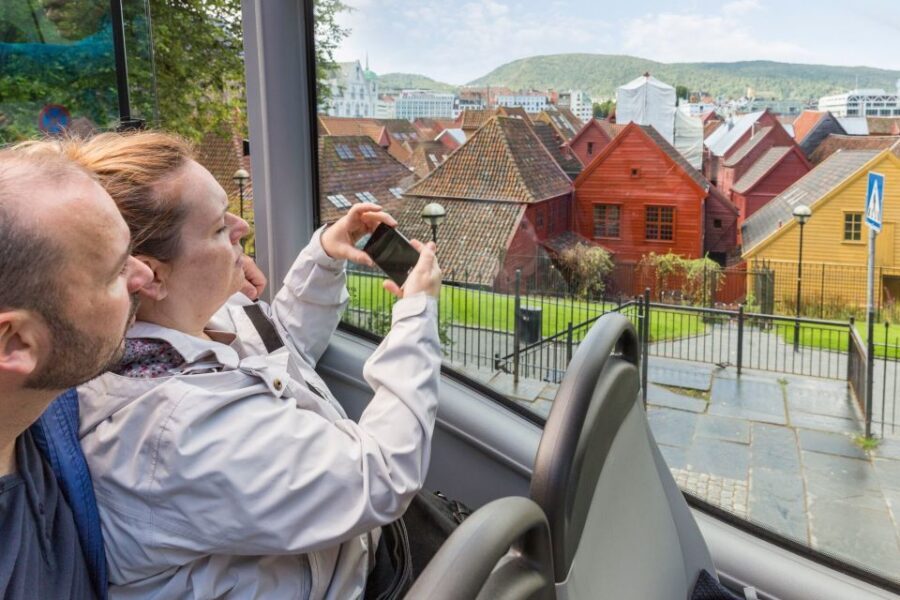
The tour includes an audio guide in 8 languages and includes headphones. It’s also referenced that audio can be used on your own device, which is handy if you prefer your own familiar tech.
To make it actually useful, I’d use the narration while the bus is moving between stop clusters. Then, when you hop off, switch to looking for what the guide pointed you toward: the nearby museum area, the church stop, or the aquarium entrance.
One real-world caution: in damp weather, you may find bus windows get foggy, which can limit how much you can watch outside. If you care about views from the ride, sit where you can get a clearer line of sight and bring a light jacket so you’re not stuck feeling cold.
Weather-Proof Bergen: When the Bus Is the Best Tool
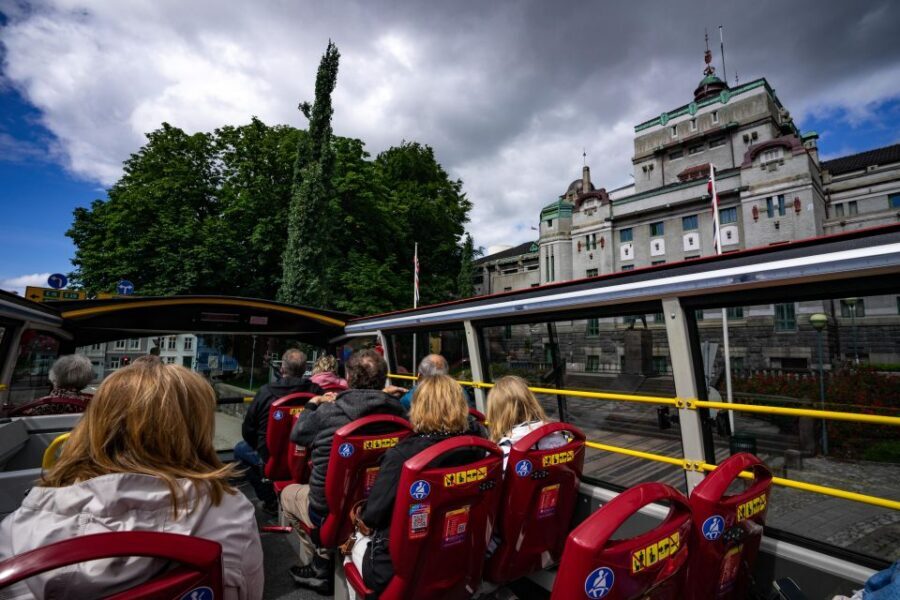
Bergen is famous for changing conditions, and this route is built for that reality. When it’s raining, hopping between indoor-friendly anchors like the aquarium and church/museum stops saves time and energy.
The bus also helps you avoid the “wrong hill, wrong direction” problem. Even if Bergen is very walkable in parts, a hop-on route makes it simpler to connect those walk zones without constantly checking where you are.
If you hate waiting, there’s still a catch: the loop is about 55 minutes, and buses come every 30 minutes. So you can’t treat it like instant transport. Use the bus to buy flexibility, not to replace a full day of walking.
Should You Book This Bergen Hop-On Hop-Off Bus Tour?
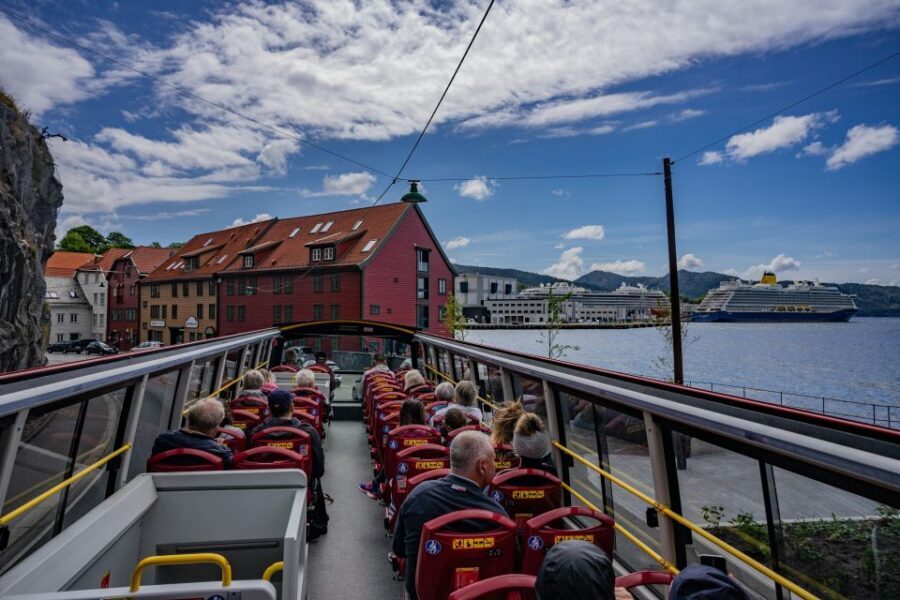
Book it if you want:
- One-ticket convenience that covers major attractions in a logical loop
- An audio guide that helps you understand what you’re seeing
- A plan that holds up when weather is rough
Skip or reconsider if:
- You’re mainly doing low-cost sightseeing and prefer to spend most time on foot
- You’re expecting a longer, more detailed guided experience than a 55-minute loop
My practical take: for a first visit or a short visit with mixed weather, it’s a solid value because it compresses planning and transportation into one simple ticket. But if you’re confident on your feet and you don’t plan to pay for multiple attractions, the bus may feel like a pricey taxi for quick stops.
FAQ
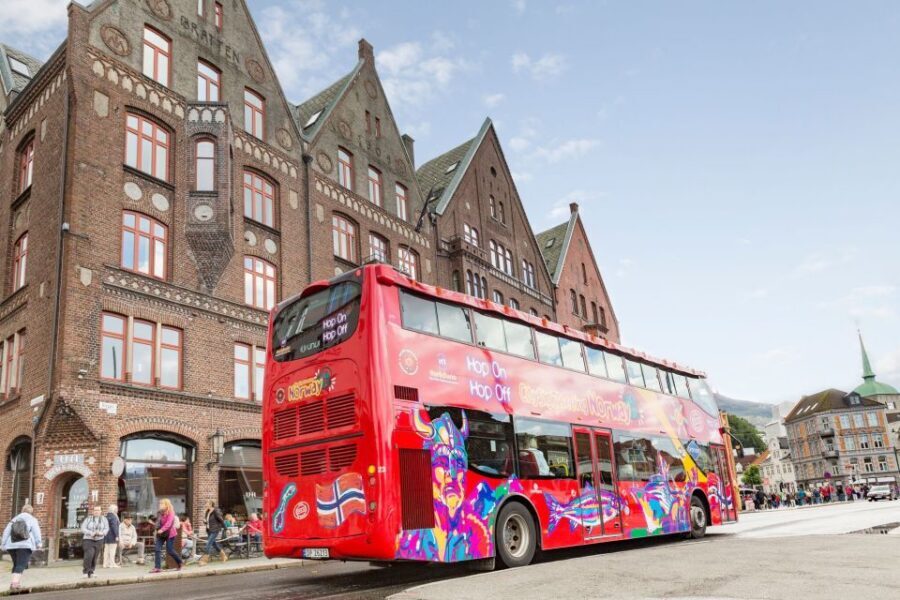
Is the Bergen City Sightseeing ticket valid for 24 or 48 hours?
Yes. The hop-on hop-off bus ticket is valid for either 24 hours or 48 hours.
Where is the first bus stop, and when do buses run?
The first tour stop is at the Skolten Cruise Terminal. The first departure is at 10:00, and the last departure is at 16:00 (from Stop 1).
How long does the full bus route take, and how often do buses depart?
The tour duration is 55 minutes, and buses depart every 30 minutes.
What languages are available on the audio guide?
The audio guide is listed as available in English, Spanish, French, German, Italian, Japanese, Russian, and Norwegian.
Can I use a mobile or printed voucher?
Yes. Both mobile and printed paper vouchers are accepted, and paper vouchers can be redeemed at any bus stop.
Does the ticket include entrance fees to attractions?
No. Entrance tickets are not included. The tour includes the bus ride, audio guide, and onboard extras, but attractions themselves typically require separate tickets.
Is there free cancellation?
Yes. Free cancellation is available up to 24 hours in advance for a full refund.
If you tell me how many hours you have in Bergen (and whether you arrive by cruise), I can suggest the best stops order to fit a tight day.