REVIEW · BERGEN
Guided tour – Viking Village, Nærøyfjord Cruise and Flåm Railway
Book on Viator →Operated by Guided Fjord Tours · Bookable on Viator
A day on rails and boats beats a checklist. This guided trip strings together Njardarheimr Viking Village plus the Flåm Railway for big Norway scenery without you driving. I especially like that you get multiple “wow” transport moments in one go: a fjord cruise, waterfall stops, and two railways. The only real drawback is timing: it’s a packed day, so you should expect short windows at each stop—great for seeing a lot, less great if you want to linger.
I also like the value angle here: all transport tickets are included, which removes the hardest part of planning the logistics around Bergen’s fjord region. And the group size is capped at 94 travelers, so it stays manageable. Still, because it’s jammed with transfers and scheduled timing, bring a flexible attitude—and plan to buy your own lunch and snacks during the day.
In This Review
- Key highlights worth planning for
- Why This Bergen Day Tour Feels Like Norway in Motion
- The Route Logic: Bergen to Gudvangen, Fjord Cruise, Then Flåm by Rail
- Tvindefossen Waterfall vs. Stalheim: Two Scenic Stops With Different Personalities
- Tvindefossen (summer stop option)
- Stalheim (winter stop option)
- Which is better?
- Njardarheimr Viking Village: A Real-Life Viking Town in About 30 Minutes
- Nærøyfjord Cruise: UNESCO Views That Actually Hold Your Attention
- Aurlandsfjord and Kjosfossen: Small Stops That Set Up the Big Ones
- Myrdal Station and the Two Train Experience: Steep Grades, Lots of Tunnels
- Bergen Railway segment (Myrdal to Voss)
- Flåm Railway (Flåmsbana) from Flåm to Myrdal
- How Much Walking Is Involved (and Where You Can Rest)
- Value Check: Is $429.48 Worth It?
- Who This Tour Suits Best (and Who Might Want a Different Plan)
- Should You Book This Bergen Tour or Not?
- FAQ
- What’s included in the Viking Village, Nærøyfjord Cruise, and Flåm Railway tour?
- Are meals and drinks included?
- How long is the tour?
- Where does the tour start and end?
- What language is the tour offered in?
- How much time do you spend at Njardarheimr Viking Village?
- Is the order of activities always the same?
- How big are the groups?
Key highlights worth planning for
- Njardarheimr in Gudvangen: Viking living-history village with a guided visit included
- UNESCO Nærøyfjord cruise: narrow fjord views that stay spectacular for the full ride time
- Flåm Railway (Flåmsbana): steep, scenic climb between Flåm and Myrdal
- Two big rail moments: Bergen Railway segment over to Voss plus the Flåm Line
- Waterfalls as punctuation: Tvindefossen and Kjosfossen break up the day with dramatic stops
- Seasonal route tweaks: you might swap Tvindefossen for Stalheim depending on when you go
Why This Bergen Day Tour Feels Like Norway in Motion
This is the kind of tour you book when you want the West Coast to hit you all at once. In about 10.5 hours, you move from Bergen into the fjord world near Gudvangen, then onto Flåm’s steep rail adventure, with waterfall and mountain scenery threaded through the day.
What makes it work is the mix of “slow” and “fast” sightseeing. The bus moves you between areas. Then the cruise slows everything down while you watch the fjord walls slide by. Finally, the train brings you close to cliffs, tunnels, and dramatic elevation changes. If you like variety, you’ll probably feel like you got more than one trip’s worth of memories.
The other reason I like this format: you don’t have to figure out separate tickets for each leg. Since transport tickets are included, your planning headache drops to zero—and your attention can stay on the views.
You can also read our reviews of more boat tours in Bergen
The Route Logic: Bergen to Gudvangen, Fjord Cruise, Then Flåm by Rail
This tour runs in one continuous loop with guided guidance from pickup to return. The exact order can change by season. Depending on the timetable, you may start with the Viking Village and cruise first, then train. Or you may start with the railway and end with Njardarheimr.
Either way, the core rhythm stays the same:
1) You travel by bus into the fjord region
2) You do the Nærøyfjord cruise from Gudvangen toward Flåm
3) You ride the Flåm Railway between Flåm and Myrdal
4) You continue by rail and bus back toward Bergen, with a couple of scenic breaks
That “all-in-one” flow matters. You spend your time moving through the region instead of losing it to ticket counters, seat hunting, and transfers that don’t quite line up.
One practical note: the bus transfer stop varies by season. In winter, it’s Voss. In summer, it’s commonly Tvindefossen. So if you’re trying to catch a specific waterfall, check the departure date and be ready for seasonal swaps.
Tvindefossen Waterfall vs. Stalheim: Two Scenic Stops With Different Personalities
You’ll see either Tvindefossen or Stalheim on the way, depending on season.
Tvindefossen (summer stop option)
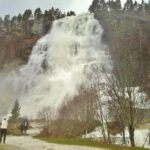
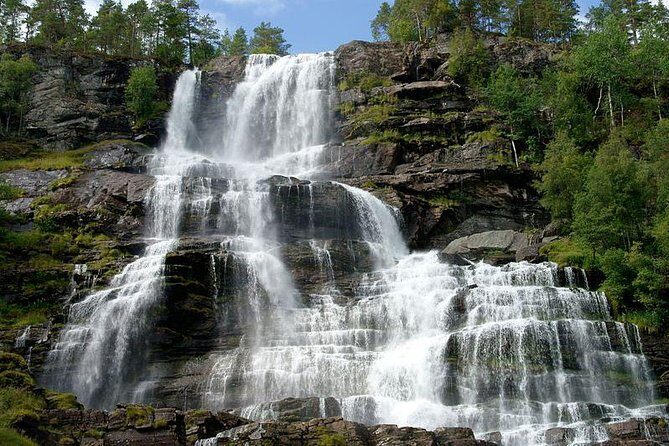
Tvindefossen sits near Voss on the road down toward Flåm. It’s a 110-meter waterfall formed by the stream Kroelvi tumbling over a receding cliff. It’s famous simply for its look—lots of visitors stop there to admire it.
But here’s a quirky fact I found memorable: in the late 1990s, the water got a reputation as a natural rejuvenation attraction, drawing huge numbers of visitors over the years, including people bringing containers. Whether you find that story believable or funny, it helps explain why this waterfall has such a following.
From a sightseeing standpoint, it’s a good “breather” stop: you’re not stuck indoors, and you get a real sense of Norway’s power-of-water geography before you move on.
Stalheim (winter stop option)
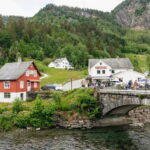
Stalheim is a small village along the highway in the Voss municipality. The area sits high in the Nærøydal valley, with the highway dropping down through tunnels toward the fjord region.
The standout is Stalheimsfossen, and the viewpoint from Stalheim hotel is well-known from paintings. If you like classic postcard angles—mountain, valley, and waterfall in one view—this is a strong substitute for Tvindefossen.
You can also read our reviews of more guided tours in Bergen
Which is better?
If you’re chasing sheer waterfall drama, Tvindefossen has the more direct “you’ll feel it from the road” energy. If you’re after an iconic scenic viewpoint tied to valley geography, Stalheim does that job.
Njardarheimr Viking Village: A Real-Life Viking Town in About 30 Minutes
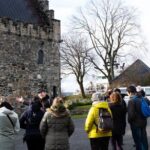
Njardarheimr (the Viking Village) is in Gudvangen, right in the fjord heart near the Nærøyfjord UNESCO area. The visit is short—about 30 minutes—but it’s structured as a guided experience with admission included.
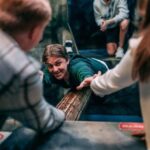
Here’s what makes this stop valuable: it’s not just Viking costumes. You’re walking through a living-history village where you can move between houses and see how daily life might have worked in the Viking Age. The point isn’t deep academic lectures; it’s a hands-on sense of what life looked like, how they lived, worked, and how their culture influenced the wider world.
I like it best because it gives context to the landscape. When you’re later riding through fjord valleys and steep terrain, it’s easier to imagine why Norse communities mattered and how travel and survival shaped their world.
One consideration: the Viking visit is timed, so don’t expect a long wander with zero schedule pressure. If you’re the kind of traveler who wants to read every sign and slow-walk every hut, this may feel brief. If you want a strong introduction without losing the day to museums, it’s a great fit.
Nærøyfjord Cruise: UNESCO Views That Actually Hold Your Attention
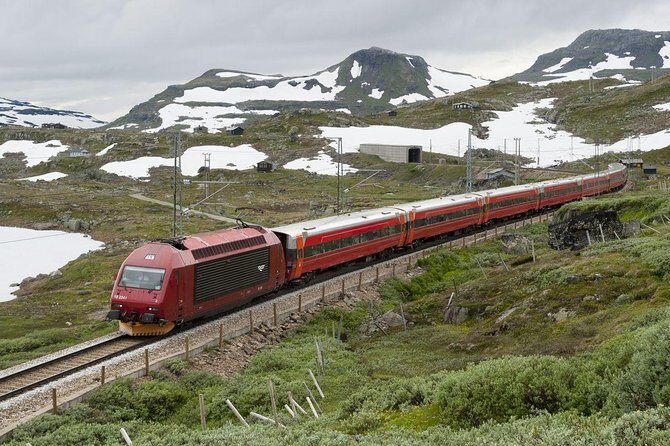
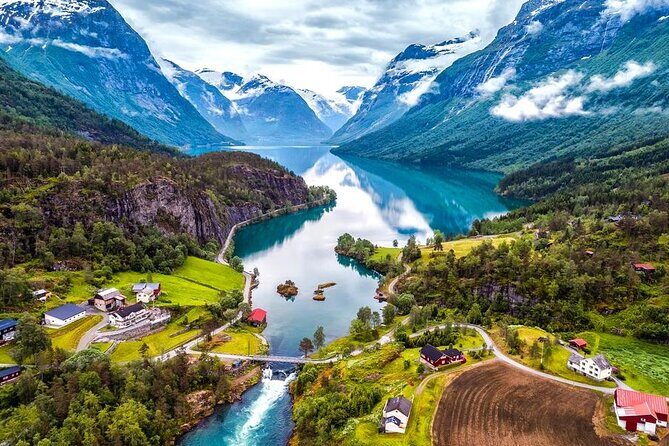
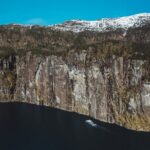
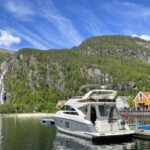
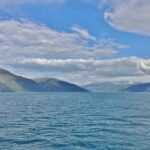
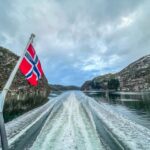
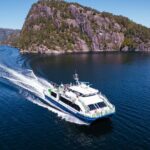
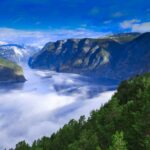
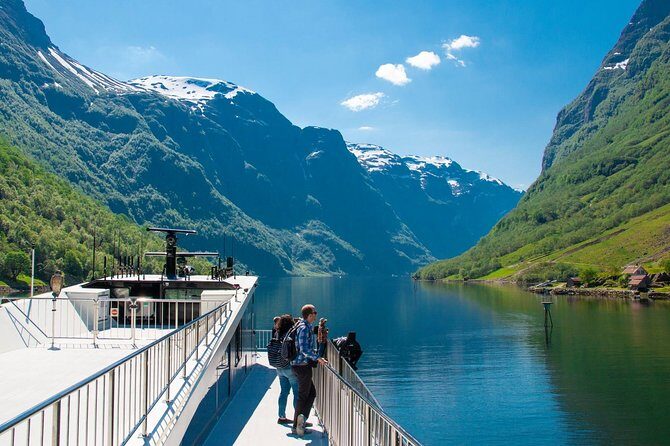
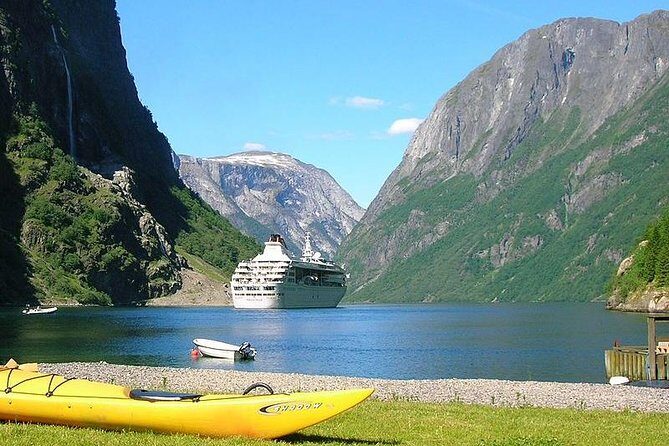
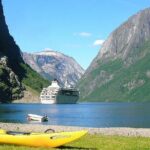
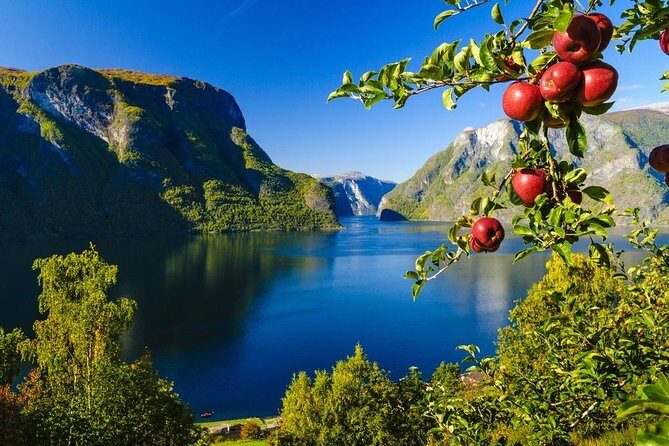
This is the tour moment most people remember. The Nærøyfjord cruise takes you along one of the world’s famous narrow fjords—18 kilometers long and only around 250 meters wide in some sections. Since 2005, it’s on UNESCO’s World Heritage List.
The fjord is not just scenery; it has a geography you can feel. The valley feeds into the fjord through the river Nærøydalselvi at the village of Gudvangen. As you cruise, steep mountain sides and tight water channels create that classic “how is this real?” effect.
From an on-the-ground practical viewpoint, the cruise length is long enough to settle in. You’re on water looking outward, not chasing viewpoints across multiple sites. If you’re tired from buses, this is where you exhale.
What also helps: you’re traveling during a part of the day when light and weather can make a huge difference. If you get clear skies, the fjord tends to look even more dramatic. If you get cloud cover, it still works—because the fjord’s narrow shape stays the star.
Aurlandsfjord and Kjosfossen: Small Stops That Set Up the Big Ones
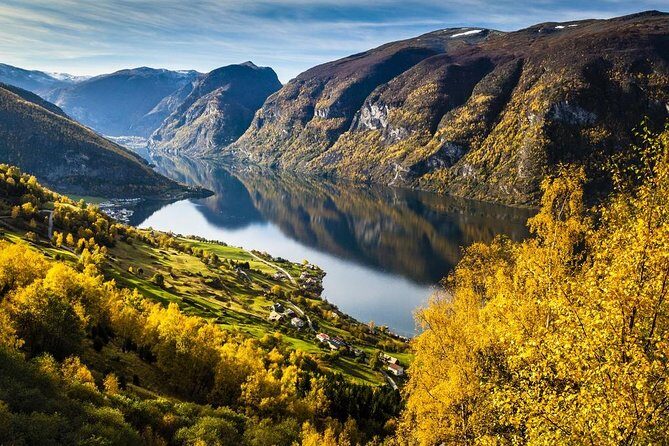
You get a stop tied to the surrounding fjord system at Aurlandsfjord. This fjord branches off from Sognefjord (Norway’s longest fjord) and is deep and narrow, reaching about 962 meters depth and staying under about 2 kilometers wide for most of its stretch. Flåm sits near the innermost part of the Aurlandsfjord area.
Why this matters for you: it’s the geography bridge between the cruise and Flåm’s train world. It helps you understand why towns like Flåm became transport hubs in a region where mountains and water define movement.
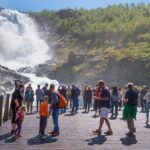
Then comes Kjosfossen waterfall, one of Norway’s most visited waterfall areas. It has a total fall of around 225 meters and connects visually to the Flåm Line railway area through a small power station that’s used for electricity.
This is a quick 10-minute stop. So think of it as a camera-and-breath pause. It’s not the “main attraction” in the way the fjord cruise is. But it’s a strong highlight because you can actually see how waterfall and rail infrastructure coexist here.
Myrdal Station and the Two Train Experience: Steep Grades, Lots of Tunnels
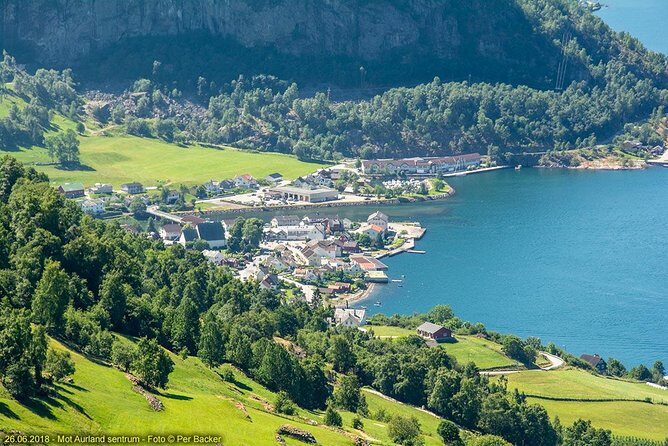
One of the coolest parts of this tour is that you don’t ride just one train—you ride two.
Bergen Railway segment (Myrdal to Voss)
After the cruise and the Flåm area, you’ll reach Myrdal Station, where the day continues by train toward Voss via the Bergen Railway. This rail line is known as a scenic standard gauge route between Bergen and Oslo, and it crosses the Hardangervidda plateau at about 1,237 meters above sea level.
A detail I like for context: the line began as the narrow Voss gauge line back in 1883, and the route later became part of the modern Bergen line after conversion and electrification.
Even if you’re not a rail nerd, you can feel what these lines were built to do: move people across a country that doesn’t make things easy on purpose.
Flåm Railway (Flåmsbana) from Flåm to Myrdal
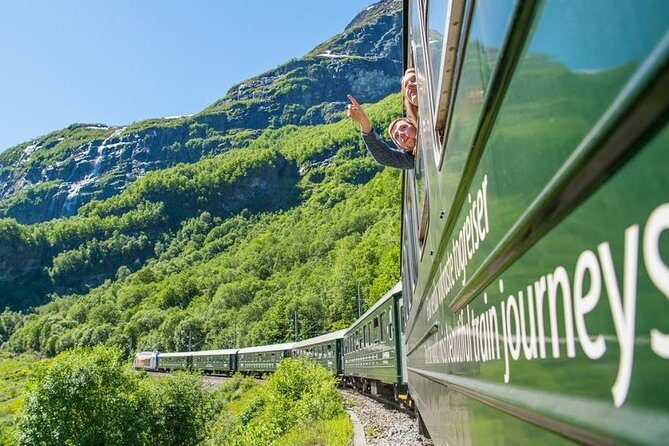
Then comes the headline: Flåm Railway, also called Flåmsbana. It’s about 20.2 kilometers long, with a big elevation difference of 866 meters between Flåm and Myrdal. It has ten stations, twenty tunnels, and one bridge, and it runs on a steep gradient of up to 5.5%.
Here’s the value of that steepness: you don’t just “see” the region—you experience movement through it. The tunnels and curves make the journey feel like part of the sightseeing, not a boring transfer.
If you want the best chance at views, be ready for crowds. One complaint tied to the experience is that the train can feel tight, with some passengers needing to adjust where they stand or sit to see the best angles. So on busy days, treat seats like treasure and aim to settle in early.
How Much Walking Is Involved (and Where You Can Rest)
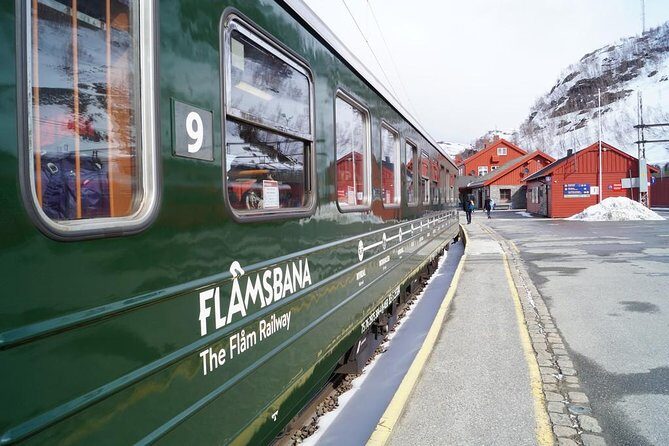
This is mostly a sit-and-watch day. You’ll do some walking at Njardarheimr Viking Village as you move between houses, but it’s not an all-day hiking plan. Most of your time is spent on bus, boat, and trains.
That said, it’s still a full day. Your main challenge won’t be miles—it’ll be staying comfortable while the schedule keeps moving. If you bruise easily from long days, plan a little extra patience for transfer time and short stop windows.
Also, since food and drinks aren’t included, you should budget for buying meals during the day. The tour information notes you can find options in Gudvangen, on the fjord cruise, in Flåm, and at Myrdal. Practically, this means you can usually eat without going off on your own.
My advice: don’t assume you’ll have plenty of time for a long sit-down lunch. Grab what you can during the built-in stop moments.
Value Check: Is $429.48 Worth It?
At $429.48 per person, this isn’t a cheap “hop on the bus” sightseeing add-on. The big question is whether the included transport saves enough time and hassle to justify the cost.
Here’s where it usually pencils out:
- You get multiple paid rides bundled in: bus transfers, a premium fjord cruise, the Flåm Railway, and a Bergen Railway segment
- You don’t plan separate tickets and connections across fjord towns
- Your day is guided, with explanations that help you connect what you’re seeing—Vikings in Njardarheimr, fjord geography on the cruise, and why these trains exist in the first place
So even if you personally care less about one segment, you’ll likely still appreciate the total package. The strongest “value” ingredient here is not just the scenery—it’s the scheduling efficiency. You get a lot of western Norway in one pass.
The one thing that can affect your sense of value is your preference for linger time. If you want half a day at one place, this tour won’t match that style. But if you want a well-run sampler day with major highlights, it’s priced like a shortcut.
Who This Tour Suits Best (and Who Might Want a Different Plan)
This tour fits best if:
- You have only a day from Bergen and want the fjord region highlights without car planning
- You like rail and water sightseeing, and you enjoy seeing many places even if each is short
- You’d rather pay for a planned route than troubleshoot transfers and ticket timing
It might be less ideal if:
- You hate tight schedules and prefer slow, museum-style pacing
- You’re very sensitive to crowded vehicles or limited seating on trains
- You want a long, uninterrupted Viking Village experience rather than a timed introduction
One more note: the experience is capped at a maximum of 94 travelers, and it includes an English-speaking guide year-round. In July–September, there’s also a Spanish-speaking guide, which can make the day easier if you’re traveling with friends or family who prefer Spanish support.
Should You Book This Bergen Tour or Not?
If you’re wondering whether to book, here’s the simplest way I’d decide: book it if you want major highlights without logistics stress. Njardarheimr gives you culture, the Nærøyfjord cruise delivers the classic fjord magic, and the Flåm Railway gives you that steep, scenic train experience you can’t really fake with photos alone.
Skip it if your travel style is “one place, deep time.” This is built for moving. It’s a full, packed day, and that’s the trade: you get a lot, but you don’t linger long.
If you do book, plan to eat on your schedule stops, keep your camera ready for waterfall windows, and treat the short visits as part of the thrill.
FAQ
What’s included in the Viking Village, Nærøyfjord Cruise, and Flåm Railway tour?
All transport tickets are included, including the bus Bergen to Gudvangen, guided tour of Njardarheimr Viking Village, premium Nærøyfjord cruise (Gudvangen to Flåm), Flåm Railway (Flåm to Myrdal), Bergen Railway (Myrdal to Voss), and the bus Voss to Bergen. An English-speaking guide is included (and a Spanish-speaking guide in July–September).
Are meals and drinks included?
No. Food and drinks are available for purchase throughout the day, including options in Gudvangen, onboard the fjord cruise, in Flåm, and at Myrdal.
How long is the tour?
It runs about 10 hours 30 minutes (approx.).
Where does the tour start and end?
It starts at Strandkaien 16, 5013 Bergen, Norway and ends back at the meeting point.
What language is the tour offered in?
The tour is offered in English. For July to September, there is also a Spanish-speaking guide.
How much time do you spend at Njardarheimr Viking Village?
The guided stop at Njardarheimr is about 30 minutes, with an admission ticket included.
Is the order of activities always the same?
No. Depending on the season and timetable, the tour may operate in either direction—either starting with the Flåm Railway and ending with the Viking Village, or starting with the Viking Village and ending with the Flåm Railway.
How big are the groups?
The tour has a maximum of 94 travelers.