REVIEW · OSLO
Oslo City Private Walking Tour
Book on Viator →Operated by OURWAY Tours - Oslo · Bookable on Viator
Oslo, mapped in a couple of hours. You’ll start at the Nobel Peace Center, then walk a tight line of major sights in central Oslo with an easy meetup and a private group format that keeps the pace personal. You’ll hear how the city connects Edward Munch, Henrik Ibsen, and other Oslo notables to today’s landmarks.
I like that the tour is designed around real places you’ll recognize fast—from Karl Johans Gate to Akershus Fortress—so you get orientation right away. And I also like that many stops are admission-free as part of the experience, so you’re not constantly paying entry fees just to keep moving.
One consideration: you’ll be outdoors through a lot of the city center, so plan for traffic noise and quick, efficient stops rather than lingering for long photo breaks.
In This Review
- Key reasons this Oslo walking tour works
- The value: why 2 hours is the sweet spot in Oslo
- Getting your bearings: starting at the Nobel Peace Center
- Oslo City Hall: where the Nobel ceremony lands
- Nationaltheatret: theater as a long Oslo tradition
- The Royal Palace area: seeing monarchy without the performance
- Karl Johans Gate: the main spine for shopping and strolling
- Stortinget (the Parliament): politics on the same street as your shopping
- Christian IV’s Glove and Kvadraturen: the city plan you can actually see
- Akershus Castle and Fortress: the water-view payoff
- Bankplassen and the Ibsen–Munch thread
- Oslo Stock Exchange: old money in a modern city
- Harbour Promenade and the Opera House view finish
- Guides make the difference: what you can expect in real life
- Who this tour is best for (and who should skip it)
- Practical tips so your 2 hours feel effortless
- Should you book the Oslo City Private Walking Tour?
- FAQ
- How long is the Oslo City Private Walking Tour?
- Where does the tour start and end?
- Is this tour private?
- What language is the tour offered in?
- Do I need to pay for admission at the stops?
- What’s included in the price?
- Does it run in bad weather?
- Is cancellation possible if plans change?
- Are there any notes about location and getting there?
Key reasons this Oslo walking tour works
- Private-only route: your group sets the tone, and the guide can adjust on the fly.
- Nobel Peace Center to Opera House arc: the story runs forward across the city, finishing with the best skyline payoff.
- Major sights in short segments: you’ll see a lot without turning the walk into a half-day job.
- Free entries at multiple stops: many listed attractions are included without extra ticket pressure.
- English guide plus mobile ticket: simple to join, with fewer hassle points in your day.
- All-weather planning: the walk keeps going in rain or cold, with the guide likely choosing indoor moments when it helps.
The value: why 2 hours is the sweet spot in Oslo
Oslo can feel spread out on a map, but downtown is dense enough that a good walking tour can give you real bearings fast. This one is built for that. In about two hours, you cover the classic core—cultural institutions, government buildings, a royal residence area, shopping streets, and the water—without dragging on into the kind of timetable that makes everyone grumpy.
At $239.46 per person, it’s not a budget stroll. So what makes it worth it? Two things:
First, you’re paying for a professional guide who can connect what you see to what Oslo is like today. In real-life terms, that means you spend less time staring at façades wondering what matters, and more time understanding why those places sit where they do.
Second, several major stops are listed with free admission tickets. That matters because Oslo can add up quickly: museums, viewpoints, and indoor attractions often come with their own fees. Here, the tour is structured so the walk stays “pay-as-you-go simple,” letting your money go toward guidance instead of ticket juggling.
One more value angle: this tour is private, and that changes how the time feels. Even if you only have a small group, you’re not competing with other people for the guide’s attention. You also get more flexibility to ask questions—especially useful if you care about art, theater, politics, or architecture.
You can also read our reviews of more walking tours in Oslo


Getting your bearings: starting at the Nobel Peace Center
Meet at the Nobel Peace Center at Brynjulf Bulls plass 1, 0250 Oslo. It’s a smart starting point for one big reason: it anchors the whole walk in something Oslo takes seriously—the Nobel Peace Prize.
The center is in a former train station, and that detail sets the mood. It’s a place where history isn’t just behind a rope; it’s built into the setting. The Nobel Peace Prize is awarded every year on December 10, and the center’s focus makes that annual rhythm feel connected to the city, not like a distant headline.
What you’ll likely do here is quick but meaningful: a guide-led orientation so you understand the Nobel theme before you move into the government and official buildings that come next. If you’ve ever toured a city where you jump from one monument to another, this start is designed to avoid that.
Also, the meetup is described as easy, and the tour begins near public transportation. That’s practical if you’re arriving by tram/metro/bus rather than with a private driver.
Oslo City Hall: where the Nobel ceremony lands
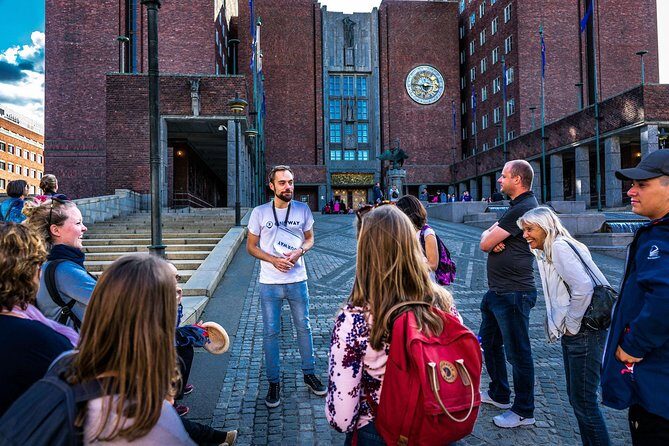
From the Nobel Center, you head to Oslo City Hall, the local government hub and host of the Nobel Peace Prize award ceremony. This stop is worth it because it ties a big-world event to a very local Oslo institution.
You’ll also notice the artistic side of the building—works with motifs from Norwegian history, culture, and working life. That detail helps you read the architecture better. Instead of seeing a bureaucratic structure, you start seeing it as a “story wall” for how Norway frames identity: what people did, what people valued, and how work and culture shaped the nation.
Time here is short (about 10 minutes), so treat it like an orientation stop. If you want more depth later, this is a great place to learn what to look for when you return on your own.
Nationaltheatret: theater as a long Oslo tradition
Next up is Nationaltheatret. This is one of the country’s main stages for Norwegian classic and innovative productions, and the key detail is simple: it has been around for over 100 years.
Even if you don’t plan to catch a show, the building and the idea behind it are useful. Oslo isn’t only museums and waterfront views. It’s also a city that has treated performing arts as part of civic life for a long time.
This stop is brief, and that’s fine. The goal isn’t to schedule your afternoon around theater. It’s to give you a mental bookmark: when you’re back walking on your own, you’ll spot theater energy in other places too.
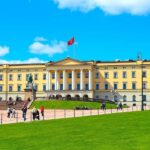
The Royal Palace area: seeing monarchy without the performance
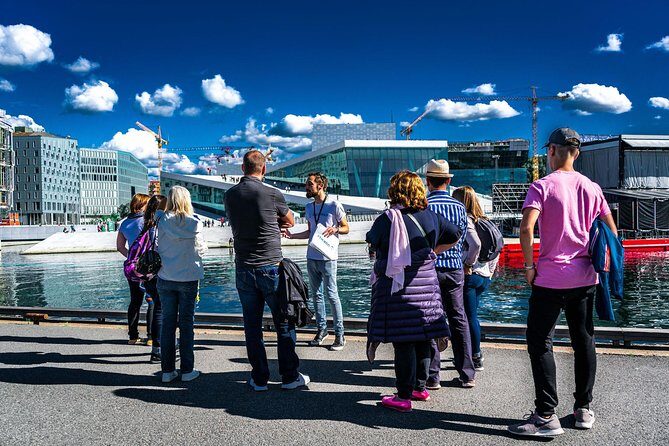
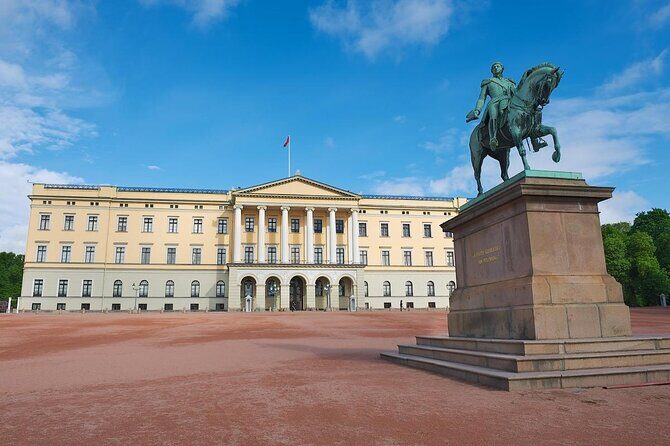
The tour continues to the Royal Palace, the official residence of the current Norwegian monarch. You’ll also be near where many members of the Royal Court work.
What you should appreciate here is not just the palace itself, but how Oslo arranges power and visibility. Norway’s monarchy is public-facing enough that it’s part of the downtown walk, but it’s not staged like a theme park attraction. The guide framing helps you see what “official residence” really means in daily city terms.
This stop is around 10 minutes, and again, it’s not about waiting around for ceremonies. It’s about understanding what role this area plays.
You can also read our reviews of more city tours in Oslo





Karl Johans Gate: the main spine for shopping and strolling
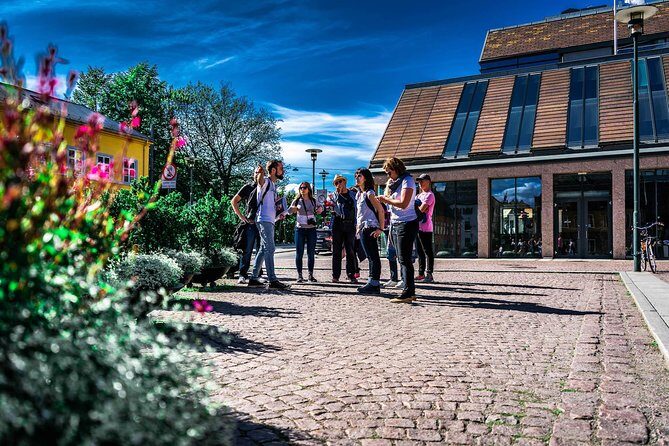
Now for the street where most first-timers feel Oslo click into place: Karl Johans Gate. It’s the city’s main pedestrian street—about 1,020 meters long—lined with big-name architecture and shopping.
It’s also where the walk naturally becomes more “you can keep going after the tour” rather than “guided museum stop.” If you’re the type who likes to wander without a strict plan, Karl Johans Gate is an easy place to continue.
The practical note: this is a pedestrian corridor, but it still sits in the city’s traffic reality. Expect noise and movement. That can be a drawback if you’re hoping for quiet “romantic Copenhagen vibes.” On the other hand, it’s also what makes Oslo feel alive in a normal way—people walking, running errands, taking coffee breaks.
Stortinget (the Parliament): politics on the same street as your shopping
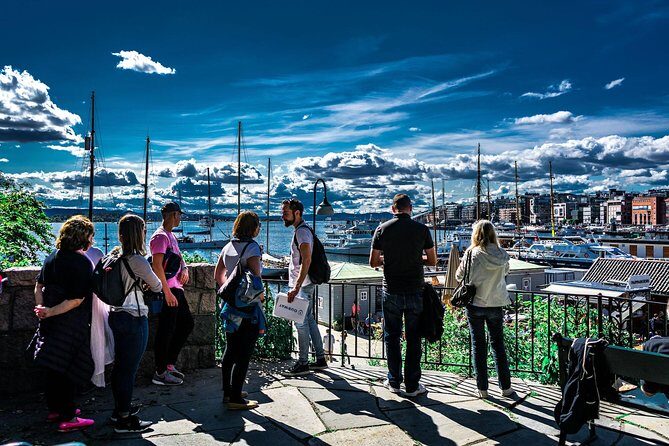
Karl Johans Gate also brings you to the Norwegian Parliament (Stortinget). It’s located right along this main pedestrian street, so you get a rare street-level connection: government power next to everyday strolling.
The tour gives this stop about 5 minutes, which means you’ll get the big picture rather than a tour of the building interior. But even for a quick stop, the placement teaches something. In Oslo, the political center isn’t hidden away. It sits where daily life happens.
Christian IV’s Glove and Kvadraturen: the city plan you can actually see
A fun, very Oslo detail comes near Christian IV’s Glove. This refers to a part of the area called Kvadraturen (“The Quadrature”), named after the Renaissance-style rectangular street pattern laid out under Christian IV.
Why does this matter? Because it changes how you read the city. A grid isn’t just a design trick—it affects how neighborhoods connect, how you navigate, and even how long blocks feel when you’re walking with cold hands and a camera.
This stop is short (about 5 minutes), but it’s the kind of comment that makes your next few hours of walking easier. Once you notice the grid logic, streets start making more sense.
Akershus Castle and Fortress: the water-view payoff
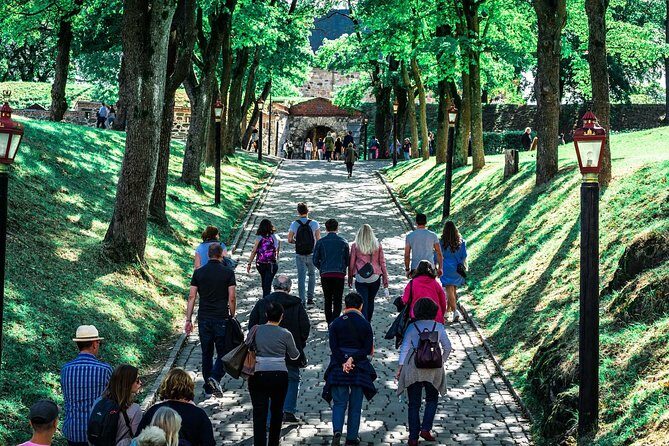
Then the walk turns toward one of Oslo’s defining physical features: the water. Akershus Castle and Fortress sits along the waterfront and overlooks the Oslo Fjord.
This is a “stop and look” moment. Even in bad weather, the fortress-to-fjord relationship is hard to ignore. You’ll likely appreciate the mix of medieval feel with modern city scale around it.
Time here is about 15 minutes, which is longer than some other stops. That’s intentional. The guide needs room for both explanation and for you to absorb the setting. If you only remember one photo frame from the walk, this is usually the one that works best.
Bankplassen and the Ibsen–Munch thread
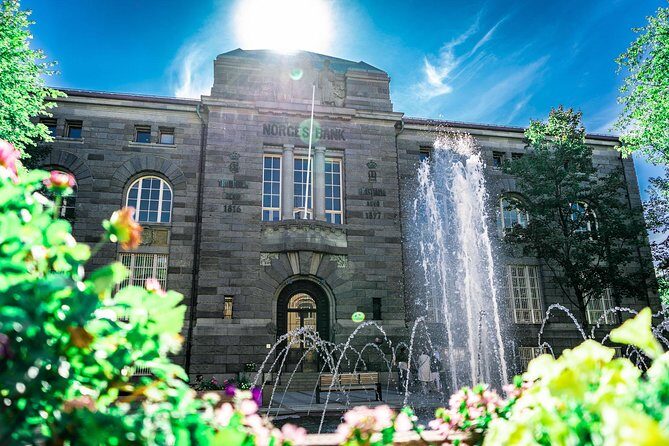
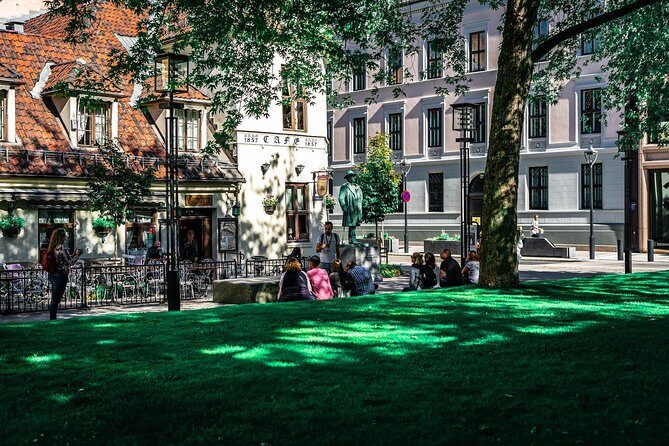
From the fortress area, you move to Bankplassen (The Bank Square). Historically, it indicates where the Bank of Norway used to be located, which gives the square a sense of financial gravity.
But what makes this stop interesting is the Engebret Café, noted here for attracting famous Norwegians such as Ibsen and Munch. That’s the kind of detail that turns a square from “just a place” into a clue about cultural life. Suddenly you’re thinking about Oslo not only as government and art institutions, but as a city where artists and thinkers met in everyday spaces.
This stop is around 10 minutes. Again, it’s not a long sit-down, but it’s a smart way to connect major names to the actual geography of Oslo.
Oslo Stock Exchange: old money in a modern city
Next: the Oslo Stock Exchange. The tour notes that approval and funding took years, and that the exchange building is now about 180 years old.
This is a good example of why a guided walk can beat a DIY guidebook. Without context, you might see a building and move on. With context, you start realizing the Oslo skyline has layers—financial history right alongside cultural landmarks.
Time here is short (about 5 minutes). Treat it as a “pause and notice” stop, then keep moving.
Harbour Promenade and the Opera House view finish
Finally, you end on the Oslo Harbour Promenade, with the Oslo Opera House as the headline view. The tour description notes outdoor performances on select dates annually, but the big point for most people is what you get in walking terms: a strong finish and an iconic Oslo landmark you’ll recognize immediately.
The tour ends at Havnepromenade, Langkaia 1, 0150 Oslo, with the idea that you’ll leave with a visual anchor for the rest of your trip. If you’re planning dinner or a bit more strolling afterward, this location makes sense.
This is also a good reminder of how Norway builds city life around the waterfront. You’re not only sightseeing downtown—you’re stepping back into the Oslo waterfront rhythm.
Guides make the difference: what you can expect in real life
One reason this tour earns such high satisfaction is the guide quality. Names you may encounter include Inger, Diana, Anja, and Tine (sometimes heard as TUNA). Across those different guides, the pattern is consistent:
- They cover major highlights in the limited time available.
- They explain the “why” behind sights, not just the dates.
- They can adjust on the spot—especially when weather turns unfriendly.
One helpful real-world detail: in cold or rainy conditions, a good guide doesn’t just keep marching outside. They look for indoor moments when possible so you don’t freeze your questions out of your mouth.
That matters because this tour operates in all weather conditions, and downtown noise is unavoidable. If you arrive prepared to walk through weather (layers, rain shell, comfortable shoes), the guide can keep things smooth.
Who this tour is best for (and who should skip it)
This is a strong choice if you want:
- A first-time Oslo orientation built around major sights
- A private setting where your questions matter
- A short, focused walk that ends with a view you’ll remember
It’s also ideal if your interests include:
- The intersection of culture and place (Munch, Ibsen, theater traditions)
- Architecture and city planning (Kvadraturen grid logic)
- Norway’s civic and political centers (City Hall, Stortinget)
You might consider skipping or choosing a different format if:
- You hate street-level sightseeing and prefer one big museum day instead
- You need long stops for photos and indoor time
- You’re sensitive to noise and fast pacing in busy city center areas
Practical tips so your 2 hours feel effortless
- Wear shoes you can walk in for two hours without thinking about it. Oslo sidewalks look charming, but you’ll still cover real ground.
- Dress for shifting weather. The tour runs in all weather, so layers beat one “hero outfit.”
- Bring your curiosity. The stops connect art, government, and city planning. If you like asking why things are where they are, you’ll get more out of the guide time.
- If you’re short on time in Oslo, this is a high-return way to see a lot without committing to a full-day plan.
Should you book the Oslo City Private Walking Tour?
I’d book this if you want a fast, guided “map of Oslo” that ties together big landmarks with real context—Nobel stories, royal presence, the city’s cultural names, and that strong waterfront finish by the Opera House. The pricing is premium, but you’re paying for private guidance plus free admission for multiple major stops, which helps justify the cost.
If you’re the kind of traveler who enjoys wandering downtown after a tour, this one is especially convenient because you finish in an area where your next move is easy. And if weather turns, a good guide approach can keep the experience from feeling like a nonstop cold-weather march.
FAQ
How long is the Oslo City Private Walking Tour?
It lasts about 2 hours.
Where does the tour start and end?
It starts at the Nobel Peace Center (Brynjulf Bulls plass 1, 0250 Oslo) and ends on Havnepromenade (Langkaia 1, 0150 Oslo), with a view of the Oslo Opera House.
Is this tour private?
Yes. It’s a private tour/activity, and only your group participates.
What language is the tour offered in?
The tour is offered in English.
Do I need to pay for admission at the stops?
Many of the listed stops include free admission tickets as part of the experience.
What’s included in the price?
A professional guide is included.
Does it run in bad weather?
Yes. It operates in all weather conditions, so dress comfortably and appropriately.
Is cancellation possible if plans change?
Free cancellation is available, with a full refund if you cancel at least 24 hours in advance of the experience start time.
Are there any notes about location and getting there?
The meeting point is near public transportation, and the majority of the tour is in the city center where traffic noise may be unavoidable. Service animals are allowed, and most travelers can participate.