REVIEW · OSLO
Hipstoric Grünerløkka Private Walking Tour
Book on Viator →Operated by OURWAY Tours - Oslo · Bookable on Viator
Oslo beyond the postcard starts here. This private walking tour threads politics, culture, and street art through neighborhoods most people skip, guided by locals with names like Inger and Björn.
I especially like the way the route teaches you to read the city at street level, from political squares to small cultural venues. You also get a tight hit of Grünerløkka art, including areas around Blå and Brenneriveien.
The only downside is the price: $237.12 per person is a splurge if you’re mostly shopping for big “must-see” landmarks.
In This Review
- Key highlights you’ll feel on this walk
- What this Hipstoric Grünerløkka tour really is
- Before you go: pace, timing, and what to wear
- Youngstorget and Torggata: political Oslo with street-level meaning
- Kulturkirken Jakob: a church used for theatre, concerts, and dance
- Akerselva River and the walk into Grünerløkka
- Olaf Ryes plass and Parkteatret: late-1800s buildings and an art connection
- Blå and Brenneriveien: street art meets music-town energy
- Damstredet: preserved wooden houses you can actually live around
- Our Saviour’s Memorial Cemetery and Old Aker Church: famous Norwegians and medieval survival
- Telthusbakken and Munch motifs: art you can point at
- Mathallen Oslo at Vulkan: where the tour ends (and food planning begins)
- Price and value: is $237.12 per person a fair trade?
- Who should book (and who might skip it)
- Should you book the Hipstoric Grünerløkka Private Walking Tour?
- FAQ
- How long is the Hipstoric Grünerløkka Private Walking Tour?
- Where does the tour start and end?
- What language is the tour offered in?
- What’s included with the tour price?
- Is this a private tour?
- Is the tour suitable for people who can handle walking?
- Does the tour run in bad weather?
- Is Mathallen open every day?
- Can I cancel for a full refund?
Key highlights you’ll feel on this walk
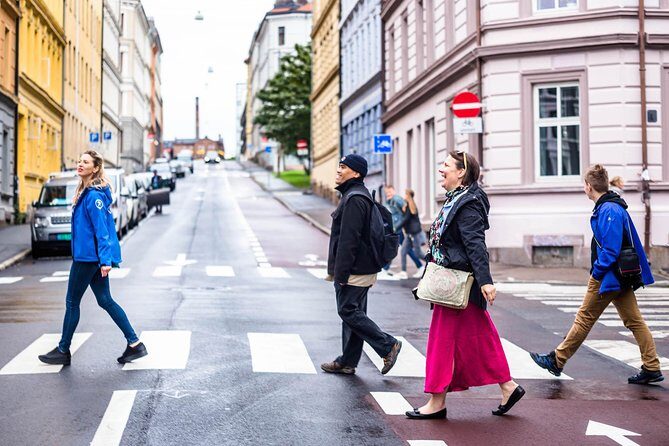
- Youngstorget politics and Torggata street trivia: you learn how power, protest, and even Monopoly show up in daily life
- Kulturkirken Jakob: a church used long-term for theatre, concerts, and dance
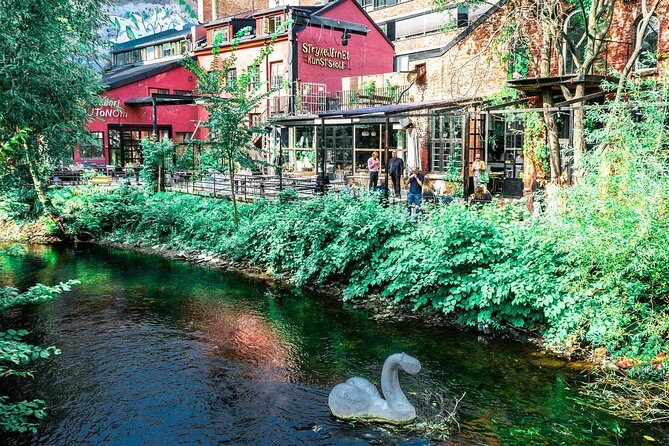
- Akerselva as Oslo’s green spine: you walk the river corridor that locals use like a real outdoors space
- Grünerløkka’s working-class to gentrification story: you see how the neighborhood shifted in late 1900s
- Street art stops you can photograph: Blå’s area and Brenneriveien’s transformed industrial buildings
- Munch-linked streets plus Old Aker: art motifs you can literally stand on, plus Oslo’s oldest surviving church
What this Hipstoric Grünerløkka tour really is
This is a private, English-language walking tour in Oslo that’s designed to help you understand the city by walking through it, not by ticking off landmarks. It runs about 3 hours and starts at Youngstorget, then finishes at Mathallen Oslo (Vulkan) in Grünerløkka.
What makes it work is the mix. You’re not just doing “pretty streets.” You’re moving through political spaces, culture-focused buildings, river life, and art districts. Even the cemetery and the medieval church feel like part of the same story: Oslo’s big names and big changes happened in very specific places, and you’ll walk to many of them instead of reading about them.
If you love guides who answer your questions and connect dots, you’ll likely enjoy this. Inger and Björn both show up in the feedback as guides who made the district’s culture and history feel personal and clear.
You can also read our reviews of more walking tours in Oslo
Before you go: pace, timing, and what to wear
The tour is about 13 stops, with most lasting around 10 minutes and one slightly longer stop at the cemetery. That means you’ll be walking steadily, with frequent short “teacher moments” at each place.
Practical tips:
- Wear comfortable shoes. Even “easy” city walking adds up over a few hours.
- Bring a camera. Street art, wooden houses, and church exteriors are all part of the visual payoff.
- Dress for all weather. The tour operates in rain and wind, so you’ll want layers you can move in.
The route is described for people with moderate physical fitness. If you’re dealing with mobility limits, I’d plan extra buffer time and consider whether 3 hours of walking is realistic for you.
Youngstorget and Torggata: political Oslo with street-level meaning

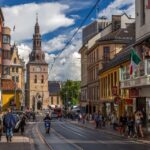
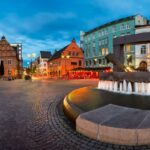
You start at Youngstorget, a square tied to Norwegian political life. Because it’s near the government quarter, it’s connected to speeches and rallies—think major dates like March 8 and Pride-style events. This stop helps you notice something important: politics in Oslo isn’t only in formal buildings. It shows up in public space, in the places people actually gather.
Then you move to Torggata, literally Square Street. It’s the kind of detail that turns a map into a story: the street is represented in the Norwegian edition of Monopoly. It’s a fun trivia stop, but it also hints at how local culture becomes playful and widely recognized, even for visitors who don’t speak Norwegian.
If you like tours that make you look at street names and squares as part of daily life, these two stops set the tone.
Kulturkirken Jakob: a church used for theatre, concerts, and dance
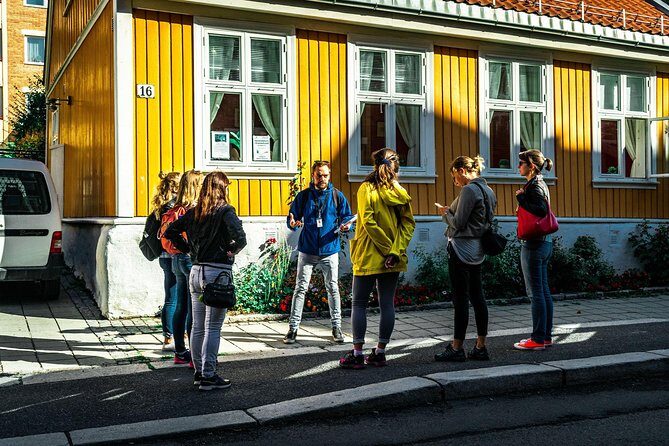
Next comes Kulturkirken Jakob, often described as a culture church. The key idea is simple: the space is rented long-term by Kirkelig Kulturverksted, and it’s one of the few church venues in Norway where you can watch theatre, attend concerts, dance, and join other cultural expressions.
Why this matters on a walking tour? Because it reframes what a church can be. Instead of thinking of churches only as architecture or religion, you start seeing them as community infrastructure—places that host arts and people’s nights out.
You’ll likely appreciate this stop if you’re the type who enjoys understanding how institutions adapt to real modern life.
Akerselva River and the walk into Grünerløkka
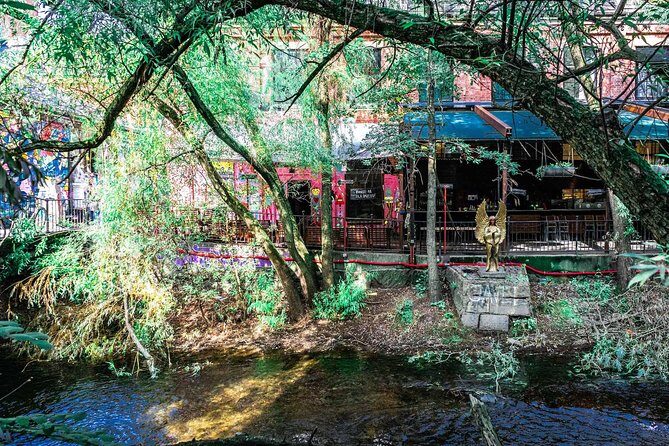
From the culture stop you shift into nature-in-the-city mode at Akerselva River. The river is known as Oslo’s green lung, with parks and nature trails along its sides. This is where the walk changes pace in your head: you move from civic squares and venues into an outdoors corridor locals use all year.
After crossing Akerselva and the Fairytale Bridge, you enter Grünerløkka. This is where the tour earns its Hipstoric label in a grounded way. Grünerløkka is traditionally working-class, but in the late 1900s it went through gentrification—so you can see layers. Old industrial and housing patterns don’t vanish; they get reused, repurposed, and reinterpreted.
This stop is a good checkpoint for your own mental map. By now, you’re not just watching things—you’re noticing patterns: power, culture, daily life, and the city’s constant reshaping.
You can also read our reviews of more private tours in Oslo



Olaf Ryes plass and Parkteatret: late-1800s buildings and an art connection
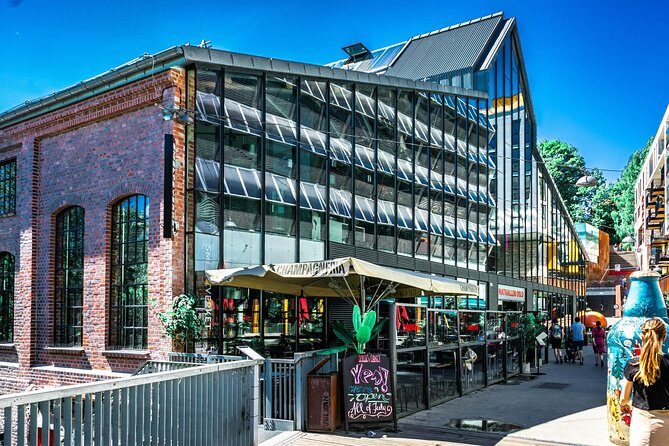
At Olaf Ryes plass, you’re surrounded by three- and four-story buildings, mostly built in the late 1800s. One of the most interesting threads here is the mention of a young Edvard Munch as an inhabitant of these buildings.
Alongside the park sits Parkteatret, one of Oslo’s famous concert venues today. So you get a neat pairing: older streets you can stand in, and a performance venue still active now.
If you like tours that connect art to exact street locations, this is a strong moment. The guide commentary makes it feel less like a museum fact and more like you’re walking through the same city that shaped the artists.
Blå and Brenneriveien: street art meets music-town energy
Now the tour leans fully into the artsy side of Oslo.
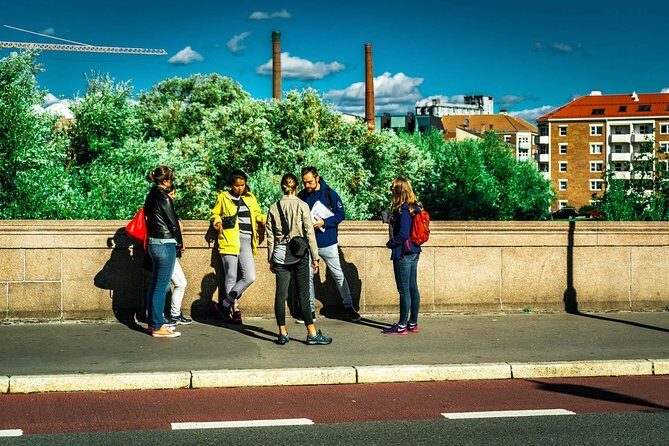
You stop by Blå, an alternative music venue, and the surrounding area is highlighted as a street art hotspot. Don’t forget your camera here. The point isn’t just to take photos—it’s to understand how street art sits in everyday city flow, in the same area as live music culture.
Then you reach Brenneriveien, where old, unused industrial buildings have been transformed into a street art paradise by local art students. That detail is useful because it tells you street art here isn’t only random tagging. It’s tied to a learning community and the repurposing of industrial spaces.
This section is ideal if you want your Oslo visit to feel current and human, not only heritage-heavy.
Damstredet: preserved wooden houses you can actually live around
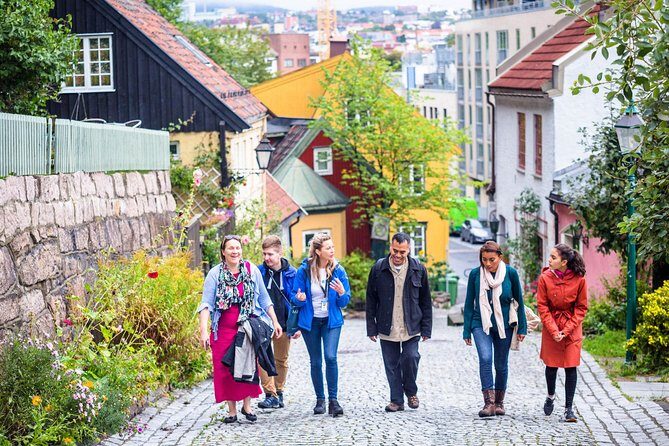
At Damstredet, you’ll see wooden houses that are well-preserved and inhabited. The hillside layout gives you charming angles and great photo opportunities, but the real value is the “people live here” aspect. It’s easy to romanticize old buildings; it’s more meaningful when they remain part of daily life.
If you’re the kind of traveler who likes architecture, this stop gives you scale and texture. If you’re not, you’ll still enjoy it because it looks like a place you could wander after the tour ends.
Our Saviour’s Memorial Cemetery and Old Aker Church: famous Norwegians and medieval survival
Two stops hit a different tone: Our Saviour’s Memorial Cemetery and Old Aker Church.
At the cemetery, the emphasis is on the resting places of famous Norwegians, including playwright Henrik Ibsen and painter Edvard Munch. It’s a reminder that the story of Oslo isn’t only written in monuments downtown. It also lives in places of remembrance.
Then you visit Old Aker Church (Gamle Aker Kirke), described as Oslo’s oldest remaining building and the only remaining church from the Middle Ages. This is one of those stops that can quietly change how you see a city. You’re standing in something that survived centuries while so much around it evolved.
If you want a balanced day—art streets now, plus deep time right in the middle—this is the section that delivers it.
Telthusbakken and Munch motifs: art you can point at
Next is Telthusbakken, famous for colourful wooden houses. The tour specifically notes that Telthusbakken is the motif for one of Edvard Munch’s paintings. Today, around 50 people live on one side of the street, while on the other side you have allotment gardens.
That mix matters: it turns a painting setting into a real living neighborhood. You’re not only learning an art fact; you’re seeing how the scene still functions as housing and garden space.
If you enjoy linking art to physical location, you’ll likely find this stop one of the most satisfying moments on the walk.
Mathallen Oslo at Vulkan: where the tour ends (and food planning begins)
Your tour finishes at Mathallen Oslo (Vulkan 5), a development project area called Vulkan tied to old industry along Akerselva. Mathallen is one of Oslo’s food halls, with options that cover different tastes.
Two practical notes:
- The tour ends there so you can keep exploring Grünerløkka right away.
- Mathallen is closed on Mondays, so plan your day accordingly if your schedule lands on that weekday.
This ending works because it gives you an easy “what now?” moment. You finish with art and history in your head, then you shift to something concrete: a place to grab a late lunch or quick snack and keep walking on your own.
Price and value: is $237.12 per person a fair trade?
At $237.12 per person, this isn’t the cheapest way to see Oslo. So the question isn’t just whether it’s worth it—it’s whether it matches your style of travel.
Here’s what you’re buying:
- A private setup, meaning only your group is participating.
- A professional guide who can interpret what you’re seeing as you walk.
- A route that mixes political context, culture venues, river life, and street art—things that can be hard to piece together solo.
If you’re the type who gets more out of context than checklists, you may feel this price makes sense. You’ll also get value from the fact that many stops are free to enter (so you’re paying for guidance and time, not ticket fees).
If you mainly want classic sights with minimal walking and minimal explanation, you could find less expensive options. But if you want Oslo through lived neighborhoods and art-driven streets, this private format can feel like a smart splurge.
Who should book (and who might skip it)
This tour is a strong fit if you:
- Want an Oslo day that focuses on district texture instead of only famous squares and views
- Like street art, small venues, and local stories
- Enjoy walking tours with guides who can answer questions and tie places together (Inger and Björn come up often in feedback)
You might consider skipping or swapping if:
- You’re on a tight budget and prefer group tours
- You don’t want much walking or you’re sensitive to weather (the tour runs in all conditions)
- You want mostly indoor, ticketed attractions rather than public streets and outdoor church/cemetery stops
Should you book the Hipstoric Grünerløkka Private Walking Tour?
I’d book it if you want a real-feeling Oslo route—politics, culture, art, and old architecture all in one continuous walk—taught by a guide rather than pieced together from a phone map.
I’d think twice if the price feels uncomfortable or if you’re mainly chasing the most famous sights. In that case, you might prefer a different itinerary that’s more focused on the big-name highlights.
For the right traveler, though, this one has a good formula: short stops, clear stories, and a strong art-forward finish at Mathallen.
FAQ
How long is the Hipstoric Grünerløkka Private Walking Tour?
It’s about 3 hours (approx.).
Where does the tour start and end?
It starts at Youngstorget in Oslo and ends at Mathallen Oslo (Vulkan 5, 0178 Oslo).
What language is the tour offered in?
The tour is offered in English.
What’s included with the tour price?
The price includes a professional guide.
Is this a private tour?
Yes. It’s private, so only your group participates.
Is the tour suitable for people who can handle walking?
It’s intended for people with a moderate physical fitness level.
Does the tour run in bad weather?
Yes. It operates in all weather conditions, so you should dress comfortably and appropriately.
Is Mathallen open every day?
No. Mathallen is closed on Mondays.
Can I cancel for a full refund?
Yes. You can cancel up to 24 hours in advance for a full refund.