REVIEW · OSLO
Discover Oslo: Self Guided Audio Tour
Book on Viator →Operated by Citywalksz Ltd · Bookable on Viator
Oslo has a talent for telling big stories on foot. This self-guided audio tour strings together sea-focused history with key city landmarks, so you can pause, restart, and stroll at your own speed. I like the flexibility of a mobile audio tour that fits how long you actually want to linger, and I also like the clear museum-and-fortress sequence that makes the city feel logical.
The main thing to consider is that this is not a guided tour with a person talking to you. If you’re expecting real-time storytelling from a guide, the experience may feel light for the price—especially since admission fees are not included.
One other good detail: it’s set up to work in English, with audio files and a GPS map so you can keep moving without second-guessing where to go next.
In This Review
- Key points to know before you go
- Price and what you really get for $15.29
- How the self-guided audio format works in real life
- Akershus Fortress: your starting point and why the shoreline matters
- The Norwegian National Opera & Ballet: a modern building with a rooftop
- Oslo Cathedral and Oslo City Hall: calm church time and art you can use as a landmark
- Nobel Peace Center: a thinking stop on war and peace
- Fram Museum and Kon-Tiki: Oslo’s outbound spirit, told through ships
- Finishing at the Norwegian Museum of Cultural History (and the Viking Ship Museum area)
- Tips to make this walk feel worth your time
- Who should book this self-guided Oslo audio walk?
- Should you book Discover Oslo: Self Guided Audio Tour?
- FAQ
- Is this tour self-guided?
- How long does the Discover Oslo audio tour take?
- Is the tour available in English?
- Are admission fees included?
- Do I need to bring an audio device?
- Where does the tour start and end?
- Can I cancel and get a full refund?
Key points to know before you go

- Audio + GPS map means you’re mostly navigating by your phone, not a paper handout
- Self-paced walking lets you stretch the 2–3 hours into whatever your day allows
- Sea history for 800 years ties the stops together in a way that feels purposeful
- Museum stops are hands-on in content, even when you’re only outside the buildings
- Opera roof access is part of the fun, if the building hours and weather cooperate
- No admissions included, so budget separately if you plan to enter the museums
Price and what you really get for $15.29
At about $15.29 per person, this tour is priced like a budget-friendly way to get structure for a walk—without paying for a museum ticket or a human guide. You’re paying for the audio files and GPS map, not for entry into places along the route.
That’s why value depends on your travel style. If you’re the kind of traveler who likes to wander but wants the city to talk back through your headphones, this can be a solid deal. If you plan to spend most of the 2–3 hours buying multiple museum tickets, then the tour fee matters less—and the main cost driver becomes admissions.
Also note you’ll need your own audio device. The tour includes the downloadable audio content, but you bring the phone/tablet and headphones.
You can also read our reviews of more guided tours in Oslo



How the self-guided audio format works in real life

This is a mobile ticket experience, and the key step is downloading the audio before you start. The description also says to get the audio files and map ready, then open the map included with your download and start walking.
In practice, that’s a simple setup, but I’d plan carefully:
- Download on Wi‑Fi if possible, before you leave your hotel.
- Bring a charged phone and a light power bank if you’re doing lots of photos.
- Expect to pause the audio when you stop for a snack or a longer look.
The route is designed for a walking pace, with a duration of about 2 to 3 hours. You’re aiming for a steady stroll with short stops, not a marathon. And because the tour mentions moderate physical fitness, it’s best for people comfortable with city walking and some time on foot.
One more practical note: the tour is English-only, and the maximum group size is listed as 50 travelers—though since it’s self-guided, you won’t be herded into a group rhythm.
Akershus Fortress: your starting point and why the shoreline matters
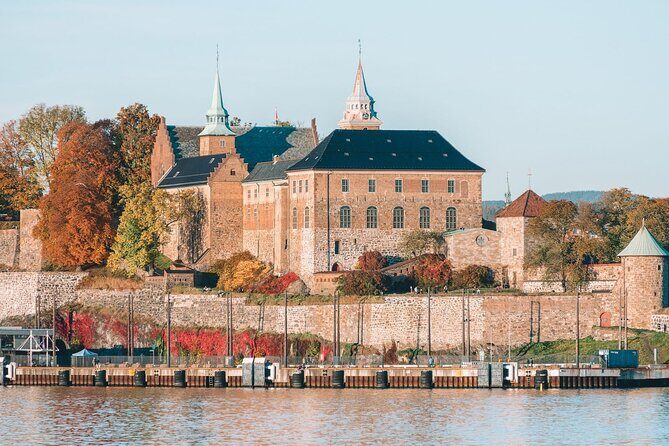
You begin at Akershus Fortress (Akershus Slott og Festning) near the shoreline. This is one of those places where the setting explains the story: the fortress was built to protect Oslo, and its position helped people spot enemy ships early.
When you stand on the water-facing side, the audio’s sea theme actually makes sense. The city’s development isn’t treated like a random timeline; it’s linked to maritime life and defense—because Oslo was shaped by what came by boat.
What I like about starting here is that it gives you a mental map for the rest of the walk. After Akershus, the other stops feel less like separate sights and more like chapters in how a coastal city evolved.
Consideration: you won’t get admission included, so if you want to go inside, you’ll need to handle entry separately.
The Norwegian National Opera & Ballet: a modern building with a rooftop

Next up is the Norwegian National Opera & Ballet, and the big detail here is that the architecture invites visitors to go up onto the roof. That makes the stop feel less like a closed building and more like a public viewpoint, assuming the roof access is open when you arrive.
The opera house is also a useful contrast after Akershus. The fortress tells you Oslo’s defensive, maritime past. The opera building tells you a modern city that puts culture on display and encourages you to walk into it.
If you go here on a clear day, you’ll likely appreciate the views from the roof—plus the chance to see how dramatic Oslo’s waterfront setting can look when the day is bright.
Consideration: the tour notes no admission is included, and rooftop access can depend on building policies and timing. Treat it like a bonus if it’s available when you get there.
Oslo Cathedral and Oslo City Hall: calm church time and art you can use as a landmark
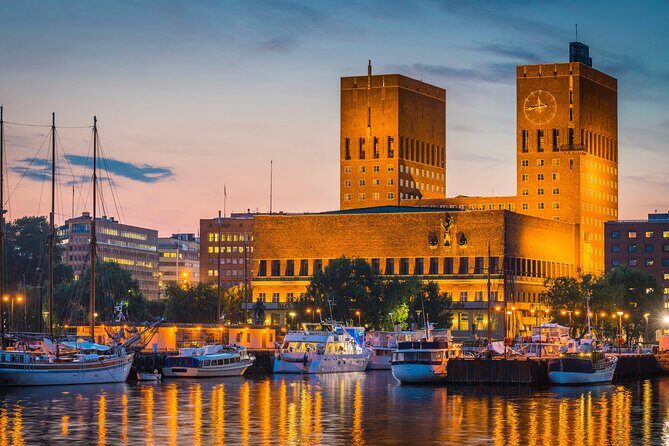
The route includes Oslo Cathedral, consecrated on 7 November 1697, and described as a peaceful place where national, parliamentary, and royal events are held. Even if you don’t plan to enter, this is the kind of stop that helps your walk breathe. It shifts the mood from fortifications and grand modern architecture to a quieter civic and religious center.
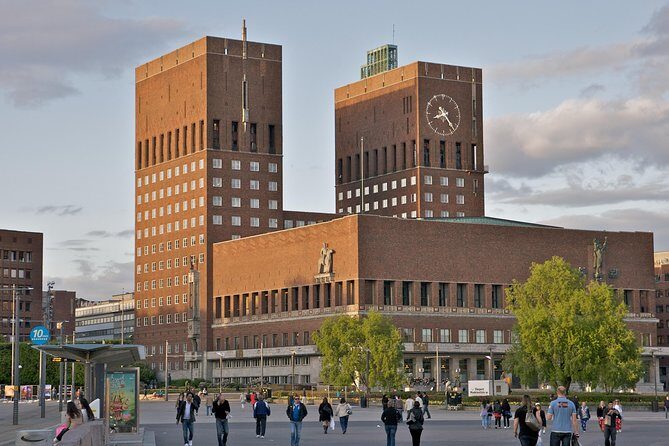
Then you move to Oslo City Hall, which is famous for its art collection drawing more than 300,000 visitors each year. One highlight called out is a room dedicated to Edvard Munch. City Hall can be a great “anchor stop” because art becomes a way to orient yourself—especially if you’re using your audio map while walking.
What to watch for: both stops include a 15-minute slot in the route pacing. If you love churches or art, that might be short. If you’re sightseeing at a quick tempo, it can feel like a good amount of time before you move on.
And remember: admission isn’t included for this tour unless the stop explicitly says free. Oslo Cathedral and Oslo City Hall are listed with free admission, which helps your budget.
A few more Oslo tours and experiences worth a look





Nobel Peace Center: a thinking stop on war and peace

The Nobel Peace Center is your next major theme shift. Instead of focusing on Oslo’s physical development, the center is described as a place for exhibits, discussions, and reflections about war and peace, connected to some of the world’s influential figures.
This stop can be especially worthwhile if your brain is tired of straight sightseeing. It’s not just another building photo. The format—exhibits and reflection—fits the audio tour’s larger message about how human life is shaped by forces beyond one city: conflict, diplomacy, and the long effort to make peace practical.
Consideration: admission is not included for this stop. So decide in advance if you want to spend museum time here, or if you prefer to enjoy the experience from the outside and keep moving.
Fram Museum and Kon-Tiki: Oslo’s outbound spirit, told through ships
Two of the route’s strongest “wow” stops are maritime and adventure-based: the Fram Museum and the Kon-Tiki Museum.
At the Fram Museum, you’ll encounter the history of polar expeditions, with the centerpiece described as the wooden polar explorer ship Fram. The audio framing ties this back to Oslo’s sea connections: this is the city looking outward into extreme environments, not just along its own coastline.
Then comes the Kon-Tiki Museum, featuring vessels and maps from Thor Heyerdahl’s 1947 Kon-Tiki expedition, including the raft used for the voyage. The tour description also frames Heyerdahl’s voyages as evidence that humans mastered long-distance sailing long before the saddle and the wheel were invented.
I like these two stops back-to-back because they cover different kinds of “outward travel.” Polar exploration is science and endurance. Kon-Tiki is experiment and story-driven exploration. Together, they support the audio tour’s core idea: Oslo’s relationship with the sea shaped what people built, learned, and dared.
Consideration: both museums list admission not included, so the cost of entering will stack up if you decide to go inside both. If you’re trying to keep the budget tight, you can still use the audio content to get the meaning and decide on entry later.
Finishing at the Norwegian Museum of Cultural History (and the Viking Ship Museum area)
Your listed end point is the Norwegian Museum of Cultural History on Museumsveien 10. The overview also mentions the Viking Ship Museum, which is associated with this museum complex in the Bygdøy area, so your finish point is likely where you connect to more of Oslo’s heritage.
If you want to make the day feel complete, this is a strong place to stop, because it continues the story theme: Norse and seafaring heritage, not just modern Oslo.
Practical tip: since your tour is self-guided, use your energy wisely. If you’ve already hit multiple museums, you might treat this finish like a final viewpoint and save deeper entry for a separate visit.
Tips to make this walk feel worth your time
This tour is designed for 2–3 hours, but your enjoyment will come down to how you pace it. Here are the things that help most:
- Set headphones up before you leave: the download step is called out, and it matters.
- Use the GPS map aggressively: don’t wait until you’re lost to check it.
- Pick your museum commitment level: you’ll see stops where admission is free (like Oslo Cathedral and City Hall), and others where it’s not. Decide which ones you’ll actually enter.
- Plan for weather: Oslo can go from pleasant to windy fast near the waterfront. Short pauses for coffee or warmth are part of the smart plan.
- Keep time for the in-between moments: the route connects major sights, but the charm is often in the short stretches where you notice how the city sits next to the water.
If you have moderate mobility, this tour still can work because it’s essentially a walking route with quick stops. But I’d avoid stacking it with another long museum day on the same schedule unless you enjoy museum marathons.
Who should book this self-guided Oslo audio walk?
This is a good fit if:
- You like structured wandering with audio guidance.
- You want to move independently through Oslo and not match someone else’s pace.
- You’re interested in how the sea shaped the city over hundreds of years, not just standalone landmarks.
- You’re comfortable paying for admissions separately when you choose to enter.
It’s probably not the best choice if:
- You want a live guide to answer questions.
- You expect the tour price to include museum entry.
- You want a lot of time inside every stop. The pacing is short at each location.
Should you book Discover Oslo: Self Guided Audio Tour?
I’d book it if you want a simple way to turn an Oslo stroll into a story you can follow, especially if you enjoy sea-and-maritime themes. The value is strongest when you treat the audio as the main attraction and handle admissions only where you truly want them.
Skip or rethink it if you want a guided experience with real-time context and conversation. Since it’s self-guided, you’re doing the controlling—and that’s great for independence, but it won’t replace a person.
If you’re on the fence, my practical suggestion is this: plan to spend less time inside ticketed museums and more time using the audio to connect the dots. That’s when the route feels like money well spent.
FAQ
Is this tour self-guided?
Yes. It’s a self-paced audio tour, and you use the downloaded audio files along with the GPS map.
How long does the Discover Oslo audio tour take?
It takes about 2 to 3 hours, and you can pause the audio guide when needed.
Is the tour available in English?
Yes. The tour is only available in English.
Are admission fees included?
No. Admission fees are not included for the tour. Some stops are listed as free, but most are not.
Do I need to bring an audio device?
Yes. The tour description says an audio device is not included. You’ll need your phone or another device for the audio.
Where does the tour start and end?
It starts at Akershus Fortress (0150 Oslo, Norway) and ends at The Norwegian Museum of Cultural History, Museumsveien 10, 0287 Oslo, Norway.
Can I cancel and get a full refund?
Yes. You can cancel up to 24 hours in advance for a full refund. Changes within 24 hours of the start time aren’t accepted, and refunds aren’t available if you cancel less than 24 hours before the start time.