REVIEW · OSLO
Private sightseeing in a Volvo XC 90 All inclusive museum/guiding
Book on Viator →Operated by Sertifisert Oslo guide · Bookable on Viator
Four hours in Oslo feels short—until you see it laid out smart. This private, all-inclusive ride in a Volvo XC 90 turns far-flung sights into a smooth morning, capped by views from Tryvannstarnet.
Two things I really love: the way the itinerary pairs top viewpoints with hands-on museums, and the fact that it’s guided end to end by Hans (the driver/guide many groups get). The Holmenkollen stop adds context to Norway’s skiing obsession, and the ship museums make exploration feel personal, not textbook-y.
One thing to consider: the price is premium, and weather can affect what you see from the high points. If the summit skies are gray, you still get the museums—but that tower view might be less dramatic than you hoped.
In This Review
- Key highlights to notice before you go
- A half-day route that feels built for real time
- Stop 1: Tryvannstarnet Tower for the big Oslo view
- Stop 2: Holmenkollen Ski Museum and Norway’s skiing identity
- Stop 3: Kon-Tiki Museum, Thor Heyerdahl, and the original ships
- Stop 4: Fram Museum and the polar ships that changed sea history
- Stop 5: Frognerparken sculptures by Gustav Vigeland
- What the private Volvo format changes (for the better)
- Price and what you actually get for $402.36 per person
- How to time your 10:00 am start for best results
- Who this tour suits best
- Should you book this Oslo private museum tour?
- FAQ
- Can you be picked up from your address in Oslo?
- What time does the tour start?
- How long is the tour?
- Is this tour private?
- Are the museums included in the price?
- Which stops have free admission?
- What language is the guiding in?
- Is coffee or tea included?
- Is the tour suitable for everyone?
- What is the cancellation window?
Key highlights to notice before you go
- Private pickup in a clean Volvo XC90 right from your Oslo address
- All fees and taxes included, plus museum admission where it matters
- Tryvannstarnet first so you start with the best “big picture” view
- Holmenkollen Ski Museum ties Olympic-level skiing to the culture
- Kon-Tiki and Fram museums in one sweep for real stories of sea travel
- Frognerparken’s Gustav Vigeland sculptures for an emotional outdoor finish
A half-day route that feels built for real time
This is the kind of Oslo tour that works if you want a strong overview without burning hours on trains, buses, and transfers. You meet up at 10:00 am and your guide picks you up at your address in Oslo. From there, you’re in a private car with only your group—no waiting for slow walkers, no hunting for parking, and no awkward “where are we supposed to meet” moments.
The pacing is built around museum time blocks: one viewpoint, two major museum clusters, and then Frogner Park to close the loop. You’ll usually get about 4 hours total, give or take, and the structure is tight enough that you can still have lunch and do a bit of your own exploring afterward.
For value: the tour is sold as all-inclusive for guiding and museum admissions. That matters in Norway, where adding tickets and transport piece-by-piece can quietly inflate the final bill. Here, you’re paying for the whole experience: private transport, guiding, and the key museum entries.
You can also read our reviews of more private tours in Oslo



Stop 1: Tryvannstarnet Tower for the big Oslo view
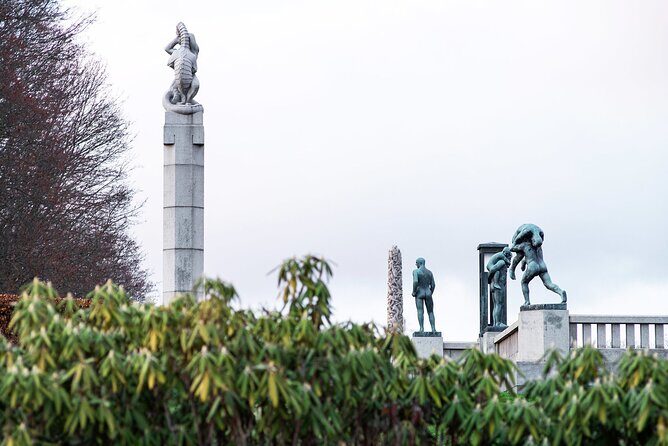
You start with Tryvannstarnet, Oslo’s top viewpoint. Admission is free for this stop, and you get around 45 minutes there—long enough to take photos, look around, and actually absorb what you’re seeing instead of rushing.
What makes this stop great is the geographic payoff. On a clear day you can see the harbor, the Oslo fjord, and the islands outside the city. It’s the kind of perspective that makes later museum stories feel grounded in place. When you return to city streets later, you’ll have the mental map: where water, hills, and neighborhoods line up.
Possible drawback: if the weather is lousy (clouds, rain, or heavy mist), the view can be muted. Some days you’ll get a postcard skyline; some days you’ll get a softer, gray version. Either way, it’s worth doing early because it sets the tone for everything else.
Stop 2: Holmenkollen Ski Museum and Norway’s skiing identity
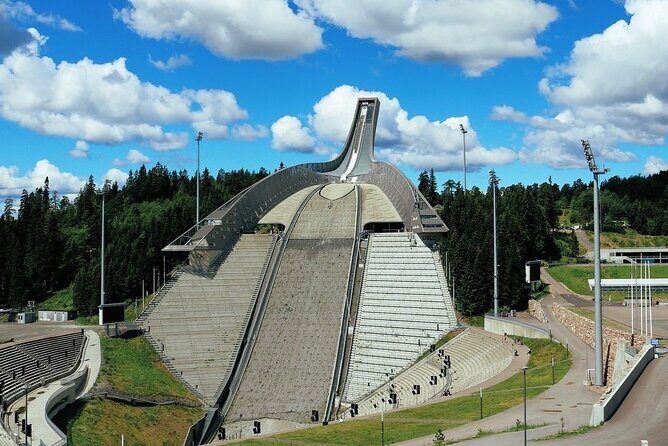
Next comes Holmenkollen Ski Museum, with the kind of reputation that doesn’t need hype. This site dates back centuries, and it’s where major Nordic skiing events have happened, including multiple World Cups and Olympics, plus four World Championships in Nordic skiing.
You’ll spend about one hour, and museum admission is included. This isn’t just “look at skis and photos.” The setting helps you understand why skiing is not a random sport in Norway—it’s part of national identity. Standing at Holmenkollen’s ski-jump environment makes the modern athletic world feel linked to the early days of winter life.
A practical tip: if you have time inside the museum complex, try to get up to the top areas with the lift when available. Many people end up loving that extra viewpoint moment because it makes the ski-jump scale click in a way photos can’t.
What I’d watch for: Holmenkollen can be a little weather-sensitive like any high northern viewpoint. Layers help, and comfortable shoes matter even if you’re only moving around for an hour.
Stop 3: Kon-Tiki Museum, Thor Heyerdahl, and the original ships
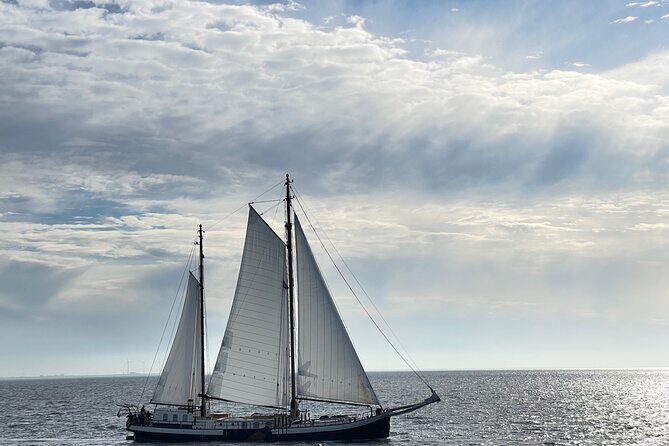
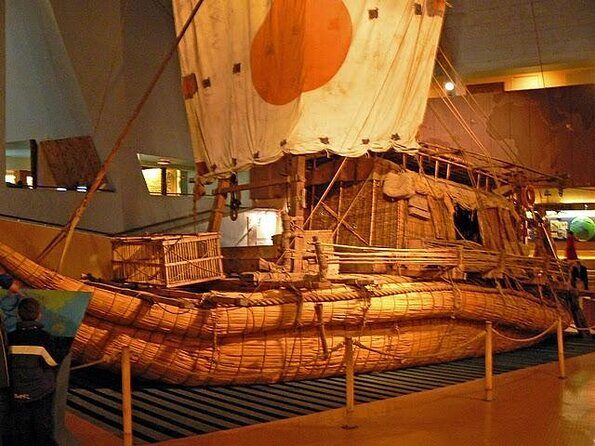
After skiing culture, you switch gears to maritime adventure at the Kon-Tiki Museum. Admission is included, and you get about 45 minutes.
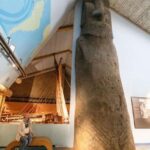
The key attraction here is the original Kon-Tiki craft, plus the RA craft. The museum focuses on explorer Thor Heyerdahl and how he pursued his goals—less about a clean, straight-line hero story, more about curiosity and the kind of risk people take when they want to prove an idea.
This is a museum stop I like because it connects exploration to engineering and planning. You can stand in the space and still feel the uncertainty those voyages carried. Even if you don’t know every detail ahead of time, the exhibits make the story legible fast.
Time consideration: 45 minutes means you’ll see highlights rather than everything. If you have a strong interest in ships and experiments, tell your guide early so you can bias the time toward what you care about.
Stop 4: Fram Museum and the polar ships that changed sea history
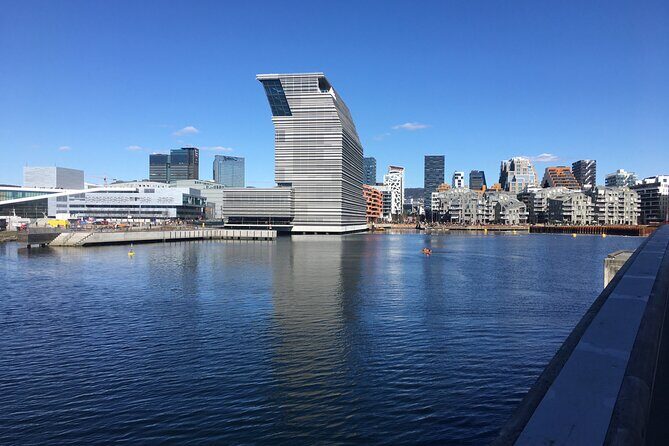
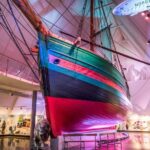
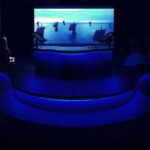
Then it’s the big one: Fram Museum. You’ll spend about 45 minutes, and admission is included. This stop is essentially your polar exploration crash course, centered on the ship Fram.
The Fram story matters because it’s tied to both the south pole and the north pole. You’re not just looking at a boat—you’re looking at how people designed solutions for extreme cold and harsh conditions, and how the ship itself became part of the strategy.
One more detail worth knowing: the museum also lets you see the ship Ga, associated with Roald Amundsen and the attempt to find the true north-west passage. That creates a nice contrast: Heyerdahl’s type of exploration mindset on one side, and the tightly planned polar efforts of the other.
What to expect in your hour: you’ll get guided context and walk through the ship spaces at a comfortable pace. The private format helps here. You can ask questions without feeling like you’re slowing down a large group.
Weather upside: even if it’s nasty outside, the Fram Museum keeps your day on track. That’s a big plus on Oslo days when the clouds don’t cooperate.
You can also read our reviews of more museum experiences in Oslo

Stop 5: Frognerparken sculptures by Gustav Vigeland
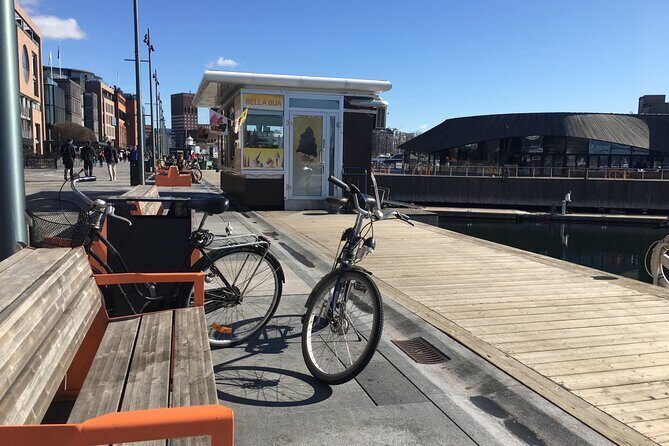
To close, you head to Frogner Park (Frognerparken), one of Oslo’s most famous outdoor art spaces. Admission is free for this stop, and you’ll have about 45 minutes.
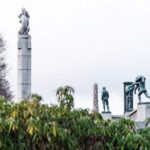
This is where the tour turns from “adventure and science” to “human meaning.” The park features 214 sculptures by Gustav Vigeland, all by one artist, built around the theme of life and death—relationships between people, emotions made physical.
If you love art that tells you more by implication than by explanation, you’ll enjoy walking the paths at your own pace. People often have a favorite piece here, and it’s not hard to see why. The scale of the project—and that it was done over decades—makes the whole park feel like one long conversation.
Practical note: this is outdoor time. Wear warm clothing if you’re touring in cooler months. Comfortable shoes matter because you’ll be walking through the park and taking your time with the sculptures.
What the private Volvo format changes (for the better)

A private car tour isn’t just comfort. It changes how the day flows. Driving between Oslo’s best museums and viewpoints can be slow when you’re managing schedules and transit. Here, the guide handles route choices, timing, and the logistics of parking and short transfers.
From the way the tour is run, the guiding approach is practical: you hit the key stops efficiently, then you get enough museum time to actually understand what you’re looking at. You’re not stuck in a rigid “only five minutes here” loop. And if you want to adjust your priorities, flexibility is part of the experience.
One pattern I noticed in real-world experiences: the guide often helps with small things like photo opportunities and pacing in the museums so you don’t feel rushed. That’s a big deal if you want both learning and decent pictures.
Price and what you actually get for $402.36 per person

At $402.36 per person for about 4 hours, this isn’t a bargain. But it’s also not paying only for sightseeing—you’re paying for private guiding, private transportation, and included admissions for the main museums.
Here’s the value logic I think makes sense:
- You’re getting private transport in a Volvo XC90, which replaces multiple transit legs and potentially taxis.
- You’re getting 4 hours of private guiding covering every stop, not just a quick “drop-off and go.”
- You’re getting museum admissions included for Holmenkollen, Kon-Tiki, and Fram. (Tryvannstarnet and Frogner Park are free stops.)
- You’re paying for time. In a city like Oslo, saving even an hour can be worth real money.
If you’re traveling solo, the cost can feel heavy because you’re not splitting the vehicle. If you’re a couple or small group, it starts looking more sensible—especially if you would otherwise spend time coordinating transport and buying tickets on your own.
One more timing note: this kind of private tour gets booked well ahead (on average 85 days in advance). If your dates are fixed, don’t wait for “someday.”
How to time your 10:00 am start for best results
A late-morning start can feel risky when you want views, but this itinerary makes it work by hitting Tryvannstarnet early in the day’s schedule. That means you’re not finishing the tower under a darker sky later.
To prepare, I’d do three simple things:
- Dress in layers. High points and coastal air can feel colder than you expect.
- Bring a light rain layer. Even if museums are indoor, you still have outdoor legs at Tryvannstarnet and Frognerparken.
- Think about your “must spend” stop before you go: Holmenkollen, Kon-Tiki, or Fram.
If it’s cloudy, don’t panic. The museum-heavy parts carry the day. And if it clears up, you’ll still get the benefit of the viewpoint.
Who this tour suits best
This is a strong match if you want:
- An Oslo highlights day without sprinting across town
- Major museums that connect exploration, skiing culture, and art
- The ability to ask questions and move at your own pace
- Comfort and clarity—especially on cold, rainy, or snowy days
It’s also a good fit for cruise-stop schedules when you want to pack in multiple far-to-reach sights in one half-day. The private format helps you avoid the big-group scramble and keeps your return timing more predictable.
If you’re the type who loves deep museum reading and long gallery time, 4 hours might feel short. But you’ll still walk away with a clear, connected overview of Oslo’s best-known stories.
Should you book this Oslo private museum tour?
Yes—if you want an efficient half-day with transport, guiding, and key museum admissions handled for you. It’s especially worth booking if you care about viewpoints plus the Kon-Tiki/Fram exploration thread, and you like art that asks emotional questions in public space.
I’d think twice if you’re cost-sensitive and plan to spend your time wandering independently, because the private element is the heart of what you’re paying for. And if you’re traveling on a day when you’re strongly dependent on spectacular skyline visibility, remember weather can soften the Tryvannstarnet view.
FAQ
Can you be picked up from your address in Oslo?
Yes. Pickup is offered, and the guide picks you up at your address in Oslo.
What time does the tour start?
The start time is listed as 10:00 am.
How long is the tour?
The duration is about 4 hours.
Is this tour private?
Yes. It’s private, and only your group participates.
Are the museums included in the price?
Yes. Admission is included for Holmenkollen Ski Museum, Kon-Tiki Museum, and Fram Museum, and you also receive guiding at all included stops.
Which stops have free admission?
Tryvann’s Tower and Frogner Park are listed as free admission ticket stops.
What language is the guiding in?
The tour is offered in English.
Is coffee or tea included?
No. Coffee and/or tea are not included.
Is the tour suitable for everyone?
Most travelers can participate. Service animals are allowed, and it’s near public transportation.
What is the cancellation window?
Free cancellation is available if you cancel at least 24 hours in advance for a full refund.