REVIEW · OSLO
2-Hour Essential Oslo in the City Center Guided Walking Tour
Book on Viator →Operated by Oslo Walking · Bookable on Viator
Oslo clicks into place on foot. This 2-hour city-center walk is built for first-time orientation, moving you through the places that shape the city’s stories and daily rhythm.
I like the small-group format (capped at 22), because you get real back-and-forth moments instead of a lecture. I also love that the guide style mixes landmark history with practical pointers, from where to eat to quick restroom knowledge. One drawback: there are no snacks or drinks, so bring water and plan your caffeine before you start.
In This Review
- Key Things to Know Before You Go
- University Square: The Smart Way to Start Oslo
- Det juridiske fakultet (UIO): Architecture With a Ceremonial Feel
- Royal Palace From a Distance: A Quick Hit on Norwegian Tradition
- The Norwegian Parliament and Grand Hotel Area: Power Meets the Street
- Oslo Cathedral and the Nearby Market: Faith and Everyday Life
- Oslo Opera House: The Photo Stop That Actually Makes Sense
- Kvadraturen Neighborhood: The Architecture Walk in Motion
- Oslo City Hall and National Theatre Stories: Closing With Context
- Price and Value: What $32.53 Buys You (and What It Doesn’t)
- Pace, Weather, and How to Dress for an Oslo Walk
- Who Should Book This Oslo City-Center Tour
- Should You Book This Tour?
- FAQ
- What is the duration of the Oslo city-center walking tour?
- Where does the tour start, and when does it begin?
- Is the tour guided, and what language is offered?
- What sights will I see during the walk?
- What’s included in the ticket price?
- Is food or drink included during the tour?
Key Things to Know Before You Go
- University Square start at Karl Johans gt. 47 keeps you in the action from minute one
- Big sights, tight timing: Palace, Parliament, Cathedral, Opera House, Kvadraturen, City Hall—no wasted detours
- Photo-friendly priorities especially around the Opera House where you’ll get a great picture chance
- Free viewing stops throughout, so you’re paying for the walk and storytelling, not admissions
- All-weather operation: bring the right layers so 2 hours doesn’t feel like 3
- English-guided, mobile ticket makes it simple to show up and go
University Square: The Smart Way to Start Oslo
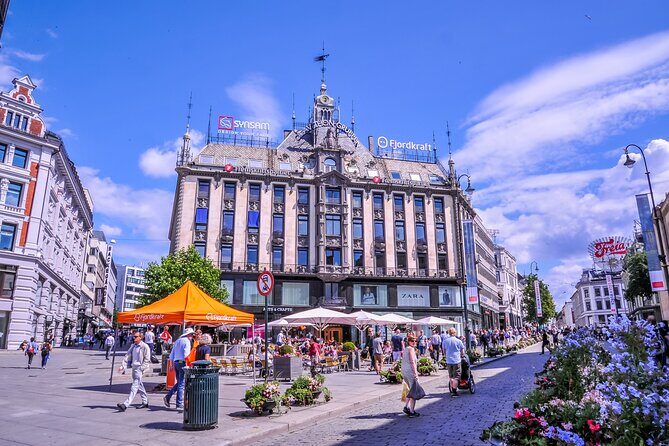
The tour begins at University Square near Karl Johans gt. 47 (Det juridiske fakultet / UIO). This matters more than it sounds. Starting here puts you close to Oslo’s core, so you don’t waste your best daylight (or your best energy) getting from your hotel to “somewhere central.”
Also, the route is designed to loop back to the same meeting point. That’s a small detail with big payoff. After 2 hours, you’re not stranded across town—you can pivot right into dinner plans, museum visits, or a self-guided stroll without having to re-orient yourself from scratch.
You’ll also be walking with an English-speaking guide, and the group stays relatively compact. In a city where you’ll see serious architecture and serious history, having a guide who can answer your questions without shouting makes the experience feel personal—even when you’re not a private tour.
You can also read our reviews of more walking tours in Oslo



Det juridiske fakultet (UIO): Architecture With a Ceremonial Feel
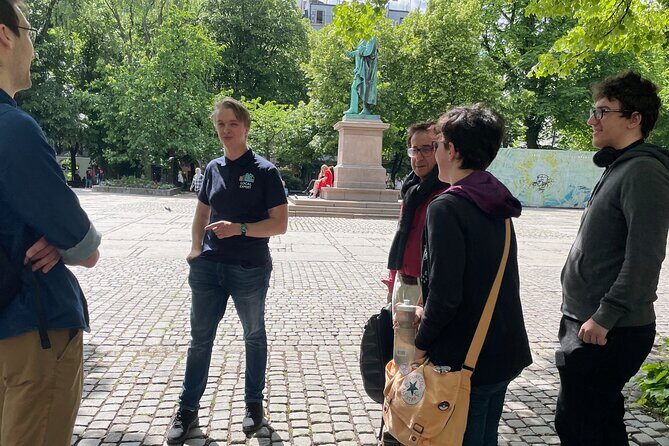
The first stop centers on Det juridiske fakultet (UIO), meeting near the T. A. Munch statue by the Aula University entrance. This is a good warm-up, because it gives you a sense of how Oslo blends culture, education, and grand public design.
You’ll get a short introduction to the Aula University entrance and its historical ceremonial hall, often described as one of the campus’ most beautiful buildings. Even if you’re not the type who reads plaques for fun, this kind of opening helps you understand why Oslo’s city center feels “planned.” You’re not just seeing random buildings—you’re seeing systems: civic life, learning, and public space tied together.
Practical tip: stand back for a few minutes and look for the building’s overall proportions before focusing on details. Many of the impact points are about layout, not just decoration.
Royal Palace From a Distance: A Quick Hit on Norwegian Tradition

Next you’ll be pointed toward the Royal Palace, with viewing mostly from a distance. That might sound limiting, but in practice it’s often the right approach on a walking tour—especially when you’re keeping the whole experience to about 2 hours.
Why it works: the Palace is part of Oslo’s visual “signature.” Even without close-up access, it signals the city’s royal and national symbolism. You get the important context and photo angle without burning time on long stops that don’t fit a short schedule.
Consideration: if you’re hoping for a deep interior visit, this won’t be that kind of tour. Instead, think of this as a fast orientation moment so you’ll know where to aim on later self-guided time.
The Norwegian Parliament and Grand Hotel Area: Power Meets the Street
From there, you’ll pass by the Norwegian Parliament area, typically described alongside the Grand Hotel and Parliament House. This is one of those parts of Oslo where the political buildings sit in real city life, not behind walls of mystery.
You’ll get the kind of explanation that helps you read the street scene properly: what this area represents, why these buildings matter, and how Oslo’s civic identity shows up in everyday space. You don’t have to be a politics person for this to land. The key is that the guide turns the view into a story you can remember.
Practical tip: pause for a minute and watch foot traffic. Parliament districts can feel “important” and quiet, but they’re still working parts of the city. That’s where you start to understand Oslo’s character—less showy than it is deliberate.
Oslo Cathedral and the Nearby Market: Faith and Everyday Life
Then comes Oslo Cathedral, the main church for the Diocese of Oslo and the seat of the Bishop of Oslo. You’ll also hear that there’s a historical market nearby, which is a nice reminder that religion here isn’t sealed off from ordinary life. It’s part of a neighborhood, and that neighborhood has movement.
This stop is long enough to matter—around 15 minutes—so you can take in the exterior and still have time to ask questions. If you’re traveling with someone who loves architecture, this is a strong moment. If you’re more “show me the vibe” than “tell me the facts,” the Cathedral usually still feels meaningful because it anchors the area.
One thing to keep in mind: since this is a walking tour schedule, you won’t have unlimited time to roam. Treat it as your chance to understand what Oslo is trying to express at the center of its old and civic core.
Tip for your walk: if the guide is sharing practical city advice (and they often do), ask for restroom locations too. You’ll be happier later in the day when you’re not hunting.
You can also read our reviews of more guided tours in Oslo






Oslo Opera House: The Photo Stop That Actually Makes Sense
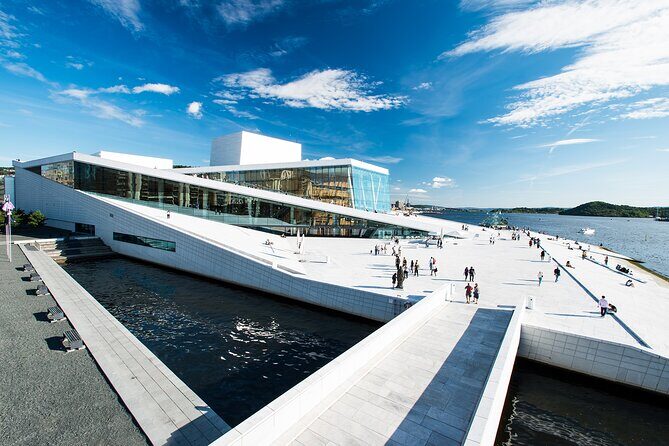
After the Cathedral, the tour shifts toward the Oslo Opera House, where the big goal is a great picture of the building. You’ll get about 20 minutes, which is exactly the right length for two reasons.
First, the Opera House is visually dominant, so you want time to frame it. Second, the area often gives you multiple angles depending on how you approach—upper edges, water/harbor views (when visible), and street-level perspectives. A short window keeps you from spiraling into an endless photo loop.
I’d treat this stop like a mini mission:
- Take one wide establishing photo first
- Then take one closer “texture and shape” photo
- Only then ask questions about what you’re seeing
Even without extra admissions, this is one of the most satisfying stops for first-timers because the Opera House is instantly recognizable. The guide’s job here is to give you the “why” behind the look—so later, when you notice it again from a distance, it won’t just be scenery. It’ll be part of your mental map.
Kvadraturen Neighborhood: The Architecture Walk in Motion
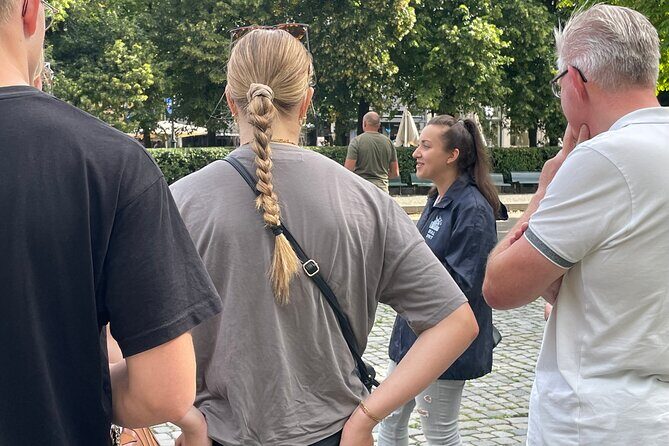
Next is Kvadraturen, with about 30 minutes. This is where the tour shifts from landmark checklists into city-reading mode.
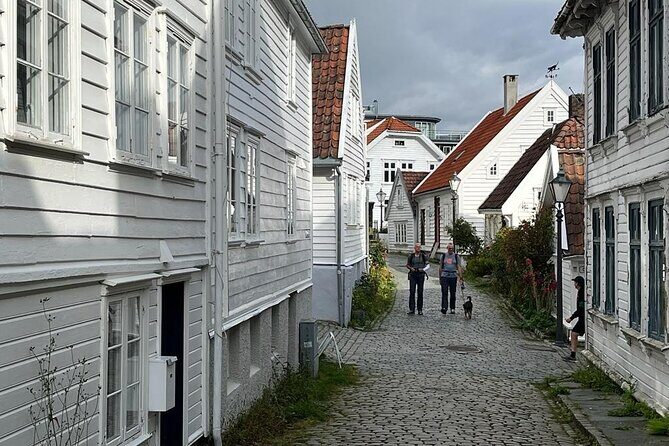
Kvadraturen is the kind of area that rewards slow glances. The point here isn’t one single building. It’s the mix: streetscapes, architectural variety, and how Oslo’s city center forms a coherent pattern without looking identical block after block.
If you’ve only got limited time in Oslo, this is one of the stops that makes the whole walk feel worth it. Otherwise, a short city tour can become a string of buildings with no sense of “how the city lives between them.” Kvadraturen helps close that gap.
Consideration: this is still a walking tour, so keep your pace comfortable. If you’re wearing shoes that feel borderline, you’ll notice it more during this stretch.
Oslo City Hall and National Theatre Stories: Closing With Context
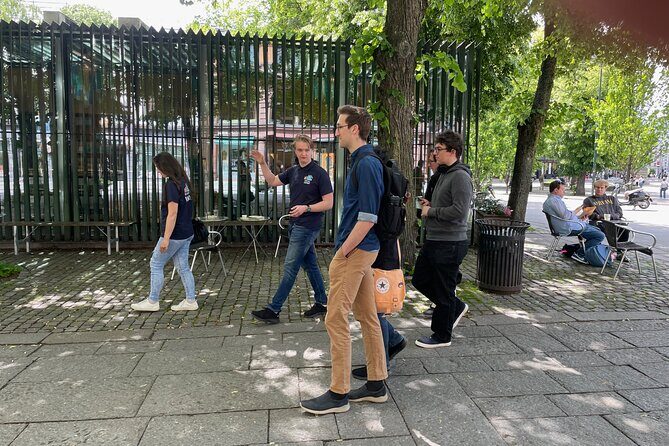
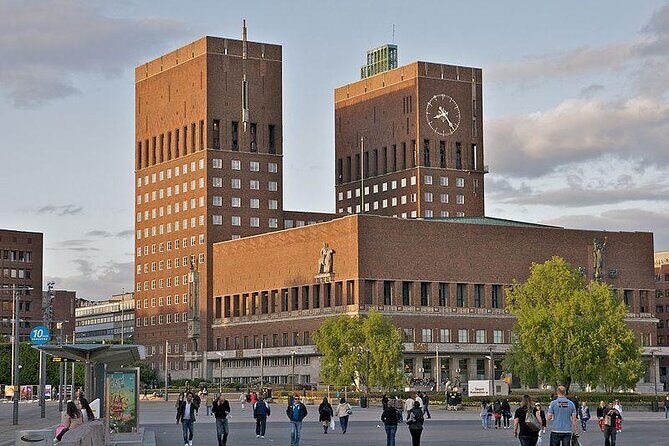
The walk finishes with Oslo City Hall, plus stories about the National Theatre. This is scheduled for about 30 minutes, giving you time to connect the dots between civic life and performance culture.
Why this finale works: City Hall is about governance and public identity; National Theatre is about public imagination. When you pair them, Oslo starts to feel like one system. Not just “sights,” but a city that invests in shared spaces—where decisions get made and stories get staged.
It also helps psychologically. When you end the walk in a meaningful area, you don’t just head out feeling like you saw stuff. You head out feeling like you understand what kind of place Oslo is.
Price and Value: What $32.53 Buys You (and What It Doesn’t)
At $32.53 per person for roughly 2 hours, the price is all about the guide and the route design. The tour includes all fees and taxes. Importantly, the stops you’ll hit are free to visit, so you’re not paying extra admissions to see the highlights.
What you’re buying:
- A focused walking route that hits the city center efficiently
- Landmark context in English
- A guided pace that works for short stays
- Practical “how to plan the rest of your day” advice, which can be surprisingly valuable on a tight itinerary
What you’re not buying:
- Snacks or drinks (and the tour doesn’t build in food guarantees)
So here’s the value-based advice: if you’re the type who enjoys understanding what you’re looking at, this price is reasonable. If you’d rather wander without any guidance, you might be happier with a self-guided walk. The tour is at its best when you use it as a shortcut to understanding.
Also note the reality of time. This is booked on average about 43 days in advance, so if you want a specific date/time, don’t wait until the last minute.
Pace, Weather, and How to Dress for an Oslo Walk
The tour runs in all weather conditions, which is a polite way of saying: Oslo weather doesn’t negotiate. Dress appropriately so the walking doesn’t drain you.
I’d plan for layered clothing. Even when the day looks fine at 10:00am, conditions can shift. The route covers enough distance and enough open-air time that you’ll feel temperature changes.
Two more practical points:
- Bring water. There’s no included refreshment stop.
- If you need a bathroom break, ask early or time it during natural pauses between stops. The guide can often point you to places with minimal fuss.
Who Should Book This Oslo City-Center Tour
This walking tour is a strong fit for:
- First-timers who want orientation fast
- People who like history mixed with practical context
- Travelers on short stays who still want the big city icons
- Anyone who prefers a small group with an English guide
It’s less ideal if:
- You’re expecting a long, in-depth museum or interior experience
- You hate walking for a full 2 hours in one go
- You want food included or a built-in café break (it’s not part of the plan)
Should You Book This Tour?
If you’re asking whether this is worth it, my answer is yes—with one condition: you’ll actively use the guide. Ask questions. Get practical tips. Use the stops to build a mental map you can navigate later.
What tips the scale in its favor is the mix of outcomes: you see the big names in Oslo’s center, you understand how they connect, and you finish back at the start so your day stays flexible. At $32.53, you’re not just paying for movement—you’re paying for a structured way to understand Oslo in the time most people actually have.
Book it if you want a confident start. Skip it if you already know the city well and prefer to roam without any structure.
FAQ
What is the duration of the Oslo city-center walking tour?
It lasts about 2 hours.
Where does the tour start, and when does it begin?
The meeting point is University Square near Det juridiske fakultet (UIO), Karl Johans gt. 47, 0162 Oslo, Norway. The start time is 10:00 am.
Is the tour guided, and what language is offered?
Yes, it’s a guided walking tour offered in English.
What sights will I see during the walk?
You’ll stop at or view highlights including Det juridiske fakultet (UIO), the Royal Palace, the Norwegian Parliament area, Oslo Cathedral, the Oslo Opera House, Kvadraturen, and Oslo City Hall.
What’s included in the ticket price?
The price includes all fees and taxes.
Is food or drink included during the tour?
No. Snacks, food, and drinks are not included, so plan accordingly.