Oslo has a way of stacking time on top of itself. This guided walk strings Royal Palace landmarks, big ideas, and neighborhood art into one easy half-day plan. I like that it moves at a steady pace and keeps the story human, not just dates on a plaque.
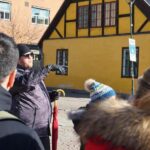
Two things I especially liked: the guidance from Anders, who was personable and clearly dialed in, and the way the tour explains what you’re actually looking at—architecture, public art, and why specific places matter. You’ll also get a satisfying traditional Scandinavian meal at the end, served in a family-owned restaurant with a historic feel.
One consideration: several stops are marked as admission not included, so you may want to budget extra if you decide to enter certain buildings instead of sticking to viewpoints and exteriors.
In This Review
- Key highlights you’ll feel right away
- Why This Oslo Walk Works in One Half Day
- Royal Palace: A Quick Route Through 1300 Years of Monarchy
- National Theatre to City Hall: Writers, Women’s Rights, and Public Art
- Norway’s Democracy from Parliament Square to Bankplassen
- Akershus Fortress and Oslo Cathedral: Fort Walls and Faith
- University of Oslo Law Faculty: Fear of Revolution and Institutional Power
- Traditional Norwegian Lunch at a Family-Owned Restaurant
- Price and Value for a $155 Oslo Highlight Tour
- Who Should Book This Tour, and Who Might Skip It
- Should You Book This Oslo City Tour?
- FAQ
- How long is the Oslo City Tour and Traditional Norwegian Lunch?
- What does the price include?
- Are alcoholic beverages included?
- Is admission included for all stops?
- What are the main stops on the walking route?
- Where does the tour start and end?
- What’s the cancellation policy?
Key highlights you’ll feel right away
- Small-group pace (max 15) that keeps the walk from feeling rushed
- Anders-led storytelling that links architecture to real Norwegian questions and events
- Public-art stops including City Hall, with emphasis on worker statues
- Hands-on city context from the Royal Palace to Akershus Fortress
- Traditional Norwegian lunch at a family-owned restaurant in a historic building
Why This Oslo Walk Works in One Half Day
This is a straightforward plan: about four hours on foot, centered on the most important landmarks in central Oslo. The group size cap of 15 is a big deal. You can hear your guide, ask questions, and still stay moving without playing walk-traffic-controller.
The tour also hits the sweet spot between “major sights” and “how the city thinks.” You’re not only seeing places—you’re learning how monarchy, democracy, literature, and institutions connect in Oslo’s story. That matters because Oslo isn’t built like some capitals where everything sits on one ceremonial axis. Here, you need the map in your head.
It’s also set up to be practical. It’s a mobile ticket experience and starts near Slottsplassen 1 at the Royal Palace. You’ll finish at the Broker in Bogstadveien 27, where the lunch happens. And yes, the tour asks for moderate physical fitness since it’s a walking route.
You can also read our reviews of more city tours in Oslo



Royal Palace: A Quick Route Through 1300 Years of Monarchy
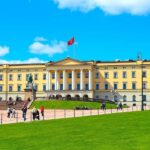
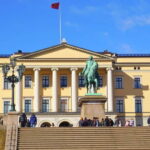
You begin at the Royal Palace area, Slottsplassen 1. This start point is perfect because you immediately get the spine of Oslo’s identity: monarchy as a long-running thread, not just a photo stop.
The palace segment is designed to be short—about 20 minutes—but it gives you a sense of continuity. You’ll hear the tour’s focus on the royal family timeline going back roughly 1300 years. Even if you’re not a “royal-nerd,” it helps you understand why certain symbols, buildings, and public spaces keep reappearing in Oslo.
Admission here is not included, so what you get depends on whether you’re just viewing from the outside area or adding interior time. If you prefer to keep your schedule clean, plan to enjoy it as a guided orientation and move on. If you’re planning to go inside, take a moment to decide early so you don’t slow the group later.
National Theatre to City Hall: Writers, Women’s Rights, and Public Art
Next comes the National Theatre area, where the tour zooms into literature and social change. This part is about connecting famous names to the world they were pushing against—especially Ibsen, Bjørnson, and Holberg, plus the theme of fighting for female rights. That’s a smart move. You’re standing in a cultural landmark while learning what kind of ideas Norway has historically argued about in public.
This stop is around 15 minutes, so it’s not a deep theater history lecture. It’s more like the guide sets the stage for the rest of the walk: Oslo’s culture isn’t just “performing arts.” It’s also where public debate shows up.
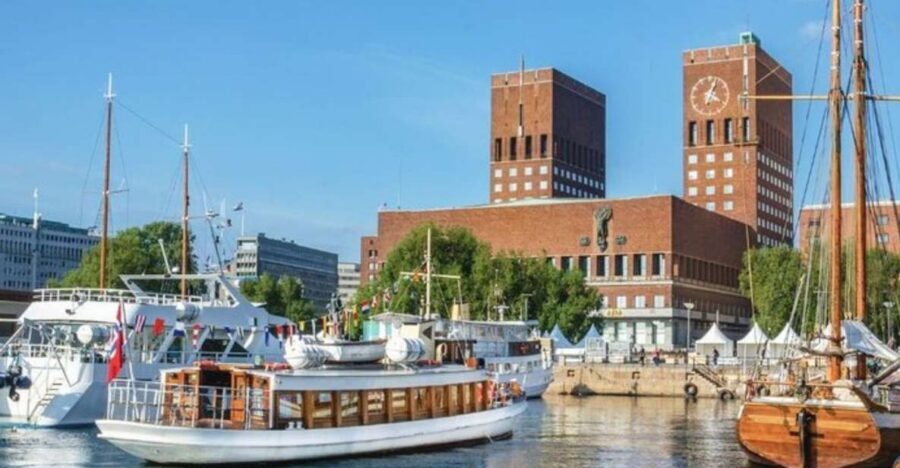
Then you hit Oslo City Hall, with about 25 minutes and admission marked free. This is one of the best places on the route if you like visual details. The tour focuses on art inside and highlights the worker statues—exactly the kind of thing that’s easy to miss if you only glance at the building from the street.
If you want a memorable payoff from a short stop, City Hall is it. You’ll leave with a clearer idea of how Oslo honors labor and civic life through sculpture and interior art. It’s also a good “reset” stop—after the themes of literature and reform, you get something concrete and artistic.
Norway’s Democracy from Parliament Square to Bankplassen
The walk continues toward Norwegian Parliament (with the route passing through Christian the 4th Square). This segment is built around how democracy works in Norway—specifically a comparison of before and after Denmark. It’s the kind of historical context that makes the present-day institutions feel less abstract.
You’ll also hear about the fire of 1624 and the idea of new Christiania. Those are the sorts of events that can sound like trivia until you connect them to why the city looks the way it does and how it rebuilt. Here, the guide’s storytelling helps you connect the dots between disaster, politics, and urban renewal.
Admission at this stop is not included, so again you’ll get the main value through guided explanation and the surrounding landmark context.
From there, the tour shifts to Bankplassen, marked free. This is a short stop (about 15 minutes), but it’s one of those places where history shows up as money and policy rather than battles or palaces. The tour connects the Danish king past to the oil fund present—an angle that helps you understand why Norway’s financial systems are such a big part of its national identity.
This is also where the tour’s nods to the Nobel family and the history of dynamite fit into the bigger picture. Even if you don’t walk away with a chemistry degree, you’ll likely appreciate the way industrial achievement, Nobel-level legacy, and Oslo’s institutional growth are tied into the story. It’s a reminder that cities run on ideas, inventions, and economic decisions, not just monuments.
Akershus Fortress and Oslo Cathedral: Fort Walls and Faith
Akershus Castle and Fortress is a high-impact stop. You spend about 20 minutes here, and admission is marked free. That means you can spend your time on the guided interpretation without the mental cost of extra ticket decisions.
The theme is the past 800 years of the fortress—how power, protection, and strategic location shaped Oslo. Fortress time can feel heavy, but the guide’s approach is practical: you learn what to look for and why the fortress mattered, rather than just hearing a list of rulers.
After Akershus, you move to Oslo Cathedral for about 15 minutes. Admission is not included here, so this is likely a guided stop geared toward understanding the symbolism and the shift in the country’s belief systems. The tour focuses on Norway before and after Christianisation.
This is one of those stops where you get more from the explanation than from the building alone. If you’ve ever toured a cathedral and thought, okay, nice stones—this helps you read the stones. You start seeing religious change as a major social pivot, not just a change of worship.
A few more Oslo tours and experiences worth a look

University of Oslo Law Faculty: Fear of Revolution and Institutional Power
The final sightseeing block includes the University of Oslo, Faculty of Law. The stop is about 15 minutes and admission is not included. This segment ties the theme of institutions back into something you can understand quickly: how the rule of law and education can calm fear—or create it—depending on the era.
The tour’s focus includes fundraising and the fear of revolution, and it notes the university’s ranking at around the 60th best in the world. Even if rankings aren’t your thing, the underlying point is helpful. Great cities build legal and educational structures that help society function under pressure.
It’s a good capstone to the earlier democracy and governance stops. You see how the story moves from politics in public squares to the systems that shape everyday life.
Traditional Norwegian Lunch at a Family-Owned Restaurant
The tour ends at a family-owned restaurant near the Broker area in Bogstadveien 27. This is your reward stop. The experience includes lunch plus bottled water, and you’ll also get coffee and/or tea. Alcoholic beverages are not included, so keep that in mind if you were hoping to pair the meal with wine.
One standout detail from the guide-style meal experience: the restaurant setting is in a historically significant building, with beautiful ceilings. That matters more than you’d think. Food is great, but a memorable room makes you slow down and enjoy the moment instead of eating while rushing.
The lunch itself is described as Norwegian signature and Scandinavian in style, so you should expect the kind of hearty, traditional flavors that fit Norway’s cold-weather reputation—without needing to guess at fine-dining trends.
Your package lists dinner as included as well. Since the tour text specifically frames the end as a lunch stop, I’d treat that as a signal to confirm timing with your host at the start of the day. Either way, plan your schedule so you don’t end up too full too early or show up hungry and confused.
Price and Value for a $155 Oslo Highlight Tour
At $155.30 per person for about four hours, this sits in the “mid-range guided tour” zone. The value is in two places.
First, you’re paying for a guided walking format that ties together multiple central landmarks without needing to plan transfers between neighborhoods. With a maximum group size of 15, the guide can keep the pace controlled and the explanations targeted.
Second, you’re paying for the included meal. Lunch (plus water and coffee/tea) changes the math. If you’ve ever tried to tour Oslo on an empty stomach, you know how quickly sightseeing fatigue becomes meal decisions.
The potential “watch-out” is admission. Several stops are marked as tickets not included (Royal Palace, National Theatre, Norwegian Parliament area, Oslo Cathedral, and the Faculty of Law). Some stops are marked free (City Hall, Bankplassen, Akershus). If you personally want to go inside everything that has a ticket option, the total cost can climb beyond the base price.
Still, even with that consideration, this tour is a strong value if you like learning while walking and you want a guided meal at the end rather than figuring out lunch solo.
Who Should Book This Tour, and Who Might Skip It
I think this is a great fit if you:
- want a compact way to understand Oslo beyond the obvious sights
- like history that connects to culture, literature, and institutions
- enjoy architecture and public art, not just scenic views
- appreciate a guide who can explain what you’re looking at in plain language (Anders is a highlight)
You might skip it if you:
- only care about interior museum-style time and want lots of entry included
- hate walking in general, because this is still a guided walking route for about four hours
- prefer self-guided tours where you control every stop minute
Should You Book This Oslo City Tour?
If your goal is to get oriented in Oslo, connect the dots between monarchy, literature, democracy, and the city’s institutions, and finish with a real Norwegian lunch in a historic setting, I’d book it. The strongest reasons are the small group size, the guide’s storytelling (Anders), and the way the day is structured so you don’t just see buildings—you understand why they matter.
Just go in with the expectation that not every site’s admission is included, so decide ahead of time whether you’ll pay extra for interiors or treat some stops as guided exteriors with context.
FAQ
How long is the Oslo City Tour and Traditional Norwegian Lunch?
It runs for about 4 hours (approx.).
What does the price include?
It includes lunch, bottled water, coffee and/or tea, and dinner.
Are alcoholic beverages included?
No. Alcoholic beverages are not included.
Is admission included for all stops?
No. Admission is not included for several stops, while some stops are marked as free (including Oslo City Hall, Bankplassen, and Akershus Castle and Fortress).
What are the main stops on the walking route?
You’ll visit the Royal Palace, National Theatre area, Oslo City Hall, Norwegian Parliament area (including Christian the 4th Square), Akershus Castle and Fortress, Bankplassen, Oslo Cathedral, and the University of Oslo Faculty of Law.
Where does the tour start and end?
It starts at the Royal Palace (Slottsplassen 1, 0010 Oslo) and ends at the Broker (Bogstadveien 27, 0355 Oslo) at the family-owned restaurant.
What’s the cancellation policy?
Free cancellation is available up to 24 hours in advance for a full refund.