REVIEW · OSLO
Vigeland Alien Threat in Oslo Exploration Game and Tour
Book on Viator →Operated by Questo · Bookable on Viator
A sci-fi quest through Oslo’s sculpture parks. The Vigeland Alien Threat exploration game turns Vigelandsparken and nearby Frognerparken into a story you follow on your phone, with directions that keep you moving at your own pace. You’ll get clues tied to real landmarks, so the art doesn’t feel like random sightseeing.
I especially like the offline access and the 24/7 customer support. That combination matters in a place where weather changes fast, and where you may not want to hunt for signal while walking between stops.
One thing to consider: the puzzles are generally on the easy side, and in winter some details can be harder to spot under snow. Still, the app provides hints, and you can pause or slow down whenever you want.
In This Review
- Key things to know before you go
- Price and what the Vigeland Alien Threat quest really costs
- How the phone game works across Vigelandsparken and Frognerparken
- Stop 1 to Stop 10: the route, what to look for, and why each place matters
- Stop 1: Statue of Gustav Vigeland (your first clue)
- Stop 2: The Children’s Circle at Frognerparken (first real puzzle focus)
- Stop 3: Sinnataggen (Gustav Vigeland) (study mode)
- Stop 4: Anne på landet (the Lone Girl story beat)
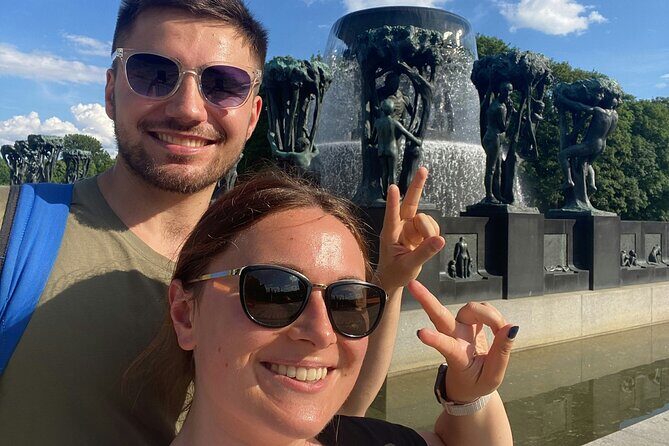
- Stop 5: Vigelandsfontenen (pause-and-continue pacing)
- Stop 6: Nobels gate 32 (The Clan clue)
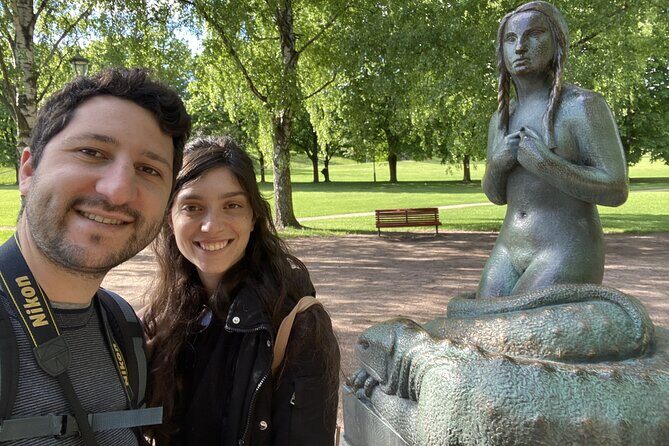
- Stop 7: Sirkusteltet, Frognerparken (Girl with Serpent)
- Stop 8: Monolitten (take in the view)
- Stop 9: Majorstuen (The Sundial challenge)
- Stop 10: The Wheel of Life (story + route end)
- Timing it right: winter, crowds, and how to make the game feel smooth
- What I like best about this style of sightseeing
- Who should book the Vigeland Alien Threat quest?
- Practical value checklist before you hit Start
- Should you book it?
- FAQ
- How long does the Vigeland Alien Threat experience take?
- Where does it start and where do you finish?
- Do I need a tour guide?
- Are admission tickets needed for the attractions?
- Can I use the app offline?
- Is customer support available during the experience?
- What is the cancellation policy?
Key things to know before you go
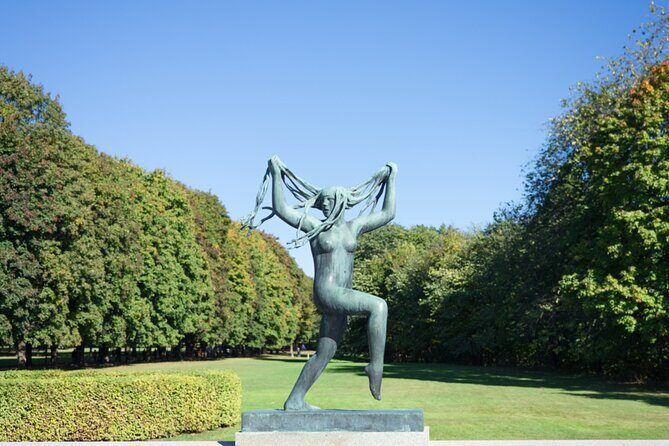
- Self-guided, start-and-stop at your pace so you can linger where you want.
- Offline access means your game doesn’t depend on cell service.
- 24/7 support if you hit a snag during the story.
- A short, manageable route (about 1 to 1.5 hours) with short stops.
- Open-air walking through sculpture-heavy parks, with a built-in rhythm that helps you avoid crowd chaos.
Price and what the Vigeland Alien Threat quest really costs
This experience is listed at $8.40 per person. For Oslo, that’s not money thrown away on a one-note activity—it’s a low-cost way to get a walking plan plus a story engine on your phone, without paying for an official guide.
You also don’t need separate admission tickets to complete the route, which keeps the budget clean. Most of your “ticket value” is really in the structure: instead of deciding what to see first, you follow the next clue and go from statue to statue with a reason to look closely.
Timing-wise, plan for about 1 to 1.5 hours. The listed stop time is short, but the real time sink (in a good way) is the fact that you’ll naturally want to pause for views, photos, and reading what the sculptures represent.
A few more Oslo tours and experiences worth a look



How the phone game works across Vigelandsparken and Frognerparken
The core idea is simple: you start the app at the first landmark, then follow clue prompts that tell you where to go next. Each stop is designed around a real piece of the park, so the story doesn’t float in the background—it points your attention to specific figures and monuments.
You can start and pause whenever you like. That’s huge if you’re traveling with kids, if you’re balancing bathroom breaks, or if the weather flips from nice to chilly and you need a quick regroup.
Because you get offline access, you’re not stuck searching for directions while you’re walking on paths. And with 24/7 customer support, you have a safety net if the app behaves oddly or you’re confused about the next step.
Finally, it’s a private group activity, meaning only your group participates. That’s the kind of detail that usually matters more than people expect, because it keeps the whole experience from feeling like you’re squeezing into someone else’s pace.
Stop 1 to Stop 10: the route, what to look for, and why each place matters

You’ll move through a loop that starts at Vigelandsparken and finishes at The Wheel of Life. The entire route is built around sculpture locations, with short story beats at each stop.
Stop 1: Statue of Gustav Vigeland (your first clue)
Begin at the statue of Gustav Vigeland and get your first clue. This is a smart opening move, because it frames the game around the artist and helps you understand what you’re walking through.
Even if you’re not a sculpture super-fan, this stop gives you a mental foothold: you’re not just wandering—you’re starting a “why” story. Admission is free here, and the game logic means you’re encouraged to look before you rush ahead.
Stop 2: The Children’s Circle at Frognerparken (first real puzzle focus)
Next is Frognerparken, where you’ll find your first clue around The Children’s Circle. This is where the experience starts to feel playful, especially if you’re doing it with a family member who enjoys games.
The art in this area tends to reward careful looking—faces, groupings, gestures. The game nudges you to slow down just enough to notice those details, rather than passing by on autopilot.
A practical note: this is outdoors, so if it’s windy or wet, you may want to bundle up early and keep your phone protected.





Stop 3: Sinnataggen (Gustav Vigeland) (study mode)
At Sinnataggen, the game asks you to study your next clue tied to the scene there. This stop feels more reflective than the children-focused sections, and it’s a good break from constant “move now” pressure.
If you like moments where you’re standing still and really looking at what a work is saying, this is one of the stops that fits that mood. The app’s hint system can help if snow or distance makes details harder to read.
Stop 4: Anne på landet (the Lone Girl story beat)
Then you’ll reach Anne på landet in Frognerparken. This stop is specifically linked to the story of The Lone Girl, giving you a narrative thread that turns the sculptures into characters in your head.
This is also where the experience can feel surprisingly good for learning. Even without turning it into a classroom, you’re absorbing symbolism because the game ties it to a storyline question.
Stop 5: Vigelandsfontenen (pause-and-continue pacing)
Next is Vigelandsfontenen. This is one of the stops where you’re explicitly allowed to pause, take your time, and continue when you’re ready.
I like this kind of built-in breathing space. Parks like these are easy to rush through because you’re excited about seeing everything, but the sculptures are often about posture, interaction, and expression. A slow pause makes those things click.
Stop 6: Nobels gate 32 (The Clan clue)
Your next clue appears near Nobels gate 32, tied to The Clan. The name alone makes this feel more like a chase story than a museum walk, which is part of the fun.
This stop may be where you start noticing how the game blends “real place” with “fictional context.” You’re walking streets and park edges, but the app is framing it as part of a larger alien-threat narrative.
Stop 7: Sirkusteltet, Frognerparken (Girl with Serpent)
At Sirkusteltet in Frognerparken, you’ll get your next clue connected to Girl with Serpent. If you’re bringing a child or a teen, this is the kind of name that usually gets attention fast.
The practical value here is that it pulls you toward another focal sculpture. Instead of wandering until you find something interesting, the story pushes you to locate it on purpose.
Stop 8: Monolitten (take in the view)
Then comes Monolitten, where the game shifts from solving to enjoying. You’re meant to take the view and keep exploring at your pace.
This stop is a good reminder that a sculpture park isn’t only about close-up detail. Sometimes the best payoff is stepping back and seeing how the works and paths relate to one another in space.
If the weather is gray, this is still a solid place to catch the vibe. If it’s clear and bright, you’ll likely enjoy this one even more.
Stop 9: Majorstuen (The Sundial challenge)
Next is Majorstuen, where you’ll work to solve the challenge connected to The Sundial. This part returns you to the “think a bit, then move” rhythm.
When you’re doing this on foot, that balance matters. A full sightseeing day can turn into constant walking. The game keeps your brain engaged in short bursts, which can make the route feel lighter than it is.
Stop 10: The Wheel of Life (story + route end)
Finally, you finish at The Wheel of Life. This is where the city exploration game and the story end.
If you want the best satisfaction, don’t treat the final stop as a checkmark. Give it a little time to soak in, because it’s designed as a closing image. It’s also a great place to stop and re-check any photos you’ve taken along the way, since you’ll have a clear “start to finish” arc.
Timing it right: winter, crowds, and how to make the game feel smooth
Because this is an open-air walk, weather is the main variable. In winter, some elements can end up covered in snow. The good news is that the app provides hints, so you’re not left guessing when details aren’t easy to see.
If you hate rushing, you’ll probably enjoy this more than most structured activities. The route is short enough to fit into a day, but it rewards people who slow down. One of the best practical tips I’d give you: don’t schedule it as a sprint between other timed bookings.
Crowds can happen in the parks. Even then, the self-guided format helps because you’re not stuck in a single moving group line. You can pause longer at the places you care about and pass through more quickly where you don’t.
Also: because you’ll be walking between multiple iconic points, you’ll likely want comfortable shoes. The game doesn’t feel like heavy hiking, but you are moving.
What I like best about this style of sightseeing

This isn’t just a list of stops; the game design gives each location a purpose. That changes how you look.
For example, when you’re prompted to find a clue near a specific sculpture, you automatically focus on the details you’d otherwise skip. And when the story shifts from solving to simply enjoying—like at Monolitten—you get permission to switch gears from brain mode to scenery mode.
I also like that the experience supports different travel styles:
- Do it alone and treat it like a personal puzzle walk.
- Do it as a family activity where the story provides built-in engagement.
- Do it as a couple date idea because the pacing gives you natural conversation breaks.
Who should book the Vigeland Alien Threat quest?
This works really well if you want:
- a low-cost, self-guided plan for Oslo’s sculpture parks,
- a way to see more than the obvious “walk and hope” route,
- something that feels fun for kids without turning into a chore for adults.
It may not be your best choice if you want:
- deep, expert narration from a human guide (this is no guide),
- extremely challenging puzzles (this game is generally straightforward),
- guaranteed quiet, because popular parks can still get busy.
Practical value checklist before you hit Start
Before you begin, make sure you’re ready for a phone-led walk:
- Bring a fully charged phone (even with offline access).
- Dress for the weather. Wind and cold can change how long you want to stand still.
- Give yourself room in your schedule so you’re not finishing while you’re cold and irritated.
- If it’s winter, be patient with snow-covered details and rely on the app hints.
Should you book it?

If you want a fun, structured way to see Vigelandsparken and Frognerparken without paying for entry tickets or wrestling with a timed guided tour, I’d say yes. The combination of offline access, 24/7 support, and a short 1 to 1.5 hour route makes it a smart value.
Book it especially if you enjoy clue-based walks, want something that works for families, or prefer to control the pacing. Pass if you’re chasing a tough puzzle challenge or you specifically want a live guide telling you every detail.
FAQ
How long does the Vigeland Alien Threat experience take?
It runs about 1 hour to 1 hour 30 minutes, depending on how long you stop at each location.
Where does it start and where do you finish?
You start at Vigelandsparken in Oslo and finish at The Wheel of Life.
Do I need a tour guide?
No. This is a self-guided phone experience, and the tour does not include a tour guide.
Are admission tickets needed for the attractions?
No. Admission tickets are not needed to complete the tour.
Can I use the app offline?
Yes. You get complete offline access to the app.
Is customer support available during the experience?
Yes. You have 24/7 customer support available every day of the year.
What is the cancellation policy?
Free cancellation is available. You can cancel up to 24 hours in advance for a full refund.