REVIEW · OSLO
Oslo Shore Excursion: City Sightseeing Oslo Hop-On Hop-Off Bus Tour
Book on Viator →Operated by City Sightseeing Ltd - Europe · Bookable on Viator
Oslo’s highlights in one day, without stress. This hop-on hop-off city bus lets you board around town (17 stops) and use it for up to a 24-hour voucher, so you can match the ride to your shore timetable. I love how straightforward it is from a cruise ship—buses run right outside the terminal area—plus how the stops line up with major Oslo sights without you needing to plot routes. One real consideration: the on-board audio and timing can be uneven in practice, so give yourself slack if you’re trying to hit a museum right at opening.
I also like the audio setup: you get an audio guide in 8 languages, with free headphones and options to use in-seat modules or your own device (BYOD). Add free Wi‑Fi onboard, and it’s easier to look up walking links between stops. The drawback is simple but important: the ticket covers the bus only, so museum entry and food are on you.
Because it’s an open-top double-decker, I’d plan for weather. The buses run in all weather, but you’ll feel the conditions—so pack a rain layer and something warm for the windier waterfront stretches.
In This Review
- Key things you should know before you ride
- Why this hop-on hop-off bus works for Oslo shore days
- Price and value: what $46.60 really buys
- Meeting up and getting on: the cruise-terminal advantage
- The timing reality: frequency is good, but build in buffer
- Route map in plain English: from Karl Johans Gate to Akershus and back
- Stop-by-stop: what to do when you hop off
- Stop 1 area: Det juridiske fakultet / National Theatre / Royal Palace / Karl Johans Gate
- Vigelandsparken: Vigeland Sculpture Park and Oslo Museum
- Folkemuseet: Norwegian Museum of Cultural History
- Bygdøynes: Kon-Tiki Museum / FRAM / Norwegian Maritime Museum
- Hjortnes / cruise terminal gates (Hjortnes; Royal Caribbean & MSC cruise gate; Filipstad cruise terminal)
- Tjuvholmen: harbor-front alternative stop
- Akershuskai / Oslo Cruise Ship Terminal area: Akershus Fortress
- Vippetangen / Narvesen Havnelageret: ferry port and Langkaia area
- Operagata 4: Opera House / MUNCH Museum
- Audio guide and Wi‑Fi: helpful when it’s working well
- Weather, comfort, and crowds: what to plan for
- Who should book this, and who should skip it
- Should you book the City Sightseeing Oslo hop-on hop-off bus?
- FAQ
- How long is the City Sightseeing Oslo hop-on hop-off bus tour?
- How often do the buses depart, and what time do they run?
- Where is the first stop, and can I board at other locations?
- Do I need to exchange my voucher before boarding?
- Is audio included, and what are my listening options?
- Can I use the ticket for more than one ride?
- Are museum entry tickets included with the bus tour?
Key things you should know before you ride

- Cruise-day friendly boarding: you can get on directly outside the cruise terminals, so you avoid a messy search for a stop.
- Every ~30 minutes, 10am to about 4pm: enough rhythm to hop off for a few sights and still get back in time.
- 24-hour flexibility: the voucher is valid for 24 hours, so you can ride, get off, then return later.
- Audio in 8 languages, two ways to listen: free headphones plus in-seat modules or BYOD (with adapters available).
- A route built around top Oslo targets: Vigeland, the Viking Ship Museum area, Bygdøy museums, Akershus Fortress, and the Opera/MUNCH zone.
- You must exchange your voucher: you’ll need to swap it for the bus ticket before or as you board.
Why this hop-on hop-off bus works for Oslo shore days
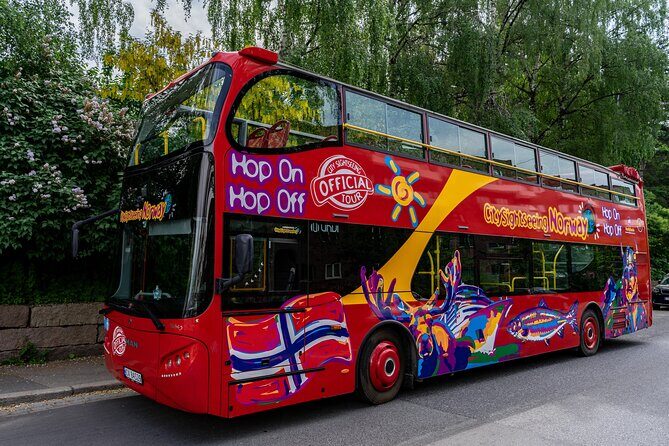
If you’re in Oslo for a port call, you’re usually juggling two things: the ship’s clock and the city’s layout. Oslo rewards planning, but you don’t want your whole day to hinge on exact buses, transfers, and walking. This City Sightseeing hop-on hop-off approach is built for that reality: you ride a loop, choose your exits, then return when you’re ready.
The biggest win is that you can build a personal plan around your interests. One hour on the bus gets you a clear overview of how Oslo is arranged—waterfront, parks, and the central boulevard—while a longer day lets you break the route into museum chunks. If you’re aiming for Viking or maritime culture, the route steers you toward the Bygdøy museums zone without forcing you to string together multiple local rides.
The other practical advantage is comfort-by-choice. When you want fresh air and views, you’re up top. When you want to warm up or rest your feet, you stay on for the next segment. That flexibility matters on a shore day, where your energy can run out before your schedule does.
You can also read our reviews of more city tours in Oslo



Price and value: what $46.60 really buys
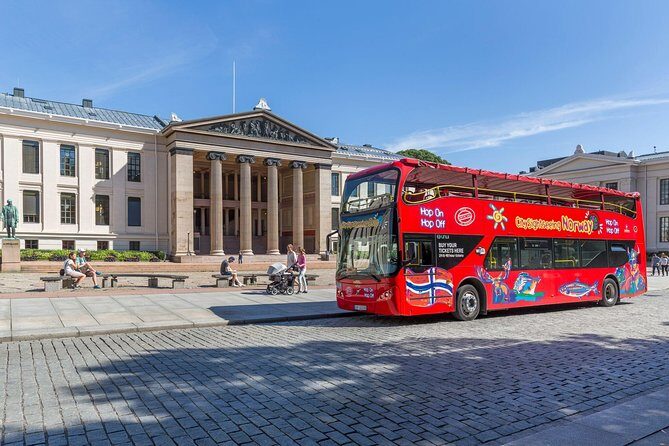
At $46.60 per person, this isn’t a “cheapest possible” activity. It is, however, a time-saver. You’re paying for three things: a guided-style route (audio), transportation between key sights, and the option to control your pace across a full 24 hours.
So the value comes down to how you use it:
- If you hop off at two or more major stops (for example, Vigeland plus Bygdøy museums), the bus starts to make financial sense compared with piecing together taxis or multiple rides.
- If you only want a quick look at the city center and you mostly plan to walk, you may find the bus cost hard to justify.
Also, remember what’s not included: you won’t pay any extra for the bus rides, but entry fees to museums and attractions are separate. That’s normal for hop-on hop-off tours, but it changes how you should budget and how early you may want to plan tickets if a site sells timed entry.
Meeting up and getting on: the cruise-terminal advantage
On a cruise day, you’re often fighting for minutes. The good news here is that cruise guests can board directly outside the cruise terminal area, without needing a long walk to an unrelated neighborhood stop.
That said, there’s one step you can’t skip. Your voucher needs to be exchanged for the hop-on hop-off bus ticket with City Sightseeing staff or the bus driver before or when you board, and you should keep your ticket with you at all times. Do that quickly and confidently; it reduces the chance of delays and confusion when lines form.
If you’re joining later from elsewhere in town, the first bus stop is at the National Theatre on Karl Johans Gate, with other convenient boarding spots listed around the central sights and museum corridors (including the Opera House area and the Bygdøy museums zone).
The timing reality: frequency is good, but build in buffer
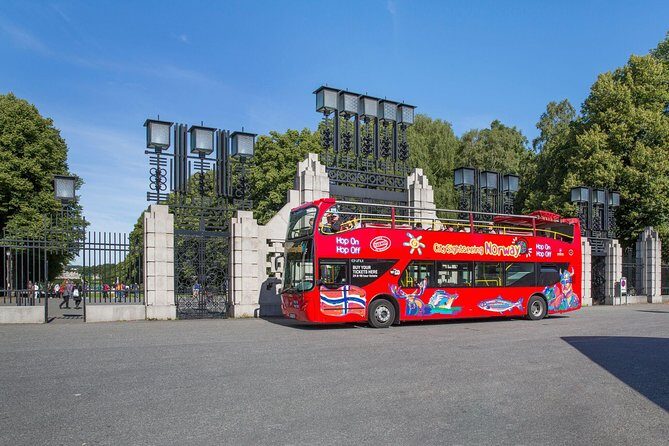
The schedule is simple: buses run about every 30 minutes and operate between 10am and about 4pm (last departure at 4pm). In good conditions, that cadence is exactly what you want—enough to hop off, stretch your legs, and still reasonably catch your next segment.
But this is also where a cautious traveler strategy helps. Some people ran into trouble with audio working properly or bus timing not matching the posted rhythm. You can’t control that, so you control your risk: don’t book yourself into a “must be here at exactly 2:10pm” plan.
For shore days, I recommend this rule of thumb:
- pick your must-see (usually one museum stop or one big attraction),
- then add one flexible extra stop,
- and leave a bigger-than-you-think return window so you’re not sprinting back to the ship.
Route map in plain English: from Karl Johans Gate to Akershus and back
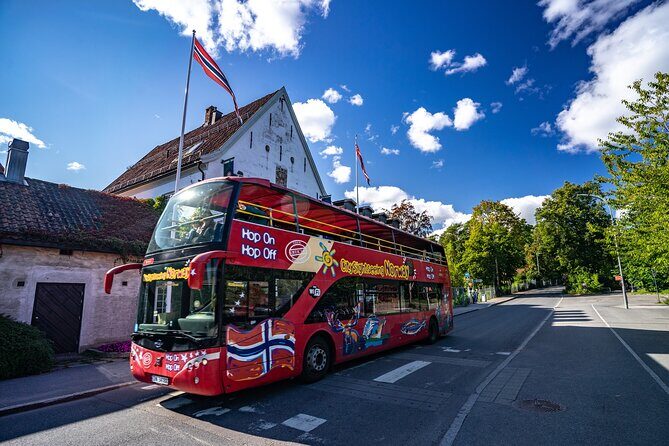
This is a loop, so you’ll see the same city segments in a continuous arc rather than a point-to-point ride. The route is packed with “I can’t believe this is in Oslo” landmarks, but it’s also practical: it connects central Oslo to the waterfront cruise area and then toward the museum peninsula of Bygdøynes.
Here’s the overall feel as you ride:
- You start in central Oslo near Karl Johans Gate, with the National Theatre and the Royal Palace area in view.
- You swing toward the Frogner/Vigeland side of town, where the park museums and sculpture area anchor the experience.
- Then you head toward Bygdøy for the maritime and polar-ship museums.
- Finally, you circle through the harbor and cruise terminal zone, then back toward Akershus Fortress and the downtown waterfront.
Even if you never hop off, staying on the bus for the full loop gives you a mental map. That helps a lot if you decide you want to walk between two nearby stops later.






Stop-by-stop: what to do when you hop off
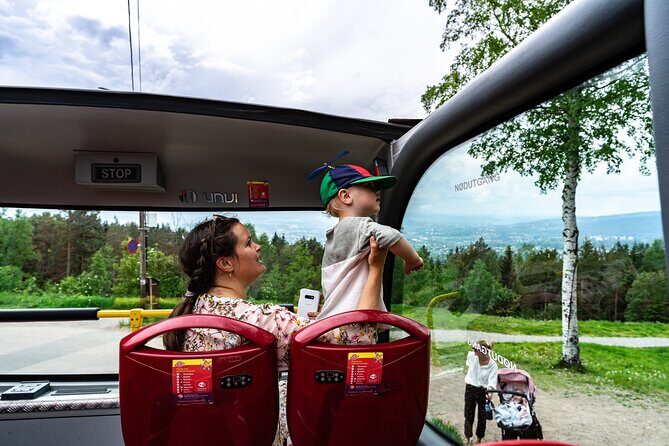
Below are the stops that matter most for building an actual itinerary. Use these as “choice points” rather than as a checklist.
Stop 1 area: Det juridiske fakultet / National Theatre / Royal Palace / Karl Johans Gate
This is your launch pad for the city center vibe. If you’re new to Oslo, it’s the best place to orient yourself fast. You’ll be near the major central landmarks and the main boulevard feel of Oslo, which makes it a smart “first ride” stop before you commit to museums farther out.
If you’re only doing one quick sightseeing pass, stay on the upper deck from here and let the bus show you the shape of the city. It’s easier than trying to guess what’s walkable once you’re farther away.
Vigelandsparken: Vigeland Sculpture Park and Oslo Museum
This is one of the stops people consistently appreciate because it delivers a recognizable “wow” moment. The Vigeland area is also a good stop when you want to stretch your legs for longer than a simple photo stop. Even if you don’t do every part of the park, hopping off here helps you experience Oslo’s green spaces and sculpture culture in one go.
One caution: build in extra time if you like to linger. Parks are slow in the best way, but your shore schedule is still your schedule.
Folkemuseet: Norwegian Museum of Cultural History
This stop is for culture, not just scenery. It’s a great fit if you want a deeper sense of Norwegian life beyond the modern city skyline. If your interest runs toward traditions and how people lived before the current era, this stop can be the most meaningful museum stop of the day.
I’d treat this as a “get off and really do it” option, not a grab-a-photo-and-go stop. The bus will still be there, but your energy might not be.
Bygdøynes: Kon-Tiki Museum / FRAM / Norwegian Maritime Museum
If you like sea stories, polar exploration, and real artifacts, Bygdøy is where you’ll feel like you made a smart decision. These museums are concentrated together, which is exactly what you want on a limited day: you can hop off, see more than one museum without commuting, and then hop back on when you’re done.
This is also the zone where bus timing matters less, because you’re already planning museum hours. If the bus runs a little behind schedule, you’re less likely to miss a “window” since you control the pace once you’re on the peninsula.
Hjortnes / cruise terminal gates (Hjortnes; Royal Caribbean & MSC cruise gate; Filipstad cruise terminal)
These stops are more about logistics than sightseeing. They’re useful because they connect you to the cruise terminal area and the broader harbor loop. If you’ve been walking and you want an easier return ride, these terminal-side stops are the safety net.
I think of these as “keep your options open” stops. If you’re tired, get back on quickly. If you still have energy, you can stay in the loop and move forward to another sight.
Tjuvholmen: harbor-front alternative stop
Tjuvholmen is the kind of stop that works well if you want a break from museum buildings and straight into a waterfront stroll. It’s also a nice choice when the weather is cooperating and you’d rather be outside than inside.
If your priority is long museum hours, you might skip it. If you want a lighter cultural pause, this stop can add a lot.
Akershuskai / Oslo Cruise Ship Terminal area: Akershus Fortress
Akershus Fortress is the “medieval Oslo” anchor. The fortress area is a strong end-of-day stop because it’s both photogenic and easy to understand from the outside even before you decide how much time to spend exploring.
For shore-day planning, I like this stop because it gives you a satisfying landmark without requiring a complicated route. If you’re short on time, even a focused visit here feels like you got a real Oslo highlight.
Vippetangen / Narvesen Havnelageret: ferry port and Langkaia area
These harbor-oriented stops help you stitch together your day around the waterfront and cruise/transport areas. They can be especially handy if you decide your museum priorities have changed and you just need the most convenient return segment.
Keep an eye on stop identification here. One theme from real-world usage is that stop numbering and map matching can be confusing, so look for the official City Sightseeing branding at the stop.
Operagata 4: Opera House / MUNCH Museum
This stop is your bridge between Oslo’s modern architecture and its art scene. The Opera House area is a classic “see it even if you don’t have time for a full museum visit” zone. If you want at least one modern landmark moment, hop off here and take in the area before deciding whether MUNCH fits your energy.
If you’re doing just a few big stops, Opera House plus one museum out on Bygdøy is a very solid, not-too-stressful combination.
Audio guide and Wi‑Fi: helpful when it’s working well
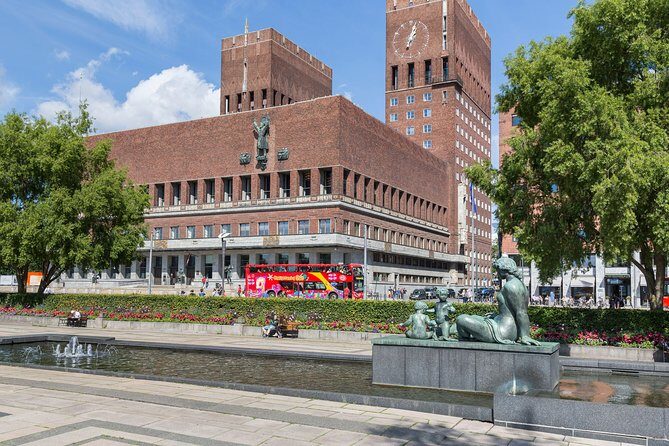
The audio guide is a major part of the value because it turns the bus ride into more than just transportation. You get commentary in 8 languages and can listen via free headphones, or choose BYOD if you prefer using your own phone/tablet.
The two listening modes matter:
- If you use in-seat modules, you don’t need to manage extra devices.
- If you use BYOD, you’ll want to bring your own headset. Adapters are available onboard, so you aren’t stuck if your plug is different.
When audio works smoothly, it’s genuinely useful. It helps you connect what you see outside the windows—palaces, parks, museums—to a bit of context, which is what makes the loop feel like a guided experience.
The downside to keep in mind is that audio continuity and synchronization can fail. So don’t rely on it as your only source of direction. If you want to avoid confusion, have a simple plan for what stop you care about most and what you want to do there.
Weather, comfort, and crowds: what to plan for
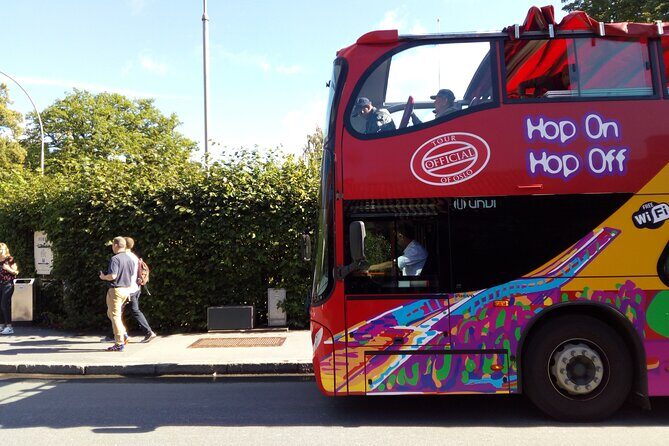
The buses run in all weather, which is perfect in a country where rain can change your day. Still, because this is an open-top double-decker format, you should plan for wind, mist, and chill—especially along the waterfront.
Comfort also depends on crowd levels. There are times when boarding at busy stops can feel tight, and some people reported difficulty getting on when buses were full. The practical fix is boring but effective: arrive at the stop a bit early, and be ready to wait for the next bus if the first one is crowded.
Also, check expectations around onboard amenities. Wi‑Fi is included, but food and drinks aren’t. So if you think you might be out long, pack a snack or plan to eat near the museum zones you’re visiting.
Who should book this, and who should skip it
This tour is best for:
- you have only one port day and want major Oslo sights without transfers
- you want to mix city views with museum time, especially around Vigeland and Bygdøy
- you like the idea of hopping back on whenever your feet start complaining
It might be less ideal if:
- your day is extremely time-crunched and you need strict reliability at exact times
- you mostly want central Oslo and prefer walking the inner city without bus loops
- you’re sensitive to audio issues and want live guidance rather than prerecorded narration
If you’re traveling with kids, the loop can reduce walking fatigue, but keep a close eye on boarding congestion. If you’re traveling solo with museum interests, this is one of the easier ways to sample a lot without thinking too hard.
Should you book the City Sightseeing Oslo hop-on hop-off bus?
Book it if you want a low-effort way to see Oslo’s biggest hits during a shore day. The value is strongest when you use it to reach multiple anchor stops—like Vigeland plus Bygdøy museums, or Opera House plus Akershus Fortress—and when you treat the schedule as flexible rather than exact.
Skip it or switch tactics if you mainly want one neighborhood and plan to walk there anyway. At $46.60, it’s not the kind of cost that pays off for a single quick photo pass. And since audio and timing can be inconsistent, build slack into your plan so one hiccup doesn’t turn your day stressful.
If you decide to go for it, do this: pick your top one or two stops before you board, exchange your voucher right away, and give yourself buffer time to get back to the ship.
FAQ
How long is the City Sightseeing Oslo hop-on hop-off bus tour?
The tour runs about 90 minutes for the loop, and you can stay on the bus for the full loop or hop on and off as many times as you like.
How often do the buses depart, and what time do they run?
Buses run every 30 minutes, with departures between 10:00 AM and around 4:00 PM (last departure from the first stop at 4:00 PM).
Where is the first stop, and can I board at other locations?
The first stop is at the National Theatre on Karl Johans Gate. You can also board at other conveniently located stops, including the Opera House area, Oslo Cruise Ship Terminal area, Vigeland Sculpture Park/Frogner Park area, and several museum stops around Bygdøynes.
Do I need to exchange my voucher before boarding?
Yes. You need to exchange your voucher for the hop-on hop-off ticket with City Sightseeing staff or the bus driver before or upon boarding, and you should keep the ticket with you.
Is audio included, and what are my listening options?
Audio commentary is included in 8 languages with free headphones. You can choose between in-seat modules or a BYOD option (bring your own device), and adapters are available on board.
Can I use the ticket for more than one ride?
Yes. Your voucher is valid for 24 hours, so you can hop on and off as many times as you like during that period.
Are museum entry tickets included with the bus tour?
No. Entry to attractions and museums is not included, and you’ll pay those separately.