Oslo in two hours, with stories attached. This city-center walk strings together headline sights like the Royal Palace, the Nobel-linked squares of Oslo, WWII hero Gunnar Sønsteby, and finishes at Oslo Cathedral—with short stops that make the whole thing feel brisk, not tiring.
I especially like the guide energy. In English, guides such as Nahuel and Eleonora keep it lively, answer questions, and sprinkle in fun, human details that help you picture how Oslo got to be Oslo. I also like the value detail: multiple stops include admission tickets, so you’re not constantly checking whether something costs extra.
The one drawback to consider is that this is mostly an outdoor, photo-and-story format. You won’t go inside every landmark (for example, the Royal Palace is admired from the outside), and the tour requires good weather—so you’ll want a plan for light rain and cooler days.
In This Review
- Key Highlights You Should Know Before You Go
- Starting in the Right Place: Karl Johans Monument to Oslo’s Core
- The Royal Palace Stop: Royal Architecture Without the Long Lines
- University Square: Where Oslo’s Brain Shows Up in Stones
- Gunnar Sønsteby Statue: WWII Courage in a Walk-by Moment
- Nationaltheatret: The Drama of Norwegian Performing Arts
- Rådhusplassen (Oslo City Hall): Nobel Peace Prize in Your Hands
- Akershus Castle and Fortress: Medieval Overviews and Harbor Guards
- Bankplassen: The Quiet Squares That Reveal Real Daily Life
- Bjørvika and the Water-Edge of Modern Oslo
- Jernbanetorget: Tiger Energy at Central Station
- Oslo Cathedral (Domkirke): End on a Spire and a Pause
- Price and Value: When $53.65 Feels Like More Than a Walk
- Pacing, Shoes, and Who This Tour Fits Best
- Should You Book This Oslo City Center Tour?
- FAQ
- How long is the Oslo city center tour?
- Where does the tour start and where does it end?
- Is the tour offered in English?
- What’s included in the ticket price?
- How big is the group?
- Does the tour require good weather?
- What is the cancellation policy?
- Is the tour suitable for people with service animals or if you use public transportation?
Key Highlights You Should Know Before You Go
- Small group size (max 15) means the tour usually feels more personal than a big bus ride.
- Nobel Peace Prize connections show up more than once, including Oslo City Hall (Rådhusplassen).
- Gunnar Sønsteby’s WWII resistance story adds a serious, memorable layer to the walk.
- Photo-friendly architecture stops keep you moving while still letting you pause for details.
- Practical guidance from the hosts includes recommendations for museums, hiking, and food.
- A satisfying finish at Oslo Cathedral gives you a classic Oslo landmark to close on.
Starting in the Right Place: Karl Johans Monument to Oslo’s Core
Your tour kicks off at the Karl Johan Monument in central Oslo (Sentrum). This is a smart meeting point because it sits in the walking heartbeat of the city, near major connections, and it’s easy to spot on arrival. You’ll start at 10:00 am, and the whole outing typically runs about 2 hours to 2.5 hours—long enough to cover big names without turning into an all-day marathon.
This matters because Oslo’s “best of” sights are clustered, but they’re not all obvious to a first-timer. A guided route helps you avoid the common mistake: wandering randomly and realizing you skipped the places that actually connect to major stories like the Nobel Peace Prize and WWII resistance.
You’ll also be moving at a steady city-walk pace. If you’re traveling with anyone who prefers a calmer rhythm, there’s no frantic sprint between stops. The structure is built around short visits (often around 10–20 minutes), so you get breaks without losing momentum.
You can also read our reviews of more city tours in Oslo



The Royal Palace Stop: Royal Architecture Without the Long Lines
One of the first major landmarks you’ll hit is the Royal Palace. It’s an iconic building in Oslo, and this stop is designed for exactly what most visitors want: quick admiration, good photos, and real context. Expect to learn the palace’s history and hear entertaining details about Norway’s royal family and their role today.
Important expectation-setting: the plan is not a full interior visit. You’ll admire it from the outside, which keeps the tour’s timing tight and avoids the drag of waiting around. For me, that’s a fair tradeoff. You get the best exterior “wow” factor plus stories, without turning your morning into a queue.
If you care about royal symbolism, this is also a useful contrast to what comes next—academic Oslo, civic Oslo, and later a WWII resistance narrative. The palace frames the theme of power and national identity early, before the tour broadens beyond royalty.
University Square: Where Oslo’s Brain Shows Up in Stones
Next you’ll walk to University Square, connected to the University of Oslo. This is one of those stops that feels calmer, but it teaches you how Oslo thinks. You’ll hear about the university’s place in education and its reputation as Norway’s oldest and most prestigious university.
You’ll also learn why this location is special beyond campus life. The tour includes the fact that Nobel Peace Prize ceremonies once took place here. That tidbit turns a pretty academic backdrop into a setting with real global reach.
A practical thing: this stop is more than sightseeing. It helps you understand how Oslo presents itself as a country of institutions and ideas, not just scenery and museums. When you connect that mindset to what you’ll see later at Nobel-linked sites, it all clicks.
Gunnar Sønsteby Statue: WWII Courage in a Walk-by Moment
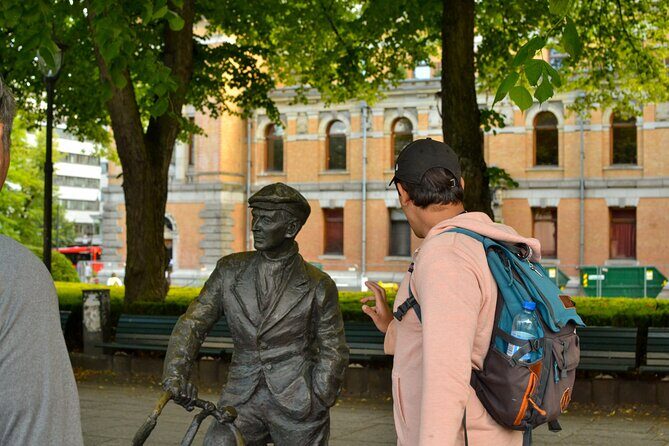
Then comes a stop that adds weight. You’ll see the Gunnar Sønsteby statue and hear about Norway’s most decorated war hero and his resistance against Nazi occupation during WWII.
What makes this good for a walking tour is how it humanizes history. A statue could easily become a quick photo. Here, the story focus matters: you’ll get the courage, clever tactics, and the legacy of Sønsteby as a symbol of Norwegian freedom and resistance.
This is also a reminder that Oslo’s major landmarks aren’t only about beauty. They’re about memory. And because the stop is timed (about 15 minutes), you don’t get stuck in a lecture—you get a clear, meaningful snapshot and then move on.
Nationaltheatret: The Drama of Norwegian Performing Arts
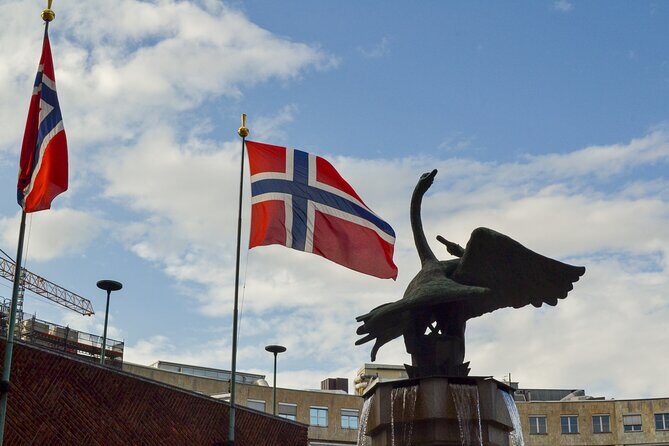
At Nationaltheatret, you’ll admire the grand National Theatre, one of Oslo’s major cultural centers. The building’s scale and design do a lot of the talking. The tour adds the “why”: its rich history and the playwrights honored there, including Henrik Ibsen.
If you don’t already know Ibsen, you’ll still leave with a better sense of how theatre fits into Norwegian identity. If you do know him, this stop gives you a reason to look closely—facade details, the feel of the venue, and how Oslo treats the arts as part of everyday national life, not a separate world for tourists.
The stop runs about 15 minutes, so it’s best when you’re ready to look up at architecture and let the guide connect the dots between the building and Norwegian culture.






Rådhusplassen (Oslo City Hall): Nobel Peace Prize in Your Hands
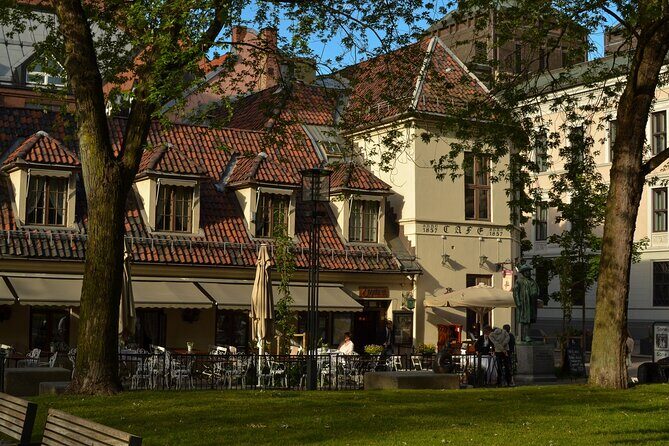
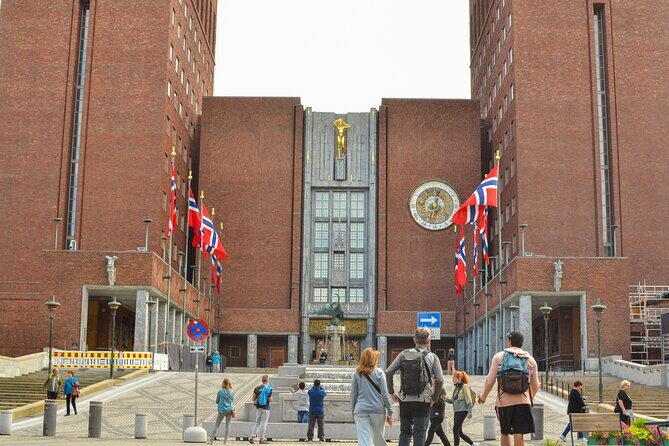
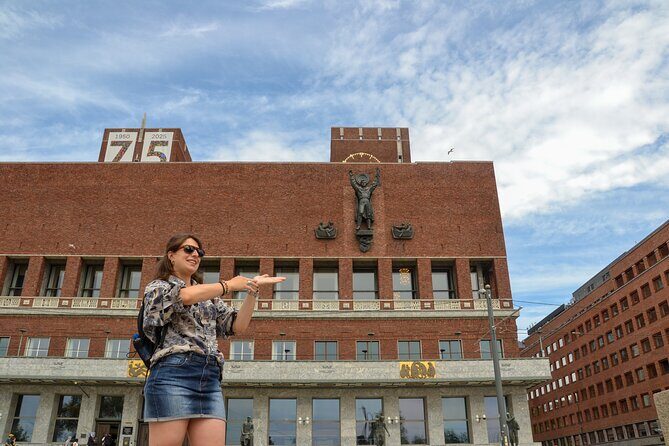
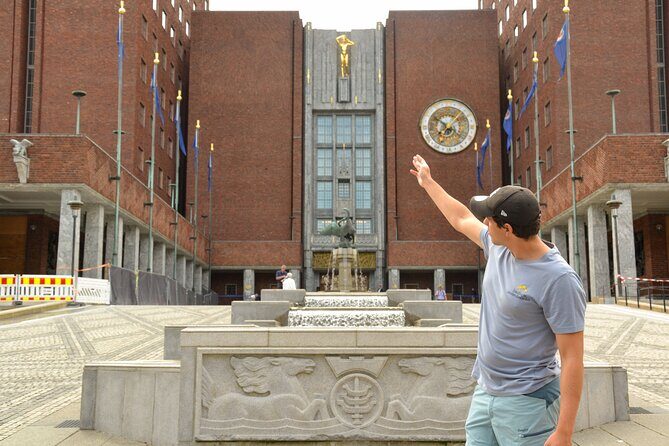
Next is Rådhusplassen, where you’ll see Oslo City Hall. This is a key Nobel Peace Prize connection point—each year, the prize ceremony is tied to this setting.
The architecture and murals are part of the story. The tour frames how the city tells Norway’s past and everyday life through art, and how that connects to the idea of civic pride and global peace.
This is one of the most satisfying stops on the walk because it mixes emotions. It’s easy to admire the building and move on, but the Nobel link makes you slow down just enough to see that the square is designed for meaning, not just function.
Akershus Castle and Fortress: Medieval Overviews and Harbor Guards
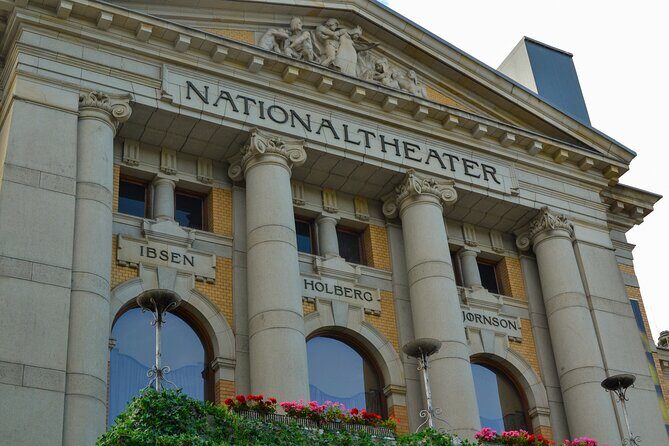
You’ll then head to Akershus Castle and Fortress (Akershus Slott og Festning), one of Oslo’s historic core sites. Think of this as medieval Oslo with an outlook over the harbor—defensive walls, royal ties, and a sense of how the city protected itself.
The stop also connects with nearby Christiania Torv, the old town square where King Christian IV famously decided to rebuild Oslo after the 1624 fire. That detail turns the fortress area into a timeline: guard the city, then rebuild it, then grow into what you see now.
This part of the tour is timed at about 20 minutes, which is just right. You get enough time to take in the structure and the viewpoint, and also absorb the historical link to the city’s transformation.
One practical note: this area is outdoors. On windy days, plan for it—warm layers help more than you’d expect in Oslo.
Bankplassen: The Quiet Squares That Reveal Real Daily Life
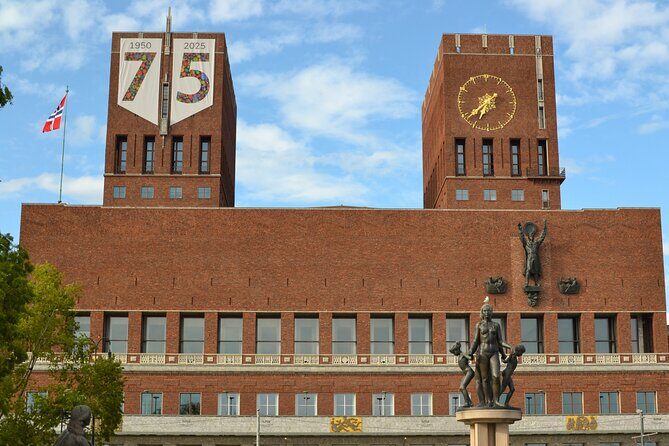
Not every downtown stop is loud. At Bankplassen, you’ll step into a square that holds layers of Oslo’s everyday story. The tour points out that this area has been home to the city’s first restaurant, an early theatre, and even an orphanage.
That mix is what makes Bankplassen more than a photo pause. You start noticing how cities work: entertainment and survival, public spaces and care, business and community—all coexisting in the same small geography.
The listed time here is about 10 minutes, and the ticket info is free for this stop. That makes it a great mental reset point. You’ve seen power (palace), ideas (university), courage (WWII), arts (theatre), and global symbolism (Nobel City Hall). Bankplassen returns you to the human scale.
Bjørvika and the Water-Edge of Modern Oslo
Now you get a modern Oslo payoff. The tour passes through Bjørvika, where you’ll enjoy sweeping views toward Ekeberg Park, known for forest trails and sculptures.
You also get a sense of Oslo’s contemporary culture moving alongside its waterfront identity. On the route, you’ll pass by the Munch Museum (modern art anchored to Norway’s most iconic artist), the striking Oslo Opera House, and the Deichman Library—a cultural hub with a design-minded feel.
One fun detail: you’ll be pointed toward a floating sculpture in the fjord, an odd little reminder that this city likes creativity right at the waterline.
This segment is about 10 minutes and is a free-to-view stop. It’s not trying to replace a full museum day. It’s doing something smarter: it shows you how Oslo’s “today” looks, so you can decide what’s worth adding later.
If your trip is short, this kind of “preview” value matters a lot.
Jernbanetorget: Tiger Energy at Central Station
Next is Jernbanetorget, the lively square at Oslo’s central station. The big visual here is the iconic tiger sculpture, the kind of thing you might miss if you didn’t know to look for it.
The tour uses this stop for orientation in a different way. It helps you feel the city’s everyday rhythm—the place locals and travelers cross paths. That matters because Oslo’s best walking days feel easiest when you understand where the main flows are.
The stop is about 15 minutes, and again it’s a free area. Think of it as a stretch and regroup point: take in the urban energy, grab a quick snack if you need one, and then prepare for the final spiritual and architectural closer.
Oslo Cathedral (Domkirke): End on a Spire and a Pause
The walk concludes at Oslo Cathedral (Domkirke), near Karl Johans gate, on the tour’s end point address: Karl Johans gt. 11. This ending is a smart choice because the cathedral gives you both atmosphere and a strong visual finish.
You’ll see a majestic blend of history and architecture, plus soaring spires and details that reward a slow look. If you want a final moment that feels like Oslo’s older soul, this is it.
The stop is about 10 minutes, and the cathedral visit is listed with admission included. If you’re able, take those minutes to step in (when open) and soak up the quieter mood. You’ll get a different feel of the city than you did at the palace or theatre.
Price and Value: When $53.65 Feels Like More Than a Walk
At $53.65 per person, you’re paying for a guided route plus structured time at multiple major landmarks. The best way to judge the value is not the headline price—it’s what you’re getting inside that price.
Here’s what stands out for value:
- A guided pass through a cluster of downtown icons over about 2 to 2.5 hours.
- English narration throughout.
- Mobile ticket convenience.
- Several stops include admission tickets, so you’re not constantly paying separately.
Also, the group is kept to a maximum of 15 travelers. Small group size doesn’t guarantee a great guide, but it usually helps the guide manage questions and keep things interactive. And from the guide style you can expect (with hosts like Nahuel and Eleonora), the tour tends to be more than a script.
If you’re thinking of doing a DIY route, the main value isn’t the photos. It’s the context that turns buildings into stories you can remember while planning the rest of your trip.
Pacing, Shoes, and Who This Tour Fits Best
This is a walking tour with a clear structure and short stops. That makes it a good match for:
- First-time visitors who want an efficient introduction to Oslo’s central highlights.
- Travelers who like architecture but also want human history, not just facts on plaques.
- People who appreciate a guide who can answer questions and share practical next steps.
It may be less perfect if you want long museum time, deep interior access, or a slow, no-pressure wandering day. The stops are timed, and the Royal Palace in particular is an outside-looking experience.
Shoes matter. Oslo’s downtown is easy to walk, but you’ll cover enough ground that you’ll feel it by the end. Dress for good weather, since the tour is designed to run outdoors and can be rescheduled or refunded if conditions are poor.
Should You Book This Oslo City Center Tour?
Book it if you want to get your bearings fast and learn what makes Oslo feel like Oslo: royal symbolism, Nobel connections, WWII resistance memory, and the arts. The route is tight, the guide-led storytelling is the point, and the included admissions reduce friction.
Skip it if you’d rather spend your hours only inside museums or if you strongly prefer long interior time at every stop. This tour is about perspective and orientation, not a full day of ticketed attractions.
If your schedule is limited and you want your first Oslo day to feel purposeful, this is an excellent choice.
FAQ
How long is the Oslo city center tour?
The tour usually lasts about 2 hours to 2 hours 30 minutes.
Where does the tour start and where does it end?
It starts at the Karl Johan Monument area in Sentrum and ends at Oslo Cathedral (Domkirke) on Karl Johans gate.
Is the tour offered in English?
Yes, it’s offered in English.
What’s included in the ticket price?
The tour includes a mobile ticket, and admission tickets are included for several stops. Some stops are free to view.
How big is the group?
The tour has a maximum of 15 travelers.
Does the tour require good weather?
Yes. It requires good weather, and if it’s canceled due to poor weather, you’ll be offered a different date or a full refund.
What is the cancellation policy?
Free cancellation is available up to 24 hours in advance for a full refund. If you cancel less than 24 hours before the start time, you won’t get a refund.
Is the tour suitable for people with service animals or if you use public transportation?
Service animals are allowed, and the tour is near public transportation.