REVIEW · OSLO
Oslo City Walks – The City of Contrasts
Book on Viator →Operated by Oslo Guidebureau · Bookable on Viator
Oslo changes fast on a two-hour walk. This City of Contrasts route connects modern architecture with older neighborhoods so the city feels like one story instead of random sights. I love how the walk centers on the Oslo Opera House, including a possible roof stroll if timing allows, and I also like the focus on Bjørvika’s transformation from port area to cultural magnet.
You’ll also get real value from the local guide, with clear context that makes the details stick as you move. The tour runs in all weather, so you’re not forced to guess whether the city will be too wet or too cold for a meaningful evening outing.
One thing to consider: the visit to Munch is time-focused and the Munch museum ticket isn’t included, so if you want more time inside, you may need extra planning beyond this 2-hour loop.
In This Review
- Key highlights worth your attention
- Oslo at 5: the City of Contrasts walk in plain terms
- Where you start and how the route finishes neatly
- Stop 1: The Norwegian National Opera & Ballet, including a roof stroll
- Stop 2: Munch and Bjørvika’s newest cultural shift
- Stop 3: Akrobaten pedestrian bridge—where neighborhoods meet
- Why the contrasts theme actually helps you understand Oslo
- Price and value: what $53.31 buys you here
- Timing, pacing, and what to bring for an all-weather walk
- Who this tour suits best
- Should you book Oslo City Walks: The City of Contrasts?
- FAQ
- How long is the Oslo City Walks tour
- What is the price per person
- Where do I meet the guide
- Where does the tour end
- Is the tour in English
- Is Munch admission included
- Does the tour run in bad weather
Key highlights worth your attention
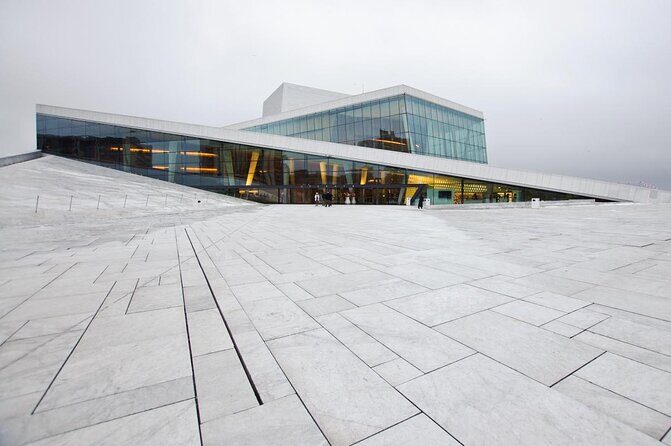
- Opera House views from the roof (if time allows), plus the chance to understand why the building feels so different
- Bjørvika’s shift from container port to cultural hub, explained through what you see on the ground
- Munch museum area in the Bjørvika district, the newest draw in this part of Oslo
- Akrobaten pedestrian bridge, a key connector between Grønland and Bjørvika that’s become a local photo stop
- Small group size (max 20), which helps the guide keep things moving without turning it into a shuffle
Oslo at 5: the City of Contrasts walk in plain terms
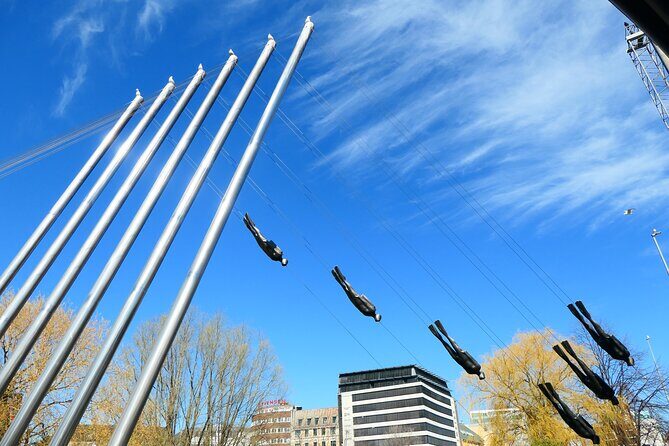
If you like cities that look modern but still remember where they came from, this Oslo evening stroll fits well. The theme is simple: Oslo doesn’t treat old and new like separate chapters. You’ll walk through areas where history, redevelopment, and today’s culture sit close enough to compare in a single afternoon-to-evening stretch.
This tour runs about 2 hours and starts at 5:00 pm. That timing matters. In late-day light, the Opera House area and the Bjørvika waterfront-style zones tend to feel more dramatic, and you spend less of your time fighting harsh midday crowds. The route also ends near Deichman Bjørvika, which is a practical finish if you’re planning dinner or transit right after.
The price is $53.31 per person, and the “what you pay for” is mostly the guide and the guided structure. You’re not paying for a big pile of included attractions—admission for Munch isn’t included, for example. Instead, you’re paying to have someone connect the dots between neighborhoods and buildings, and to keep the pacing tight enough to cover the three main anchor areas.
You can also read our reviews of more city tours in Oslo


Where you start and how the route finishes neatly
You begin at the Oslo Visitor Center at Jernbanetorget 1 (near central transit). That’s one of the smarter features of this tour: you don’t have to solve a complicated meet-up location. If you’re arriving by tram or train, you can usually get there without a taxi detour.
You’ll end at Deichman Bjørvika, located at Anne-Cath, Vestlys plass 1. Ending at a landmark like that is useful. It gives you a clear “done” point for your evening, so you don’t feel stuck walking back through half the city just to get to somewhere you actually want to eat.
And because this tour is near public transportation, you’re not locked into one long return route. If you decide you want to extend your evening, you can often do it with less friction than if you finished somewhere far out of the center.
Stop 1: The Norwegian National Opera & Ballet, including a roof stroll
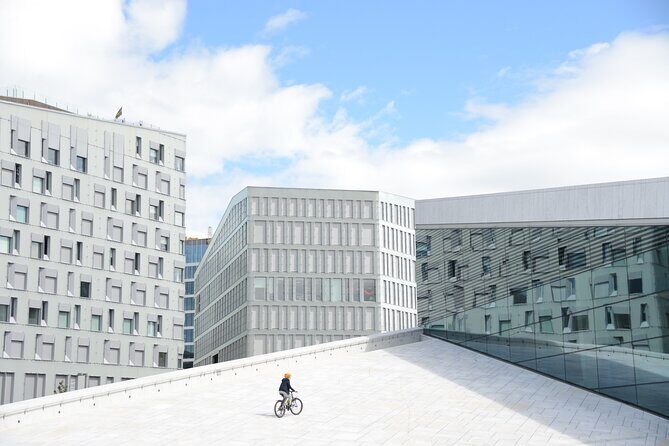
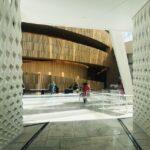
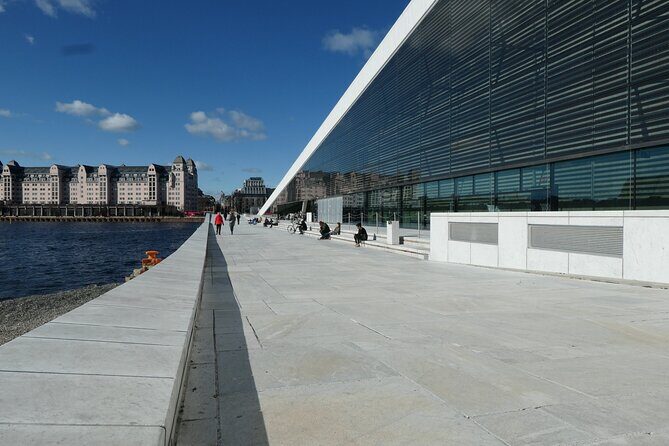
Your first big wow moment is the Norwegian National Opera & Ballet area. The Opera House is a modern design icon, and the tour uses it as the launching pad for the whole “contrasts” idea: Oslo’s present-day confidence, shown in architecture you can approach up close.
The tour notes that if there’s time, you can take a stroll on the roof of the Opera House. That’s a practical perk, because it turns a building photo-stop into something more active. You’ll get a better feel for scale and the way the structure sits in its waterfront-adjacent setting.
A detail I appreciate here: the tour frames this as more than a pretty exterior. It’s positioned to help you understand how modern design and city planning can sit next to cultural life and still feel grounded in place. Even if you only do the standard time block outside, you’ll likely leave with a clearer picture of why this building is talked about so often.
One timing note: the roof part is conditional on time, so don’t assume it’s guaranteed. If you’re the kind of person who plans your photos down to the minute, you’ll want to keep your pace steady in the earlier segments.
Stop 2: Munch and Bjørvika’s newest cultural shift
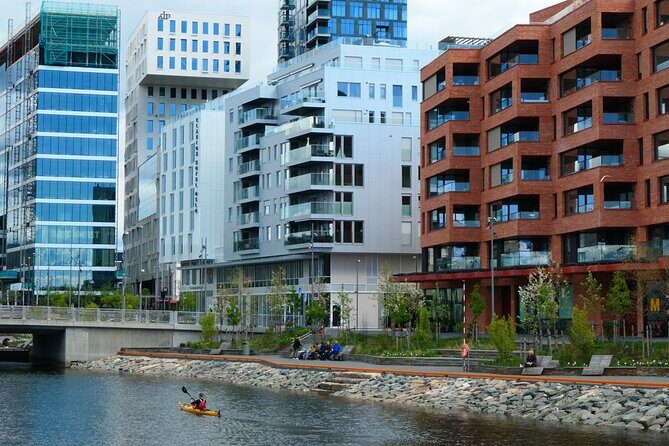
Next comes Munch, tied to the Bjørvika area. The museum opened in October 2021, and the tour treats it as the newest anchor in this rapidly changing part of Oslo. That matters because Bjørvika is one of those districts where you can feel redevelopment happening around you, not just read about it later.
You’ll spend about 20 minutes here, but admission to Munch is not included. That’s a crucial value point. In a short walk like this, Munch is more likely to be a focused look at the area and the museum presence, rather than a full museum visit unless you’re quick.
If you’re a serious Munch fan and want the full museum experience, you may prefer to treat this stop as a tasting portion. Then you can come back on another day (or adjust your plans around museum time elsewhere). If you’re more of a “show me the context” person, this stop still works well because it adds meaning to why the district feels like it’s moving toward culture and away from its earlier industrial identity.
Stop 3: Akrobaten pedestrian bridge—where neighborhoods meet
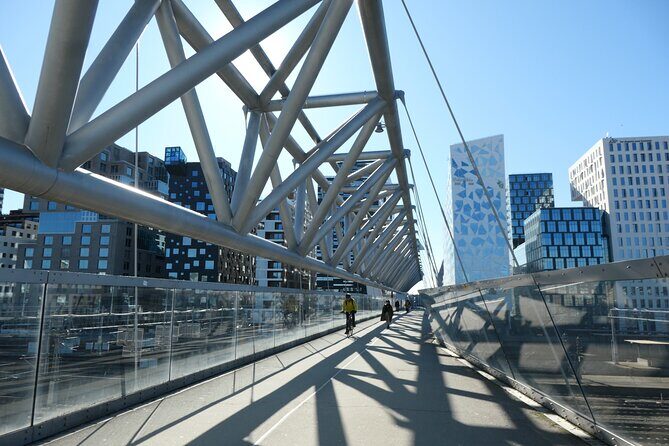
The final anchor is the Akrobaten Pedestrian Bridge, which connects Grønland and Bjørvika. It’s the kind of spot that’s easy to overlook if you’re rushing, but it becomes a memorable contrast moment once you notice what it’s doing.
This bridge is popular because it’s a connector you can actually experience. Instead of imagining how districts relate, you get the physical link between them—walking across, looking both ways, and seeing how the city’s “old side” and “new side” share space.
The tour gives this stop about 10 minutes, and that’s enough for a quick crossing and orientation. If you linger too long taking pictures, you may feel the time pressure near the end, but if you enjoy brief viewpoints, it’s a good length.
Admission here is free, and you don’t need tickets. That makes it a low-stress payoff near the end of your tour, and it also helps you keep your expectations realistic. This isn’t a museum day. It’s a guided city logic lesson you can walk through.





Why the contrasts theme actually helps you understand Oslo
A lot of city walks list sights. This one tries to explain how Oslo fits together. The “City of Contrasts” idea isn’t just marketing wording. It’s reflected in the set-up of the stops:
- You start with modern cultural architecture at the Opera House.
- You shift into the energy of Bjørvika, including the newest Munch attraction.
- You end with a pedestrian connector that physically links distinct districts.
That flow helps you avoid the common problem of “I saw a building, then I saw another building.” Instead, you start noticing patterns: how Oslo repurposes space, how it invites people into new cultural zones, and how the city’s design choices affect where life happens.
There’s also a big-history flavor in the Kvadraturen area mentioned as part of the tour highlights: it’s home to Oslo’s oldest restaurant and was once the site of the original town hall. Even if your time there is brief, that’s the kind of anchor detail that keeps you from thinking Oslo’s story is only about redevelopment. It’s older than the new skyline—and the guide helps you feel that.
Price and value: what $53.31 buys you here
At $53.31 per person for roughly 2 hours, this is the mid-range end of walking tours. The key value isn’t paid admissions (because Munch isn’t included). The value is the human layer: a guide who can connect architecture, district change, and neighborhood history into a narrative you can remember.
You also get:
- Mobile ticket convenience
- English language service
- Small group size (max 20), which tends to make Q&A and pacing easier
- A free experience item at the Opera House roof if time allows, and free outdoor stops like the bridge
So I’d frame it like this: if you’re the type who reads plaques and still feels like the city is a jumble, the guided structure will likely feel worth it. If you’re purely sight-driven and don’t care about context, you might get less out of it than you’d hope.
Timing, pacing, and what to bring for an all-weather walk
The tour runs in all weather conditions, so you should plan like Oslo can change its mind quickly. Bring a jacket you trust. Even on a day that seems fine, you’re walking outside for a good chunk of the two hours.
The tour also asks for moderate physical fitness. This is not a hike, but you’ll be on your feet for multiple stops with an evening pace. Wear shoes that handle city walking comfortably.
Because the tour is near public transportation, you don’t have to fight a long arrival plan. Just make sure you’re at the Oslo Visitor Center a little early so you don’t feel rushed when the group meets.
Who this tour suits best
This walk is a strong match if you:
- Want a short guided loop that hits the biggest “contrast” points without turning into a long day
- Like modern architecture but also want the historical thread that explains why it exists
- Prefer a small-group feel and a guide who can keep the story moving
It may be less ideal if you’re trying to fit a deep museum experience into the same day. With Munch admission not included and only about 20 minutes allotted, plan on using the stop as a context moment unless you’re ready to adjust.
Should you book Oslo City Walks: The City of Contrasts?
I think this one is a smart booking choice if you want to understand Oslo quickly, not just collect photos. The price buys you guidance through neighborhoods and design choices that would be harder to interpret alone, especially around Bjørvika and its redevelopment story.
Book it if:
- You’ll enjoy short, focused time at each stop
- You want the Opera House setting and the Bjørvika/Munch connection explained in plain language
- You like finishing near Deichman Bjørvika so you can keep your evening going
Skip it (or pair it with a separate plan) if:
- You want a full Munch museum visit during this time window
- You prefer totally self-paced walking with no tour structure
In short: if you want Oslo to make sense in two hours, this walk does that job well.
FAQ
How long is the Oslo City Walks tour
The tour lasts about 2 hours.
What is the price per person
The listed price is $53.31 per person.
Where do I meet the guide
Meet at Oslo Visitor Center, Jernbanetorget 1, 0154 Oslo, Norway.
Where does the tour end
The tour ends at Deichman Bjørvika, Anne-Cath, Vestlys plass 1, 0150 Oslo, Norway.
Is the tour in English
Yes, it’s offered in English.
Is Munch admission included
No. Munch admission is not included, though the surrounding area stop is part of the walk.
Does the tour run in bad weather
Yes. It operates in all weather conditions, so you should dress appropriately.