REVIEW · OSLO
Oslo City Walks: In the Heart of Oslo
Book on GetYourGuide →Operated by Oslo Guidebureau AS · Bookable on GetYourGuide
Oslo is best learned on foot. This 2-hour walking tour gives you a local guide and a tight route through the city center, from the old fortress to the royal area and ending near Karl Johan. I like how the stops are built around clear history beats, and I also like that the pace includes explanation time rather than turning it into a speed march. One possible downside: if you’re hoping for lots of deep monument time, the tour is short, and the group size can feel a bit big depending on the day.
You’ll start in a smart spot with easy wayfinding, then walk through views and landmarks that make Oslo feel logical. The guide is the main feature here—history, context, and how the city grew into the modern capital you see today. My main caution is simple: bring comfortable shoes, because this is real walking and you’re expected to keep moving.
In This Review
- Key things to love about Oslo City Walks
- Why this 2-hour Oslo city walk works
- Where the walk starts inside Østbanehallen
- Akershus Fortress: the stop that gives you Oslo’s timeline
- Kristiania Torg: seeing how the city center worked
- Royal Palace: the monarchy angle, starting in the 1840s
- Finishing on Karl Johan near Parliament
- What the certified guide actually adds
- Price and value: is $52 worth it for 2 hours?
- What to bring, what to wear, what to avoid
- Who this tour suits best
- Should you book Oslo City Walks: In the Heart of Oslo?
- FAQ
- How long is the Oslo City Walks tour?
- Where does the tour meet?
- What sights are included?
- What languages is the guide available in?
- What is included in the price?
- How much does the tour cost?
- Are high-heeled shoes allowed?
- Are drones allowed during the tour?
- Is there free cancellation?
- Can I reserve and pay later?
Key things to love about Oslo City Walks
- Certified Oslo guide who explains what you’re seeing in plain language
- Akershus Fortress stop, tied to centuries of conflict and change
- Kristiania Torg for understanding how the city center functioned historically
- Royal Palace area and the monarchy story starting in the 1840s
- A finish on Karl Johan, where you can keep exploring immediately
Why this 2-hour Oslo city walk works
This is the kind of tour I recommend when you want to get oriented fast without cramming your schedule. At 2 hours, the route is short enough to fit your day, but it still hits major anchors in the Oslo core: old defenses, a historic square, the royal zone, and the main pedestrian artery where the city gathers.
The best part is that you’re not just seeing buildings. You’re getting the “why” behind them—how Oslo’s center developed over time and what each place signaled. That’s what turns photos into understanding.
It’s also a practical choice if you’re the type who likes a plan but still wants to roam afterward. You end near Parliament on Karl Johan, meaning you can continue on your own with cafes, museums, and strolls.
You can also read our reviews of more city tours in Oslo



Where the walk starts inside Østbanehallen

Your meeting point is the Oslo Visitor Center inside Østbanehallen. That matters more than you might think. Østbanehallen is a major transport hub, so it’s easy to arrive without hunting across the city.
Once everyone’s there, the guide greets the group and lays out what you’ll cover. Then the walking starts in earnest. This “brief first, walk second” rhythm usually helps you follow along—especially if you’re learning the city’s timeline and names as you go.
And because it’s a walking tour, you should show up with the right energy: expect steady movement, short stops for looking and listening, and a lot of ground covered in a relatively compact route.
Akershus Fortress: the stop that gives you Oslo’s timeline
The first big landmark is Akershus Fortress. It’s one of those places where you can feel the layers even if you’re not a history expert. You’re going to see a site that has witnessed conflict starting as far back as the 14th century and continuing through the Second World War.
For me, the value here is focus. A fortress isn’t just a wall and a view—it’s a statement about power, protection, and control. In a short tour, this kind of anchoring landmark helps your brain “map” the rest of Oslo.
Practical tip: fortress sites often involve steps, uneven areas, and standing for explanations. Wear shoes you trust on stone or worn paths. Also keep your expectation realistic: this is a guided stop, not a full independent deep-dive into every corner.
Kristiania Torg: seeing how the city center worked
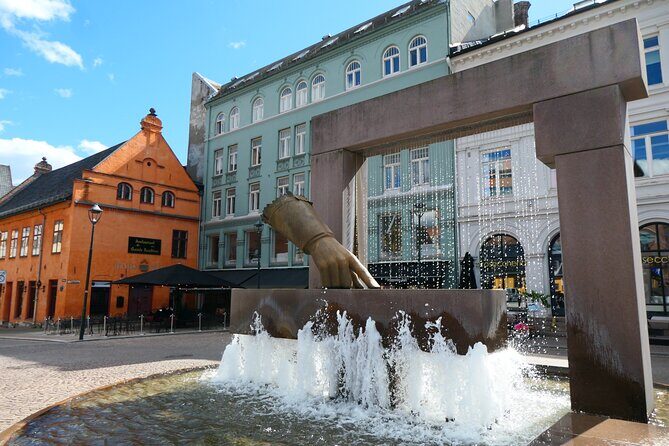
After Akershus, you head toward Kristiania Torg, a square that used to be the heart and soul of the city. Even if you’re not familiar with the name, the idea is clear: a central square is where daily life collects.
This stop works because it shifts you from military history to civic life. Fortresses explain control and defense. Squares explain routine—trade, gatherings, movement, and how people made the city function day to day.
I like that the guide frames what you’re seeing in terms of history rather than turning it into a random photo stop. If you enjoy learning how cities “used to work,” this is the kind of place where those explanations make the square feel alive.
Royal Palace: the monarchy angle, starting in the 1840s
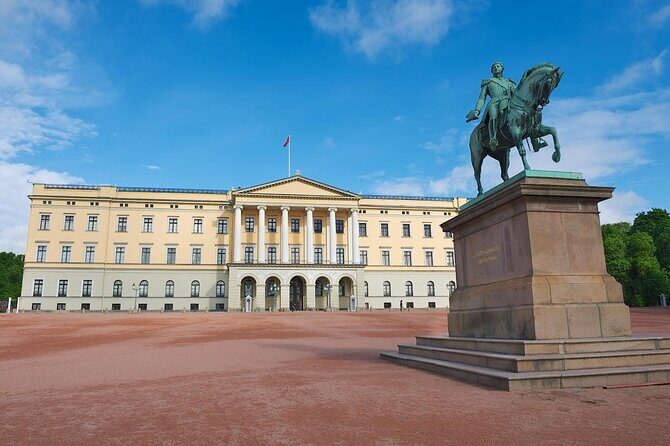
Next comes the Royal Palace area. The key detail you’ll hear is that Norwegian royals have resided there since the palace was completed in the 1840s. That one fact gives your visit a clear timeline and helps you place the monarchy story in the broader flow of Oslo’s development.
This part of the walk also gives you a nice shift in atmosphere. Instead of walls and squares, you’re in the formal, ceremonial space where national identity shows itself in architecture and layout. It’s also a good moment to slow down and notice the surroundings: how the area is designed, how it sits within the city, and how the space connects back to the wider central streets.
If your interest is mostly in architecture and symbols, you’ll appreciate how the guide points out what matters. If your focus is only on scenery, you can still enjoy the views and the grand setting—but you may find the historical context is the real payoff.






Finishing on Karl Johan near Parliament

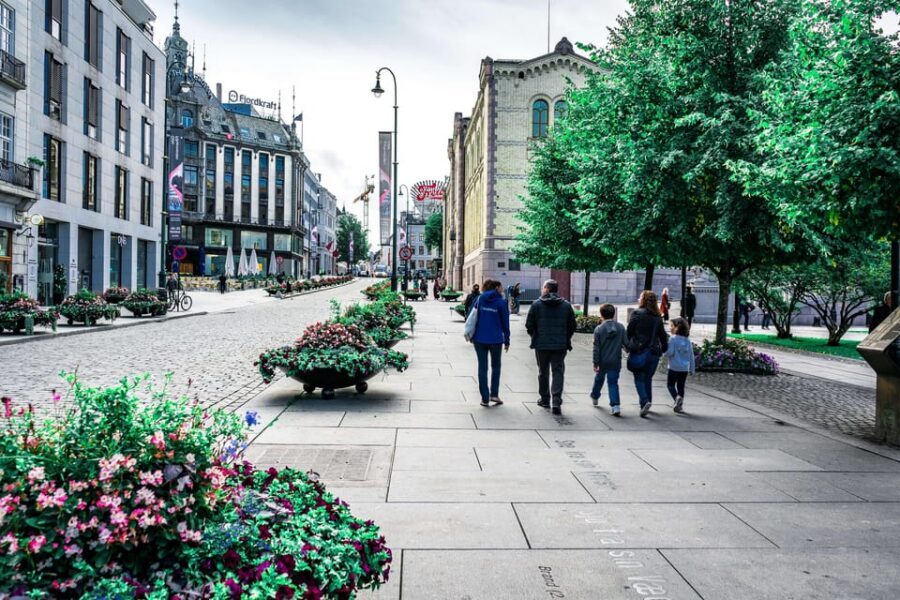
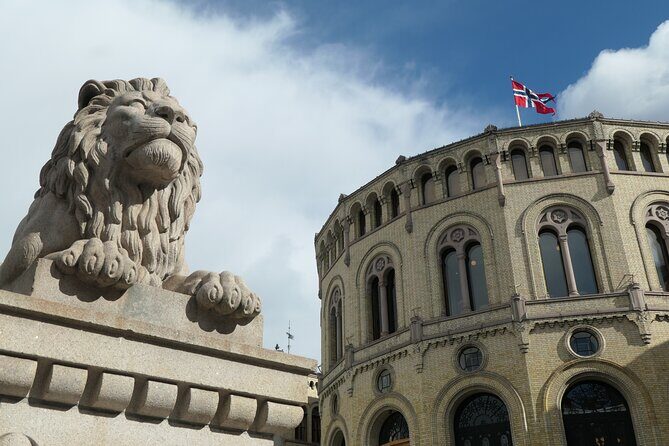
The tour concludes on Karl Johan near Parliament. This is smart design for a short walking experience. Karl Johan is a major pedestrian street and an easy place to transition from guided walking to independent wandering.
Why the ending location is a plus: you’re not deposited in an obscure corner. You’re left near an area that makes it easy to grab a hot drink or a bite and keep going with your own plans.
If you time it well, you can use the tour’s last minutes as a scouting moment. Look at what direction feels easiest for your next stop—shopping streets, museums, or simply a longer walk.
What the certified guide actually adds
The guide is credited as certified, and that’s more than a badge on paper. In a city like Oslo, the difference between a good walk and a great one is interpretation: what you notice, what you ignore, and what you come away understanding.
Based on the tone described in the experience feedback, the best-guided moments are the ones where the guide keeps the pace moving but still adds enough stops to explain what you’re seeing. That balance matters. Too fast and you just get exercise. Too slow and you lose the thread.
One small consideration: on at least one day, the group was described as too large, even with a strong guide. If you know you prefer quieter, less crowded experiences, consider aiming for a time that fits your travel style and arriving a few minutes early to get a comfortable viewing spot when the group pauses.
Price and value: is $52 worth it for 2 hours?
At $52 per person, this tour sits in the practical “mid-range” category for a guided city experience in a capital. For me, the value comes from two things you can’t easily replace on your own:
- A guided route that hits major anchors without you spending time planning.
- Context while you walk, especially for Akershus Fortress and the square and palace areas.
Since Oslo’s center is compact, you could technically do some of this on your own. But you’d lose the quick timeline framing and the “what this meant” explanations that make short tours feel worthwhile.
Also, the tour is only 2 hours, which helps if you’re trying not to blow half your day on sightseeing. You can treat this as your foundation tour, then spend the rest of your time choosing what to repeat or expand.
What to bring, what to wear, what to avoid
This walk is simple, but the details matter.
Bring:
- Comfortable shoes you can walk in for extended stretches
- Weather-appropriate clothing, because Oslo weather can change fast
Not allowed:
- High-heeled shoes
- Drones
- Unaccompanied minors
- Climbing
That last one matters for peace of mind. When you’re near fortress walls or historic structures, guides usually want everyone to stay safe and off fragile or restricted areas. Plan to look, listen, and move—no risky photo acrobatics.
If rain shows up, wear gear that keeps you moving comfortably. The experience has included rainy conditions, and a good guide will still keep the tour going with explanations at the stops.
Who this tour suits best
I’d book this if you:
- Want a first-time orientation in Oslo
- Like learning history, but you don’t want a long multi-hour museum day
- Prefer a guided route that ends in a great spot for further exploring
- Enjoy walking and can handle a solid chunk of city center walking
I would not choose it if you’re only interested in monument details with lots of time inside. This is a structured walk with key stops, not a full deep-dive into every building.
It’s also a decent fit for solo travelers who want company for a couple hours, or for couples who like shared context while strolling. If you’re traveling with kids, keep in mind that unaccompanied minors aren’t allowed, so you’ll need to be with them.
Should you book Oslo City Walks: In the Heart of Oslo?
Yes, I think you should book this if you want a focused, easy-start Oslo day. The route covers high-impact landmarks—Akershus Fortress, Kristiania Torg, the Royal Palace area, and a finish on Karl Johan near Parliament—and the certified guide ties it together with history so your time doesn’t feel like a checklist.
Skip it only if you’re chasing a longer, more monument-heavy experience. Two hours is short, and the experience depends heavily on how much you enjoy guided storytelling as much as the sights themselves.
If you want, you can use this tour as your Oslo “reset” day: get the story straight first, then spend the rest of your time choosing what to revisit at your own pace.
FAQ
How long is the Oslo City Walks tour?
It lasts 2 hours.
Where does the tour meet?
Meet at the Oslo Visitor Center, located inside Østbanehallen.
What sights are included?
The walking route includes Akershus Fortress, Kristiania Torg, the Royal Palace area, and it ends on Karl Johan near Parliament.
What languages is the guide available in?
The tour is available in English and Norwegian.
What is included in the price?
You get a walking tour and a certified Oslo guide.
How much does the tour cost?
The price is $52 per person.
Are high-heeled shoes allowed?
No, high-heeled shoes aren’t allowed.
Are drones allowed during the tour?
No, drones aren’t allowed.
Is there free cancellation?
Yes. You can cancel up to 24 hours in advance for a full refund.
Can I reserve and pay later?
Yes. You can reserve your spot and pay later.