REVIEW · OSLO
Myths and Legends of Oslo
Book on Viator →Operated by Nordiva Tours AS · Bookable on Viator
Norse stories meet major monuments in Oslo. I really love how this tour ties myth to real civic landmarks, and I love the guides’ storytelling style that can get delightfully dark and current. One thing to keep in mind: it’s only about two hours, so if you want long hangs and lots of sidetracks, you may feel slightly rushed.
This tour is built like a fast, focused route: a sequence of key plazas and historic stops where the guide connects symbols, names, and legends to how Oslo thinks about itself. Each stop is described as having free admission listed, so you’re paying mostly for the guide and the walking time, not museum tickets. The tradeoff is that several stops are short, so you’ll get ideas quickly, not slow-and-savor pacing.
You’ll meet at Oslo City Hall’s square (Fridtjof Nansens plass 2) at 10:00 am, and the tour runs in all weather, so dress like Oslo weather is in charge. Expect a moderate walking pace, and plan on staying together as it’s a private group experience.
In This Review
- Key Highlights That Make This Tour Worth Your Time
- Start at Oslo City Hall: Fridtjof Nansens Plass and the Two Swans
- Rådhusplassen: Where Oslo’s Symbols Become a Story You Can Follow
- Engebret Cafe: Christiania, the Capital Transfer, and the Power of a Name
- Kvadraturen: Reading Oslo’s Shape Through Local Legend
- Akershus Castle and Fortress: Medieval Defense, Prison Walls, and Unexplained Tales
- Why Private Tour Guides Change Everything (And Who You Might Get)
- Price and Value: $311.45 Per Group Up To 8 People
- Timing, Walking Pace, and What Weather Can Do to You
- Getting There: Meeting at City Hall and Using Public Transit Nearby
- Who This Tour Fits Best
- Should You Book Myths and Legends of Oslo?
- FAQ
- How long is the Myths and Legends of Oslo tour?
- How many people is the private tour for?
- What language is the tour offered in?
- Where does the tour start and end?
- Is admission required for the stops?
- Does the tour include food or drinks?
- Can I cancel for a full refund?
Key Highlights That Make This Tour Worth Your Time
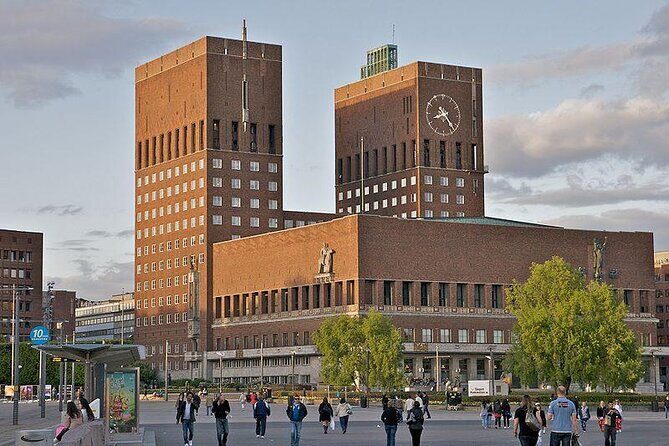
- City Hall’s Two Swans sets the myth tone immediately, before you even cross a street
- Rådhusplassen connects symbols and legends to Oslo’s identity
- Engebret Cafe brings in the Christiania naming story from the 1600s
- Kvadraturen gets treated like a “read-the-city” chapter, not just a quick photo stop
- Akershus Fortress covers protection, royalty, prison life, and local unexplained tales
- Guides steer the conversation to your interests, including dark or modern cultural threads
Start at Oslo City Hall: Fridtjof Nansens Plass and the Two Swans
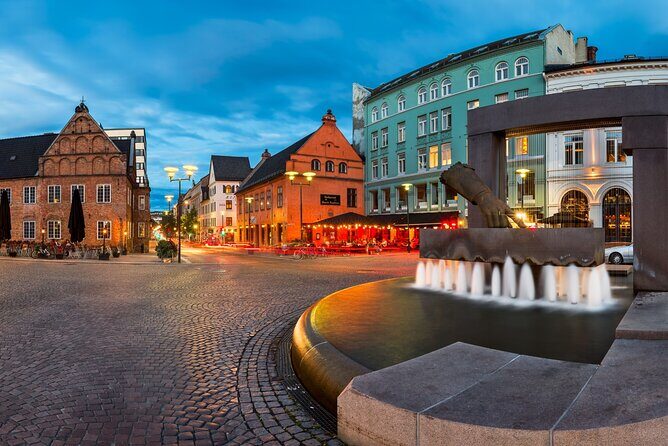
Your tour starts at Fridtjof Nansens plass 2, in front of Oslo City Hall, right by the Two Swans Fontaine. It’s a strong opening because City Hall isn’t just a landmark; it’s a civic stage. The guide uses that stage to launch the themes of the tour: gods, wisdom, love, war, hate, and even future visions—mythic themes placed directly in the middle of modern Oslo.
I like this kind of setup because it stops Norse stories from feeling like museum folklore. Instead of treating mythology as something old and sealed in glass, you’re nudged to see how the same ideas keep showing up in the way places are designed and explained.
You’ll also get your bearings quickly. With a guided beginning at one of the most recognizable points in central Oslo, you’re less likely to spend your first hour simply trying to orient yourself.
Practical note: the time here is listed at about 20 minutes, which means you should come ready to listen. If you wander off for photos too long, the story train won’t wait.
You can also read our reviews of more tours and experiences in Oslo.



Rådhusplassen: Where Oslo’s Symbols Become a Story You Can Follow
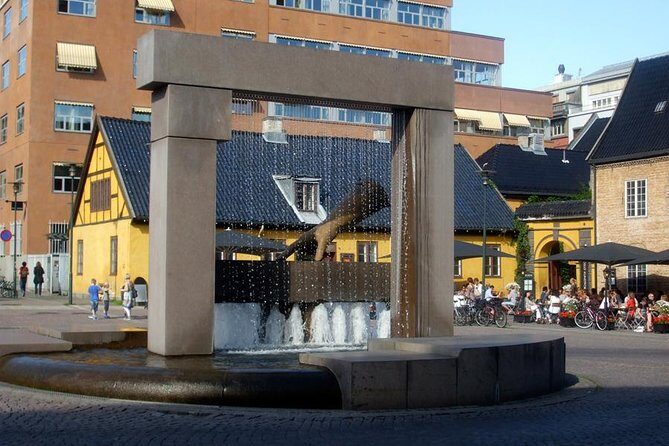
From City Hall you continue to Rådhusplassen, where the tour shifts from myth themes in general to Norwegian and Oslo symbols and the legends wrapped around them. This is where the tour starts feeling like cultural interpretation rather than trivia.
Think of it like learning a local language for meaning. You’re not memorizing facts for a test; you’re learning how Oslo points at itself—through symbols—and then translating what those signals can mean.
This stop is short (about 10 minutes), so it works best if you’re paying attention to the connections the guide makes. If you’re the type who likes to ask questions, this is a good moment to do it. Private tours make it easier for the guide to slow down when something clicks—or when something doesn’t.
Engebret Cafe: Christiania, the Capital Transfer, and the Power of a Name
Next comes Engebret Cafe, where the guide turns to the story of how the Norwegian capital moved in the 17th century and how the city received the name Christiania. Even with just a quick stop (listed around 15 minutes), this part matters because names stick. They shape identity for generations.
I like this stop because it adds a practical historical ingredient without turning the tour into a long lecture. It gives you a thread: myth and symbols are one layer, but language and place names are another. Oslo isn’t only legends on stone. It’s also politics, movement, and the way people re-label their world.
If you enjoy history that shows up in everyday things—street life, architecture, and what locals call places—this is the stop that will likely make your city map feel more alive.
Kvadraturen: Reading Oslo’s Shape Through Local Legend
The tour then moves to Kvadraturen, with about 15 minutes devoted to stories connected to that neighborhood. This is one of those moments where a good guide helps you see a city plan as meaning, not just geometry.
You’re not getting a shopping district pitch here. You’re getting an explanation of why this area is talked about, and what legends and stories have attached themselves to it over time. It’s a reminder that urban design isn’t neutral. People build cities with intentions, and the stories follow.
The main drawback is time. With a relatively brief visit, you’ll want to keep your eyes open for whatever details your guide points out—like a particular corner, street alignment, or symbolic reference—because those are the hooks the rest of the tour may build on.
Akershus Castle and Fortress: Medieval Defense, Prison Walls, and Unexplained Tales
The big finish is Akershus Castle and Fortress (Akershus Slott og Festning), with about 40 minutes here. If you only remember one stop, make it this one. Akershus isn’t a decorative site—it’s the kind of place built for protection, overlooking the Oslo Fjord, dating to the late 1200s.
The guide covers how the fortress served over centuries:
- a royal residence
- a military stronghold
- a prison
That mix of roles gives the tour its emotional range. You’re looking at the same stones through different “chapters” of power and suffering. And then the guide adds the layer that makes this tour match its title: myths and unexplained phenomena people talked about for generations.
This part is also where the storytelling energy can feel the most intense. One of the strongest review takeaways I think you should expect is a guide who can swing between eras and moods—one guide (Anastasiia) reportedly worked in stories like an execution square moment and even talked about black metal church burnings, while still keeping the mythology thread tied to modern culture. Another guide (Alla) was praised for putting sites into historical, political, cultural, artistic, and religious perspective, even if the overall tour length ended up feeling a touch short.
That leads to a real consideration: this is a two-hour tour, so Akershus is your peak moment and you’ll still be leaving before you can fully wander on your own. If you love fortresses, plan a bit of extra time later to go back independently.



Why Private Tour Guides Change Everything (And Who You Might Get)
Because this is a private tour, the guide can shape the pacing to your group. The reviews give you a clear picture of the range:
- Anastasiia was described as strongly engaging, with answers to questions and good suggestions for what to do next.
- Irina was engaging and even accommodated a slight start-time request, meeting the group at their hotel when asked.
- Alla was praised for connecting the dots across multiple angles—history, politics, culture, art, and religion—and for keeping the tour focused on meaning rather than just facts.
So what should you expect as you walk?
- You can ask follow-ups without feeling like you’re slowing down a big group.
- The guide can bring in extra context when something catches your attention.
- The stories may get a bit edgy in a way that feels more like real life than a sanitized script.
One caution: that personalization cuts both ways. If you prefer a strictly formal, museum-style flow, you may want to set that expectation early. In a private tour, the guide tends to match your energy.
Price and Value: $311.45 Per Group Up To 8 People

The price is $311.45 per group for up to 8 people, for about two hours. That’s a group-based cost, so it gets dramatically better the more people you split it with.
Here’s the quick math:
- 2 people: about $155 each
- 4 people: about $78 each
- 6 people: about $52 each
- 8 people: about $39 each
Your money goes to a professional guide, with all taxes and fees included. That matters because what you’re really buying is interpretation—turning monuments into stories you can carry around the rest of your trip.
Two other value points:
- The route includes stops that list admission ticket free, which keeps the cost predictable.
- The time is compact. You can fit this early in your Oslo stay to help everything else click.
If you’re traveling solo or as a couple, you’ll want to be honest with yourself: do you want a guide guiding you through meaning, or would you rather do a self-guided walk? This tour wins when you want the story explained.
Also, this seems to be popular—on average it’s booked about 63 days in advance—so if you have a tight schedule, lock it in.
Timing, Walking Pace, and What Weather Can Do to You
The tour starts at 10:00 am and returns to the meeting point. Reviews hint that a morning schedule works well because central Oslo streets can feel quieter early on. If you like taking photos without fighting crowds, that’s a real perk.
As for how hard it is, the description calls for moderate physical fitness and says it operates in all weather conditions. That means you should:
- wear grippy shoes
- bring layers (wind and rain are a thing in Oslo)
- pack a light rain shell even if the forecast looks friendly
Also keep in mind the stop times add up to a brisk rhythm. You’ll be listening often and moving between points. It’s not a sit-down show.
Getting There: Meeting at City Hall and Using Public Transit Nearby
You meet at Fridtjof Nansens plass 2, 0160 Oslo and your tour ends back there. The activity is marked as being near public transportation, which is helpful because you can plan around transit rather than relying on a car.
One detail you should double-check before you go: the tour description highlights hotel pickup and drop-off, but the structured listing also says hotel pickup and drop-off is not included. If pickup matters to you, confirm it with the operator when you book.
Who This Tour Fits Best
This is a smart match if you:
- like mythology, but also want it connected to real places and modern culture
- enjoy short, story-driven city walks where meaning matters more than grinding through distances
- want a guide who can explain symbols, naming, and political context in plain language
- appreciate slightly darker or edgier storytelling threads (like real events tied to cultural shifts)
It may not be your best fit if you:
- want a long, slow wandering tour with lots of free time
- dislike hearing about serious topics as part of local storytelling
- need a fully stroller-friendly or fully laid-back pace (the tour calls for moderate fitness)
Should You Book Myths and Legends of Oslo?
Yes, if you want Oslo explained through story instead of signage. This tour is built for people who like their travel with a brain attached: symbols, names, and monuments tied to legends, then backed by context at major stops like Akershus Fortress.
I’d book it if you’re arriving early in the trip and want a strong framework for the rest of your days. The route is tight, the guide does the talking, and you’ll come away with a lot of ideas you can connect as you walk on your own.
I’d think twice if you’re the type who needs longer time per site. With only about two hours total, you’ll get the highlights and the big story beats, but not a leisurely deep linger. In that case, plan either an extra visit to Akershus afterward or another slower activity later.
FAQ
How long is the Myths and Legends of Oslo tour?
It’s approximately 2 hours.
How many people is the private tour for?
It’s a private tour for your group, with pricing up to 8 people.
What language is the tour offered in?
The tour is offered in English.
Where does the tour start and end?
You start at Fridtjof Nansens plass 2, 0160 Oslo, Norway, and the tour ends back at the same meeting point.
Is admission required for the stops?
The tour description lists admission ticket free for the stops listed (including City Hall, Rådhusplassen, Engebret Cafe, Kvadraturen, and Akershus Castle and Fortress).
Does the tour include food or drinks?
Food and drinks are not included.
Can I cancel for a full refund?
Yes. You can cancel up to 24 hours in advance for a full refund.