REVIEW · OSLO
Interactive Mystery Hunt by Akershus in Oslo
Book on Viator →Operated by Solve A Mystery · Bookable on Viator
A real fortress becomes your game board. In this self-guided mystery hunt you follow clues across Akershus in Oslo, using a mobile ticket in English and short stops timed for about 1 to 2 hours. You are not paying entry fees to access the key spots, and the experience ends back where you started.
What I like most is the way the format makes you slow down and look closely. You work with the surroundings like clue clues in plain sight, so the fortress and nearby streets turn into part of the puzzle, not just scenery. You also get a structure with four clear locations—each one gives you a new angle on the case and the area.
The main drawback to plan around is walking and finding your start. Some people found it tough to reach the meeting point and that the hunt can feel like a lot of movement if you are not in a puzzle mood. If you prefer a quick, guided talk, this might not hit the mark.
In This Review
- Key things to know before you start
- Entering the fortress world: what this hunt actually feels like
- Getting to Fenaknoken and the Akershusstranda start point
- Stop-by-stop route: how Akershus becomes your crime scene
- Stop 1: Akershus Castle and Fortress (Akershus Slott og Festning)
- Stop 2: Skarpenords kruttårn and the logic of looking closely
- Stop 3: Bankplassen and solving with the city layout
- Stop 4: Myntgata and the endgame
- The mobile ticket and self-guided rhythm
- How long it takes (and why “1 to 2 hours” can vary)
- Walking and getting comfortable: the honest trade-off
- Price and value: is $32.43 worth it?
- Who should book this mystery hunt in Oslo?
- Should you book this Akershus mystery hunt?
Key things to know before you start
- Self-guided true-crime game: you solve your own mystery using a phone-based hunt
- English available: the experience is offered in English
- Timed stops across Akershus: roughly 15 to 25 minutes per location
- No extra site admission needed: you do not buy separate entry tickets for the listed stops
- You end back at the meeting point: the route loops within the fortress area and nearby streets
- A start-stop detail matters: some folks appreciated interaction at the start area, which can make the hunt feel more fun from minute one
Entering the fortress world: what this hunt actually feels like
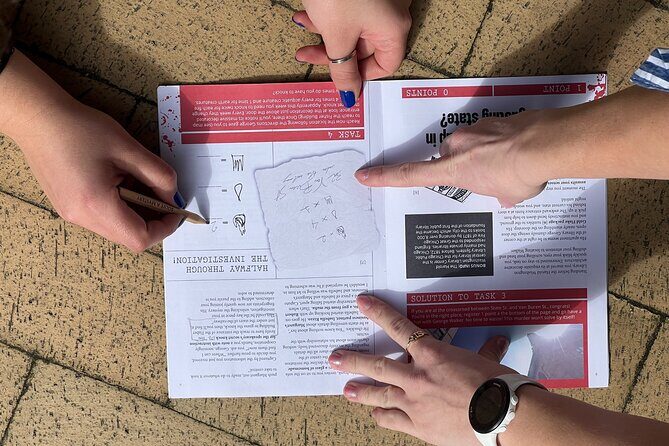
This is not a show where someone leads you by hand. Instead, you collect your case materials, then move through a set route where your phone guides you to the next clue location. The vibe is part puzzle hunt and part history-by-spotting-details, with the fortress setting making everything feel more grounded.
The great thing about this style is control. You choose your pace and you can reread clue text as many times as you need. If you like figuring things out, you will enjoy the friction of trying to reason your way forward from what you see on site.
The trade-off is that you are the one doing the work. If you want a storyteller to explain what you are looking at, you may find the experience a bit lean. The route is short, but it is still a walking experience, and the puzzle part can stretch longer than you expect if you get stuck.
You can also read our reviews of more tours and experiences in Oslo.



Getting to Fenaknoken and the Akershusstranda start point
Your meeting point is at FenaknokenAkershusstranda 23, 0150 Oslo. The experience starts in an area that is close to public transportation, which is a win, but you still want to arrive ready to navigate the waterfront/fortress edge.
Here is how I’d plan it:
- Give yourself a little extra time before the start window, since the meeting point can be awkward to find when you are juggling a phone GPS and old-street turns.
- Check that you are at the right exact spot before you collect your mystery.
- If you are coming during the lunch rush or later afternoon, expect more pedestrian traffic around the fortress area.
The opening hours listed run Monday to Friday, 11:00 AM to 5:00 PM (within the overall date range given). That helps you plan a midday puzzle session without it eating your whole day.
Stop-by-stop route: how Akershus becomes your crime scene
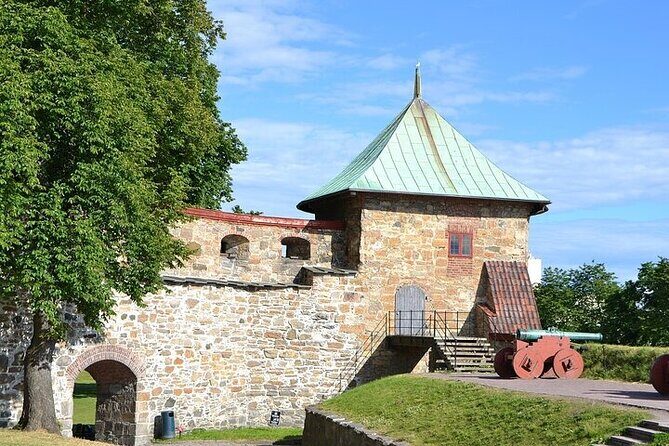
The hunt is built around four locations. Each stop is timed for a specific chunk of solving, and each one nudges you toward using your surroundings rather than relying on outside information.
Stop 1 is where you set the tone. Stops 2 and 3 force you to make connections based on what the area is telling you. Stop 4 is where the puzzle snaps toward an answer and you try to identify who is responsible.
A big plus: you are not asked to buy tickets or pay entrance fees for these stops. The sites are used as open spaces for observation and logic.
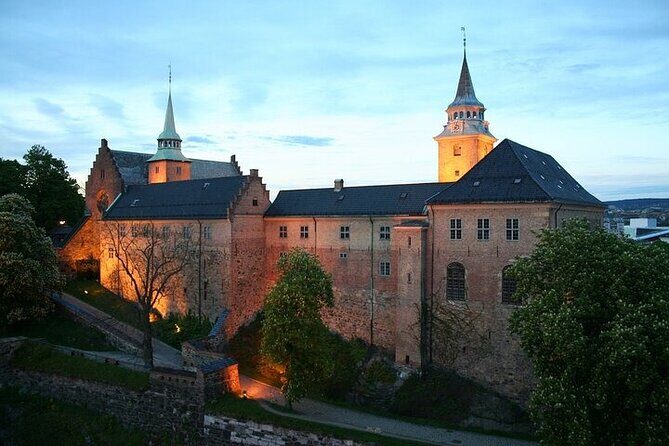
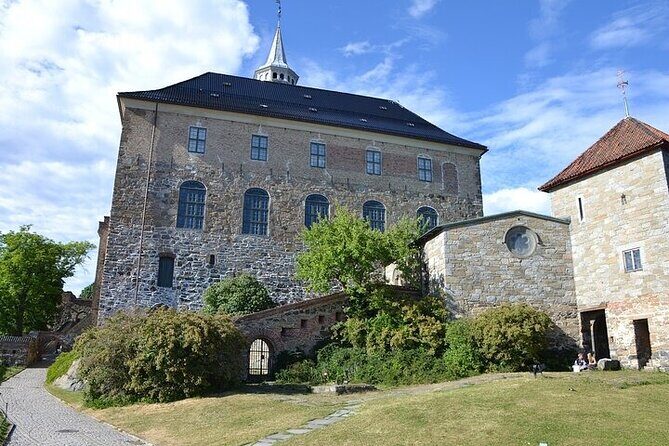
Stop 1: Akershus Castle and Fortress (Akershus Slott og Festning)
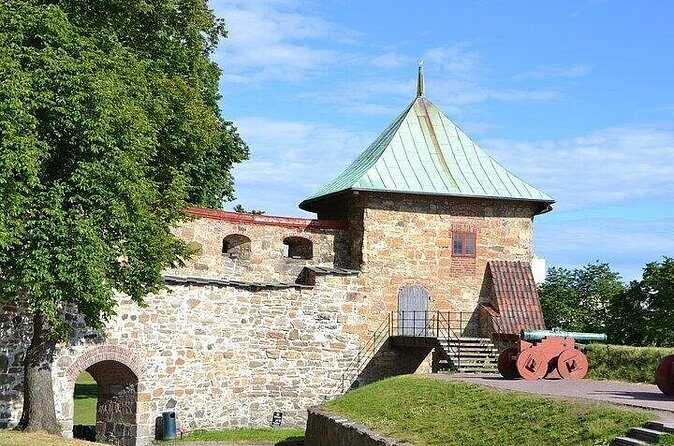
Your first moment is at Akershus Castle and Fortress. After you collect your mystery, this is where you begin your true-crime journey. The stop is designed for about 15 minutes, which means you are not wandering forever before you start solving.
What makes this start special is that it gets you to use a major “anchor location.” You are surrounded by an environment people already recognize as important, so the puzzle can lean on visible cues like structure, positioning, and the way the fortress area is laid out.
A practical note: since there are no additional entry fees for this part, you can focus on the hunt itself. If you have been to fortress sites before, you will know the temptation is to just tour the walls. Here, your job is to treat the walls as information.
Stop 2: Skarpenords kruttårn and the logic of looking closely
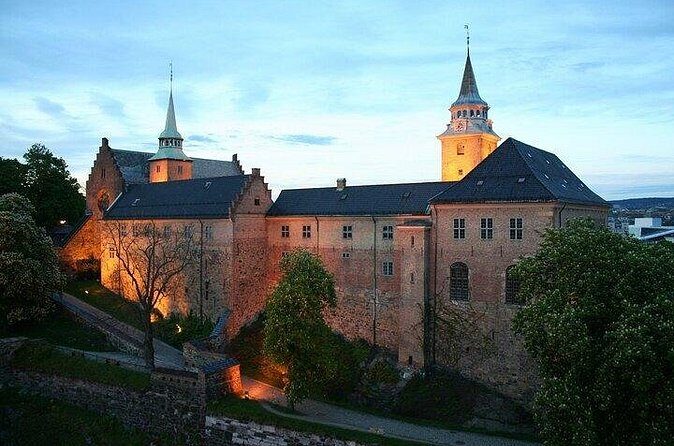
Next you head to Skarpenords kruttårn, with about 20 minutes allocated for this stop. This is one of the more intriguing names on the route, and it signals what the hunt wants you to do: pay attention to details around you and use them to deduce clues.
Because this is a fortress-related tower area, it naturally rewards close looking. Even if you do not know the terminology ahead of time, you can still work the clues by observing what is near you and how the location connects to what came before.
The potential snag here is that you might feel stuck if you try to solve everything like a crossword. This hunt is more “spot-and-reason” than “pure trivia.” If you get overwhelmed, take a breath and go slower—revisit what the clue asks you to notice, then scan the immediate surroundings again.



Stop 3: Bankplassen and solving with the city layout
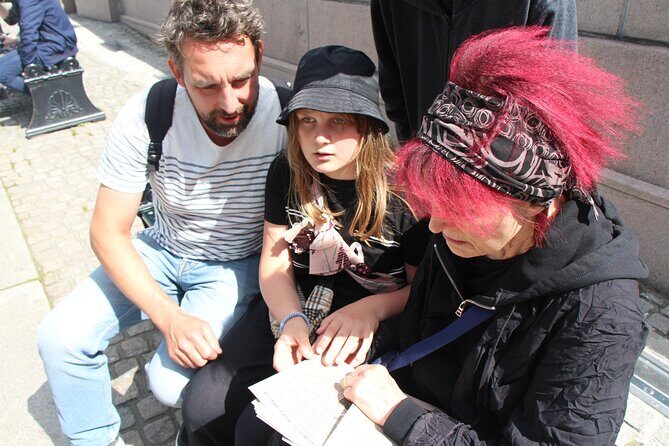
Stop 3 is Bankplassen, given about 20 minutes. This shift from castle/tower energy to a public square context is smart. It changes the kind of clues you are likely to pick up because street layout, open space, and nearby features can act like a map for your logic.
The puzzle here is about using the Bank Square to help you move toward the next location and to form your idea about who the culprit could be. Even if your first theory is wrong, the hunt structure nudges you to test and adjust.
If you like detective work, this is where it becomes fun. You stop thinking only about the building you are standing by and start thinking about how people and space interact. If you are not into puzzle hunts, this is also where it can feel like “one more place to check.” The difference is your mindset: are you here to solve, or just to see the fortress?
Stop 4: Myntgata and the endgame
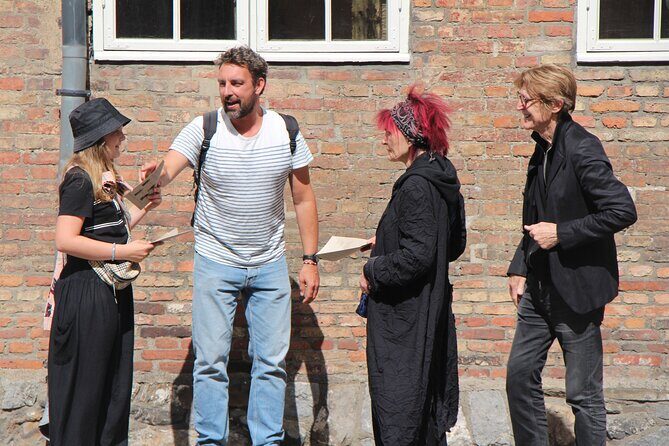
The final stop is Myntgata, with around 25 minutes. This is where the hunt ends, and it is the moment you try to figure out the culprit. The longer time at the last stop makes sense: the ending is often where you piece together what you have learned, compare clues, and decide your final answer.
Myntgata is a street setting, so expect the hunt to rely more on what you can see in the immediate streetscape. If you have been progressing smoothly, this stop should feel like an endgame. If you got stuck earlier, you might need to slow down and reread the earlier clue steps (using your phone) while you compare what you now see.
This is also the stop that benefits most from simple patience. A puzzle like this rarely “clicks” instantly at the start, but the ending is often where everything starts to line up.
The mobile ticket and self-guided rhythm
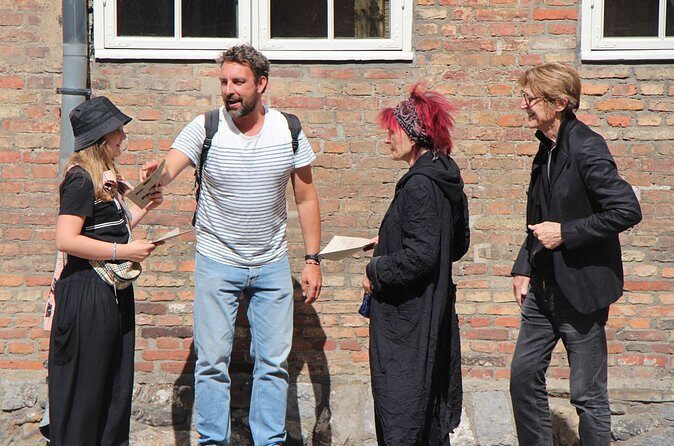
You receive a mobile ticket and the experience is self-guided. That means you should plan to keep your phone battery up, and you should be ready to follow prompts that tell you where to go next.
A helpful mindset is to treat each stop like a mini case: read, look, reason, move. Because each location is allocated a short time window, you are not meant to do a long-form museum-style visit. The point is solving on the move.
Also, this is offered in English, which matters if you are traveling with companions who do not want to struggle with translations. If you are group-based, that language consistency usually makes teamwork easier.
How long it takes (and why “1 to 2 hours” can vary)
The listed duration is about 1 to 2 hours. With stop times of roughly 15 minutes, 20 minutes, 20 minutes, and 25 minutes, you can do the math: the main activity blocks are about 80 minutes, not counting walking between stops.
In practice, your total time depends on:
- how quickly you read and interpret clues
- whether you need extra time to confirm your logic
- how easily you move between the fortress area and the street stops
If you are planning the rest of your day, I’d give yourself at least a two-hour window from start to finish. Oslo days can run on schedules, and you do not want this hunt to crowd out your next plan.
Walking and getting comfortable: the honest trade-off
Expect lots of walking. That is not a warning so much as a reality of the route shape: fortress-to-tower-to-square-to-street is a loop that changes terrain and viewpoint.
For most people, it should be manageable because the experience is generally described as open to most travelers. But you still want to dress for movement. Comfortable shoes matter here more than jacket fashion.
If the idea of puzzles + walking sounds tiring, consider it this way: you are getting more than a single viewpoint. You are getting a guided-feeling route with your brain switched on. That works best when you want an activity, not just a photo walk.
Price and value: is $32.43 worth it?
At $32.43 per person, you are paying for the game structure, the clue system, and the self-guided format—not for museum entry tickets. Since the listed stops note no admission or entrance of any kind, you are effectively buying a focused activity around free-to-access public and fortress grounds.
Is it good value? For the right person, yes. You are paying for:
- a planned route of four meaningful stops
- an English mobile mystery experience
- a short time commitment that can still feel like a full afternoon activity
It may feel overpriced if you do not like puzzle hunts or if you expect a more guided storytelling experience. One negative reaction mentioned disappointment when the task felt less involving than hoped and that the route could feel like extra movement. That is the risk: if you want someone to steer you and explain, you may feel “left alone with the clues.”
If you are traveling with kids or someone who likes logic games, this can be a strong pick because it makes history-style locations feel like a challenge.
Who should book this mystery hunt in Oslo?
This hunt fits best if you:
- enjoy puzzle games and detective-style reasoning
- like seeing a place through a task, not just a lecture
- want an activity that works in an hour to two without booking a long tour
- are okay with walking between fortress and city spots
It might not be the best fit if you:
- want heavy historical narration throughout
- dislike moving between multiple locations for problem-solving
- get frustrated when a puzzle takes time to crack
- expect a very structured, teacher-like experience
One smart strategy: pair this with another short fortress walk afterward if you still have energy. The hunt changes how you notice details, so you may enjoy a second pass even without an official game guide.
Should you book this Akershus mystery hunt?
If you want a fun, low-cost way to turn Akershus into an active challenge, I think it is worth booking. The combination of English self-guided clues, a clear multi-stop route, and no added site admission fees makes it easy to justify the price.
But go in with the right expectations. This is not a museum tour and it is not a slow stroll with constant explanations. It is a puzzle game that asks you to look and reason while you walk.
If you are the type who likes cracking codes and figuring things out on your own, you will likely have a good time here. If you are hoping for more guidance and less movement, you might feel shortchanged.