REVIEW · BERGEN
Walk with a Witch in 16th Century Bergen: A Self-Guided Fictional Tour
Book on Viator →Operated by VoiceMap Audio Tours · Bookable on Viator
A witch story in old Bergen sounds fun because the city itself did scary things. This self-guided walk uses VoiceMap audio to connect the “witch” theme to real places, from Bryggen to Korskirken (Holy Cross Church). I like that it’s low-stress and flexible, and I also like that you get historical storytelling without hunting for a live guide. One drawback to consider: it’s not a guided walking tour with a person, so if you want back-and-forth Q&A, this won’t satisfy that craving.
You’ll mainly follow audio cues at your own pace, with no WiFi needed. The route is short enough to fit many days, but the story depends on you being willing to listen as you walk. On a busy day like a cruise stop, you might need a little extra planning just to get to the start point.
In This Review
- Key points to know before you go
- Why a Witch Story Works in 16th-Century Bergen
- Your Route Starts at Bergenhus, Ends at Nordnesbakken
- VoiceMap Offline Audio: The Real Convenience Advantage
- Stop 1: Bryggen Wharf and the Hanseatic Trade Story
- Stop 2: Korskirken (Holy Cross Church) Built in the Late 1100s
- Stop 3: Shoemakers Street—From Sutarestretet to Kong Oskar’s Gate
- How Long It Takes, and How to Pace It Yourself
- Bergen Weather: Yes, You’ll Probably Get Rain
- Value for $8.99: What You’re Really Paying For
- Who This Is Best For (and Who Might Skip It)
- Booking Decision: Should You Book the Walk With a Witch in Bergen?
- FAQ
- Do I need WiFi to use the tour?
- How long is the walk?
- What language is the tour available in?
- Where do I start and where does it end?
- What’s included with the purchase?
- What do I need to bring?
- Is the tour refundable if plans change?
Key points to know before you go
- Lifetime access means you can repeat it later without buying again.
- Offline VoiceMap audio and maps keep it smooth even with spotty service.
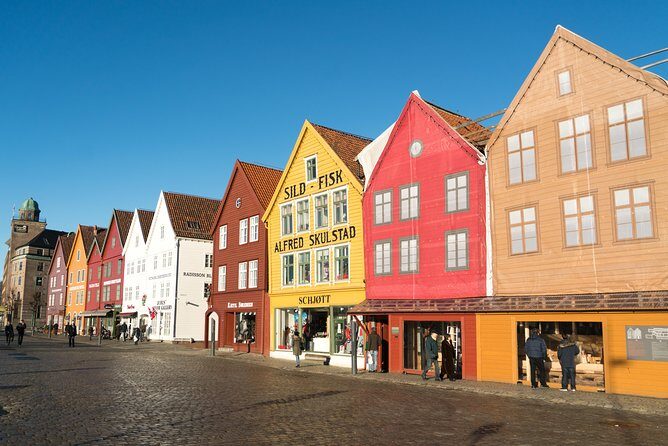
- Bryggen and Korskirken are the big anchors, tied to Hanseatic trade and repeated fire rebuilding.
- A “shoemakers street” turn helps you spot how everyday work shaped the old town.
- A darker witch-history thread adds bite, including the fact that 350 women were condemned as witches over 150 years.
- Flexible pacing lets you pause for coffee, shopping, or the fish market area.
Why a Witch Story Works in 16th-Century Bergen
Bergen can feel like a bundle of eras pressed together: wooden wharves and stone churches, medieval trade routes and later city streets. This tour uses the witch theme to make those layers feel personal. It’s fiction, but it’s placed carefully in real locations you can see and walk past without a museum ticket.
What makes it work is the pacing. Instead of dumping information, the audio gently guides you from landmark to landmark and gives context for what you’re standing on. I like that the story gives you a reason to look up at architecture, notice rebuilding patterns, and connect the past to everyday streets.
You also get a reality check, because the “witch” theme isn’t just spooky theater. The narrative points out how accusations spread and how people can fall into pack thinking—and it doesn’t shy away from the human cost. Even if you never buy into witch-lore as history, the social lesson lands.
You can also read our reviews of more walking tours in Bergen

Your Route Starts at Bergenhus, Ends at Nordnesbakken
This is a self-guided GPS walk, so you don’t meet a guide at a specific time and move as a group. You start at Bergenhus 4, 5003 Bergen, and the walk ends at Nordnesbakken 1, 5005 Bergen. The whole experience is about 1 hour 10 minutes on average, though you can stretch or shorten it.
That timing matters in Bergen because weather changes fast and the old harbor area can be crowded at certain hours. A short walk also means you can pair it with other stops like the fish market zone or a wander through the historic streets without feeling like you booked your entire day to one thing.
The tour is offered in English, and confirmation comes at booking time. It’s also set up so service animals are allowed, and it’s described as suitable for most travelers.
VoiceMap Offline Audio: The Real Convenience Advantage
The best thing here is how you listen. The experience uses the VoiceMap application with offline access to audio, maps, and geodata, and it explicitly doesn’t require WiFi. For me, that’s the difference between “cool idea” and “I can actually use this in real travel conditions.”
In old-city areas, WiFi can be patchy and you don’t want to burn time loading directions. Offline audio means you can keep walking. Offline maps also help when you’re turning corners, especially if you’re weaving through side streets near the waterfront.
One practical note: the tour data says a smartphone isn’t included, so you’ll need your own device plus enough battery. If you’re the type who forgets to charge, I’d plan a full day battery before you start.
Stop 1: Bryggen Wharf and the Hanseatic Trade Story
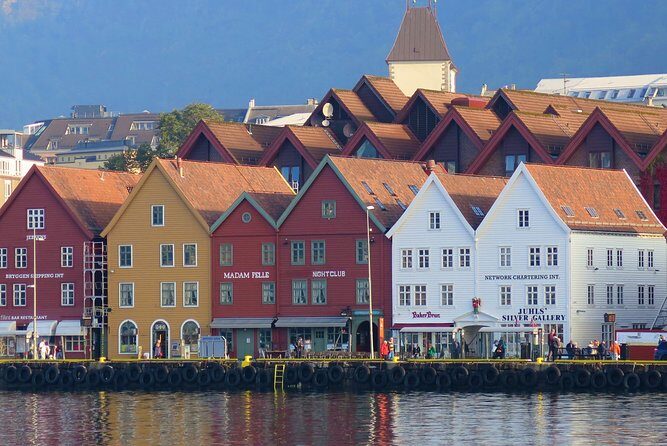
Bryggen is the starting point in the walk’s narrative, and it’s a strong choice. You’re looking at Bergen’s old wharf, tied to the town’s importance in the Hanseatic League trading empire from the 14th century into the mid-16th century. That’s not just trivia. It explains why this place became powerful enough to attract merchants, and why the built environment followed the logic of trade.
The audio connects the setting to repeated catastrophe. The wooden houses of Bryggen have been hit by multiple fires, and that history of rebuilding is part of why the area feels like it remembers everything at once. When the story gives you that background, the architecture stops being “pretty old buildings” and starts becoming evidence.
How you should experience this stop
- Walk slowly enough to notice how the wharf edge shapes the street views.
- Listen for how the Hanseatic era shaped the city’s role, not just its timeline.
- If you’re taking photos, time it so you don’t miss the transition in the story.
A drawback at Bryggen: it’s a busy area, and fire-rebuilding stories can become gloomy if you’re already tired from crowds. If that happens, just treat the audio here as a foundation, then give yourself permission to pause and enjoy the harbor atmosphere between prompts.
Stop 2: Korskirken (Holy Cross Church) Built in the Late 1100s
Next comes the big stone-and-faith anchor: Holy Cross Church, also known as Korskirken. The tour places it in the late 1100s, and then stresses a key theme: changes over time. Churches here weren’t static. They were frequently augmented, reproduced, and rebuilt, often because fires devastated both church and town.
That’s the kind of detail you usually hear as a footnote in other trips. Here, it becomes the point. You stand near a building with deep roots, and the audio helps you understand why what you see today reflects layers of repairs and decisions made after disasters.
Why this stop adds value
You get a contrast with Bryggen’s wooden trading world. One place tells the story of commerce and easy combustion. The other shows how communities kept investing in sacred spaces even after repeated destruction. That pairing makes Bergen feel more coherent.
A small practical consideration: Korskirken and its surroundings can feel like a pause in the flow. If you’re expecting constant movement and chatter, this is the spot where you’ll want to take a minute and let the audio settle. It’s also a good place to adjust your pace for the rest of the walk.
You can also read our reviews of more guided tours in Bergen




Stop 3: Shoemakers Street—From Sutarestretet to Kong Oskar’s Gate
The final narrative stop is a street-name time machine. Today it’s called Kong Oskar’s Gate, but the tour explains it used to be where shoemakers worked, known as Sutarestretet (shoemakers street).
This is my favorite kind of historical detail: the kind that changes how you read daily life. When you know a street’s job in the past, you start picturing carts, craftsmanship, and routine. It turns a normal urban stroll into something more meaningful without requiring you to do any research.
Even if you don’t stop long at this final segment, it lands well as a “from trade to labor” thread. Bryggen gives you the city’s economic engine. Korskirken gives you community resilience. Sutarestretet gives you the everyday work that made a city run.
One thing to watch: this is a short tour. If you’re the kind of traveler who wishes the story carried on longer, you might reach the end while you still want more old-town context. That’s not a problem; it’s simply the trade-off for a walk that stays compact and manageable.
How Long It Takes, and How to Pace It Yourself
The experience is listed at about 1 hour 10 minutes, but the real advantage is that it’s made for pauses. You can stop and start as you like, which matters in Bergen where you might hit rain, you might get curious mid-walk, or you might spot a place you want to check out.
I think this flexibility is why people seem to enjoy it so much. A self-guided history walk can turn frustrating if you feel rushed or if you don’t like listening to audio without a person. This one tries to remove that pressure.
If you’re thinking about pacing, here’s a simple way to do it:
- Plan for a slower first pass, then decide if you want to speed up.
- Save your photo stops for the breaks where the audio is done prompting.
- If it’s raining, accept that you’ll hear less outside and use quick shelter breaks without quitting the walk.
A review detail worth planning around: someone mentioned they stopped halfway when the route moved into more recent buildings. That’s a useful reminder. If your goal is medieval-only, you may want to treat the audio as “old town and church-focused” and then wrap early if modern streets feel less compelling.
Bergen Weather: Yes, You’ll Probably Get Rain
Bergen has a reputation for showers, and this tour fits it because it doesn’t depend on perfect conditions. Since it’s self-guided and audio-driven, you can keep moving without feeling like your experience is ruined by missing a meeting time.
Still, rain changes how you experience sound and walking. If it’s wet, I’d bring a compact rain layer and keep your phone protected. Offline audio is great, but if your device dies because you were careless in the rain, you’ll be stuck without the story.
The upside: even in rain, the route is still a short walk between clearly defined areas. You won’t be wandering for hours without direction.
Value for $8.99: What You’re Really Paying For
At $8.99 per person, this is priced like an impulse-friendly add-on, but the structure is what makes it worth your money.
You’re paying for three main things:
- A themed narrative that ties witch history to real city locations.
- Self-paced convenience (you’re not stuck with one fixed group timing).
- A reusable format, because you get lifetime access to the tour.
That last part matters more than it sounds. Bergen is a place you might revisit, and having the same walk available later means you aren’t just buying a one-time hour. Also, since it’s offline, you can reuse it even when data or connectivity is unreliable.
Is it the cheapest thing you could do? Sure. But it’s not trying to be “just a cheap walk.” It’s aiming to give you a guided-feeling experience without paying for a live guide.
Who This Is Best For (and Who Might Skip It)
This works especially well for you if you like:
- Walking on your own terms
- Storytelling that connects history to places you can see
- Short, efficient experiences that don’t eat a full day
- Learning something slightly different, like the witch-history angle paired with Bergen’s historic streets
It might be less ideal if you strongly prefer:
- A live person with Q&A
- Longer multi-hour routes
- A strictly medieval-only itinerary with minimal time in later parts of the city
If you’re traveling as a couple, solo, or with friends who want flexibility, the private nature—only your group participating—also makes it feel calmer than typical group walks. And because it’s near public transportation, you’re not forced into a car or taxi-only plan.
Booking Decision: Should You Book the Walk With a Witch in Bergen?
Book it if you want a practical, offline-friendly history walk that takes you through Bergen’s most recognizable historic anchors—Bryggen and Korskirken—with an engaging fiction wrapper. The lifetime access is a big plus, and the short time commitment makes it easy to fit around rain, shopping, or a fish-market stop.
Skip it if you need a live guide, or if you know you hate audio tours. Also consider your mood: this story touches on witch accusations and real human suffering, including the detail that 350 women were condemned over 150 years, so it’s not just “spooky fun.”
If you’re in the middle—curious, open-minded, and ready for a short self-paced walk—this is the kind of ticket that makes your city time feel more intentional without draining your schedule.
FAQ
Do I need WiFi to use the tour?
No. The experience is set up with offline access to audio, maps, and geodata through the VoiceMap app, so you can use it without WiFi.
How long is the walk?
It’s listed at approximately 1 hour 10 minutes on average, though you can pause and continue at your own pace.
What language is the tour available in?
The tour is offered in English.
Where do I start and where does it end?
You start at Bergenhus 4, 5003 Bergen and end at Nordnesbakken 1, 5005 Bergen.
What’s included with the purchase?
You get lifetime access to the Walk with a Witch in 16th Century Bergen tour, plus the VoiceMap application with offline audio and maps, and directions to the starting point.
What do I need to bring?
The tour does not include a smartphone, so you’ll need to bring your own device, plus plan for battery life since you’ll be using the app while walking.
Is the tour refundable if plans change?
Yes. There’s free cancellation, and you can cancel up to 24 hours in advance for a full refund.