REVIEW · TROMSO
Tromsø: Troll Museum Entry Ticket with AR Media Experience
Book on GetYourGuide →Operated by Troll Museum · Bookable on GetYourGuide
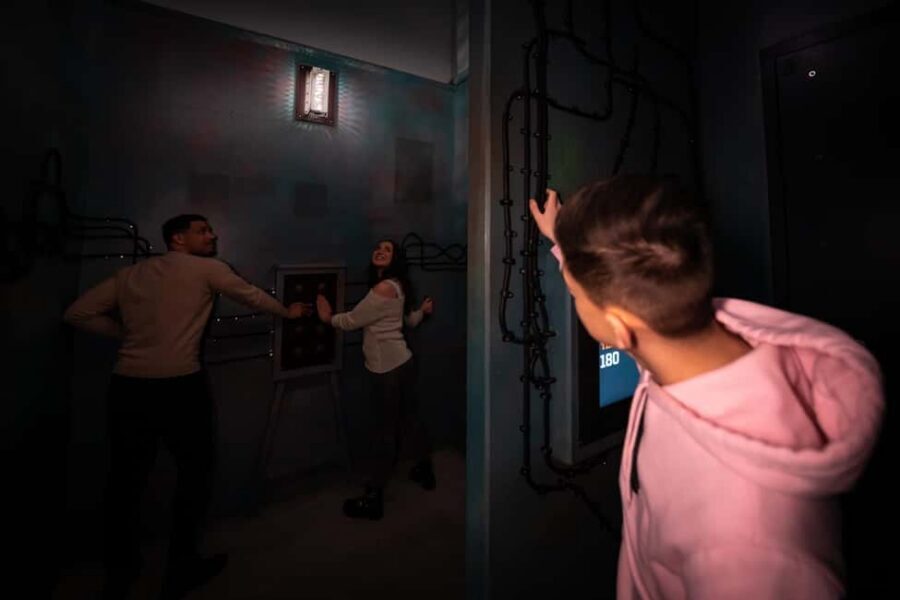
Tromsø turns folklore into something you can see. At the Troll Museum, you pick up a tablet and point it at the exhibits; AR brings trolls to life while you walk through Norse myths and Norwegian fairy-tale storytelling. I also like the multilingual audio guide, so you can follow the legends at your pace without getting lost in a crowd.
This is the kind of indoor stop that works when the weather is doing its usual Tromsø impression—gray, windy, and mildly determined. The main drawback is simple: the whole visit is short, so if you want a big, all-day museum, you might feel done sooner than expected.
If you’re visiting with kids, there’s a children’s quiz that helps keep attention on the story. And in at least one recent visit, the staff member Kirsten earned real praise for friendly, clear explanations.
In This Review
- Key highlights before you go
- Why the Troll Museum works so well in Tromsø
- Your tablet and the audio guide: the setup you should use right
- Road of Trolls: Vikings, the universe, and troll logic
- Fairy tales and troll habitats: Norway’s stories, not just one version
- Home of the Sea Troll: when trolls go maritime
- Sami folklore connection: trolls aren’t the only thread
- When you can visit and how long it takes
- Price and value: is $21 worth it?
- Who should book this AR troll ticket
- Tips that make the visit smoother
- Should you book the Troll Museum AR ticket in Tromsø?
- FAQ
- What is included in the Troll Museum ticket?
- Do I need to bring my own device for the AR experience?
- How long is the ticket valid?
- What languages are available for the audio guide?
- What can I expect to see inside the museum?
- Is the museum suitable for children?
- Are food and drinks allowed inside?
- Is the Troll Museum wheelchair accessible?
- Can I cancel for free or pay later?
Key highlights before you go
- AR tablet scenes that animate displays as you move through the museum
- Road of Trolls showing the Viking-era idea of how the universe works
- Home of the Sea Troll, focused on life and legends at sea
- Trolls across time, with exhibits showing how stories changed over the years
- Norwegian fairytales and legends, presented alongside Norse mythology
- Online audio guide in multiple languages plus a kids quiz
Why the Troll Museum works so well in Tromsø
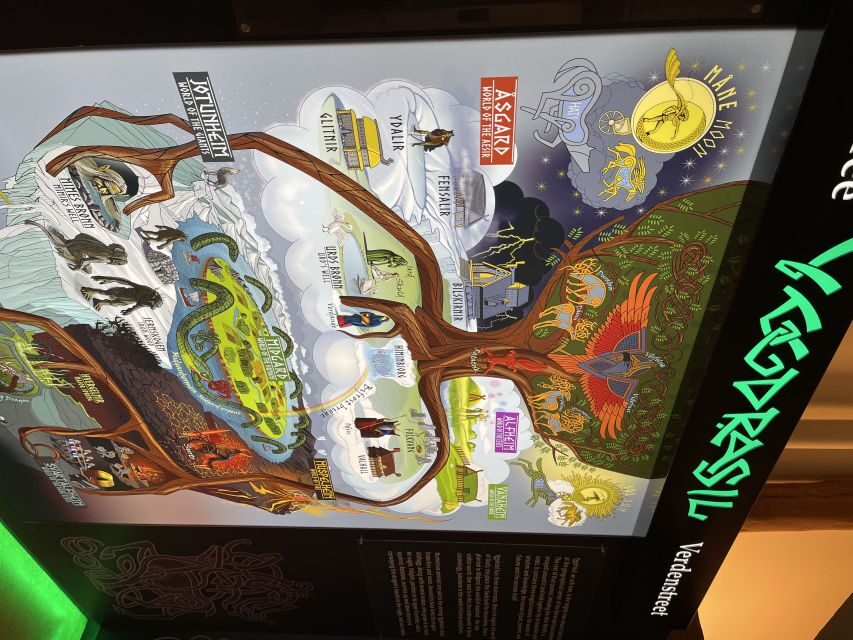
Troll stories are everywhere in Norway, but the Troll Museum gives them a structure you can follow. Instead of just reading about trolls as folklore leftovers, you experience them as characters with different themes: nature, sea life, the Viking worldview, and the bedtime story side of Norwegian culture.
The smart part is how it pairs art and storytelling with technology. The AR isn’t there just to show off. You use a tablet to make exhibits come alive, which helps you pay attention to details you’d otherwise skim past.
For me, the best sign that a museum is built for real visitors is how quickly you understand the rules and start enjoying the experience. Here, you get a tablet, you activate AR, and you’re off. You don’t need to be a tech person, and you don’t need a degree in mythology to enjoy it.
A few more Tromso tours and experiences worth a look



Your tablet and the audio guide: the setup you should use right
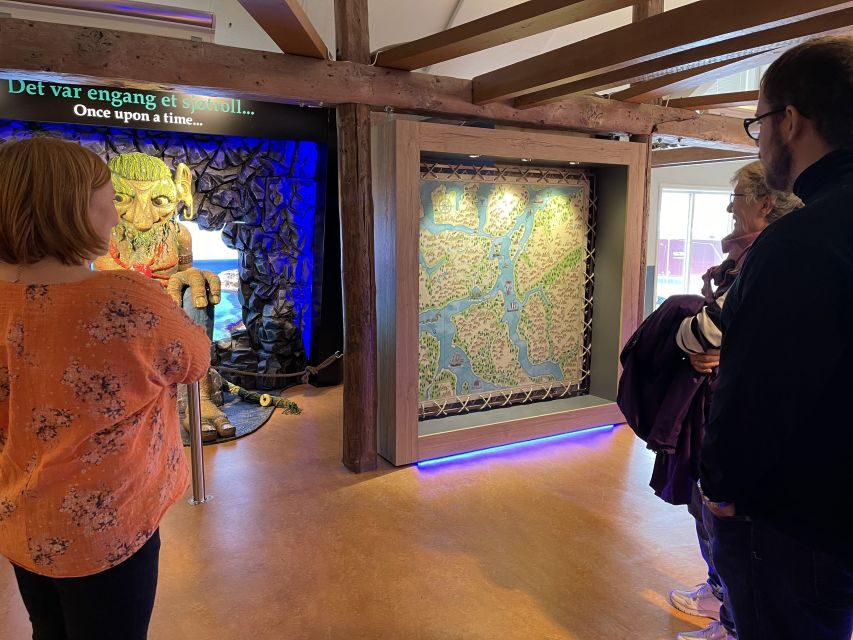
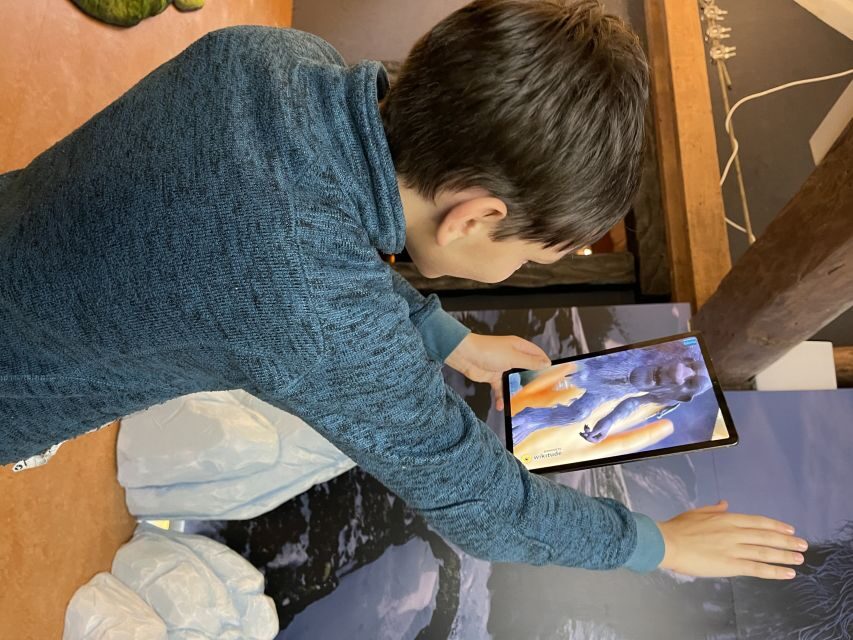
You’ll get your own tablet during your visit. The displays are designed to respond to AR, so think of it like a guided scavenger hunt for troll details. As you walk, you’ll see trolls appear or change on-screen where you’re looking. It’s visual storytelling that rewards you for slowing down just a bit.
On top of that, you get an online audio guide included with your ticket. Languages listed include English, Dutch, French, German, Italian, Norwegian, Spanish, and the info you receive also indicates Polish and Russian are available. This matters more than it sounds. When the audio is in your language, you can actually connect myths to the themes the museum is showing—rather than treating the visit like a visual slideshow.
Practical tip: start the audio early and keep it running at a comfortable pace. The museum’s strength is how the exhibits build on each other, and the audio helps you notice that progression.
Road of Trolls: Vikings, the universe, and troll logic
One of the museum’s most specific stops is the Road of Trolls exhibit. This section ties troll folklore to what Vikings believed the universe looked like—an idea that’s fascinating because it’s not just fantasy. It reflects how people tried to make sense of the world with the tools they had.
What makes this exhibit useful for you is the way it turns a myth into a model. You’ll be looking at troll-related storytelling while also learning how the Viking worldview shaped the myths people carried forward.
Also, the AR element keeps you from zoning out. Instead of reading about an idea, you’re looking at exhibits that connect the story to the setting. Even if you only catch part of the myth, you’ll still walk away with a clearer sense of how trolls fit into a larger belief system.
Fairy tales and troll habitats: Norway’s stories, not just one version
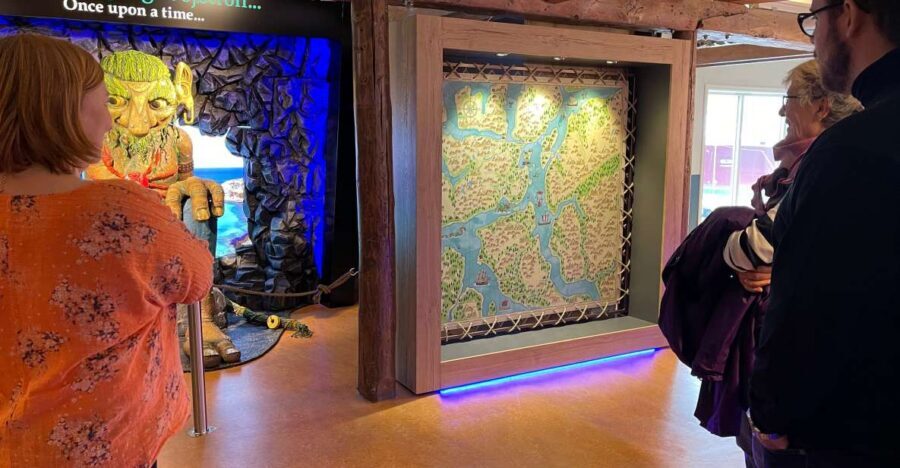
After the Viking-universe angle, the museum shifts toward Norwegian fairy tales and legends. That’s important because trolls don’t live in a single story type. In folklore, they can be frightening, comedic, cautionary, or just plain strange—depending on the tale.
The exhibits also show how trolls have changed over time. That gives you context: you’re not only learning what a troll is, but how people’s ideas about trolls shifted as stories were retold across generations.
The museum layout includes troll-themed displays in what’s described as their natural habitat. So you’re not only getting a list of names. You’re seeing the theme of trolls placed into settings that match the legend style. If you like storytelling that feels rooted in place—rather than generic “myth facts”—this section is a highlight.
And yes, there are interactive bits along the way. The overall experience is described as playful, with games and tablet-based information points that keep the energy up.
Home of the Sea Troll: when trolls go maritime
Then comes the Home of the Sea Troll exhibit. This is a change in atmosphere from land-based myths. It focuses on life at sea, and that theme fits Norway naturally, where water has always shaped livelihoods and imagination.
Even if you’re not a deep mythology person, sea-themed storytelling tends to grab attention because it’s easy to visualize: the ocean as a source of food, danger, mystery, and movement. The museum’s approach makes that theme feel like part of troll culture rather than an unrelated add-on.
The AR experience also plays a role here. The idea is consistent across the museum: point your tablet and watch the exhibit react. That keeps the experience from turning into passive viewing, which is a big plus in a short museum.
You can also read our reviews of more museum experiences in Tromso


Sami folklore connection: trolls aren’t the only thread
One section you’ll want to pay attention to is the museum’s folklore of Scandinavia, including information about the Sami people. The goal isn’t to replace trolls with something else—it’s to show a wider cultural map for the myths and storytelling traditions in the region.
The museum also includes a thread about how trolls became more popular through well-known Norwegian literature. That’s a smart angle, because it explains a common question you might have while visiting: Why do trolls feel so famous in modern Norway?
When you learn that literature helped spread and shape the stories, it turns your museum experience into a bigger takeaway. You start noticing how folklore travels—through books, art, and the stories people keep choosing to tell.
When you can visit and how long it takes
Your ticket is described as valid for 90 days, which is handy in Tromsø. You can book now and still decide on the right day later, especially if the weather changes your plans.
As for time on-site, multiple visitors describe it as a short visit—often around an hour or two. The format matches that: a few rooms, lots of interactive points, and an AR system that keeps the pacing brisk.
Scheduling tip: don’t show up late. The information says there’s no entry less than 30 minutes before closing. Give yourself buffer time so you don’t feel rushed at the end.
Price and value: is $21 worth it?
At $21 per person, the value comes down to what you want from a museum.
You’re paying for:
- Entry to the troll-focused museum
- AR experience using a tablet (the museum is built around this)
- An online audio guide in multiple languages
- A children’s quiz
- Skip the ticket line
Because the visit is short, you’ll feel the cost per hour more than in a full-day museum. If you enjoy myth and story, plus you like interactive exhibits, the price is easier to justify. The AR and the audio guide are the reason this isn’t just another small room of statues.
If you’re more interested in big-scale museum collections, you might compare it unfavorably. But that’s not the museum’s style. This is a compact, story-driven experience designed to be entertaining and understandable for all ages.
Who should book this AR troll ticket
This ticket makes the most sense for:
- Families who want an indoor activity that feels like play, not homework
- People who enjoy Norse mythology and Norwegian folklore
- Visitors who like museums with technology that supports the story
- Anyone who gets stuck doing indoor plans because Tromsø weather can be unpredictable
It can also work for adults who aren’t obsessed with trolls. Even if AR isn’t your main reason for going, the museum’s storytelling themes—Viking worldview, fairy tales, sea myths, and Sami connections—give you enough structure to leave with something meaningful.
If you’re traveling with someone who prefers quiet, no-tech exhibits, you might want to set expectations. The museum is interactive by design.
Tips that make the visit smoother
A few practical points from the activity rules and the experience format:
- No food and drinks are allowed inside. Plan to eat before or after.
- Alcohol and drugs aren’t allowed.
- Unaccompanied minors aren’t allowed. Children must be accompanied by adults.
- The museum is described as wheelchair accessible, which is helpful if you’re bringing mobility equipment or traveling with someone who needs step-free access.
Small tip: bring a little patience for AR. Like any interactive system, it works best when you pause long enough for the display to do its thing. If you rush, you’ll miss some of the fun.
Also, with a museum this size, the order matters less than your attention during each stop. If you’re even a bit curious about the stories, you’ll probably enjoy it more than someone trying to “get through it.”
Should you book the Troll Museum AR ticket in Tromsø?
If you want a short, well-paced indoor experience that mixes Norwegian troll folklore with AR technology, this is an easy yes. The price is reasonable for what you get: a tablet-based experience, multilingual audio support, and hands-on games that keep the story moving.
I’d skip it only if you’re hunting for a large museum with deep collections and lots of room to wander for hours. This place is built for one thing: turning myths into a guided, interactive walk you can finish without exhausting your day.
If Tromsø weather has you planning indoors anyway, this is the kind of stop that makes the gray day feel a little more like Norway.
FAQ
What is included in the Troll Museum ticket?
The ticket includes entry to the Troll Museum and an online audio guide. The audio guide is available in multiple languages, and there is also a quiz for children. AR tablet experiences are part of the on-site admission.
Do I need to bring my own device for the AR experience?
No. You receive a tablet as part of the visit and use it to view the augmented reality displays.
How long is the ticket valid?
The ticket is valid for 90 days, so you can choose a suitable visit date within that window.
What languages are available for the audio guide?
The audio guide is offered in English, Norwegian, German, French, Spanish, Italian, and Dutch. Polish and Russian are also listed as available options.
What can I expect to see inside the museum?
You’ll visit areas such as the Road of Trolls exhibit, story-focused troll displays, an exhibit connected to Norwegian fairy tales, and the Home of the Sea Troll. The museum also includes sections about Scandinavia’s folklore, including the Sami people, and how trolls became popular in Norwegian literature.
Is the museum suitable for children?
Children must be accompanied by adults. The museum includes a quiz for children, and it is described as suitable for all ages in how the experience is presented.
Are food and drinks allowed inside?
No. Food and drinks are not allowed in the museum.
Is the Troll Museum wheelchair accessible?
Yes. The experience is described as wheelchair accessible.
Can I cancel for free or pay later?
Free cancellation is available up to 24 hours in advance for a full refund. You can also reserve now and pay later.