REVIEW · STAVANGER
Stavanger: Prison Island Adventure Game
Book on GetYourGuide →Operated by Fangene på Fortet Stavanger · Bookable on GetYourGuide
A prison break you can solve in Stavanger. At Fangene på Fortet, you and your team step into a prison-themed world of timed challenge rooms where puzzles and quick choices actually matter. It’s the kind of activity that feels equal parts escape game and TV challenge show, and it moves fast.
I love the team-first format (you really need your whole group working together) and the way the rooms support different comfort levels with puzzles. Another win: there are enough room options that you can keep trying and improve your score instead of just finishing and walking away.
One thing to consider: some tasks may be harder to grasp if your team is smaller in puzzle experience, and the activity involves physical movement—so wear shoes you can sprint a little in.
In This Review
- Key things to know before you go
- Fangene på Fortet turns a prison theme into a real team challenge
- How the 1 to 2.5 hour game really plays out
- Inside the challenge rooms: puzzles, obstacles, and scoring your way
- Team size (2 to 5) and how to make teamwork easier
- Language and skill levels: what to expect if your group isn’t fluent
- Practical tips: what to wear and how to avoid wasting time
- Price and value: is $30 per person worth it?
- The best match: who should book Prison Island Stavanger
- A few downsides to plan around
- Should you book Prison Island Adventure Game at Fangene på Fortet?
- FAQ
- Where do I meet for the Stavanger Prison Island game?
- How long does the Prison Island adventure take?
- How many people are on each team?
- Is the game in English?
- What’s included in the ticket price?
- Is there a personal guide included?
- Do I need to arrange transportation to the venue?
- Is the activity wheelchair accessible?
- What should I wear?
- What’s the cancellation policy?
- Can I reserve now and pay later?
Key things to know before you go
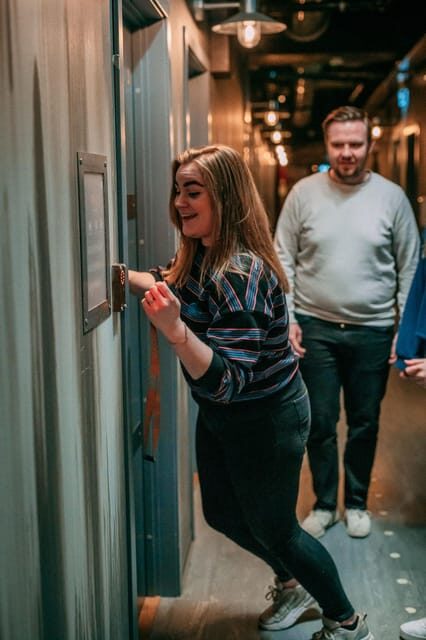
- Timed scoring game: complete tasks within the set time and rack up points on the team scorecard.
- Lots of rooms to choose from: you’re not stuck in one style of puzzle.
- Repeatable play: if you don’t nail a room, you can try again to better your score.
- Small team size: teams are 2 to 5 people, which keeps the teamwork intense.
- English-language game: the game is played in English (with support from English/Norwegian hosts on site).
- Arrive early for a briefing: show up 15 minutes before your booking time.
Fangene på Fortet turns a prison theme into a real team challenge
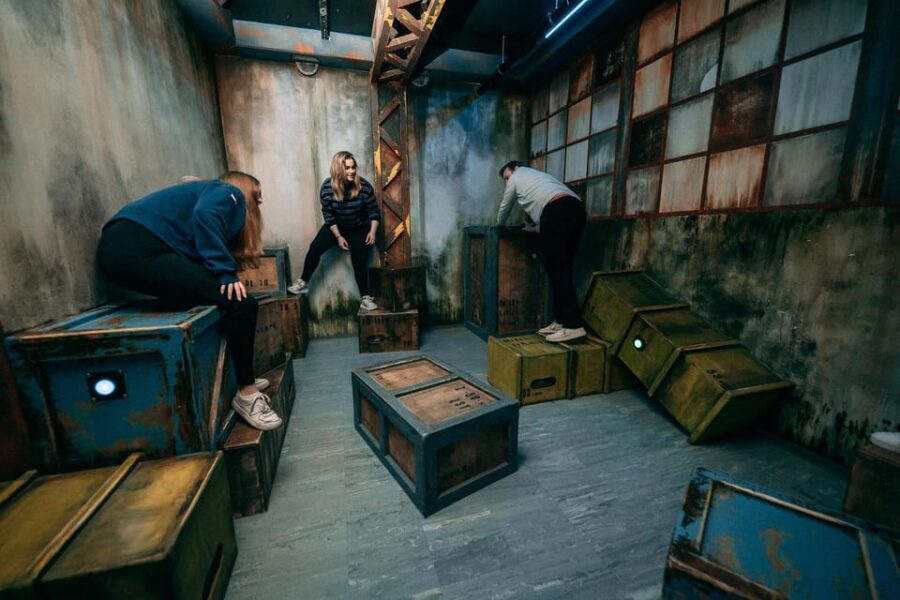
Fangene på Fortet in Stavanger is built for people who want something active, social, and a little competitive. Prison Island Adventure Game doesn’t feel like a passive attraction. It’s more like you’re dropped into a series of challenge rooms and told to work smart under time pressure.
That prison theme isn’t just decoration, either. The rooms are set up as distinct challenges. Some are puzzle-heavy, some push you to communicate fast, and others ask you to overcome obstacles while staying coordinated as a team. The result is an experience that’s fun even if your group isn’t all at the same puzzle skill level.
You’ll also see this isn’t only for one type of traveler. It’s designed for friends, families, corporate teams, and schools. That matters, because the best group activities in Stavanger (or anywhere) are the ones where everyone has a job—even the person who prefers to think instead of move.
You can also read our reviews of more tours and experiences in Stavanger.



How the 1 to 2.5 hour game really plays out
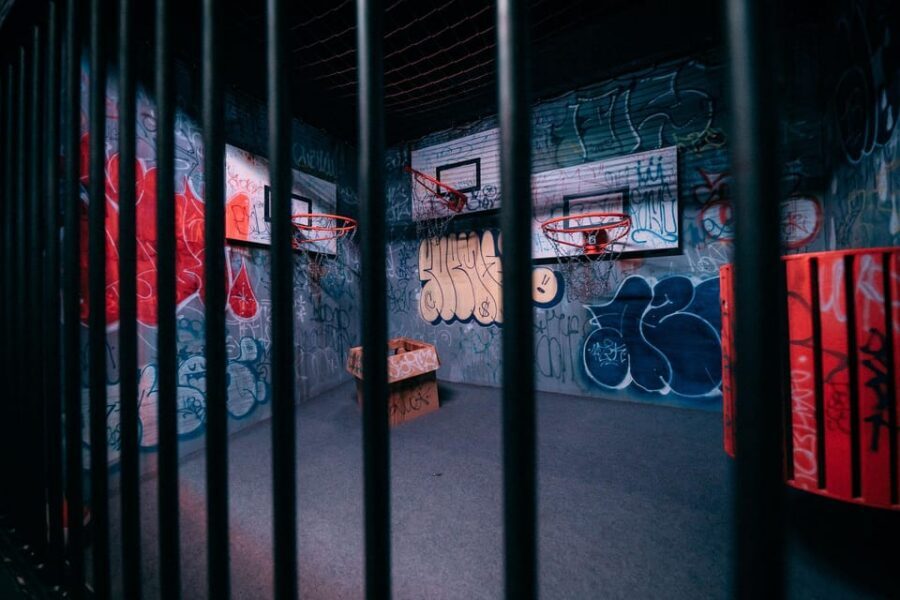
Your total time is listed as 1 to 2.5 hours, and you’ll want to treat that as a flexible window rather than a strict clock. In practice, the game is built around moving through multiple challenge rooms, solving puzzles, and completing tasks while chasing a points target.
Here’s what you can expect in the flow:
- You meet at the welcoming reception at Fangene på Fortet.
- You get a briefing (so you’re not guessing how to play).
- Then you’re in the rooms, working room by room.
- The goal is to score as many points as possible before time runs out.
The time element is a big part of why this works. It forces better communication. You can’t just wander, think, and relax. Your team has to decide: do we try this approach now, or save time and pivot? That’s also why it’s a great “bonding by problem-solving” activity. You’ll talk to each other a lot, and the game naturally pulls everyone into the same mission.
Also, note a practical detail: there’s no personal guide included. You’re not being shepherded room-by-room. You’re guided by the game setup and your team’s ability to read the situation, follow instructions, and solve what’s in front of you. That can be a plus for independence, but it also means your team should be comfortable taking initiative.
Inside the challenge rooms: puzzles, obstacles, and scoring your way
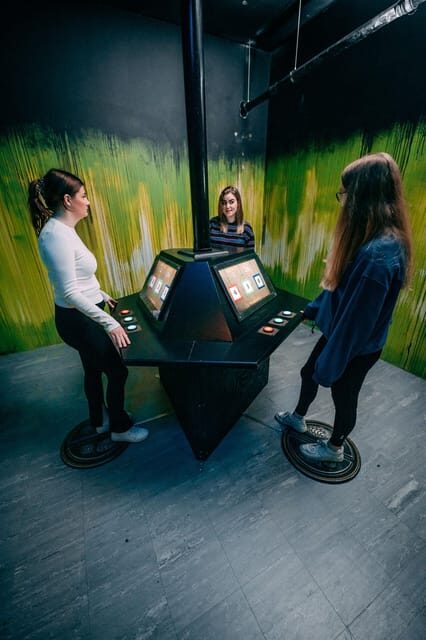
Prison Island is built around the idea of variety. You’re not doing one repeated mini-task over and over. You’re moving through unique challenge rooms with different objectives, so you keep getting new kinds of problems.
One of the most loved parts is the sheer number of rooms. A past participant specifically called out 46 escape rooms, and even if you don’t see every single option in one visit, it gives you an idea of scale. This matters because it keeps the experience from feeling like a one-off novelty. If you enjoy the first run, there’s likely enough variety to justify returning.
Scoring is also a key driver. Your team uses a team scorecard, and you’re rewarded for solving tasks successfully within the time window. That turns “doing puzzles” into “managing a mission.” You’ll feel the urgency when you’re close, and you’ll learn quickly how your team performs under pressure.
One more thoughtful feature: you can try again. People liked that you can revisit rooms to improve your score. That’s a big deal for groups, because not every team nails every puzzle on the first try. Instead of ending on a sour note (we failed one task), you can end with a sense of progress: we didn’t get it yet, so we’ll run it again and do better.
Team size (2 to 5) and how to make teamwork easier
Teams are 2 to 5 people, which is the sweet spot for a timed challenge game. Too many people and you get noise. Too few and you lose the benefit of multiple minds tackling different angles.
With a small team, you’ll want roles—at least informally. Here’s a simple approach that fits how these games typically work and keeps everyone useful:
- One person leads the discussion (calls out what to try next).
- One person is the puzzle reader (tracks clues/instructions).
- One person tests ideas (tries combinations quickly).
- If you have 4–5 people, rotate: the best teams don’t lock into one role all game.
Communication is the real tool here. Quick thinking matters, but the game rewards teams that share what they notice. Even one small piece of information—like recognizing a pattern or realizing a task doesn’t work the way you assumed—can save minutes. And in a timed environment, minutes are points.
If you’re coming as a corporate group or a school group, this structure is also ideal for leadership practice. You’ll see who takes charge, who supports, and who finds solutions fast. It’s not therapy. It’s a game. Still, it has a surprisingly practical “how we work together” vibe.
Language and skill levels: what to expect if your group isn’t fluent
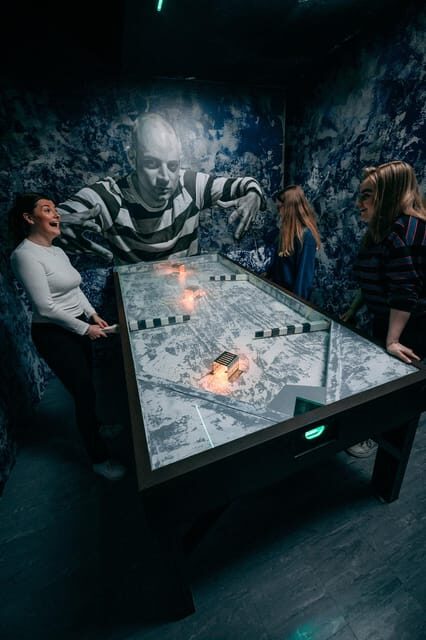
The game is played in English, and hosts/reception are available in English and Norwegian. That’s useful if you’re dealing with a mixed-language group, especially families with varying comfort levels.
The good news is that it’s tailored for all skill levels. That doesn’t mean every puzzle will be easy, but it usually means the game designers build in multiple ways to succeed—some rooms are more about logic, some about coordination, and some about noticing what the room is suggesting.
A point worth keeping in mind: if your team’s English is limited, you might still enjoy the experience, but some instructions and task descriptions could be the difference between smooth progress and slow confusion. If you have team members who are hesitant, assign them to a role where they can still help—like observing details, coordinating equipment, or running physical tasks—while the stronger readers translate what you need.





Practical tips: what to wear and how to avoid wasting time
Wear comfortable clothing and shoes suitable for physical activity. This is a real requirement, not a suggestion. Even if the game is puzzle-based, you’ll be moving, turning, and shifting positions in and between rooms. You don’t want to lose time because someone’s uncomfortable or slipping in bad shoes.
Also, plan on arriving 15 minutes before your booking time. That briefing time is part of the experience. If you show up late, your team may feel rushed before you even start, and in a timed scoring game, that matters.
One more practical idea: bring a “team sprint mindset.” The game is listed as 1 to 2.5 hours, and people said the time flew by. That’s usually what happens when you’re busy solving. Still, the faster you settle into teamwork and communication, the quicker the experience feels smooth.
Price and value: is $30 per person worth it?
The price is listed at $30 per person, and for Stavanger, that’s a very reasonable rate for a guided-adventure-style experience where you do multiple activities in one session.
Why the value works:
- You’re not just doing one puzzle. You’re cycling through multiple challenge rooms.
- You get a team scorecard, which adds structure and makes the session feel like a real “event,” not random tasks.
- The design supports repeat attempts for better scores, which stretches the value if your group enjoys competitive problem-solving.
Compared to a lot of ticketed attractions, this is less about passive sightseeing and more about active participation. If your group likes games, teamwork, and time pressure, it’s the kind of cost that turns into a story you’ll keep retelling for the rest of the trip.
If your group prefers quiet tours or doesn’t enjoy being physically active, the price can feel steep—because the “product” is effort and interaction, not scenery.
The best match: who should book Prison Island Stavanger
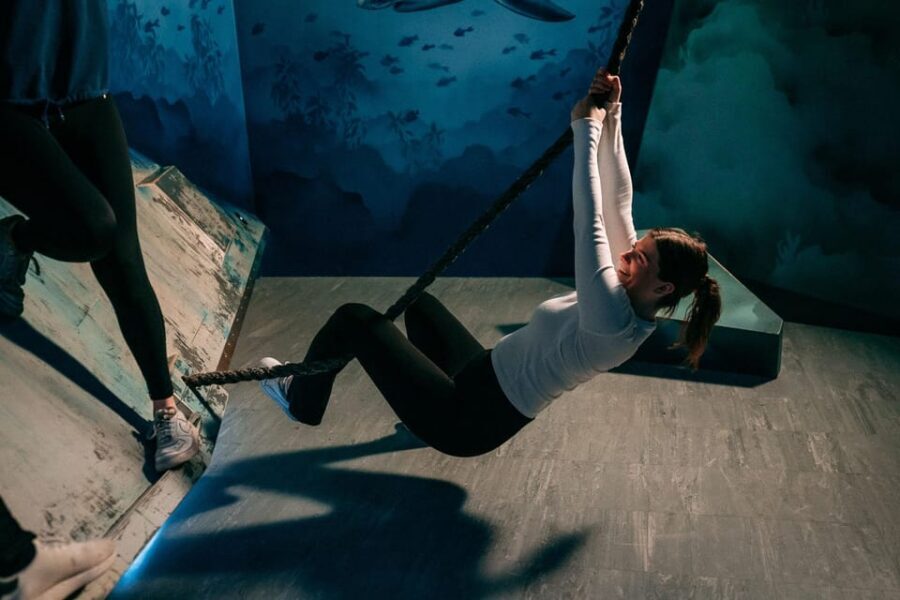
This is a strong choice if you want:
- A group activity that’s interactive and team-based
- A fun challenge for teens, families, and mixed ages
- A corporate or school outing where people have to cooperate, not just mingle
- Something you can do as a small group (2 to 5 is ideal)
People also clearly like it for team-building because it forces communication quickly. You can’t just split and wander—you have to coordinate. The activity naturally creates a shared goal (points before time) and shared problem-solving moments.
If you’re traveling with a friend who loves puzzles, you’ll both enjoy the “we figured it out” feeling. If you’re traveling with someone who’s less into puzzles, the obstacle and coordination aspects give them a chance to shine too.
A few downsides to plan around

No activity is perfect, so here are the main practical considerations to keep in mind.
1) Some tasks can be confusing
Even with different skill levels, a puzzle can still stump you. If your group likes everything explained step-by-step, the game’s independent style might frustrate you. The solution is simple: communicate early and assign someone to track instructions carefully.
2) Not every room will click for everyone
Variety is a strength, but it also means some rooms will suit your group more than others. That’s why trying again can be so valuable: you can improve scores even if one section didn’t land.
3) Physical comfort matters
The activity asks for comfortable clothing and shoes for physical movement. If your group has mobility constraints or just hates walking around inside structures, you’ll want to think hard before booking.
Should you book Prison Island Adventure Game at Fangene på Fortet?
I think you should book if you want an action-based group experience that rewards teamwork, clear communication, and quick thinking. At $30 per person, you’re paying for a structured, timed challenge where multiple rooms and scoring keep everyone engaged. The best part is the repeat option—if you didn’t nail a room, you can improve your score instead of leaving with a half-finished feeling.
Skip it if your group hates physical movement or prefers guided sightseeing over interactive problem-solving. Also consider it carefully if your team’s English comfort is limited, since the game is played in English and some tasks depend on understanding instructions quickly.
If your crew likes games and you want a memorable Stavanger outing that’s more about working together than looking around, this one is a solid bet.
FAQ
Where do I meet for the Stavanger Prison Island game?
You meet at Fangene på Fortet at the welcome reception.
How long does the Prison Island adventure take?
The activity lasts 1 to 2.5 hours, depending on starting times and how the game session runs.
How many people are on each team?
Teams can be 2 to 5 people.
Is the game in English?
Yes. The game is played in English. The host or greeter is available in English and Norwegian.
What’s included in the ticket price?
Your ticket includes entry to multiple challenge rooms and a team scorecard.
Is there a personal guide included?
No. A personal guide is not included.
Do I need to arrange transportation to the venue?
Transportation to and from the venue is not included.
Is the activity wheelchair accessible?
Yes. It is listed as wheelchair accessible.
What should I wear?
Wear comfortable clothing and shoes suitable for physical activity.
What’s the cancellation policy?
Free cancellation is available up to 24 hours in advance for a full refund.
Can I reserve now and pay later?
Yes. It offers a reserve now & pay later option, so you can hold your spot without paying immediately.