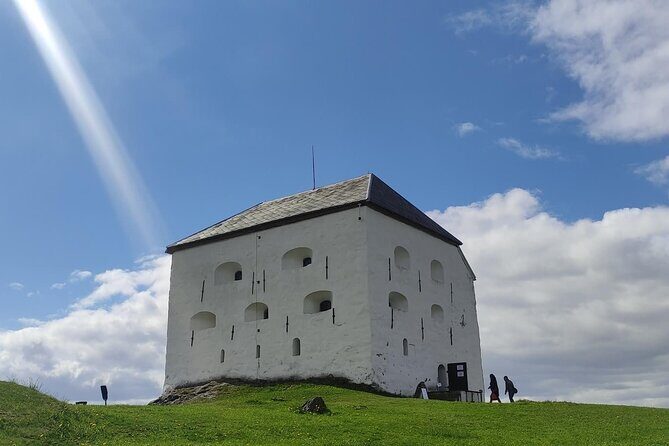
REVIEW · STAVANGER
e-Scavenger hunt Stavanger: Explore the city at your own pace
Book on Viator →Operated by Qula · Bookable on Viator
Stavanger feels like a puzzle you can stroll. This self-guided e-scavenger hunt is interesting because you get to choose your pace, answer phone prompts on the move, and link together a walk through Gamle Stavanger, oil, and maritime Stavanger. I like the flexibility to work through questions in your own order and the way the prompts mix question types. I also like the value for small groups: you’re paying per group (up to 6), not per person. One drawback to plan around is that if you ignore the most efficient sequence and bounce around, you can end up doing extra back-and-forth walking.
You’ll be using a mobile ticket on your phone for an activity that runs about 3 to 4 hours. It’s offered in English, and it’s designed for only your group, so you’re not stuck waiting on strangers. The start point is Nedre Strandgate 62, 4005 Stavanger, and the activity ends back there.
What makes this one worth your attention is the mix of stops. You’re not only looking at pretty streets. You’ll be moving through places that explain how Stavanger grew: wooden old-town life, a national oil story, fishing and canning work, and centuries of merchant shipping. Do note: you’ll need your own smartphone, plus data for the phone experience.
In This Review
- Key highlights worth your time
- Price and value: $37.49 per group makes it easy to justify
- Where it starts: Nedre Strandgate 62 and a city that’s easy to navigate
- How the e-Scavenger Hunt Stavanger phone game works in practice
- Gamle Stavanger: wooden streets, restored buildings, and a slow stroll pace
- A preserved house and garden: look closely, not just quickly
- Norwegian Petroleum Museum: how oil shaped Stavanger
- Skagenkaien and waterfront architecture: old boathouses with charm
- Stavanger Cathedral: a rare survivor of Middle Age architecture
- Sardine canning museum: tools and the reality of work
- Valberg tower (Valbergtårnet): city views plus photography and free art
- Culture center, cinema, and library: a living hub near a square
- Merchants’ buildings and maritime history: the city’s trade story
- Kielland: a wealthy family, art hobbies, and novels
- Ledaal manor: the King’s official residence in Stavanger
- Stavanger Theater: April 15, 1883 and Olaus Olsen
- Paseo por la calle: a small heart in the center of town
- Timing tips: how to keep the hunt fun instead of tiring
- Who should book this e-Scavenger hunt
- Should you book e-Scavenger hunt Stavanger?
- FAQ
- What does the e-Scavenger hunt cost?
- How long does the experience take?
- What language is the hunt offered in?
- Where does the hunt start and end?
- Do I need to bring a smartphone?
- What kind of group setup is this?
- What places are included in the hunt?
- Can I cancel for a refund?
Key highlights worth your time

- Flexible pacing with a phone-led hunt that lets you keep moving at your rhythm
- Small-group setup (up to 6) priced per group, which keeps costs down
- A strong mix of themes: old town, petroleum, maritime trade, and local culture
- Great stop variety for photos including a city-view tower and waterfront architecture
- Question types that change it up so you’re not stuck tapping the same thing
Price and value: $37.49 per group makes it easy to justify

At $37.49 per group (up to 6), this format is built for groups that don’t want to pay big-tour prices per person. If you’re traveling as a pair, you still might feel the price is reasonable because the experience covers a chunk of central Stavanger in about half a day. If you’re a family of four or a friend group, the per-group math becomes even friendlier.
The real value isn’t just the cost. It’s the independence. A guided walking tour can be great, but it often comes with fixed timing and a pace that fits the average person. Here, you decide when to pause for a photo, when to sit for a minute, and when to speed up.
You can also read our reviews of more city tours in Stavanger



Where it starts: Nedre Strandgate 62 and a city that’s easy to navigate
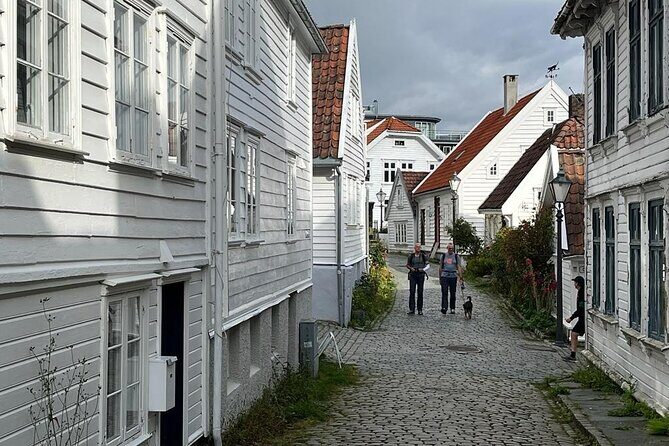
Your launch point is Nedre Strandgate 62. That matters because it keeps the hunt anchored in a walkable zone rather than scattering you across Stavanger like a scavenger hunt from a different planet. The activity also ends back at the meeting point, which helps you avoid the common end-of-tour problem: arriving at a far-away spot and then spending time sorting out transit.
One practical note: you’ll be relying on your phone. That means you should do a quick check before you begin:
- Make sure your phone is charged
- Have enough mobile data for the app-based prompts
- Bring a phone-friendly way to keep it steady while you walk (a small clip or wrist strap helps)
Also, it runs all day within the stated dates, from 12:00 AM to 11:59 PM daily, so you can usually pick daylight hours for photos and museum comfort.
How the e-Scavenger Hunt Stavanger phone game works in practice
This is a 100% tailored city game built around Stavanger, delivered as an e-Scavenger Hunt on your phone. You’ll receive a confirmation at booking time, and you’ll use your mobile ticket to start. The big idea is simple: you move from stop to stop, answer prompts, and build your own story of the city.
You can usually take the clues in the order that makes sense for you. That flexibility is a plus when you want to stop for coffee or slow down around the older streets. The trade-off is that the route efficiency depends on your choices. If you go far out of sequence, you can feel the extra walking, especially in wind or rain.
Gamle Stavanger: wooden streets, restored buildings, and a slow stroll pace

The hunt kicks you into Gamle Stavanger, the city’s historical area. This part of town is known for restored wooden buildings built in the 18th century and early 19th century. The buildings themselves are the point, but what you’ll get from doing it as a game is the attention direction: you’re more likely to notice small details when you’re answering prompts rather than just passing through.
Why it’s worth your time:
- It’s a living-feeling neighborhood, not just a monument
- The wooden streets create a natural rhythm for a self-paced walk
- It’s ideal for photos without the pressure of a tour group line
Possible drawback: if weather is rough, this area can still be lovely, but you might want to keep moving between stops to avoid getting chilled while you pause.
A preserved house and garden: look closely, not just quickly
One of the stops takes you to a house preserved almost exactly as it was when the resident passed away, with a garden you can enjoy through the year. Even without stepping into a huge, high-tech space, this kind of stop gives you something most city walks miss: a closer sense of daily domestic life.
Here’s how I’d approach it on this hunt:
- Spend a few minutes reading the context the game gives you
- Use the garden time as a chance to slow your pace
- Treat this as your mental reset between bigger-ticket museums
If gardens aren’t your thing, you can still get value by using it as a pause point. The game structure helps you move through the city in a way that feels like a story, not a checklist.





Norwegian Petroleum Museum: how oil shaped Stavanger
Next up is the Norwegian Petroleum Museum. Oil history in Norway isn’t just a set of dates; it’s a story of tools, workplaces, and decisions that changed modern life. Here, the information is presented through original objects, films, and interactive exhibitions, which gives you multiple ways to connect, even if you’re not a hardcore energy-history fan.
Why this stop works well inside a scavenger hunt:
- The game prompts can make you look for specific details instead of wandering
- Interactive elements help you spend time without it feeling like you’re forcing yourself to read
Possible drawback: museum time can stretch if you get pulled into the interactive stuff. If you’re tight on time, skim first, then go back to one or two sections that match what your phone prompts emphasize.
Skagenkaien and waterfront architecture: old boathouses with charm
Then you move to Skagenkaien, known for its great boathouse and old houses with Norwegian architecture. Waterfront scenes like this can be easy to appreciate from the street, but the game format makes you pay attention to what you’re seeing: shapes, placement, and the way the harbor connects to daily life.
This stop is great if you like:
- Waterfront walks that don’t feel rushed
- Places that look good at multiple angles
- A break from indoor museum time
Practical consideration: if the day is stormy, the waterfront can feel colder and windier. Short pauses, warm layers, and quick photo stops help.
Stavanger Cathedral: a rare survivor of Middle Age architecture

You’ll also reach Stavanger Cathedral, described as the only cathedral from the Middle Age that has kept its original architecture. That’s a big claim in plain terms, and it’s exactly the kind of detail that makes a self-guided story work. It gives you a reason to stand and look, not just pass by.
How to make this stop pay off:
- Slow down for a couple of minutes before moving on
- Use the phone prompts to guide what you notice
- Treat the cathedral as a visual anchor for the rest of the old-town walking
If you tend to rush through religious buildings, this is one place where the hunt nudges you to pause.
Sardine canning museum: tools and the reality of work
Another stop takes you to the canning museum, focused on how sardines were processed, smoked, and canned about a hundred years ago. What stands out from the description is the emphasis on original equipment and tools—not just display cases or broad explanations.
I like this kind of stop because it turns “seafood history” into real work you can picture. It also breaks the monotony if you’ve already done multiple indoor exhibits, because this one is built around practical, tangible items.
Possible drawback: if you’re not interested in food processing history, you may need to lean on the game prompts to focus you on the parts that matter for the story.
Valberg tower (Valbergtårnet): city views plus photography and free art
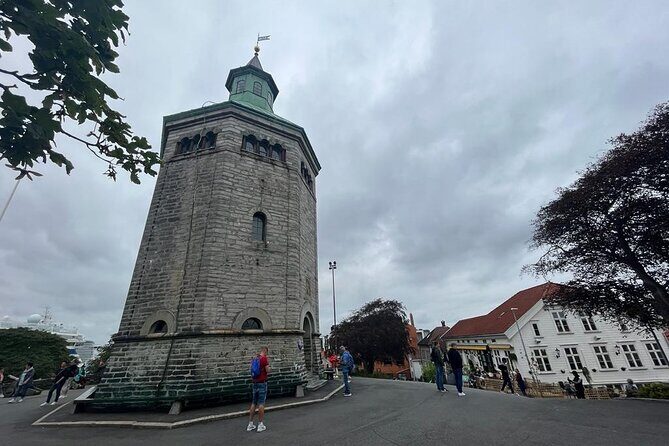
Next, you’ll find Valberg tower (Valbergtårnet), constructed from 1850 to 1853. It used to be an observation tower of Stavanger, and it still offers a nice view over the city. If you like photos, this is the kind of stop that gives your walk a payoff: the city from above, and your route suddenly makes sense in one frame.
This is also a place worth it if you care about photography and a contemporary art exhibition that’s free. That pairing is smart: the tower gives you the skyline, and the art side gives you a human, modern contrast to the older streets below.
Practical consideration: towers are weather-dependent. If it’s windy, keep an eye on footing and don’t let camera gear make you slow.
Culture center, cinema, and library: a living hub near a square
You’ll then reach a cultural center with events and activities, plus a cinema and library. It’s near a square with cozy terraces, which is useful because it gives you an easy place to take a breather during the hunt.
Why this works on a scavenger hunt day:
- It’s a natural pause point between “story heavy” stops
- Terraces make it simpler to plan a short rest without losing your place
If you’re traveling with mixed interests, this kind of space helps. Not everyone wants museums every hour, and here you get a chance to reset.
Merchants’ buildings and maritime history: the city’s trade story
One of the hunt stops highlights that museum exhibitions are located in Stavanger’s best-preserved merchants’ buildings, covering about the last 200 years of maritime history. For many people, maritime history can sound abstract. But putting it in preserved merchant buildings gives it a physical setting: you can picture how trade people lived and worked.
I like this stop because it ties the whole city walk together. Old wood houses, waterfront structures, and fishing/canning all become part of one bigger map: Stavanger wasn’t just scenic; it was a working port.
Possible drawback: if you’re museum’d out, these exhibitions can feel like one more indoor block. The trick is to treat it as a targeted stop using what your phone prompts ask you to look for.
Kielland: a wealthy family, art hobbies, and novels
The hunt also includes Kielland, tied to Stavanger’s wealthy family background. The details given are specific: his father Jens Zetlitz Kielland (1816–1881) was a banker and vice-consul of Portugal, with artistic hobbies including writing numerous novels.
This is one of those stops that makes the hunt feel like more than sightseeing. It connects people to place. Even if you don’t know the name yet, the phone prompts turn the story into something you can hold onto as you walk.
Practical consideration: if you prefer action-heavy stops, this kind of person/place story can still be fun, but give it the time your curiosity requires rather than rushing through it.
Ledaal manor: the King’s official residence in Stavanger
Then you’ll reach Ledaal, a manor house that is the official residence for the King of Norway in Stavanger. The garden is listed as free to explore, which is a good way to enjoy the space without it feeling like a strict museum mission.
I find this kind of stop great on a city game day because:
- It adds a different vibe from markets, museums, and waterfronts
- The garden gives you fresh air while still staying on-theme
Possible drawback: if you’re hoping for interiors or a full tour experience, the provided information only guarantees garden access. Plan to focus on the outdoor time.
Stavanger Theater: April 15, 1883 and Olaus Olsen
Another cultural anchor on the route is the Stavanger Theater building. The hunt notes that on April 15, 1883, the first showing was given with Olaus Olsen as director, and that the building is still used today.
This is where the hunt gets nicely local. Instead of only big-world events, you get a pinpoint date tied to Stavanger’s cultural life. It’s also a helpful anchor when you’re thinking about how the city developed over time.
Paseo por la calle: a small heart in the center of town
Finally, you’ll end at Paseo por la calle, described as situated at the heart of Stavanger. It’s a small place with a unique row of old Norwegian style.
This kind of stop is excellent for wrapping up your hunt because it’s easy to slow down and take your last photos without needing to plan a long transit move afterward. It also gives your day a satisfying “final frame” that feels calmer than a museum exit.
Timing tips: how to keep the hunt fun instead of tiring
This activity is about 3 to 4 hours, but your real experience depends on how much you pause. On a hunt day, I recommend you treat it like a choose-your-own-adventure with rules.
Here’s my practical approach:
- Start at a time when you have energy. Late evening can be tempting, but photos and indoor stops may feel slower.
- Use your phone prompts as a reason to look carefully, not as pressure to rush.
- If you want to reduce walking, try to keep the stops in a sensible sequence rather than jumping around.
One review issue pointed to the idea that clues being spread out can wear you down. That matches what I’d expect in any city route. The good news: if you follow the most logical order suggested by the hunt flow, you’ll likely avoid the worst of the back-and-forth.
Who should book this e-Scavenger hunt
This is a strong match if you:
- Want a self-paced Stavanger experience that doesn’t lock you into a group schedule
- Like mixing old town streets, museums, and a few viewpoint/photo stops
- Are traveling as a small group (up to 6) and want a cost that’s easier to manage
It’s also a good option if you enjoy figuring things out as you go. The game format encourages you to pay attention, even in places you might otherwise skim.
Should you book e-Scavenger hunt Stavanger?
If you want a Stavanger walk that feels modern (phone-led) but rooted in local places, I’d say yes. The value for small groups, the varied stops from oil to maritime to art, and the chance to take it at your pace make it a smart use of a half day.
I’d think twice if you hate walking and want everything to be tightly clustered, or if you’re likely to ignore the route logic and bounce stops randomly. Also, if the weather turns nasty, plan a flexible mindset. A city game still needs you outside.
If you do book, I’d go in with one goal: connect the themes. Gamle Stavanger plus oil plus maritime trade isn’t random. It’s how you start seeing Stavanger as one story.
FAQ
What does the e-Scavenger hunt cost?
It’s priced at $37.49 per group, for up to 6 people.
How long does the experience take?
Plan for about 3 to 4 hours.
What language is the hunt offered in?
The activity is offered in English.
Where does the hunt start and end?
It starts at Nedre Strandgate 62, 4005 Stavanger, Norway, and it ends back at the same meeting point.
Do I need to bring a smartphone?
Yes. The activity is a phone-based scavenger hunt, and smartphone and data are not included.
What kind of group setup is this?
This is a private tour/activity, and only your group participates (up to 6 people).
What places are included in the hunt?
The route includes stops such as Gamle Stavanger, the Norwegian Petroleum Museum, Skagenkaien, Stavanger Cathedral, a canning museum, Valberg tower, a cultural center, merchants’ buildings with maritime exhibitions, Kielland, Ledaal, Stavanger Theater, and Paseo por la calle.
Can I cancel for a refund?
Yes, you can cancel for a full refund if you cancel up to 24 hours in advance. If you cancel less than 24 hours before the start time, the amount paid is not refunded.