REVIEW · STAVANGER
Small Group: Highlights and History of Haugesund and Karmoy
Book on Viator →Operated by Viking Adventure · Bookable on Viator
A good story starts with a short ride. This small-group tour strings together Karmøy’s coast and history in about five hours, with real local texture at each stop. I love that it mixes easy time on your own with guided context, so you’re not just looking at places—you’re learning how the area got shaped.
What I like most is the small-group size and the way you get room to talk. You’ll hear local stories, pick up practical background, and actually ask questions without shouting over a crowd.
One thing to plan around: the tour needs good weather. If conditions are poor, the operator may reschedule or offer a full refund instead of running it.
In This Review
- Key Highlights You’ll Notice Right Away
- Haugesund and Karmøy in 5 Hours: How This Tour Feels
- Akrasanden and Akrehamn: White Sand Meets Blue Flagg
- Ferkingstad on Karmøy: North Sea Fishing Culture in a Small Dose
- Gamle Skudeneshavn: The White Lady of the Empire and a Real Stroll
- Avaldsnes and St. Olav’s Church: Pilgrims Since 1250
- Price and Value: Is $187.85 Worth It?
- What the Small Group Changes for You
- Tips for a Smooth Day: Shoes, Weather, and Pacing
- Who This Tour Fits Best (and Who Might Want Something Else)
- Should You Book This Haugesund and Karmøy Highlights Tour?
- FAQ
- How long is the tour?
- Where does the tour start?
- What language is the tour offered in?
- How many stops are included?
- Is lunch included?
- Are there admission tickets to pay?
- What’s the group size?
- Is the tour suitable for people with reduced mobility?
- Are service animals allowed?
- What happens if the weather is bad?
Key Highlights You’ll Notice Right Away
- Blue Flagg eco-label at Akrasanden: famous white sand plus a recognized environmental certification for beaches and marinas
- Ferkingstad fishing traditions: a short stop that focuses on North Sea maritime culture and local sea-based flavors
- Gamle Skudeneshavn, the White Lady of the Empire: charming summer-town streets plus light Norwegian lunch
- Avaldsnes and St. Olav’s Church: a church site built in 1250, tied to pilgrims since its consecration by Håkon Håkonsson
- Max 15 people, English narration: easier pacing and better access than big-bus tours
- A guide who keeps the drive interesting: reviews specifically praised Alfonso’s entertaining, organized storytelling
Haugesund and Karmøy in 5 Hours: How This Tour Feels
This is the kind of tour that works when you want a fast, high-quality overview without feeling rushed. You’re not trying to “do everything in Norway.” You’re getting a tight slice of coastal life on Karmøy, plus the religious and maritime anchors around Haugesund.
The structure is also smart. You get four stops, and each one has a different job: relax on the beach, understand fishing culture, walk a photogenic old town, then visit a major church site. In plain terms, your brain gets to reset between stops instead of burning out on constant sightseeing.
And because the group caps at 15, the tour tends to move like a small band of friends rather than a line of people. Reviews mention the group can reach places that bigger groups often can’t manage, which makes sense here: coast towns and viewpoints don’t always cooperate with huge buses.
You can also read our reviews of more historical tours in Stavanger
Akrasanden and Akrehamn: White Sand Meets Blue Flagg
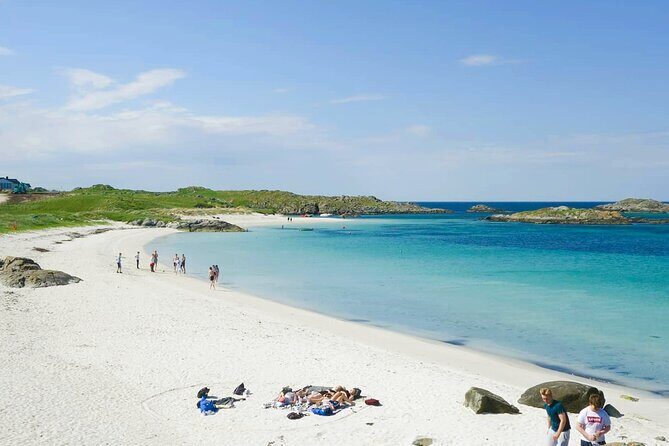
Stop one is Akrasanden (Akrehamn area), and it’s exactly what it sounds like: a wide stretch of white sand and Atlantic-style ocean views. You’ll have about 15 minutes here—just enough to stretch your legs, take photos, and feel the coastline without turning it into a long detour.
What I’d pay attention to is the Blue Flagg eco-label. The label is an international environmental certification for beaches and marinas, so it signals that the site is managed with water quality and environmental rules in mind. For you, that matters because you can spend your beach time without wondering if the beach is a dead zone or poorly maintained. You get a cleaner, better-run place to enjoy.
Practical advice: wear shoes you can walk in. Even if the sand looks smooth, there’s often uneven footing and small bits of beach debris. If it’s breezy, bring a layer—the North Sea can feel cooler than the forecast suggests.
Ferkingstad on Karmøy: North Sea Fishing Culture in a Small Dose
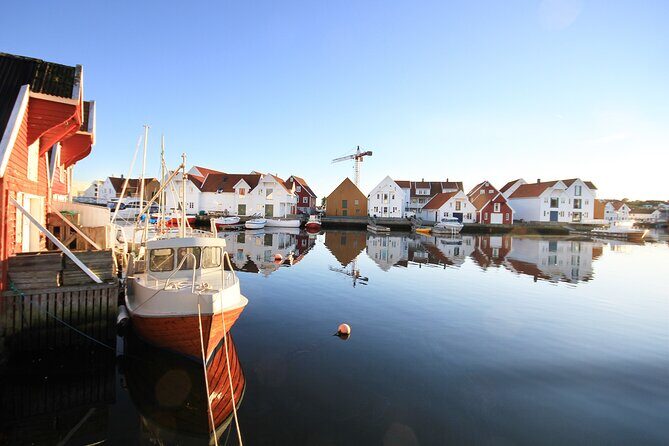
Next up is Ferkingstad. This stop is shorter—about 30 minutes—but it’s built around a theme, not just a viewpoint. You’ll get a look at Karmøy’s fishing traditions and hear local stories tied to North Sea maritime culture.
This is one of those stops that can quietly become the most meaningful. The coastline here isn’t just scenic. It’s tied to work: fishing, boats, seasonal rhythms, and the culture that grows around survival and trade. If you like understanding how people live, you’ll appreciate that the tour frames the sea as a way of life, not a postcard backdrop.
You’ll also taste sea flavors. The tour description points to local stories plus something to do with the flavors of the sea, and reviews specifically mention snacks being part of the experience. If you’re hungry, that helps. If you’re not, it still gives you a gentle nudge to try something local rather than waiting until later.
A possible drawback: because this is only half an hour, you won’t get a full “museum-style” explanation. If you want deep immersion in fishing history, treat this stop as the orientation chapter, then follow up on your own afterward.
Gamle Skudeneshavn: The White Lady of the Empire and a Real Stroll
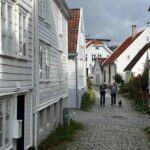
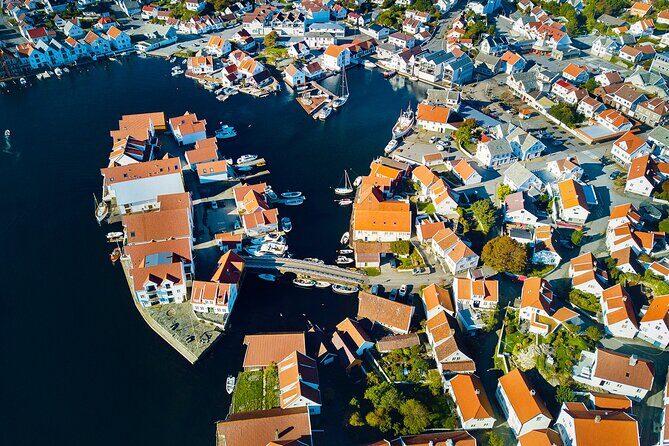
The main event is Gamle Skudeneshavn, often called the White Lady of the Empire. You get 1 hour 30 minutes, which is the sweet spot for a walking town stop: enough time to drift through streets and alleys, pause for photos, and still settle down for lunch without feeling like you’re racing a clock.
What makes this town appealing is its maritime personality. The description emphasizes charming streets and alleys steeped in maritime history, and that matches what you’ll feel as you walk. Even if you’re not a hardcore history person, the layout and seafaring vibe do the work for you.
Then there’s lunch. You’ll enjoy a light Norwegian lunch here, and that’s not a small detail. Food is often what makes a history stop click, because it turns a concept into a lived moment. Reviews also praised the value of the time and the overall organization, with lunch and the earlier stops giving the tour a “real day out” feel rather than just a checklist.
One timing note from reviews: sometimes the last stop doesn’t leave quite as much time to step out as people want. In other words, the first three stops can feel like the best pace. If your schedule is tight, you may want to plan your own photo mission around earlier stops so you’re not scrambling at the end.
Avaldsnes and St. Olav’s Church: Pilgrims Since 1250
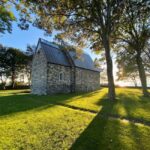
Your final cultural anchor is Avaldsnes, with St. Olav’s church. Built in 1250, it has been an important church for pilgrims since its consecration by Håkon Håkonsson.
This is the kind of stop that’s short on paper—about 15 minutes—but big in meaning. It’s not just a building. It’s a marker of how faith, power, and travel met in this region. The church’s pilgrim role is the key idea: people didn’t just pass through Norway’s coast for pleasure. They traveled with purpose, and that left footprints in places like Avaldsnes.
If you like architecture, stone age markers, and the feeling of older Europe, this stop delivers a sense of place fast. If you’re less into churches, it can still work because it’s anchored to a story: the consecration by Håkon Håkonsson and the long pilgrim history give you a framework so you’re not looking at a random church with no context.
Quick practical tip: church interiors can be cooler than you expect, even in summer. Bring a layer if you run warm. And if there’s limited access or uneven ground, take your time—15 minutes disappears fast when you’re trying to rush carefully.


Price and Value: Is $187.85 Worth It?
At $187.85 per person for about five hours, you’re paying for more than stops. You’re paying for orchestration, pacing, and local storytelling—plus at least one meal and some added snacks.
Here’s what makes that price feel more reasonable than it first appears:
- You’re getting guided interpretation at multiple locations, not just transportation.
- The itinerary includes light Norwegian lunch plus additional food touches like snacks mentioned in reviews.
- The group is capped at 15, which usually means better flow, more room for conversation, and less time stuck waiting.
Where it might feel steep: if your priorities are only scenery and you’re comfortable figuring places out solo, you could build a DIY day. But if you want a structured tour that gives you the “why” behind the “what,” the price starts to make sense fast.
In other words, I’d treat this as a value play for people who like guidance and local context. It’s not the cheapest way to see Karmøy, but it is a tidy way to learn and eat while you’re there.
What the Small Group Changes for You
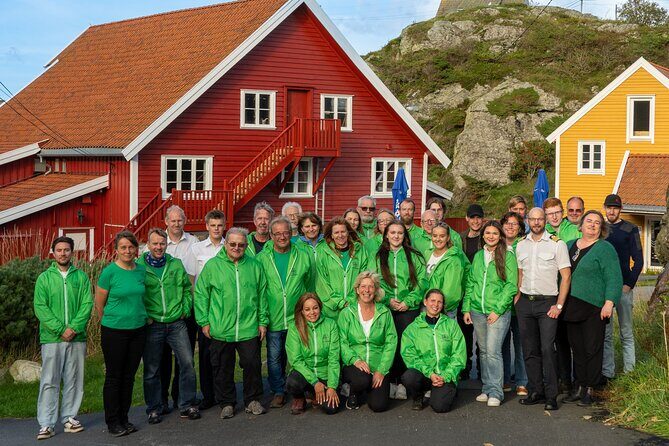
A lot of tours say small group in the marketing. Here, it actually matters. Reviews specifically praised that small groups could go places bigger groups couldn’t, and you can feel how that affects the day.
When the group is limited, you typically get:
- less waiting around at each stop
- a smoother pace between photo moments
- more chances to ask questions
- better chances to fit into tight coastal spaces
The reviews also highlighted the guide narration—Alfonso was mentioned for being interesting, informative, and entertaining. That’s the real “small group” advantage: you’re not just seeing points on a map. You’re getting a running story while you travel, so the route becomes coherent.
If you dislike group herd energy, this is the right style of tour. If you love independent time, you still get it—the itinerary includes short legs at each stop rather than forcing you into one long, constant walking block.
Tips for a Smooth Day: Shoes, Weather, and Pacing
This is a coastal tour, and coastal weather is unpredictable. The tour is described as requiring good weather, and that means you should assume wind and clouds can change the vibe even if the sky looks fine in the morning.
So here’s how to prepare without overthinking it:
- Wear comfortable shoes for sand and street walking.
- Pack a light layer. Even warm months can feel cool near the sea.
- Bring sunscreen and a hat if the sun breaks out. Beaches can give you more glare than you expect.
Pacing-wise, aim to be mentally ready for a day that alternates between “stand and look” and “walk and learn.” You’ll get time to stretch your legs at the beach, a town wander at Skudeneshavn, and quick context at church and Avaldsnes.
Also, keep your expectations realistic about timing. Reviews noted that the final stop may feel shorter for some people. That’s normal on a multi-stop day. The best strategy is to treat the first part as your main photo and exploration window.
Who This Tour Fits Best (and Who Might Want Something Else)
This tour is ideal for you if:
- you want an organized introduction to Haugesund and Karmøy in a short window
- you enjoy learning through local stories, not just facts on a sign
- you like small groups and a less crowded feel
- you want a straightforward meal plan with light Norwegian lunch included
You might choose a different option if:
- you only want long, slow sightseeing with no structure
- you’re hoping for major museum time (this is not that kind of itinerary)
- you dislike weather-dependent plans, since the tour is noted as requiring good conditions
If you’re visiting and trying to figure out what to do next, this tour is a great way to get your bearings fast. It helps you understand which parts of the coastline matter and why.
Should You Book This Haugesund and Karmøy Highlights Tour?
I’d book this if you want a compact day that mixes sea views, maritime culture, and a church story tied to pilgrims and Håkon Håkonsson. It’s not just pretty stops. The value is in the way the day is structured around themes, plus the small group feel and the included lunch.
If you hate rescheduling risk, check the weather closely before you go. The tour is designed around good conditions, and if weather turns, you’ll need flexibility.
Overall: this is a well-paced, high-effort orientation to the Haugesund and Karmøy region, delivered with a small group format that actually improves the experience.
FAQ
How long is the tour?
The tour runs about 5 hours (approx.).
Where does the tour start?
You meet at Garpeskjærvegen 3, 5527 Haugesund, Norway.
What language is the tour offered in?
The tour is offered in English.
How many stops are included?
There are 4 stops: Akrasanden (Akrehamn), Ferkingstad, Gamle Skudeneshavn, and Avaldsnes.
Is lunch included?
Yes. You’ll have a light Norwegian lunch at Gamle Skudeneshavn, and it’s listed as included.
Are there admission tickets to pay?
Admissions are listed as free for Akrasanden and Ferkingstad and Avaldsnes, while Gamle Skudeneshavn has the lunch included and is listed as the main stop.
What’s the group size?
The tour has a maximum of 15 travelers.
Is the tour suitable for people with reduced mobility?
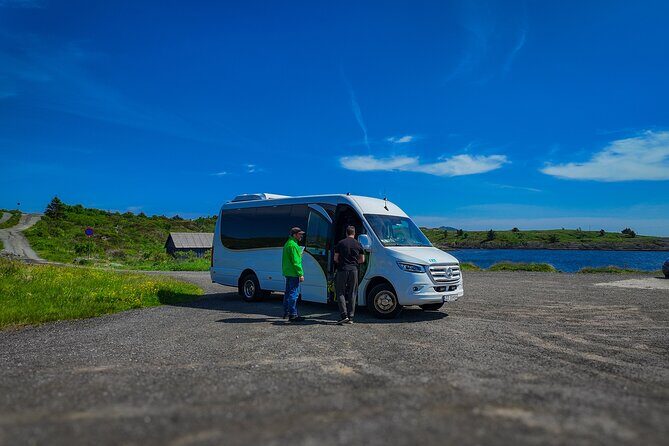
It’s suitable for people with reduced mobility, but you would need to be able to get into the bus by yourself.
Are service animals allowed?
Yes, service animals are allowed.
What happens if the weather is bad?
The tour requires good weather. If it’s canceled due to poor weather, you’ll be offered a different date or a full refund.