REVIEW · LONGYEARBYEN
Longyearbyen: Sarkofagen Summit Hike
Book on GetYourGuide →Operated by Arctic Footsteps · Bookable on GetYourGuide
The High Arctic asks for effort. This half-day Sarkofagen hike from Longyearbyen turns into a real expedition thanks to a Larsbreen glacier traverse with crampons and a sharp, guided push to the Sarkofagen summit ridge. I like that your guide doesn’t just lead your steps—he explains Arctic history and glacier dynamics while running the safety details.
One possible drawback: this isn’t a casual hike. Expect 900+ meters of elevation gain and technical footwork in cold conditions, which means you need solid fitness and confidence placing your feet carefully.
In This Review
- Key Things to Know Before You Go
- Longyearbyen’s Sarkofagen Hike: A Half-Day That Feels Like More
- The Route: Moraine Terrain to Larsbreen Glacier to the Summit Ridge
- Glacier Work With Crampons: What This Adds to Your Skillset
- The Summit Moment: Views, Silence, and a Chance at Wildlife
- Technical Footwork and 900+ Meters: How to Judge If You’re Ready
- Small Group Dynamics: Why a Max of 10 Helps
- What’s Included (and What You’ll Need to Sort Yourself)
- Timing, Duration, and What the 4 Hours Actually Means
- Price and Value: Is $262 Reasonable for This Arctic Expedition?
- Who This Hike Fits Best (and Who Should Skip It)
- Should You Book the Sarkofagen Summit Hike?
- FAQ
- How long is the Sarkofagen Summit Hike?
- What’s included in the price?
- Do I need to bring my own clothing?
- Are crampons provided for the glacier crossing?
- What kind of difficulty should I expect?
- Is this hike suitable for people with mobility impairments or health issues?
- What language is the guide?
- Is free cancellation available?
- Can I reserve and pay later?
Key Things to Know Before You Go
- Crampons are included, so you can focus on technique on Larsbreen instead of gear shopping.
- 900+ meters elevation gain in 4 hours makes the tempo feel athletic, not leisurely.
- Moraine start, glacier crossing, then a narrowing ridge means the terrain changes fast.
- Small group (max 10) helps the guide keep pacing flexible.
- Warm drinks and snacks keep you steadier during cold, stop-and-go hiking.
- English live guide with explanations of Arctic history and glacier dynamics adds meaning to the effort.
Longyearbyen’s Sarkofagen Hike: A Half-Day That Feels Like More
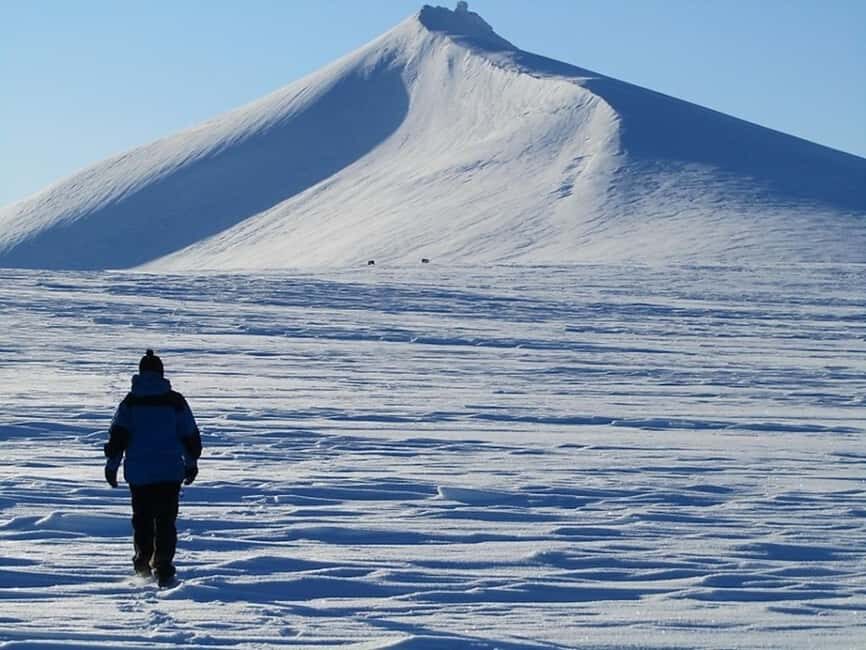
Sarkofagen is one of those climbs that’s short on paper and big in practice. In just a half-day, you work through multiple Arctic terrain types—starting on moraine, stepping onto the Larsbreen glacier with traction, then finishing along a narrowing ridge toward the summit. The result is a hike that’s less about ticking a viewpoint and more about moving through a living, icy system.
What makes this experience compelling is that you’re not just hiking in the High Arctic—you’re learning how it behaves. The guide covers Arctic history and how glaciers move and change. That context matters because it helps you interpret what you’re seeing: cracked ice, steep angles, and the sense that this environment is powerful and still actively transforming.
You can also read our reviews of more hiking tours in Longyearbyen
The Route: Moraine Terrain to Larsbreen Glacier to the Summit Ridge
You begin on moraine terrain, which usually means uneven ground underfoot and a mix of stable and less-stable surfaces. This is a good place to get your body warmed up and let the guide read the group’s pace. It also sets expectations: you’re heading into a technical hike, so don’t expect flat, forgiving walking.
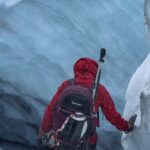
Then comes Larsbreen glacier travel. Here, crampons are provided, and that’s the line between hiking and expedition mode. You’ll be stepping in a way that feels more like careful climbing than typical trail walking, with your attention staying on footing instead of just scenery. The upside is huge: glacier hiking gives you a different scale of the Arctic—ice texture, angles, and that unmistakable quiet.
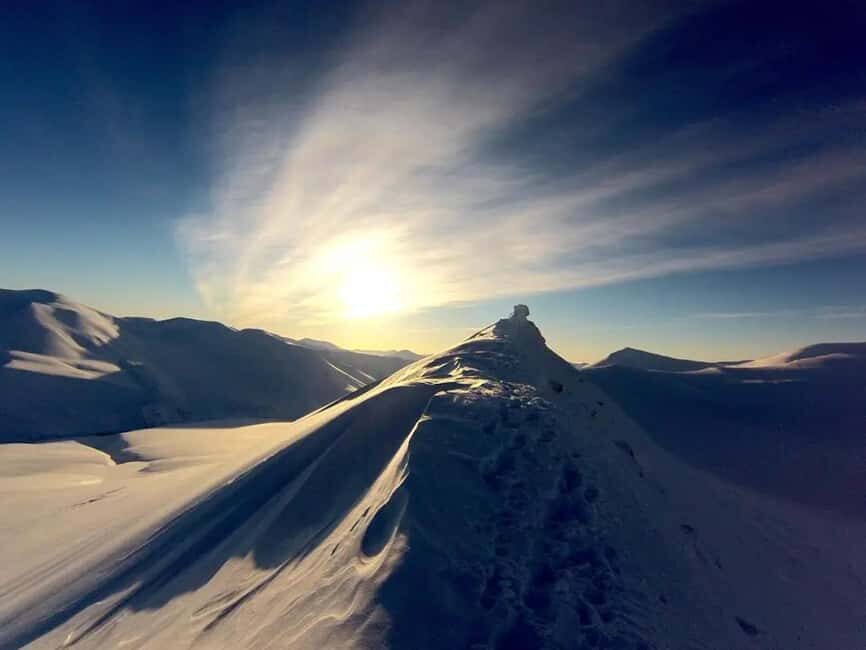
The final push follows a narrowing ridge to Sarkofagen. A ridge like this typically demands precise foot placement and steady balance. The experience highlights mention technical footwork and raw, untamed views, and that fits what a narrowing ridge tends to feel like—less room for mistakes, more reward for focus.
Glacier Work With Crampons: What This Adds to Your Skillset
Crampons aren’t just gear. They change how you move and how safe you feel. With crampons provided and safety equipment included, the structure is there for you to take the glacier seriously without worrying about missing essential basics.
The tour calls out technical footwork, and that’s the right mindset. You’re not aiming to race. You’re aiming to place each step confidently while the guide manages safety details. In a cold, remote setting, that pacing and coaching is often the difference between a tough but enjoyable hike and one where you’re stressed the whole time.
You’ll also likely get explanations tied directly to what you’re doing and seeing—glacier dynamics, and what it means for the terrain you’re crossing. Even if you know little going in, that kind of on-the-move interpretation helps the hike stick with you long after you’re back in Longyearbyen.
The Summit Moment: Views, Silence, and a Chance at Wildlife
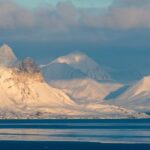
The Sarkofagen summit is the payoff, but it’s not only about a view. The highlights emphasize profound silence and raw, untamed High Arctic atmosphere. When the route gets serious—steep, cold, and technical—that silence can feel louder than any city sound.
From the summit area, you can expect a view over Longyearbyen and the coast. One guide-led review described the summit as offering a suggestive look down at the town and coastline, and that tracks with the logic of hiking a prominent peak nearby. You might also catch glimpses of reindeer or other wildlife if conditions and timing align—one booking specifically mentioned a possibility of seeing reindeer and additional animals.
Keep expectations grounded: wildlife isn’t guaranteed on a glacier ridge climb, and the main job is safe movement. Still, the combination of summit exposure and Arctic stillness makes “the chance” feel real.
Technical Footwork and 900+ Meters: How to Judge If You’re Ready
This is listed as a challenging hike for fit hikers who want more than a viewpoint. The stats support that: 900+ meters elevation gain in a 4-hour half-day. Straight elevation gain like that tends to translate into a steady uphill burn and a lot of concentration on the way up—and again on the way down.
You should be honest with yourself about low fitness. The activity is not suitable for people with mobility impairments, heart problems, or respiratory issues. Even if you don’t have those medical limitations, if you struggle with steep trails or lose balance easily on uneven ground, you’ll likely find technical footwork exhausting.
A useful way to think about it: you’re not just training for height. You’re training for careful motion in cold, traction-based conditions. If you’re comfortable staying focused for hours and you don’t mind that the hike can be demanding, this will feel worth it. If you want a relaxed walk with minimal exertion, it won’t.

Small Group Dynamics: Why a Max of 10 Helps
With a small group capped at 10 participants, you get a better chance at individualized pacing. That matters on a technical hike because people don’t all move at the same speed on glacier steps or narrow ridges. The highlights mention flexible pacing, and that’s exactly what you want when the terrain gets more demanding.
Small groups also tend to make safety management smoother. The guide can keep an eye on foot placement, check who needs extra time, and adjust timing without turning the hike into a stressful line. You’ll also get more chances to ask questions during explanations about Arctic history and glacier dynamics, because the group isn’t huge.
What’s Included (and What You’ll Need to Sort Yourself)
This hike includes the essentials that make a glacier climb workable for most participants:
- Crampons
- Guided tour
- Safety equipment
- Snacks and warm drinks
That inclusion is part of the value. In a remote environment, you’re paying for guidance and safety structure, not just access to a trail. And warm drinks and snacks aren’t a luxury here—they help you keep moving comfortably in cold weather.
What isn’t included is your personal clothing. Bring warm layers, hiking shoes, and thermal clothing as specified. That’s not the time to show up underprepared. If you’re unsure, choose warmth and thermal performance over fashion.
Timing, Duration, and What the 4 Hours Actually Means
The duration is 4 hours, described as a half-day commitment, with starting times depending on availability. In practice, that means you’re likely moving through a full “arc” of the experience: moraine start, glacier crossing, ridge approach, summit effort, and the return.
Because the time window is tight, the climb will feel purposeful. There’s less slack for slow sightseeing stops. The upside is that you’ll stay focused on the mission, and the guide can keep the schedule aligned with conditions you need to take seriously on ice and steep terrain.
Price and Value: Is $262 Reasonable for This Arctic Expedition?
At $262 per person for a 4-hour guided hike, the price isn’t low—but it also isn’t just paying for a view. You’re covering a guided expedition that includes crampons and safety equipment, plus warm drinks and snacks. You’re also getting interpretation from the guide about Arctic history and glacier dynamics, which turns the hike into more than physical effort.
Value in the Arctic often comes from reducing risk and friction. A glacier crossing requires training-style attention and proper gear. If you tried to piece together guidance, equipment, and safety planning on your own, you’d likely spend time and money—and still face uncertainty about whether you were fully set for that terrain. In that light, $262 looks like a straightforward pay-for-structure cost.
Who This Hike Fits Best (and Who Should Skip It)
This experience fits best if you want a genuine challenge and you’re comfortable with cold, technical hiking. It’s ideal for fit hikers who want more than a standard summit photo stop, and who enjoy learning as they move.
It’s not suitable for:
- People with mobility impairments
- People with heart problems
- People with respiratory issues
- People with low level of fitness
If you meet none of those criteria and you can handle steep terrain with careful footwork, you’ll likely appreciate how much you get done in a short time. If you’re recovering from injuries, have breathing limitations, or dislike technical footing, you’ll probably feel uncomfortable and anxious—exactly what you don’t want when the ridge narrows and the glacier calls for concentration.
Should You Book the Sarkofagen Summit Hike?
Book it if you:
- Want a real Arctic expedition feel in about 4 hours
- Are excited by glacier travel and don’t mind technical footwork
- Appreciate a guide who explains what you’re seeing, not just where to step
- Can bring the right clothing and are comfortable with serious elevation gain
Skip it if you want an easy hike, have limited mobility, or aren’t confident with steep, technical terrain. This is a trek where fitness and focus are part of the deal. When that matches your style, Sarkofagen delivers: crampons, glacier crossing, summit views over Longyearbyen and the coast, and that rare High Arctic quiet.
FAQ
How long is the Sarkofagen Summit Hike?
The duration is 4 hours, and starting times depend on availability.
What’s included in the price?
The tour includes a guided tour, crampons, safety equipment, and snacks with warm drinks.
Do I need to bring my own clothing?
Yes. Personal clothes are not included. The tour asks you to bring warm clothing, hiking shoes, and thermal clothing.
Are crampons provided for the glacier crossing?
Yes. Crampons are included with the tour.
What kind of difficulty should I expect?
Expect technical footwork and 900+ meters of elevation gain straight, with a half-day commitment that requires fitness and determination.
Is this hike suitable for people with mobility impairments or health issues?
No. It’s not suitable for people with mobility impairments, heart problems, respiratory issues, or low fitness.
What language is the guide?
The live tour guide is English.
Is free cancellation available?
Yes. You can cancel up to 24 hours in advance for a full refund.
Can I reserve and pay later?
Yes. The option is Reserve now & pay later, with pay nothing today.