REVIEW · BERGEN
Guided Kayak Tour Bergen
Book on Viator →Operated by Lysebotn Landhandel · Bookable on Viator
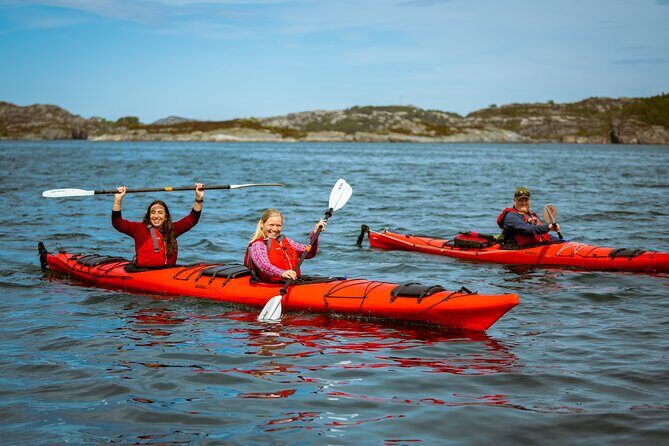
Sea kayaking near Bergen is joy with a mission. I like that this tour is built for beginner comfort: you get instruction for safety and rescue techniques before you head out, and you’ll paddle mainly in double kayaks. You’re also not just in “water views” mode—you learn what to look for out among the islets.
I love the small group setup (max 8), which means your guide can slow down, watch your technique, and explain things one-on-one when conditions get choppy. One thing to consider: plan on getting wet, and on windy days the North Sea can feel lively on the return.
In This Review
- Key Things That Make This Bergen Kayak Tour Worth It
- Øygarden Islets, Not a Fjord Cruise: What You’re Actually Paddling
- Meeting at Tourist Information and the Ride Out to the Water
- Beginner Instruction That’s More Than a Quick Talk
- On the Water Around Øygarden: Wildlife, Views, and Wind Reality
- The Lunch Break on the Islets: Fuel, Local Food, and the Beach-Mode Reset
- What Equipment You Get (and How to Dress for Getting Wet)
- The Small-Group Feel: Why Up to 8 Paddlers Changes Everything
- Route, Pacing, and the One Stop That Anchors the Day
- Price and Value: Paying for Gear, Coaching, and Getting There
- Who Should Book This Kayak Tour (and Who Might Reconsider)
- Should You Book Guided Kayaking Around Øygarden Islets?
- FAQ
- Where do I meet the guide?
- How long is the kayaking tour?
- Do I need kayaking experience?
- What is the minimum age?
- Are the kayaks single or double?
- What language is the tour offered in?
- Does the tour run in bad weather?
- Is lunch included?
Key Things That Make This Bergen Kayak Tour Worth It
- Beginner-focused safety and rescue practice before you start paddling
- Small group size (up to 8) for more personal coaching
- Clear water wildlife spotting such as crabs, shrimps, and possibly even salmon or an eagle
- Lunch included with apple juice, plus food people highlight like waffles and salmon wraps
- Rain or shine approach so you see how light and weather change on the water
Øygarden Islets, Not a Fjord Cruise: What You’re Actually Paddling
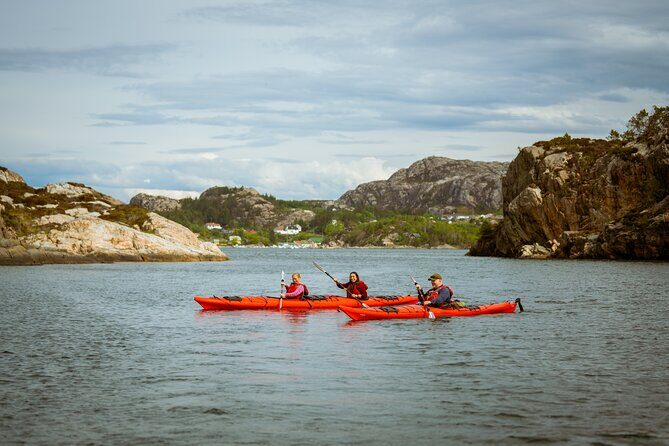
This is a guided seakayak trip around the islets outside Bergen, with the day’s “base” vibe centered on Øygarden Municipality. The big mental shift (and it matters) is that you’re not doing a calm fjord paddle. You’re on the coast and the North Sea can bring wind and chop.
That’s also why the guide matters. When waves show up, a good instructor helps you angle the kayak, manage your stroke, and get through the busy bits without turning the whole outing into a survival course. The tour is described as beginner level, and the experience is designed around that reality: you get enough coaching to feel steady, but you still get real open-water conditions.
Timing-wise, the tour is listed as about 4 hours 15 minutes, and also as 5 hours total including transport. Either way, expect a chunk of the day to be spent moving from central Bergen to the launch area, then about 2–2.5 hours on the water.
You’ll meet at the Tourist Information in Bergen (Strandkaien 3), then head out with your group and return to the same place at the end. That makes it easy to plug into a day where you still want energy left for exploring Bergen’s waterfront afterward.
You can also read our reviews of more guided tours in Bergen

Meeting at Tourist Information and the Ride Out to the Water
The meeting point is outside the entrance to the Bergen Tourist Information office at Strandkaien 3. It’s convenient because you can get there using public transport, and you’re not hunting down a remote dock in the dark.
Then comes the practical part: you’re transported out to the kayaking area. In real-world terms, people describe it as roughly a 40-minute ride from Bergen. On paper it’s “included transport.” In practice, that’s a big value add because it removes the two hardest parts of trying to do sea kayaking on your own: getting the gear and getting yourself to the right starting water with the right conditions.
One more detail worth keeping in mind: if weather is rough, the plan can still move forward. The tour goes in rain and shine, and the guides aim to show you how Bergen’s changing weather and light affect birdlife and the feel of the coast. That means you’re not stuck with a vague “maybe we’ll go.” You go when it’s safe, and the guide uses the conditions to shape the route.
Beginner Instruction That’s More Than a Quick Talk
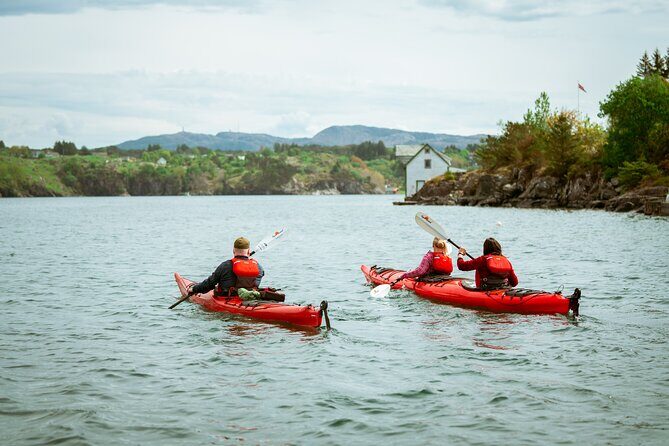
This tour explicitly says no prior kayaking experience is needed, and it’s not just marketing. The day starts with safety and instruction covering how to handle the kayak and the basics of what to do if you need rescue support. The language used is safety-first: you’ll be taught rescue techniques and how to get confident in the water.
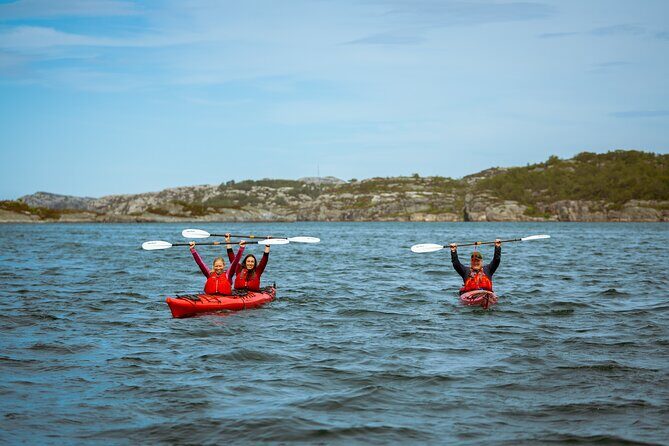
You’ll also paddle mostly in double kayaks. That changes the experience in a good way for first-timers. Working with a second seat means you get a natural rhythm, and it encourages slower, more coordinated movement instead of frantic solo paddling.
What I like about this kind of lesson is that it doesn’t try to fake experience. Instead, it teaches you what you actually need in the moment: how to start cleanly, how to correct course, and how to respond when wind or chop changes how the kayak moves under you. That’s exactly the kind of guidance people praise with names like Victor and Iris, who are described as spending time with each person and explaining how to maneuver through the water.
Also, the guides focus on more than strokes. Expect local context too—stories about natural history and local cultural life linked to the coast. You’ll end up with a better “why are we here?” feeling, not just a workout.
On the Water Around Øygarden: Wildlife, Views, and Wind Reality

Out on the islets, the tour leans hard into the idea that the water is alive. The most consistent “nature payoff” is birdlife. If you look down, you may spot small crabs and shrimps in the clear water. If you’re lucky, you might even see a salmon jumping near your kayak. And if you look up, an eagle is possible.
That’s a nice match for how this tour is described: you’re not just moving through scenery—you’re learning how to read the coast. You’ll get stories that help you notice what you’d otherwise miss: the patterns of life along the shoreline, and how animals use these waters and sheltered spots.
Now for the honest part: windy, choppy days happen here. Some guides handle those days by taking you to areas out of the wind, where the route stays calmer. People describe “hidden spots” that reduce the punch of the waves, which is a big deal for first-timers.
If you want a simple rule: expect the North Sea to be less forgiving than a quiet lake. The good news is the tour is built around that. Your guide’s job is to keep you comfortable and moving safely.
The Lunch Break on the Islets: Fuel, Local Food, and the Beach-Mode Reset
You’ll get a lunch during the tour, and it’s part of what makes this more than a half-day paddle you have to plan around. Included is snack/lunch with apple juice, and people repeatedly highlight the food as genuinely good—especially things like homemade waffles and meals such as salmon wraps.
What’s clever here is when the lunch happens. It’s not treated like an afterthought. It’s a reset after you’ve paddled for long enough to feel your effort. You also get the chance to slow down and experience the islets from shore level—watching the water and reflecting on what you saw.
On at least one described outing, the guide even cooked fish caught from the water for the group. That’s not guaranteed from the information you’re given, but it shows the overall vibe: local, hands-on coastal food rather than a generic boxed snack.
If you’re the type who gets hangry the moment you stop moving, you’ll appreciate this. Kayaking is physical, and the lunch timing helps you end the tour feeling human again.
A few more Bergen tours and experiences worth a look
What Equipment You Get (and How to Dress for Getting Wet)

Expect to be outfitted with gear suitable for time on the water in Norway’s coastal weather. Reviews mention items like boots, rain pants, jackets, hats, and gloves. On at least one day, people also received wet gear to put over street clothes when conditions were rough.
That matters because it affects your packing list. You can pack smart instead of overpacking. Still, you should plan for one inevitable truth: you will get wet. Some people note they weren’t completely soaked, but wet is the baseline.
So I recommend you bring:
- a towel (even a small one)
- a change of clothes for after the tour
- layers that dry reasonably well
If you only bring one waterproof layer, add a warm backup. Bergen weather is famous for changing fast, and the tour specifically says it runs in rain and shine. The guides even like to show how light and weather shift the mood of the water and the birdlife, which means “weather” is not a reason to cancel the vibe.
The Small-Group Feel: Why Up to 8 Paddlers Changes Everything
A maximum of 8 travelers is the difference between a tour that feels like a production and one that feels like you’re out with a local team. With a small group, guides can watch your pace and adjust the route if people need a bit more help getting in and out, staying balanced, or handling windy stretches.
This is where the guide names you’ll hear—Victor, Iris, Andreas, Johann, and Ingrid—make sense. People describe guides as fun and friendly, but also as adjusting the assistance level depending on the paddler. That’s the skill that matters most for a mixed group of friends, teens, or adults with different comfort levels on the water.
It also helps explain how this trip can include small surprises. On one outing, people who couldn’t kayak still found another way to participate (fishing), and the guide turned it into part of the day. Even if you’re here to paddle, that kind of flexibility helps when conditions or comfort levels shift.
Route, Pacing, and the One Stop That Anchors the Day
The trip’s structure is simple: you meet in Bergen, travel to the water, paddle around the islets, then return to the same meeting point. There isn’t a long multi-stop day like you’d see in big sightseeing tours, which is another reason it works well for half-day planning.
The tour includes Stop 1: Øygarden Municipality. Practically, that means your focus stays in the islet area around that municipality rather than spreading out all over the map. That keeps the pacing reasonable for beginners and also helps the guide lead you through the best water conditions for the group.
On-water time is typically 2–2.5 hours, which is long enough to feel like a real outing but short enough that a beginner doesn’t lose the thread. You get instruction, time to practice, and time to enjoy the coast before the day moves back toward Bergen.
Price and Value: Paying for Gear, Coaching, and Getting There
At $204.06 per person, you’re paying for more than a kayak rental. You’re paying for:
- a guide who teaches safety and rescue basics
- instruction for beginner paddlers
- transport from central Bergen to the launch area and back
- equipment and weather-ready items
- lunch/snack including apple juice
That package makes the cost feel more reasonable when you think about the alternatives. Doing a beginner-friendly sea kayak trip on your own usually means handling gear logistics, researching safe routes, and trying to match paddling time to weather windows. Here, the guide does the hard parts so you can focus on being out on the water.
You’re also paying for time. A small group of up to 8 means your guide’s attention is spread differently than it would be in a large tour. That matters if you want to learn quickly and feel safe.
Who Should Book This Kayak Tour (and Who Might Reconsider)
This is a strong choice if you:
- are new to kayaking
- want a guided nature experience instead of solo paddling
- like wildlife spotting and stories tied to the coast
- prefer small-group attention
- have kids who meet the minimum age of 8
It’s also a good fit for people who want “something active” without committing to a full-day adventure. The on-water block of 2–2.5 hours hits that sweet spot.
You might reconsider if you strongly dislike wind and chop, because the North Sea can be choppy. The tour can still be great in those conditions, but you should expect the physical feel of real coastal water.
If your goal is calm, smooth paddling for scenery only, this probably won’t feel like that most days. If your goal is learning to handle sea kayaking with a guide, you’re in the right place.
Should You Book Guided Kayaking Around Øygarden Islets?
Yes—if you want a beginner-friendly way to experience the coast outside Bergen, this is a smart booking. The combination of safety instruction, small group size, and included transport plus lunch makes it feel practical, not just romantic.
Book it if you’re excited by wildlife possibilities (birds overhead, life in the clear water) and you’re okay with the reality that Bergen’s coastal weather can bring wind. This is the kind of tour where you’ll leave with both a workout and stories you’ll remember.
Hold off or choose another date if you know you can’t handle wet weather or you’d be miserable in choppy water. Since the tour requires safe conditions, you’ll still have a path forward when conditions aren’t right.
FAQ
Where do I meet the guide?
You’ll meet the guide outside the entrance to the Tourist Information in Bergen at Strandkaien 3. The activity ends back at the same meeting point.
How long is the kayaking tour?
The experience is listed as about 4 hours 15 minutes. Total time is also described as 5 hours including transport, with roughly 2 to 2.5 hours on the water.
Do I need kayaking experience?
No. It’s a beginner-level tour, and you’ll receive instruction in safety and rescue techniques.
What is the minimum age?
The minimum age is 8 years old.
Are the kayaks single or double?
The tour says you’ll paddle mostly in double kayaks.
What language is the tour offered in?
The tour is offered in English.
Does the tour run in bad weather?
The tour requires good weather, but it also says it goes in rain and shine. If it’s canceled due to poor weather, you’ll be offered a different date or a full refund.
Is lunch included?
Yes. Lunch/snacks are included, and apple juice is part of what’s provided.